We independently review everything we recommend. When you buy through our links, we may earn a commission. As an Amazon Associate we earn from qualifying purchases.
Best Towels for Squeezing Cauliflower Bread: 6 Picks
Find the best towels for squeezing cauliflower bread, from grade 90 cheesecloth and flour sack towels to nut milk bags that wring riced cauliflower truly dry.
Find the best towels for squeezing cauliflower bread, from grade 90 cheesecloth and flour sack towels to nut milk bags that wring riced cauliflower truly dry.
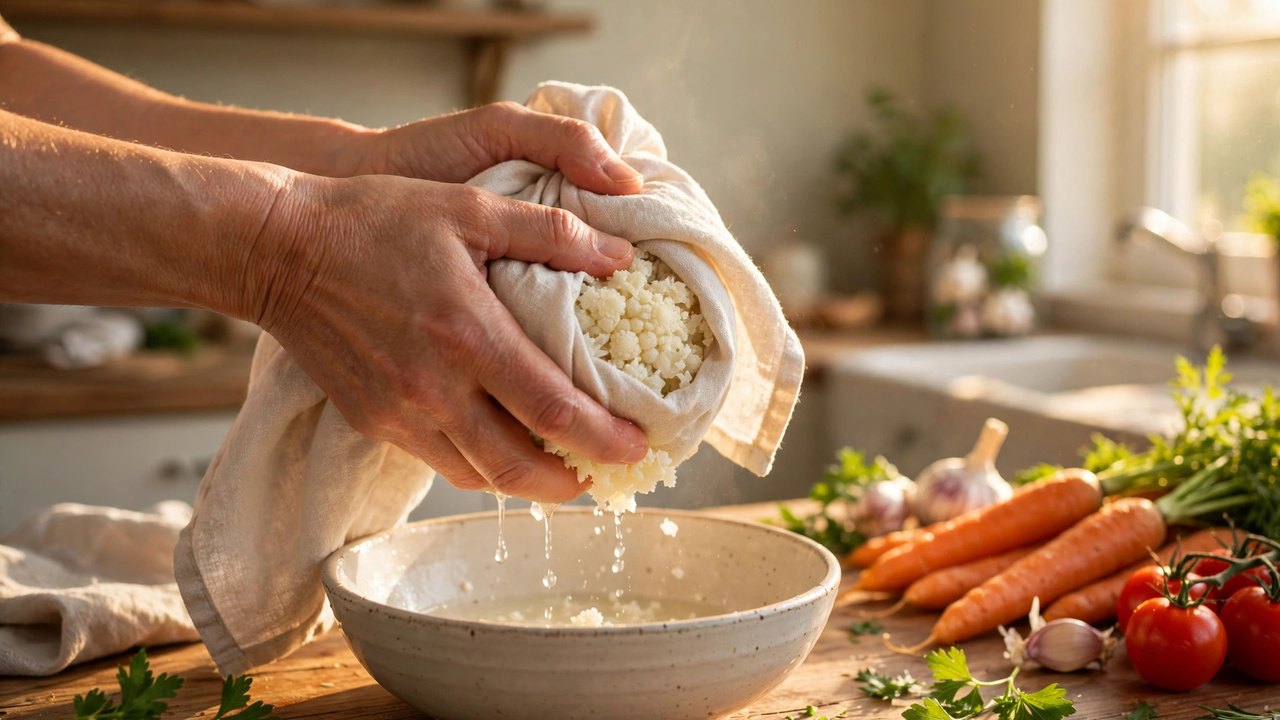
Cauliflower bread and cauliflower pizza crust live or die on one unglamorous step: getting the water out. Riced cauliflower holds a surprising amount of moisture, and if that moisture goes into the oven with your dough, the result is a soft, steamed slab that bends instead of slicing, browns unevenly, and falls apart under toppings. The cloth you squeeze with is therefore not a minor accessory. It is the tool that decides the texture of the finished loaf. This guide to the best towels for squeezing cauliflower bread covers the three cloth families that actually work for the job — fine cheesecloth, flour sack towels, and nut milk bags — and explains what separates a cloth that wrings a batch nearly dry from one that tears, sheds lint, or lets fine cauliflower grains escape into the sink.
The six picks below were chosen for the specific demands of this task. Squeezing cooked or steamed riced cauliflower is harder on a cloth than most straining jobs. The load is heavy for its size, the grains are fine enough to slip through a loose weave, and the twisting force you apply to the bundle concentrates stress on seams and edges. A good squeezing cloth needs a tight weave, enough surface area to hold a whole head of riced cauliflower without spilling, edges or seams that survive repeated wringing, and a food-grade material with nothing in it that you would not want touching hot, steamed vegetables. Every pick here is a cloth the maker lists for food use, and every material claim in this article is phrased the way the maker lists it on its own product page.
Quick verdict
For most home bakers, a grade 90 cheesecloth is the most direct answer. The SCENG Cheesecloth Grade 90 36 Sq Feet gives you a large, unbleached, cut-to-size sheet with a weave fine enough to hold riced cauliflower while water runs out freely, and the Regency Wraps Ultra Fine Cheese Cloth offers the same grade in a smaller, single 36 by 36 inch piece for bakers who make one loaf at a time. If you prefer a towel shape that doubles as an everyday kitchen towel, the Utopia Kitchen Flour Sack Towels 24 Pack and the Aunti Em’s Kitchen Flour Sack Dish Towels 13 Pack wrap a batch securely, twist without tearing, and go straight back to drying dishes afterwards. If your cauliflower is riced very fine, or you are tired of grains escaping through cloth, a bag beats a flat sheet: the Ellie’s Best Pro Quality Nut Milk Bag uses a fine nylon mesh the maker lists as food grade, and the Cotton Farm Ultra Dense Cheesecloth Bag keeps the bag shape but stays in 100 percent unbleached cotton. There is no single wrong choice here — there is only the cloth that matches how finely you rice, how much you bake at once, and whether you want cotton or a synthetic mesh doing the work.
The products in this guide
SCENG Cheesecloth Grade 90 36 Sq Feet
This is the straightforward specialist pick: a single long sheet of grade 90 cheesecloth that you cut to the size your batch needs
Selection started with the job itself rather than with towel categories in general. A bath towel, a terry dish towel, or a thick waffle-weave cloth is the wrong tool for squeezing cauliflower, however absorbent it may be: terry loops trap grains, thick weaves hold water in the cloth instead of letting it run out under pressure, and textured surfaces make it hard to scrape the squeezed cauliflower cleanly off the fabric. The cloths that work share a different profile — thin, smooth, tightly woven or finely meshed, and strong in tension when twisted. That profile pointed to three families: cheesecloth in the finer grades, flour sack towels in plain cotton weaves, and purpose-built nut milk and straining bags.
Within those families, each candidate had to meet four tests. First, the maker had to list the material plainly, and the material had to be food-appropriate: unbleached cotton or a food grade mesh, with no coatings or treatments described that would be unwelcome against steamed vegetables. Second, the weave or mesh had to be fine enough for riced cauliflower. For cheesecloth that meant grade 90, the grade the makers themselves describe as ultra fine with a tight thread count; looser grades let fine grains through and were left out. Third, size and construction had to suit a real batch: a cloth needs to gather a whole riced head into a bundle with enough spare fabric to twist, and a bag needs seams and a shape that tolerate a hard squeeze. Fourth, the product had to be a current, orderable listing in the exact size and pack configuration named in this article, verified on its own product page rather than inferred from a similar listing.
We also weighted reusability and care. Squeezing cauliflower is a weekly job in many low-carb and gluten-free kitchens, so a cloth that is listed as washable and reusable matters more than a disposable sheet you throw away after one loaf. Finally, we kept the set deliberately varied: two cheesecloth sheets at different sizes, two flour sack towel packs at different counts, and two bags in two different materials, so that whichever way your kitchen already leans, one pick fits without forcing you into an unfamiliar format.
This is the straightforward specialist pick: a single long sheet of grade 90 cheesecloth that you cut to the size your batch needs. The maker lists the material as 100 percent unbleached cotton, and lists the sheet at 1 yard wide and 4 yards long, for 36 square feet in total. Grade 90 is the important detail. The maker describes grade 90 as a much higher and finer quality than lower grades such as grade 50, and that tightness is exactly what riced cauliflower demands. Spread a cut piece over a bowl, tip the steamed cauliflower rice into the centre, gather the corners, and twist: the fine weave holds the grains in the bundle while water streams out through the cloth, instead of carrying half your future crust down the drain with it.
The cut-to-size format has a practical advantage for this job that pre-cut squares cannot match. A double batch for two pizza crusts wants a bigger piece than a single small loaf, and with a 4-yard sheet you simply cut a bigger square. The maker also lists the cloth as lint free, made only from pure virgin cotton, and washable and reusable, which suits a cloth that will be twisted hard, rinsed, and used again the following week. Because the sheet has no pre-cut edges, cut pieces are best folded so the raw edges sit outside the bundle, away from the food, and a double layer is a sensible habit for the very first squeeze of a steaming-hot batch, when the load is at its wettest and heaviest.
In use for cauliflower bread, this cloth rewards a patient technique. Let the riced cauliflower cool just enough to handle, squeeze in stages, open the bundle, break up the compressed cake, and squeeze again. The large sheet makes that second stage easy because there is always spare cloth to re-gather. If you bake cauliflower crusts regularly and in quantity, this is the pick that treats cheesecloth as the staple it should be: bought in length, cut as needed, and never rationed.
Buy it if: you bake cauliflower bread or crusts often, want grade 90 tightness in an unbleached cotton the maker lists as lint free, and like cutting each piece to the size of the batch.
Skip it if: you want ready-cut squares with finished edges straight out of the pack, or you only ever squeeze a small single batch and would waste most of a 36 square foot sheet.
Flour sack towels are the classic cauliflower-squeezing cloth, and this pack is built around rotation. The maker lists 24 white towels at 28 by 28 inches each, manufactured using 100 percent pure ring spun cotton knitted in a diagonal fashion. Twenty-eight inches square is a generous working size for this job: laid flat, it takes a full batch of riced cauliflower in the centre with enough cloth on every side to gather into a firm twist, and the plain, smooth weave releases the squeezed cauliflower in a clean cake when you open the bundle, rather than trapping grains the way a looped terry surface does.
The maker explicitly lists sweating out vegetables among the uses for these towels, alongside use as cheese strainers, which puts cauliflower squeezing squarely inside the product’s intended work rather than at its margins. The maker also lists the fabric as quick drying and highly absorbent. Absorbency matters less than weave tightness for squeezing — you want water to leave under pressure, not soak in — but a towel that dries fast between uses is a towel that stays fresh in a busy kitchen, and with 24 in the pack you can dedicate several to vegetable work, keep others for dishes, and always have a dry one ready when a cauliflower comes out of the steamer.
The honest trade-off with any flour sack towel is weave openness compared with grade 90 cheesecloth. For standard riced cauliflower — pulsed to rice-size grains — a flour sack weave holds the batch well. If you process your cauliflower finer, toward a couscous texture, lay the towel over a layer of cheesecloth or squeeze more gently on the first twist so grains settle into the weave instead of being forced through it. As a dual-purpose buy, though, this pack is hard to argue with: it equips the squeezing job properly and restocks your everyday towel drawer at the same time.
Buy it if: you want the traditional towel method, a large 28 by 28 inch working surface, and enough towels in rotation that a clean, dry one is always available.
Skip it if: you rice your cauliflower extremely fine and need the guaranteed tightness of a grade 90 weave or a fine mesh bag instead.
Aunti Em’s takes the same flour sack idea and leans into thickness and a tighter feel. The maker lists a set of 13 white towels at 27 by 27 inches, with a fabric type of 100 percent pure all-natural ring-spun cotton, and describes the towels as plain, thick, and zero-lint. That zero-lint character is worth pausing on for this particular job. When you squeeze a hot bundle of cauliflower, the cloth is pressed directly against food that is about to become your bread; a towel that sheds fibres into the mix is a real nuisance, and a lint-free plain weave avoids the problem at the source.
The maker positions these towels as sturdier and more absorbent than generic flour sacks, and notes they can be used to strain foods more effectively than cheesecloth in everyday kitchen work. For cauliflower, the slightly smaller 27-inch square still gathers a normal batch comfortably, and the hemmed construction the maker lists gives the edges a finished feel when you twist — the corners are what your hands grip and torque, so finished edges are not a cosmetic detail on a squeezing towel. Thirteen towels is a sensible middle quantity: enough to rotate through a week of cooking, washing, and baking without running a load for one cloth.
Choose this pack over the larger Utopia Kitchen set when towel quality per piece matters more to you than sheer count, and when the same towels will live a double life drying glassware and dinnerware, where the maker lists them for exactly that work. The plain white surface also makes it easy to see when a towel needs a thorough wash after vegetable duty — cauliflower water leaves its mark, and a white towel hides nothing, which in a food-prep cloth is a virtue.
Buy it if: you want a thick, lint-free flour sack towel the maker lists for straining as well as drying, in a moderate pack size with hemmed, grippable edges.
Skip it if: you need the largest possible towel count for a high-volume kitchen, or the maximum 28-inch working width for very large double batches.
A bag changes the mechanics of squeezing for the better, and this is the bag built most explicitly for hard squeezing. The maker, Ellie’s Best, lists the Pro Quality Nut Milk Bag in a 12 by 12 inch XL size, made from strong food grade fine nylon mesh, with the model number KD2100. Instead of gathering and holding loose corners, you fill the bag, close it, and squeeze or twist the whole pouch. The load stays contained, both hands can work the bundle, and the fine mesh is designed for pulp-free straining — which, translated to cauliflower, means the finest riced grains stay in the bag while the water leaves.
The maker describes the bag as much stronger and less messy than cheesecloth, easier to squeeze for faster results, and able to outlast cotton cheesecloth bags, with a design intended for repeated, heavy use. That strength profile suits cauliflower bread particularly well, because the difference between a good crust and a soggy one is often the last portion of water, and getting that last portion out means squeezing harder than a delicate cloth comfortably allows. A purpose-built mesh bag invites that final firm twist without the worry that a seam or a thin patch of weave will give way over the sink.
The nylon construction brings two practical differences from cotton. It does not absorb water into its fibres, so everything you squeeze out actually leaves the batch instead of partly soaking the cloth, and the maker notes it is easy to clean and fast to air dry. The trade-off is that it is a single-purpose specialist: at 12 by 12 inches it is sized for one standard batch at a time, and it will not double as a dish towel or a bread-proofing cover. Bakers who make cauliflower crusts weekly tend to accept that bargain happily, because for the single job of wringing vegetables dry, a strong fine-mesh bag is the most controlled tool in this roundup.
Buy it if: you rice cauliflower finely, want the strongest squeeze with the least mess, and prefer a non-absorbent food grade mesh that rinses clean and dries fast.
Skip it if: you want cotton only, need to squeeze double batches in one bundle, or want a cloth that also works as a general kitchen towel.
Regency Wraps is the established kitchen-wrap name in this set, and its single-piece cheesecloth is the small-batch counterpart to the SCENG sheet. The maker lists this piece, model RW450N, as 100 percent unbleached heavy-weight cotton, in a 36 by 36 inch size totalling 9 square feet, with a tight weave of grade 90. The maker also lists the cloth as lab-tested food safe with no metals, bleach, or dyes — a clear, specific food-contact statement that sits comfortably next to a job where the cloth is pressed hard against hot food.
Nine square feet is a considered size for cauliflower work. A 36-inch square folds neatly to a double layer over a mixing bowl, holds a single head’s worth of riced cauliflower, and still leaves enough tail to twist. Because it is one defined piece rather than a cut from a roll, it is easy to keep this cloth as your dedicated cauliflower cloth: wash it, fold it, store it with the baking things, and it is always the right size without measuring or cutting. The maker lists uses including straining, steaming vegetables, and making cheese, yogurt, and nut milk, all of which involve the same combination of fine solids and free liquid that defines squeezing cauliflower rice.
Where this pick gives ground is only on volume. If you regularly squeeze two or three heads at once for a family-sized bake, you will work through this piece in stages or wish for the SCENG sheet’s cut-to-size length. For the far more common pattern — one cauliflower, one loaf or one pizza base, once or twice a week — the Regency Wraps piece is arguably the tidiest buy in the guide: grade 90 tightness, unbleached cotton, a clear food-safe statement from the maker, and nothing to cut, measure, or store in bulk.
Buy it if: you bake single loaves or single crusts, want grade 90 unbleached cotton in one ready piece, and value the maker’s food-safe, no bleach or dyes listing.
Skip it if: you squeeze large or double batches often and need a longer sheet or a bigger towel to gather them in one bundle.
Cotton Farm answers the obvious question raised by the Ellie’s Best pick: what if you want the contained, two-handed control of a bag, but in cotton rather than nylon? The maker lists this as an ultra dense cheesecloth bag in an XL 14 by 14 inch size, made of 100 percent unbleached cotton, washable and reusable, and the listing configuration verified for this article contains two pieces. The maker emphasises that the material includes no plastic, polyester, or nylon, and describes a seamless bottom design so that liquid passes through the cotton fabric itself rather than through a stitched seam — a thoughtful detail for squeezing, because the bottom of the bag is exactly where pressure and liquid concentrate.
The maker also lists a dense weave, describing 136 threads per square inch in its advanced straining notes, and positions the bag for cheese making, straining, storage, and sprouting. For cauliflower, that density is the headline: a cotton bag this tight behaves more like the fine-mesh specialists than like a loose cheesecloth square, keeping riced grains contained while you twist. At 14 inches, it is also a little roomier than the 12-inch nylon bag, which helps when a batch is bulky before its water leaves — the bundle shrinks a lot as you squeeze, but it has to fit in the bag first.
Care is the main difference to plan around versus nylon. Cotton absorbs some of the liquid it touches, so the bag itself will be wet through after a squeeze and benefits from a thorough rinse, a wash, and full air drying before storage; the maker lists it as washable, and turning it inside out to rinse, as the maker suggests for cleaning, clears trapped grains from the weave. In return you get an all-cotton, unbleached tool with no synthetic mesh at all, which for many cauliflower-bread bakers — a group that often cooks the way it does precisely to keep ingredients simple — is the whole point.
Buy it if: you want bag-style control and a dense, fine squeeze, but insist on 100 percent unbleached cotton with no nylon or polyester in the cloth.
Skip it if: you want the fastest-drying, non-absorbent option, or you dislike rinsing grains out of a cotton weave after each use.
Buying guide
Start with weave or mesh fineness, because it decides what stays in the bundle. Riced cauliflower is a fine solid. A loose, open cloth lets grains escape with the water, which wastes food, clouds the sink, and — more importantly — means the cloth is not holding pressure well enough to wring the batch properly. For cheesecloth, grade is the maker’s shorthand for that fineness: the makers in this guide describe grade 90 as ultra fine and tight, woven with a high thread count, and that is the grade to look for. For flour sack towels, look for a plain, tight weave described as lint free rather than a loose, gauzy weave. For bags, look for a fine mesh or an ultra dense weave, and treat a stated thread count or a pulp-free straining claim from the maker as the equivalent signal.
Match the format to how you actually work. A flat sheet or towel is the most flexible format: it lines a bowl, gathers any batch size, and — in the flour sack versions — returns to general kitchen duty afterwards. Its weakness is that you are the closure; a tired grip lets a corner slip mid-twist. A bag is a closed system: filling, squeezing, and emptying are all more controlled, and both hands can apply force, but the batch size is capped by the bag, and the tool does one job. Many regular bakers end up owning one of each — a towel or sheet for big or awkward batches, a bag for the standard weekly loaf — and this guide’s six picks are chosen so that any sheet-and-bag pairing within them works.
Size the cloth to a whole head, not to the squeezed result. A batch of riced cauliflower is bulky and wet when it goes into the cloth and compact when it comes out. For flat cloths, 27 to 36 inches square is the working range in this guide, and it is the right range: enough to contain the loose, steamed rice and still leave a twistable tail. For bags, 12 to 14 inches square suits a standard head; go by the maker’s listed dimensions and remember that overfilling a bag makes the first squeeze messy and stresses the seams, so two fills of a smaller bag beat one forced fill.
Read the material line the way the maker writes it. Every pick here is listed by its maker as either unbleached cotton or a food grade mesh, and those words matter more than marketing around them. Unbleached cotton avoids bleach and dye in a cloth pressed against hot food, and the Regency Wraps listing goes further with a lab-tested food safe statement covering metals, bleach, and dyes. A food grade nylon mesh, as the Ellie’s Best maker lists, trades the natural-fibre preference for strength, a non-absorbent surface, and fast drying. Neither is automatically better; the right choice is the one consistent with why you are baking cauliflower bread in the first place.
Plan for heat and for the second squeeze. Cauliflower is usually steamed or microwaved before squeezing, and it holds heat as well as it holds water. Let it cool until the bundle is comfortable to handle firmly, or fold the cloth so a double layer sits between the food and your palms. Then squeeze in stages: twist until the stream slows, rest, open, crumble the compressed cake apart, and squeeze again. That second pass, which the larger sheets and towels in this guide make easy, is where the difference between a bendy crust and a sliceable one is usually decided. A cloth that survives that routine weekly — washable, reusable, with edges or seams the maker builds for real work — is worth more than a marginally finer cloth that frays by the third loaf.
Care decides how long the cloth stays pleasant to use. Rinse the cloth or bag immediately after squeezing, before cauliflower residue dries into the weave. Cotton cloths can be washed with your kitchen laundry; bags should be turned inside out and rinsed or washed as the maker directs, then dried fully before being put away. Keep a dedicated squeezing cloth if you can: a cloth that only ever touches vegetables stays free of the detergents, oils, and food smells that a hard-working all-purpose towel picks up, and you will always know exactly where it is when the cauliflower is ready.
FAQ
Why does cauliflower bread need squeezing at all?
Because riced cauliflower carries a large amount of water, and that water turns to steam in the oven. Left in the dough, it makes the crumb wet and soft, prevents browning, and weakens the structure so slices bend or crumble. Wringing the cooked, riced cauliflower in a towel, cheesecloth, or bag before mixing removes that water up front, so the bread bakes up firm enough to slice and hold toppings.
Is cheesecloth or a towel better for squeezing cauliflower?
Both work, and the difference is fineness and convenience. A grade 90 cheesecloth, the grade the makers in this guide list as ultra fine, holds very fine grains securely and is cheap to cut to size, but a single thin layer can feel delicate under a hard twist. A flour sack towel is sturdier, reusable across many kitchen jobs, and easier to grip, but its weave is more open, so extremely finely riced cauliflower may need a gentler first squeeze or a cheesecloth layer inside the towel.
What makes a nut milk bag good for cauliflower?
The same qualities that make it good for nut milk: a fine, strong mesh and a closed shape. A bag contains the whole batch, lets you squeeze with both hands, and keeps fine grains in while water leaves. The Ellie’s Best maker lists its bag as food grade fine nylon mesh built for hard squeezing, while the Cotton Farm bag offers the same closed shape in an ultra dense unbleached cotton for bakers who prefer to avoid synthetic mesh.
How dry should the cauliflower be before mixing?
Squeeze until the stream of liquid slows to occasional drips, then open the cloth, break the compressed cauliflower cake apart with a fork or your fingers, gather it again, and squeeze a second time. The finished bundle should feel like a firm, crumbly cake that holds together when pressed but no longer releases visible water when twisted firmly. That second squeeze is the step most often skipped, and it is usually the one that fixes a previously soggy crust.
Can I reuse the same cloth for every batch?
Yes — every pick in this guide is listed by its maker as washable and reusable. Rinse the cloth straight after use so residue does not dry into the weave, wash it regularly, and dry it fully before storing. Many bakers keep one cloth or bag dedicated to vegetable squeezing, which keeps it separate from towels used with cleaning products and makes the routine faster to start.
Should the cauliflower be hot or cold when I squeeze it?
Warm, not steaming hot. Freshly steamed cauliflower is too hot to twist firmly by hand, and a tentative squeeze leaves water behind. Let the batch cool until you can hold and twist the bundle with full, comfortable pressure — using a double layer of cloth as insulation if needed — and then squeeze in stages. Comfortable hands apply more force, and more force means a drier crumb.
Conclusion
The best towel for squeezing cauliflower bread is the one whose weave is fine enough to hold riced grains, whose size gathers a whole batch with cloth to spare, and whose material you are happy pressing against hot food week after week. The SCENG grade 90 sheet is the flexible staple for regular and larger bakes, the Regency Wraps piece is its tidy single-loaf counterpart, the Utopia Kitchen and Aunti Em’s flour sack packs bring sturdy, lint-free towels that work across the whole kitchen, and the Ellie’s Best nylon bag and Cotton Farm cotton bag give you the controlled, two-handed squeeze in synthetic or natural fibre respectively. Pick the format that matches your batch size and your material preference, squeeze twice, and the crust will repay you for it.
M
Modern Line Home Editorial Team
We compare specs, materials and verified owner reviews before a product earns a spot. Rankings are never paid.
Affiliate disclosure. As an Amazon Associate we earn from qualifying purchases at no extra cost to you. Prices accurate as of the date shown.
House cold even with the heat on? Walk this ordered checklist: thermostat and filter first, then drafts, insulation, leaky ducts and a failing heating system.
Windows fogging up in winter? Check where the fog sits: on the room side it is indoor humidity, outside it is harmless, and between panes the seal has failed.
Store the main firewood pile about 30 feet from your house, off the ground and covered only on top. Compare racks, woodsheds, garages and indoor spots safely.
Place a portable generator outdoors only, at least 20 feet from windows, doors and vents, exhaust pointed away. Exact distances, setup steps and CO rules here.
Keep houseplants in the right winter spot: match window direction to plant type, stay clear of radiators and cold glass, and fix dry air and low light at home.
Mice enter through pencil-width gaps at foundations, pipes, vents, doors and the roofline. Walk this room-by-room winter checklist to find and seal each one.
A winter outage timeline: what to do in the first hour, first night and multi-day outage, with food safety times, pipe protection, heat and CO safety steps.
Size a space heater by room area: 10 watts per square foot at 8-foot ceilings, adjusted for insulation and ceiling height, with full wattage and BTU tables.
Start dripping at about 20 degrees, sooner for exposed pipes. Set a pencil-lead stream, drip the right faucets on both lines, and know when to stop safely.
A fridge needs 800-1,200 starting watts, not just 150-400 running watts. Use the tables to total your fridge plus freezer, lights, furnace fan and more today.












Write Your Review
No reviews yet. Be the first to share your experience!