We independently review everything we recommend. When you buy through our links, we may earn a commission. As an Amazon Associate we earn from qualifying purchases.
Best Towels for Soaked Carpet: 6 Absorbent Picks for 2026
Compare ShamWow shammy cloths, large microfiber drying towels and high-GSM cotton towels for soaking up spills, leaks and standing water from wet carpet fast.
Compare ShamWow shammy cloths, large microfiber drying towels and high-GSM cotton towels for soaking up spills, leaks and standing water from wet carpet fast.
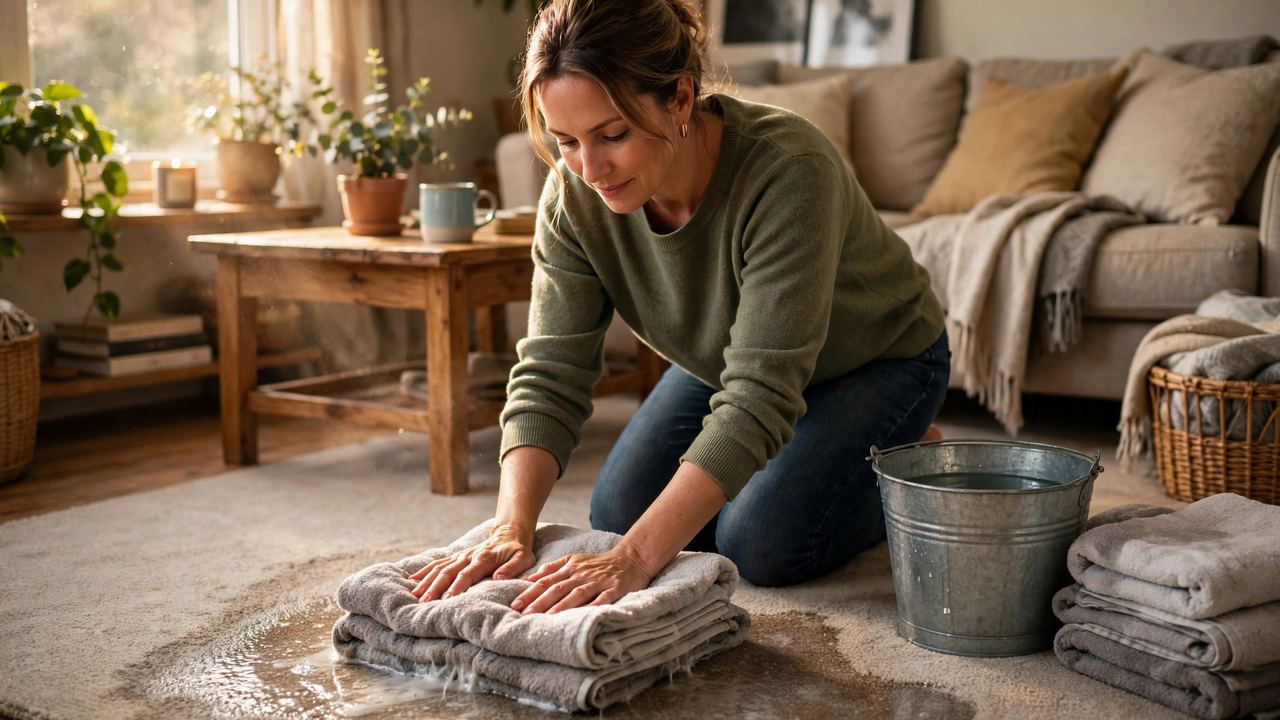
When water gets into carpet, the clock matters more than the brand of cleaner in the cupboard. A knocked-over bucket, a leaking appliance hose, a pet accident, or rain tracked through a doorway can leave a patch of carpet holding far more water than it first appears to, because the pile and the padding underneath act like a reservoir. Paper towels tear and saturate almost immediately, thin dish cloths push the water sideways, and a single ordinary hand towel is usually soaked before the spot even looks smaller. That is why households dealing with a spill or a small leak go looking for the best towels for soaked carpet — towels and cloths with enough absorbency, enough surface area, and enough wringing strength to pull water out of carpet pass after pass, instead of simply spreading it around.
The six picks in this guide approach that job from three different directions, because no single fabric wins at every stage of drying a wet carpet. Shammy chamois cloths are built to drink up liquid and release it cleanly when wrung out, which makes them ideal for repeated blotting over the same spot. Large microfiber drying towels cover a wide area in one press and hold a surprising amount of water in a thick, heavy fabric, which suits bigger spills and leak zones. And full-size cotton bath towels bring sheer bulk: a thick, high-GSM bath towel laid over a soaked patch and weighted down will draw water up out of the pile while you work on another section. Every pick below was checked on its opened Amazon listing, including whether a live offer for a new item was shown, and every specification is phrased the way the maker lists it, so the numbers here match what each brand actually claims for its own product.
A quick note on method before the picks. Towels do not extract water the way a wet vacuum does, and this guide does not pretend otherwise. What a good absorbent towel does is remove the surface and near-surface water quickly, repeatedly, and without damaging the carpet fibres — and for spills, tracked-in water, and small leaks caught early, that is often most of the water there is. Work from the outside of the wet patch toward the centre, press rather than rub, wring the towel out into a bucket away from the carpet, and rotate to a dry towel as soon as the one in your hands stops picking water up. The picks below are ordered to make that rotation easy: multi-packs first, then the big single towels, then the cotton bulk options.
Quick verdict
If you want one purchase that handles most soaked-carpet jobs, start with the ShamWow 8-pack: the maker lists that the cloths hold up to ten times their weight in liquid, the set mixes large and small cloths, and a shammy format is made for exactly this soak, wring, and repeat cycle. If you need volume on a budget, the Chachlili 10-pack of extra large German shammy cloths gives you ten big cloths to rotate through a large wet area without stopping to wash anything. For the widest single press, the Blackline drying towel covers 24 by 36 inches in a heavy twisted-loop microfiber that the maker lists at 1300 GSM. The Meguiar’s Water Magnet is the lighter, waffle-weave alternative that the maker lists as absorbing up to twice the water of terry towels. And if you prefer natural fibre and maximum bulk over a wet patch, the White Classic and American Soft Linen cotton bath towels bring 700 GSM and 600 GSM respectively, in full 27 by 54 inch bath-towel size, four towels to a set.
Best overall: ShamWow Original Super Absorbent Shammy Chamois Towel Cloth, 8 Pack
Best bulk shammy pack: Chachlili Extra Large Original German Shammy Cloths, 10 Pack
Best large microfiber towel: Blackline Microfiber Car Drying Towel, 24 x 36 Inch
Best waffle-weave towel: Meguiar’s X2000 Water Magnet Drying Towel
Best heavy cotton towel: White Classic Luxury Bath Towels, 4 Pack
Best cotton value set: American Soft Linen Premium Turkish Bath Towels, 4 Piece
The products in this guide
ShamWow Original Super Absorbent Shammy Chamois Towel Cloth, 8 Pack
The ShamWow set is the most natural first answer to a soaked carpet, because a shammy cloth is essentially a towel designed around one cycle: press
Best for Repeated blotting and wringing over one spot
100% Turkish cotton; maker lists 600 GSM and OEKO-TEX Standard 100 certification
Everyday cotton bulk for spills and leak zones
Read the table as a rotation plan rather than a ranking. The shammy cloths do the active work of blotting and wringing, the microfiber towels cover ground quickly on larger spills, and the cotton bath towels finish the job by sitting on the patch and drawing water up while you deal with the source of the leak. Many households will sensibly own two of these categories rather than six of one, and the buying guide below explains how to choose based on the size of spill you actually expect.
How we selected
Selection started with the job, not with a brand list. A towel earns a place here only if the maker lists something concrete about absorbency, size, or fabric weight that matters when carpet is soaked: a stated liquid-holding multiple, a GSM weight, a generous cloth dimension, or a pack count that lets you rotate dry towels into the work. Vague claims with no size and no fabric information were not enough, and neither were small face cloths and washcloths, however absorbent, because a cloth that saturates in two presses does not help when a whole patch of carpet is wet.
Each candidate was then checked on its opened Amazon product page. That check confirmed the exact brand, model, size, and pack configuration named in this guide, and it confirmed availability: a pick only counts if its page shows a live offer for a new item, rather than an unavailable listing. Products whose pages could not confirm those details were excluded entirely rather than described with guesswork. Specifications are reported exactly as the maker lists them — when a maker lists a GSM, a dimension, or an absorbency multiple, that figure appears here attributed to the maker, and nothing has been added, converted into a stronger claim, or borrowed from a different size or variant of the same product.
Finally, the six survivors were deliberately spread across three fabric families and a range of pack sizes, because soaked carpet is not one problem. A wine spill on a rug, a washing-machine leak spreading across a room, and slush melted off boots by a front door each reward a different tool. The guide keeps all three families in view and tells you plainly, for every pick, who should buy it and who should skip it.
The ShamWow set is the most natural first answer to a soaked carpet, because a shammy cloth is essentially a towel designed around one cycle: press it into liquid, let it drink, lift it away without dripping, wring it out, and press again. The maker lists that these cloths hold up to ten times their weight in liquid, and describes the product as working like a chamois, a towel, and a sponge in one. On carpet, that combination matters. A shammy lies flat against the pile, makes full contact across its surface, and pulls water up into the cloth rather than pushing it deeper the way a scrubbing motion can. The maker also lists the cloths as non-abrasive and machine washable, which suits carpet fibres you do not want to rough up while you blot.
The pack configuration is part of the appeal. The maker lists an eight-piece set with four large towel cloths and four small towel cloths, with the large cloths measuring 20 by 23.5 inches. Use the large cloths for the main body of a spill, folded in half for a thicker, more absorbent pad under your palm or under a weighted board, and keep the small cloths for edges, corners, and the fiddly areas around furniture legs and skirting where a big cloth bunches up. Because there are eight cloths in the set, you can keep two in active rotation — one pressing, one wrung and resting — and still have dry spares when the first pair finally saturates. The model number the maker lists for this set is SW8.
There are honest limits. A shammy cloth is thinner than a bath towel, so it will not act as a long, slow reservoir left sitting on a patch; it earns its keep through active blotting, not passive soaking. It also works best slightly damp rather than bone dry at the start of a job, a quirk of chamois-style cloths generally. And for a genuinely large leak covering several square metres, eight cloths will need washing and wringing support from the bigger towels further down this list. None of that changes the core verdict: for the common household case — a spill, a pet accident, a leaking plant pot, a wet patch by the door — this is the fastest, most repeatable tool here.
Buy it if: you want the classic soak-wring-repeat cloth for spills and wet patches, in a mixed-size pack you can rotate without stopping.
Skip it if: you mainly need a thick towel to leave weighted on a large soaked area, or you prefer natural cotton fibre over a shammy cloth.
Where the ShamWow set mixes sizes, the Chachlili pack goes all in on quantity and size: the maker lists a bulk lot of ten extra large shammy cloths, each measuring 20 by 27 inches, in orange. That is a deliberate trade, and for bigger jobs it is the right one. When a pipe drips overnight or an appliance leaks across a room, the bottleneck is rarely the absorbency of any single cloth — it is running out of dry cloths. Ten large cloths let you lay several across a wet area at once, weight them, lift and wring them in batches, and keep a genuinely dry cloth in hand for the final passes that tell you whether the carpet is still giving up water.
The maker lists these as Original German shammy cloths and describes the material as super absorbent, smooth, and scratch-free, and lists the cloths at 190g. The maker also lists them as machine washable and reusable, noting they dry back to nearly new between uses, and suggests uses ranging from household spills to drying pets, cars, and boats. Translated to carpet work, the smooth surface is a real advantage: it glides and presses without snagging loop pile, and the generous 20 by 27 inch footprint covers more ground per press than a standard kitchen cloth, so a large patch takes fewer repositionings. Ten identical cloths also make laundry simple — the whole working set goes in one wash after the job.
The trade-offs mirror the strengths. You get one size and one colour, so there is no small cloth for tight corners and no colour-coding between clean and dirty jobs unless you mark them yourself. The cloths are working tools rather than anything you would leave out on display, and like all shammy cloths they reward active use — pressing, lifting, wringing — over being left in a heap. But judged purely as soaked-carpet equipment, this is the pack that keeps working longest before the wash basket calls, and for landlords, pet owners, and anyone with a leak-prone appliance, that endurance is the point.
Buy it if: you face larger wet areas and want ten big, identical shammy cloths to lay down, rotate, and wash as one working set.
Skip it if: you want mixed sizes, colour choices, or a single premium towel rather than a bulk pack of utility cloths.
The Blackline towel comes from the car-drying world, and that origin is exactly why it belongs in a guide about wet carpet. A drying towel built to clear a whole car panel in one pass has to do two things carpet also demands: cover a wide area at once, and hold a lot of water without immediately shedding it back. The maker lists this towel at 24 by 36 inches — two feet by three feet — in a twisted-loop microfiber, and lists the fabric weight at 1300 GSM, with a fabric blend the maker lists as 70% polyester and 30% polyamide. That is a heavy, dense towel by any standard in this guide, and the maker lists that it absorbs six times its weight in water. Laid flat and pressed across a broad spill, one press of this towel does the work of several presses of a small cloth.
In practice, use it as your area tool. Unfold it fully over the widest part of the wet patch, press evenly — standing on it carefully in clean socks or pressing with flat hands spreads the load — then peel it up slowly so the water it has gathered stays in the fabric. Fold it to a dry section for the next press, and wring it into a bucket when the whole towel feels heavy. The maker lists twisted-loop technology as the reason the towel picks water up in a single pass on vehicle panels, and the same long-loop structure gives it capacity on carpet pile: the loops reach down between fibres instead of skimming across the tips. The model the maker lists for this towel is BLDT-Parent.
Be clear about what you are buying: this is a single towel, not a pack, so it cannot be rotated the way the shammy sets can, and once it is saturated your options are wringing it out or switching to another product. Its size, such an asset on open floor, makes it clumsy in corners and around furniture. And it is a specialised microfiber that deserves the maker’s care guidance — the maker lists washing with a mild detergent without special additives to protect the microfiber. None of that undermines it as the heavy lifter here; it simply means it pairs best with a multi-pack rather than replacing one.
Buy it if: you want one very large, very heavy microfiber towel that covers a broad spill in a single wide press.
Skip it if: you need several towels to rotate, or your wet patches are mostly small, tight, and tucked around furniture.
Meguiar’s Water Magnet is the established name in waffle-weave drying towels, and its model number is the one the maker lists as X2000. The maker lists the towel at 22 by 30 inches, in a waffle-weave microfiber, and lists that it can absorb up to two times the water compared to terry towels, with reduced wringing as the practical result. Waffle weave works differently from the plush twisted loops of the Blackline towel: the recessed pockets of the weave hold water in the structure of the fabric, and the towel stays lighter and easier to handle and wring, which many people prefer for a long series of presses over a moderate spill.
On carpet, that lighter character has real uses. This is an easy towel to work with one-handed while the other hand holds a bucket or moves a chair, easy to fold into a pad of exactly the size of a small wet patch, and easy to wring out fully — and a towel you can wring truly dry between presses often outperforms a heavier towel you cannot. The maker lists it as reusable, durable, and machine washable, and describes a streak-free, scratch-free finish on vehicle surfaces; on carpet the relevant translation is that the waffle surface is gentle on fibres while still pulling water from the pile. It also dries out quickly between jobs, so it is a sensible towel to keep folded near a front door or utility sink for the next incident rather than stored damp in a cupboard.
The limits are capacity and count. As a single, lighter towel it will saturate sooner than the 1300 GSM Blackline on a big spill, and its absorbency claim, as the maker lists it, is framed against terry towels rather than as a multiple of its own weight. If your typical problem is a whole room of wet carpet, treat this as a supporting towel, not the main event. If your typical problem is a spilled drink, a dripping umbrella stand, or a pet bowl zone that is wet twice a week, its balance of size, absorbency, and easy wringing is arguably the most convenient in this guide.
Buy it if: you want a proven waffle-weave microfiber towel that is light, easy to wring, and sized for moderate spills.
Skip it if: you need maximum capacity per press or a multi-towel pack for large leak areas.
Sometimes the best tool for soaked carpet is not a specialised cloth at all, but a genuinely thick bath towel — and the White Classic set is thick in a way that can be measured. The maker lists these towels as 100% Turkish cotton, made from long-staple combed cotton at 700 GSM, in a full bath-towel size the maker lists as 27 by 54 inches, in a pack of four. GSM is simply fabric weight, and at 700 GSM this is the heaviest cotton in this guide: a dense pile with a lot of fibre available to hold water. The model number the maker lists for the set is Opabt27-4, in the maker’s Hotel Collection line.
The carpet technique for a towel like this is different from blotting. Fold it lengthways, lay it over the soaked patch, and weight it evenly — a stack of heavy books on a board, or careful standing pressure — then leave it. The cotton pile draws water up out of the carpet pile by contact, and the towel’s sheer bulk gives that water somewhere to go. After ten or fifteen minutes, lift it, wring or spin it, and repeat with the next towel from the set of four. The maker lists double-stitched edges for durability, high absorbency with quick drying, and a lint-free experience, and lists the towels as machine washable. Four towels of this size also cover a respectable area when a leak has spread, which no single specialised towel here can match.
The compromises are the familiar ones for heavy cotton. A 700 GSM towel is slow to dry after washing and heavy when saturated, and cotton releases water less completely on a hand wring than a shammy cloth does, so each cycle recovers a little less than the shammy picks. These are also proper white bath towels that many households will want to keep looking presentable, which can make people hesitate before pressing one into a dirty wet patch — buy them as working towels for the home, and that hesitation disappears. As dedicated carpet-rescue towels kept in a utility cupboard, they are superb; as your only bathroom towels, they will live a double life.
Buy it if: you want the heaviest cotton option, in full bath-towel size, for laying over and drawing water out of a soaked patch.
Skip it if: you want a fast wring-and-repeat cloth, or quick drying after laundry matters more than maximum fabric weight.
The American Soft Linen set is the other cotton route, a step lighter than the White Classic towels and, for many households, the more practical everyday choice. The maker lists a four-piece set of bath towels at 27 by 54 inches, made from 100% Turkish cotton at 600 GSM, and lists the set as OEKO-TEX Standard 100 certified. The model name the maker lists is Edison, with the model number listed as ASL, and this configuration is the maker’s dark gray set. At 600 GSM the towels are still firmly in plush, absorbent territory — well above the thin cotton towels that disappoint on a wet carpet — while being a little easier to wring, wash, and dry than a 700 GSM equivalent.
Use them the same way as any full-size cotton towel on carpet: folded over the wet patch, pressed or weighted, lifted once heavy with water, then rotated out for the next dry towel in the set. Four towels give you a genuine rotation, and the dark gray colour is a quietly practical detail for this job — a towel assigned to floor duty will pick up marks over time, and a darker towel shows that working life far less than a white one. The maker lists these towels as soft, absorbent, and quick drying for their class, and lists care as machine wash, do not bleach, and tumble dry low, with dark colours washed separately. Kept as a home set rather than guest towels, they move between bathroom overflow duty, mop-up duty by the door, and carpet rescue without any of those jobs feeling like misuse.
As with the White Classic set, cotton’s limits apply: a hand wring leaves more water in cotton than in a shammy, and a saturated bath towel is a heavy object to carry dripping across a room, so work with a bucket close by. If maximum single-towel weight is your priority, the 700 GSM pick above holds the edge. But for a balance of absorbency, manageable laundry, colour that suits utility use, and a four-towel rotation, this set is the cotton option most households will find easiest to live with — and living with a towel is what guarantees it is actually there, dry and ready, on the day the carpet gets soaked.
Buy it if: you want a plush 600 GSM cotton set in a practical dark colour, sized and counted for rotating over a wet patch.
Skip it if: you want the absolute heaviest cotton available, or a synthetic cloth that wrings out more completely by hand.
Buying guide
Match the towel to the water, not the other way round. Small, frequent spills reward speed and wringing: a shammy pack lives under the sink, comes out in seconds, and handles a drink or a pet accident in a few presses. Large, rare events reward area and bulk: a wide microfiber towel and a set of bath towels cover ground and hold volume. Think honestly about which event your home actually has. A flat with a washing machine that has leaked twice needs the second kit; a family with toddlers and a large dog mostly needs the first, kept within arm’s reach.
Understand the three fabrics. Shammy chamois cloths are the wringing champions — thin, flat, and built to take in liquid and give it back almost completely when twisted, which is why the maker-listed multiples in this guide, up to ten times their weight for the ShamWow cloths, belong to this family. Microfiber splits into plush twisted-loop fabrics, like the 1300 GSM Blackline towel, which maximise capacity per press, and waffle weaves, like the Meguiar’s Water Magnet, which trade some capacity for lighter handling and easier wringing. Cotton bath towels are the bulk reservoir: their absorbency arrives through sheer fibre mass, expressed in GSM, and they work best pressed or weighted in place rather than blotted rapidly. None of the three is best in the abstract; each is best at one stage of the same job.
Size and count beat a single hero towel. A towel can only absorb until it is saturated, and on soaked carpet saturation arrives quickly. That is why pack count appears so prominently in the comparison table: eight and ten-piece shammy sets and four-piece cotton sets let you rotate, and rotation is what keeps the water moving in one direction — out of the carpet and into a bucket. If you buy a single large towel, however capable, plan the partner product you will switch to while it is being wrung out or washed. Two complementary products almost always outperform one excellent one on a real spill.
Work the carpet correctly. Start at the edges of the wet area and move inward, so you do not spread the water outward. Press straight down; do not scrub, because scrubbing pushes water deeper into the padding and frays the pile. Use your body weight through flat hands, knees on a folded towel, or a board weighted evenly. Wring every towel into a bucket positioned off the carpet, and change towels the moment a press stops producing a damp imprint — a saturated towel left in place is just returning its water. When the towels stop picking anything up, the remaining moisture is a drying problem, not a blotting problem: air movement across the patch finishes what towels started.
Know the limits of towels. If water has been sitting long enough to soak the padding and the floor beneath, if the wet area covers most of a room, or if the source is a burst pipe or flooding rather than a spill or appliance leak, towels are a first response, not a complete solution, and extraction equipment or professional help is the sensible next step. Towels also cannot address water you cannot reach under fixed furniture or fitted flooring. Within their proper scope — spills, tracked-in water, pet accidents, and small leaks caught promptly — the six products in this guide cover the job thoroughly, and keeping any one of them dry, clean, and findable is worth more than owning all six in a damp heap.
Care decides how long absorbency lasts. Follow each maker’s listed care guidance rather than a generic routine: the Blackline maker lists a mild detergent without special additives to protect its microfiber, the American Soft Linen maker lists do not bleach and tumble dry low, and the shammy makers list machine washing as standard. Across all fabrics, a towel clogged with residue absorbs less, so wash working towels separately from everyday laundry loads, let them dry fully before storing, and retire any towel that has gone stiff or sour — on the day the carpet is soaked, you need every towel in the cupboard performing at its listed best.
FAQ
How many towels does it take to dry a soaked carpet patch?
It depends on how much water went down, but the rotation principle matters more than any fixed number. One towel saturates quickly and then stops helping, which is why the multi-packs in this guide — eight shammy cloths, ten shammy cloths, or four bath towels — exist. For a typical drink spill, two or three cloths in rotation are usually enough to reach the point where a press leaves no damp imprint. For an appliance leak, expect to use a full pack, wringing as you go, and to finish with air movement rather than towels.
Are shammy cloths or cotton towels better for wet carpet?
They are better at different stages. Shammy cloths, which the makers here list as holding many times their weight in liquid, are better for active blotting because they release water almost completely when wrung out, so the same cloth can work many cycles. Cotton bath towels are better as a weighted reservoir laid over a patch, where their GSM weight and bulk draw water up while you attend to something else. A well-equipped home uses the shammy first and the cotton second, which is why both families appear in this guide.
Can I use a car drying towel on carpet?
Yes, and the two microfiber picks here are included precisely because large drying towels transfer well. A towel the maker lists at 24 by 36 inches and 1300 GSM, or a waffle-weave towel the maker lists as absorbing up to twice the water of terry towels, does not care whether the water it presses into came from a car panel or a carpet pile. Just dedicate the towel to household use once it has been on the floor, keep it washed separately, and follow the maker’s care guidance for microfiber.
Should I rub a wet carpet patch to dry it faster?
No. Rubbing and scrubbing push water sideways and downward into the padding, spread the wet area, and rough up the carpet fibres, all while absorbing less than a firm press does. Press straight down, hold for a few seconds so the towel can draw water up, lift, fold to a dry section or change towels, and repeat, working from the outside of the patch toward the centre. Patience with pressing genuinely is faster than scrubbing, because every press removes water instead of relocating it.
How do I know when to stop towelling and just let the carpet dry?
When a fresh, dry towel pressed firmly into the patch comes up without a damp imprint, the towels have done their job and the remaining moisture is in the air-drying stage. At that point, maximise air movement across the area, keep foot traffic off it, and check the patch again later by pressing a dry towel in once more. If a dry towel still picks up noticeable water after repeated sessions, or the wet area is very large, the water has likely reached the padding in depth and extraction help is the right next step.
How should I store towels kept for spills and leaks?
Store them fully dry, folded, and somewhere you can reach in seconds — under the kitchen sink, in the utility cupboard, or by the door that lets the weather in. A spill towel stored damp loses absorbency and develops odours that transfer to the carpet you press it into. Keep the working set separate from guest and bathroom towels, wash it after each real job following the maker’s listed care, and restock it to its place the same day, because the next soaked patch will not wait for laundry day.
Conclusion
A soaked carpet is a problem with a short window: the sooner water comes back out, the simpler everything after it becomes. The right towel makes that window easy to hit. Choose the ShamWow 8-pack for the classic wring-and-repeat shammy in mixed sizes, the Chachlili 10-pack when you need sheer numbers of large cloths, the Blackline towel for one wide and heavy microfiber press, the Meguiar’s Water Magnet for lighter waffle-weave handling, and either the 700 GSM White Classic set or the 600 GSM American Soft Linen set when you want cotton bulk working under weight. Keep whichever you choose dry, reachable, and ready — and the next spill becomes a few minutes of pressing, not a day of worry.
M
Modern Line Home Editorial Team
We compare specs, materials and verified owner reviews before a product earns a spot. Rankings are never paid.
Affiliate disclosure. As an Amazon Associate we earn from qualifying purchases at no extra cost to you. Prices accurate as of the date shown.
House cold even with the heat on? Walk this ordered checklist: thermostat and filter first, then drafts, insulation, leaky ducts and a failing heating system.
Windows fogging up in winter? Check where the fog sits: on the room side it is indoor humidity, outside it is harmless, and between panes the seal has failed.
Store the main firewood pile about 30 feet from your house, off the ground and covered only on top. Compare racks, woodsheds, garages and indoor spots safely.
Place a portable generator outdoors only, at least 20 feet from windows, doors and vents, exhaust pointed away. Exact distances, setup steps and CO rules here.
Keep houseplants in the right winter spot: match window direction to plant type, stay clear of radiators and cold glass, and fix dry air and low light at home.
Mice enter through pencil-width gaps at foundations, pipes, vents, doors and the roofline. Walk this room-by-room winter checklist to find and seal each one.
A winter outage timeline: what to do in the first hour, first night and multi-day outage, with food safety times, pipe protection, heat and CO safety steps.
Size a space heater by room area: 10 watts per square foot at 8-foot ceilings, adjusted for insulation and ceiling height, with full wattage and BTU tables.
Start dripping at about 20 degrees, sooner for exposed pipes. Set a pencil-lead stream, drip the right faucets on both lines, and know when to stop safely.
A fridge needs 800-1,200 starting watts, not just 150-400 running watts. Use the tables to total your fridge plus freezer, lights, furnace fan and more today.











Write Your Review
No reviews yet. Be the first to share your experience!