We independently review everything we recommend. When you buy through our links, we may earn a commission. As an Amazon Associate we earn from qualifying purchases.
Best Dual Fuel Inverter Generators Under $1500 (2026)
Six dual fuel inverter generators for home outages, compared on running watts, propane output, runtime, outlets and CO shutoff, verified from maker listings.
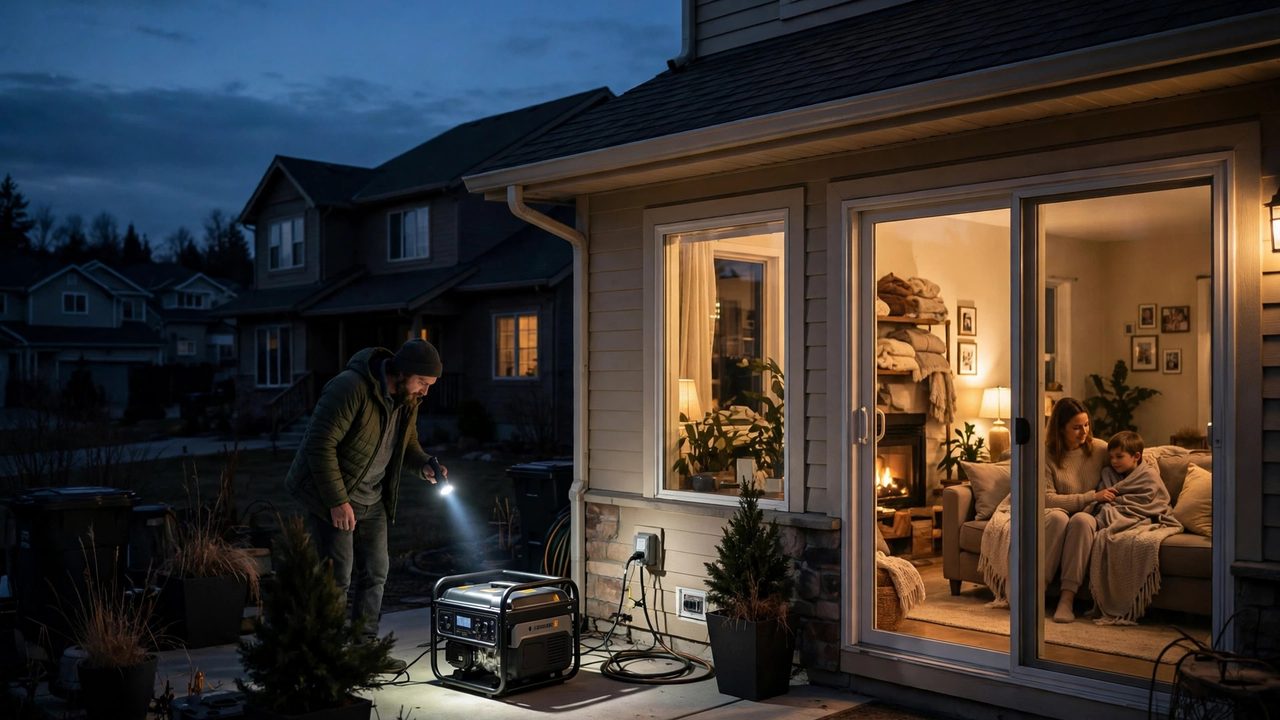
A winter outage rarely arrives at a convenient moment. The power drops, the house starts to cool, the refrigerator begins its slow countdown, and the question stops being abstract: what will actually run, and for how long, on the fuel you have on hand? That is exactly the problem the best dual fuel inverter generators for home outages under $1500 are built to solve. A dual fuel inverter generator runs on gasoline or propane, so a stale tank or an empty gasoline can does not end the story, and its inverter output is the clean, stable kind of power the makers list as suitable for phones, laptops, televisions and other sensitive electronics. Propane stores far longer than gasoline, burns from a standard barbecue-style cylinder many households already own, and gives you a second fuel to fall back on when the first runs out mid-storm.
One safety rule frames everything in this guide, and it is not negotiable. Every generator in this roundup burns fuel and produces carbon monoxide, an odorless gas that can kill in minutes. These machines are for outdoor use only. Never run one indoors, never run one in a garage with the door open, never run one in a basement, a porch enclosure or a carport attached to the house. Place the generator outside, well away from doors, windows and vents, with the exhaust pointed away from the home, and let it cool before refueling. Several picks below add a carbon monoxide sensor with automatic shutoff, and the makers present that sensor as a backstop, not as permission to move the generator closer to the house. Working carbon monoxide alarms inside the home are part of the setup, not an optional extra.
Quick verdict
For most households, the Westinghouse iGen5000DFc is the balanced pick: the maker lists 3,900 running watts on gasoline and 3,500 running watts on propane, up to 18 hours of runtime at a quarter load on its gasoline tank, a remote start fob and a carbon monoxide sensor, in a package that stays inside this price band. Households that need more headroom, including a 120/240V outlet for a transfer switch or inlet box arranged by an electrician, should look at the WEN DF680iX, the strongest unit here at 5,100 running watts on gasoline as the maker lists. The WEN DF480iX is the value workhorse with four household outlets and 4,000 running watts on gasoline. The Westinghouse iGen4000DFc suits smaller essential loads and travel use with remote start and a long propane runtime. The Champion 4000-Watt model 201050 is the long-runtime propane pick, with the maker listing up to 25 hours on propane. The WEN DF360iX is the lightest, simplest option for a short list of essentials. None of these machines is presented by its maker as a whole-home solution on its own, and this guide does not claim otherwise: each one powers a chosen set of essentials, and the buying guide below shows how to size that set honestly.
Two cautions about reading this table. First, runtime figures are not measured the same way across brands: Westinghouse lists its figures at a quarter load, WEN lists its figures at half load, and Champion lists its headline figures without the same load framing, so a longer number does not automatically mean a longer-running machine under your actual load. Second, every propane figure is lower than the matching gasoline figure. That drop is normal for dual fuel machines, and it is the single most overlooked number in this category: size your outage plan on the propane column if propane is the fuel you expect to burn.
How we selected
Every pick in this guide had to clear the same gates. First, the product had to be a true dual fuel inverter generator, sold new, with a live featured offer on its Amazon product page at the time of checking; listings showing no featured offer were excluded and replaced. Second, the model had to sit inside the price band named in the keyword at the time of checking, which is why larger dual fuel inverters and open-frame dual fuel machines, however capable, are not here. Third, every specification in this article, from running watts to runtime to outlet counts, is reported only as the maker lists it on the product page, the maker’s own product page or the maker’s manual; where two maker documents framed a figure differently, the more conservative maker figure is the one used. Fourth, because these are fuel-burning machines bought largely for winter storms, carbon monoxide protection mattered: every pick below lists a CO sensor or CO auto-shutoff system in its maker materials, and the outdoor-only placement rules in the introduction apply to all six without exception. Finally, the set was chosen to span the realistic range of outage plans, from a 2,900-running-watt essentials machine to a 5,100-running-watt unit with a 240V outlet, so the right answer depends on your load list rather than on a single winner.
The DF680iX is the headroom pick in this group, and the only one that speaks to both halves of a serious outage plan: plenty of watts, and a proper 240V connection point. The maker lists 6,800 surge watts and 5,100 rated watts on gasoline, dropping to 6,000 surge watts and 4,500 rated watts on propane, from a 224cc dual fuel engine. That gasoline running figure is the highest in this roundup by a wide margin, and it changes what an outage plan can include: a refrigerator, a freezer, a furnace blower, a sump pump, lighting and a microwave used one at a time stop being a juggling act and become a list you can run with reasonable care about what starts at the same moment.
The outlet panel is the other half of the story. The maker lists one L14-30R 120/240V receptacle, two three-prong 120V receptacles, one TT-30R RV receptacle, one 12V DC receptacle and two 5V USB ports, plus a voltage selector switch. The bonded-neutral 240V configuration is listed by the maker as providing low-power Level 2 charging for battery and hybrid electric vehicles, and for home backup it is the outlet an electrician would use with a transfer switch or inlet box, which is the safe, code-respecting way to feed selected house circuits. Never backfeed a panel through a dryer outlet or a homemade cord; if you want house circuits powered, have an electrician fit the proper equipment.
Runtime is where the DF680iX asks for planning. The maker lists a 2.9-gallon gasoline tank with up to 6.1 hours at half load, and up to 9 hours at half load on a 20 lb propane tank. Those are honest, comparatively short figures, and they reflect the bigger engine’s appetite. In practice that means this is a generator you run in blocks, powering the furnace and the cold boxes, then shutting down to stretch fuel, rather than one you leave humming all night at light load. The WEN Watchdog CO shutdown sensor is fitted, the fuel shutoff feature runs the carburetor dry before storage, and the maker lists onboard wheels and a telescoping handle, which matter at the listed weight of just under one hundred pounds. Electric start is fitted, and the maker includes a six-foot LPG regulator hose and a tool-free LPG quick-connector.
Buy it if: your outage list is long, you want the most running watts in this price band, or you plan to have an electrician connect the generator to selected house circuits through its 240V outlet.
Skip it if: you want long unattended runtime at light load, or a machine one person can carry rather than wheel; the smaller picks below are lighter and sip fuel more slowly.
The iGen5000DFc is the pick most households should look at first, because it balances output, runtime and convenience better than anything else here. The maker lists 5,000 peak watts and 3,900 running watts on gasoline, and 4,500 peak watts and 3,500 running watts on propane, from a 224cc Westinghouse four-stroke OHV engine. That is enough running capacity for the classic winter outage set, a refrigerator, a furnace blower or a few space-heating alternatives chosen carefully, lights, a router, phone charging and a sump pump, provided motor-driven loads are not all started at once. The inverter output is listed at less than 3% total harmonic distortion, which is the figure the maker gives for powering sensitive electronics.
Runtime is this model’s headline strength. The maker lists up to 18 hours at 25% load on the 3.4-gallon gasoline tank, which is the kind of figure that gets a household through a long winter night without a cold, dark refueling trip. The same maker materials list up to 22 hours at 25% load on propane for this model family, and propane’s long storage life makes it the fuel many owners keep for exactly that overnight role. An economy mode that adjusts engine speed to demand is part of how the maker achieves those figures, and it also explains the listed noise figure of as low as 52 dBA, the quietest claim in this roundup, though noise always rises with load and no generator is silent.
Day-to-day usability is strong. The maker lists remote start by key fob alongside electric and recoil starting, a digital data center that rotates through fuel level, power output, remaining run time, voltage and lifetime hours, and outlets comprising a duplex 120V 5-20R, an RV-ready TT-30R and two USB ports. A carbon monoxide sensor is fitted. The outlet count is the one compromise: a single duplex household receptacle means most owners will run a heavy-duty outdoor extension cord to a power strip indoors, which is acceptable when cords are rated for the load and kept out of walkways, but households wanting to plug several appliances in at the panel itself should look at the WEN DF480iX below. The maker also lists parallel capability with a second iGen5000DFc using a sold-separately parallel kit, a sensible growth path if a first outage teaches you that you need more.
Buy it if: you want the best balance of running watts, long listed runtime, quiet operation and remote start for a typical essentials load.
Skip it if: you need several household outlets on the panel itself, or a 240V outlet for a transfer switch; the DF680iX and DF480iX cover those needs better.
The DF480iX is the practical middle of this lineup: near the top on running watts, generous where it counts at the panel, and built around the half-load runtime figures WEN publishes in its manual. The maker’s manual lists 4,800 surge watts and 4,000 rated watts on gasoline, and 4,320 surge watts and 3,600 rated watts on propane, from a 224cc engine. That 4,000-watt gasoline running figure is second only to the DF680iX here, and it covers the standard essentials list with room to start a refrigerator or sump pump without shedding everything else first.
The panel is the most appliance-friendly in this group. The maker lists four three-prong 120V receptacles across two duplexes, one TT-30R RV receptacle, one 12V DC receptacle and two 5V USB ports. Four household outlets means a refrigerator, a freezer, a lamp circuit’s worth of lighting and a charging station can plug in at the generator without a chain of splitters, which is both tidier and safer during a dark, stressful outage. A digital data meter, a fuel shutoff for storage, onboard wheels and a telescoping pull handle round out the listing, along with the WEN Watchdog CO shutdown sensor, which the maker describes as automatically turning the generator off if dangerous levels of carbon monoxide are detected.
The honest trade-off is the tank. The maker lists a 1.9-gallon gasoline tank and up to 7 hours at half load on gasoline, or up to 12 hours at half load on a 20 lb propane tank. At the loads a real outage draws, that means either a refueling stop during a long day or a switch to propane for the overnight stretch, which is precisely what dual fuel is for. Note that WEN quotes its runtime at half load while Westinghouse quotes at quarter load, so the smaller numbers here are measured against a harder test, not necessarily a thirstier machine. Electric start with recoil backup is fitted, the listed weight is 78.5 pounds, and the maker lists a noise figure of 62 dBA at quarter load and a three-year warranty.
Buy it if: you want strong running watts and the most household outlets in this group, and you are happy to lean on propane for longer stretches.
Skip it if: you want the longest possible gasoline runtime between refills; the iGen5000DFc’s larger tank and quarter-load figures suit that pattern better.
The iGen4000DFc takes the iGen5000DFc formula, remote start, data center, quiet enclosed case, and trims it into a smaller, lighter machine for shorter essential lists. The maker lists 4,000 peak watts and 3,300 rated watts on gasoline, and 3,600 peak watts and 2,970 rated watts on propane, with output at less than 3% total harmonic distortion. For a home outage, 3,300 running watts covers a refrigerator, lights, connectivity, phone charging and a furnace blower in most cases, as long as high-draw extras such as a microwave or a hair dryer are used one at a time and briefly.
Starting is a genuine strength in winter. The maker lists remote start with the included key fob, electric start and recoil backup, so the generator can be started from the doorway on a freezing night without standing over it, while remembering that it must still sit outside, away from the house, with its exhaust pointed away. The rotating LED data center shows fuel level, power output, remaining run time, voltage and lifetime hours. Automatic low oil shutdown and carbon monoxide shutdown are both listed, as is an economy mode, a telescoping handle and a listed noise figure of as low as 52 dBA.
Runtime splits by fuel in an instructive way. The maker lists up to 7 hours on the 1.69-gallon gasoline tank, a modest figure that reflects the small tank, and up to 17 hours at 25% load on propane. That split makes this model a natural propane-first machine: keep a cylinder connected for the long, quiet overnight hours and treat gasoline as the top-up fuel for heavy daytime loads. At a listed 62.8 pounds it is also one of the easier machines here to wheel out of a garage or shed and position correctly, which is not a trivial point when correct placement, outside and well away from openings, is the core safety act.
Buy it if: your essentials list is moderate, you value remote start and a data display, and you plan to run mainly on propane for long stretches.
Skip it if: your list includes several motor-driven loads at once; the DF480iX and iGen5000DFc give you more running watts to work with.
Champion’s 4000-watt dual fuel inverter, model 201050 as listed, is the propane endurance pick. The maker lists 4,000 starting watts and 3,000 running watts on gasoline with up to 10 hours of run time, and 2,700 running watts on propane with up to 25 hours of run time. That propane figure is the longest listed in this roundup, and it reframes the machine: connected to a standard propane cylinder, it is built to keep a refrigerator cold, lights on and devices charged through a long outage without the owner making repeated fuel runs in bad weather.
The safety and outlet lists are complete. The maker lists the CO Shield carbon monoxide auto shutoff system, a 120V 25A TT-30R outlet, a 120V 20A household duplex 5-20R outlet with clean electricity at less than 3% total harmonic distortion, a 12V automotive-style outlet and parallel outlets. The parallel point matters for planners: the maker offers a sold-separately parallel kit that connects this inverter with another parallel-ready Champion inverter or power station for more power and longer run time, so a household can start with one unit and grow. The maker lists a noise figure of 64 dBA from 23 feet, the loudest claim in this group, though still within the enclosed-inverter class rather than open-frame territory.
The compromises are starting method and output ceiling. This model is recoil start as listed, with no push-button or remote start, which some owners will feel on a cold morning and others will accept as one less battery to maintain. And at 3,000 running watts on gasoline, dropping to 2,700 on propane, the load list must be disciplined: essentials yes, simultaneous extras no. The maker lists a three-year limited warranty with lifetime technical support, and the unit operates on either fuel right out of the box with the propane hose included as listed.
Buy it if: long propane runtime is your top priority and your essentials list fits inside 2,700 running watts on propane.
Skip it if: you want electric or remote start, or you need more than 3,000 running watts on gasoline; step up to the DF480iX or iGen5000DFc instead.
The DF360iX is the smallest machine here, and it earns its place by being the one a single person can genuinely carry, position and store without drama. The maker lists a dual fuel design running on gasoline at 3,600 surge watts and 2,900 rated watts, and on propane at 3,500 surge watts and 2,600 rated watts, from a 149cc engine, at a listed weight of 49 pounds. That output will not run a house’s worth of comforts, and it does not pretend to: it runs the outage essentials, a refrigerator, lights, a router, phone charging and a small fan or a CPAP-class load, with the usual care about starting one motor at a time.
Despite its size, the safety and connection lists are not cut down. The maker lists the WEN Watchdog CO shutdown sensor, a fuel shutoff to limit maintenance, two three-prong 120V receptacles, one TT-30R RV receptacle, one 12V DC receptacle, two 5V USB ports and a tool-free LPG quick-connector, plus a three-year warranty. The TT-30R makes it a legitimate small travel-trailer companion as well as an outage machine, and the clean inverter power is listed as suitable for smartphones, tablets and laptops.
The limits are runtime and headroom. The product details list a 1.5-gallon tank and a 5-hour runtime figure, so this is a machine for riding out shorter outages or for running in planned blocks during longer ones, refueling only when it has cooled and always outdoors. On propane the running figure drops to 2,600 watts, which tightens the list further. Households whose outages regularly last a full day, or whose essentials include a well pump or a large furnace blower with a heavy starting surge, should size up to the DF480iX or the iGen5000DFc rather than asking this little unit to punch above its rating.
Buy it if: you want the lightest dual fuel inverter here for a short, disciplined essentials list, or a dual-purpose outage and camping machine.
Skip it if: your outages are long or your essentials list is growing; its tank and running watts are the smallest in this group.
Buying guide
Start with a load list, not a wattage headline. Write down everything you actually need in an outage, then add up the running watts from each appliance’s label or manual. Refrigerators, freezers, sump pumps and furnace blowers also draw a short starting surge when their motors kick on, which is what the starting or surge watt figure covers. Your running total must sit under the generator’s running watts on the fuel you plan to burn, with surge room left for the largest motor. If the arithmetic only works on gasoline figures but you intend to run on propane, redo it with the propane column, because every machine here loses roughly a tenth or more of its output on propane.
Match the fuel plan to the outage you fear. Gasoline offers the full rated output and is easy to refuel in small amounts, but it stores poorly and service stations can be closed or crowded during a regional outage. Propane stores for years without degrading, runs from cylinders many homes already keep, and powers the longest listed runtimes in this group, at the cost of lower watts. Dual fuel lets you start the outage on whichever fuel is fresh and switch when one runs dry. Whichever fuel you choose, store it safely, outdoors or in a detached structure as local rules require, never in a living space, and rotate gasoline stock so the tank you reach for in January is not the one you filled two summers ago.
Plan connections before the lights go out. Most of these machines feed a home through heavy-duty, outdoor-rated extension cords run to individual appliances; cords must be rated for the load, undamaged, and never run under rugs or through doorways that pinch them. The alternative, feeding selected house circuits, requires a transfer switch or inlet box and interlock fitted by a licensed electrician, and only the DF680iX here lists a 240V outlet suited to that arrangement. Backfeeding through a dryer outlet is dangerous and illegal in many places; do not do it. If your plan depends on a furnace, remember most furnaces are hardwired, so an electrician’s visit before winter is part of the real cost of that plan.
Treat placement as the safety system. Carbon monoxide is the reason generators kill people in outages, and it is entirely a placement problem. Run the generator outdoors only, well away from the house, with exhaust directed away from doors, windows, soffit vents and any opening, and never in a garage, basement, porch or carport, even with doors open. The CO sensors and auto-shutoff systems listed on these models are a last line of defense if exhaust drifts somewhere it should not; they do not make indoor or near-house operation safe. Keep working CO alarms on every level of the home, let the machine cool before refueling, and keep children and pets away from the hot exhaust side.
Read runtime claims at their stated load. A runtime quoted at 25% load and one quoted at 50% load are answers to different questions. A refrigerator-and-lights load may sit near the quarter-load point for much of the day, while a furnace blower cycling plus a freezer pulls harder. Use the makers’ figures to compare machines quoted the same way, and expect real runtime to land below the headline whenever your load is heavier than the test load. Bigger tanks, like the 3.4-gallon tank on the iGen5000DFc, buy time between refills; propane cylinders buy even more, and swapping a cylinder is cleaner than pouring gasoline in the dark.
Think about starting, noise and storage. Electric and remote start, listed on the Westinghouse models and the larger WENs, are worth real money at 3 a.m. in sleet; recoil-only models like the Champion ask for a firm pull in the cold but have no starter battery to maintain. Noise figures are quoted by each maker under its own conditions, so treat them as rough rankings rather than guarantees, and remember that an enclosed inverter at part load is far easier to live beside than an open-frame machine. Finally, use the fuel shutoff features where fitted, run the carburetor dry before long storage as the makers direct, and keep up with oil changes using the hour meters several of these models provide.
FAQ
Can any of these generators power a whole home?
Not on their own, and no maker here claims otherwise. These are portable inverter generators sized for a chosen set of essentials, a refrigerator, lights, connectivity, a furnace blower or sump pump within the running-watt budget. Whole-home backup is the job of a permanently installed standby generator with a transfer switch, which is a different product class and budget.
Why do all of these lose power on propane?
Propane carries less energy per unit than gasoline, so dual fuel engines produce less output on it. The makers list both figures, and the drop in this group runs from a few hundred watts on the smaller machines to 600 watts of running output on the DF680iX. Size your plan on the propane figures if propane is your main fuel.
Is inverter power really safer for electronics?
The makers list total harmonic distortion figures under 3% for the Westinghouse and Champion models here and describe their inverter output as clean power suitable for sensitive electronics such as phones, tablets, laptops and televisions. That is the makers’ characterization, and it is the reason to choose an inverter model over a conventional open-frame generator for a load list full of modern electronics.
Can I run a generator in my garage if I open the door?
No. Carbon monoxide builds up in enclosed and partly enclosed spaces even with a door open, and it can also drift into the house. Every maker of these machines directs outdoor use only, away from openings, with exhaust pointed away from the home. The CO shutoff sensors fitted to these models are a backstop for drifting exhaust, not permission to move the generator indoors or closer to the house.
How do I connect the generator to my furnace?
Most furnaces are hardwired rather than plugged in, so the safe routes are a transfer switch or inlet arrangement installed by a licensed electrician, which can also serve other selected circuits. Do not improvise cords or backfeed a panel. If a furnace is on your essentials list, arrange the electrical work before winter, and confirm the furnace blower’s running and starting watts fit your generator’s budget on your chosen fuel.
Which fuel should I store for winter?
Propane is the easier long-term store because it does not degrade the way gasoline does, and the longest listed runtimes in this group are on propane. Gasoline gives full rated output but should be fresh and rotated. Many dual fuel owners keep both: propane cylinders for the long, light overnight loads and a modest amount of fresh gasoline for heavy daytime loads.
Conclusion
The right dual fuel inverter generator for a home outage is the one whose propane and gasoline running watts honestly cover your written load list, whose runtime matches the outages your area actually gets, and whose outlets fit the connection plan you have arranged in advance. For most households that is the Westinghouse iGen5000DFc, with the WEN DF680iX waiting for bigger lists and 240V plans, the WEN DF480iX for outlet-rich practicality, the iGen4000DFc for remote-start convenience on propane, the Champion 201050 for the longest listed propane endurance, and the WEN DF360iX for the lightest essentials kit. Buy it before the forecast turns, place it outdoors and far from the house every single time, and let the carbon monoxide rules in this guide outrank every other consideration, because no warm house or cold refrigerator is worth the alternative.
M
Modern Line Home Editorial Team
We compare specs, materials and verified owner reviews before a product earns a spot. Rankings are never paid.
Affiliate disclosure. As an Amazon Associate we earn from qualifying purchases at no extra cost to you. Prices accurate as of the date shown.
House cold even with the heat on? Walk this ordered checklist: thermostat and filter first, then drafts, insulation, leaky ducts and a failing heating system.
Windows fogging up in winter? Check where the fog sits: on the room side it is indoor humidity, outside it is harmless, and between panes the seal has failed.
Store the main firewood pile about 30 feet from your house, off the ground and covered only on top. Compare racks, woodsheds, garages and indoor spots safely.
Place a portable generator outdoors only, at least 20 feet from windows, doors and vents, exhaust pointed away. Exact distances, setup steps and CO rules here.
Keep houseplants in the right winter spot: match window direction to plant type, stay clear of radiators and cold glass, and fix dry air and low light at home.
Mice enter through pencil-width gaps at foundations, pipes, vents, doors and the roofline. Walk this room-by-room winter checklist to find and seal each one.
A winter outage timeline: what to do in the first hour, first night and multi-day outage, with food safety times, pipe protection, heat and CO safety steps.
Size a space heater by room area: 10 watts per square foot at 8-foot ceilings, adjusted for insulation and ceiling height, with full wattage and BTU tables.
Start dripping at about 20 degrees, sooner for exposed pipes. Set a pencil-lead stream, drip the right faucets on both lines, and know when to stop safely.
A fridge needs 800-1,200 starting watts, not just 150-400 running watts. Use the tables to total your fridge plus freezer, lights, furnace fan and more today.












Write Your Review
No reviews yet. Be the first to share your experience!