
Key takeaways
- Place a space heater on a flat floor with 3 feet clear on all sides, away from bedding, curtains and exits, plus room-by-room guidance for safer winter warmth.
If you are deciding where should you place a space heater in a room, start with the floor, not the furniture. Place it on a hard, flat, level floor, out of the walking path and never blocking an exit, with at least 3 feet of clear space on every side. Plug it directly into a wall outlet, keep it away from bedding, curtains, water and anything that can burn, and turn it off when you leave the room or go to sleep.
That short answer covers most rooms, but real rooms are rarely empty squares. There is a sofa along one wall, a bed along another, curtains that move when the window is drafty, a desk where your feet get cold, and an outlet that is never quite where you want it. This guide works through those layout problems one by one. It explains how to measure the clearance zone, how to choose a corner or a wall position without trapping the heater behind furniture, how placement changes in a bedroom, a living room, a home office and a bathroom, and which popular placements the safety authorities say to avoid completely.
Every distance and rule in this article comes from a safety authority or a heater maker, and each one is attributed where it appears. The U.S. Consumer Product Safety Commission (CPSC), the National Fire Protection Association (NFPA), the U.S. Fire Administration (USFA) and heater makers such as Lasko all publish placement guidance, and they agree on the core rules to a striking degree. Where they add different details, this guide notes who says what, so you can check your own heater manual against the same points.
The core placement rule: give the heater a clear 3-foot zone
The single most repeated placement rule is distance. The CPSC lists keeping portable heaters at least three feet away from drapes, furniture, bedding and other combustible materials. The NFPA lists the same rule in its heating safety guidance: keep space heaters at least 3 feet from anything that can burn. The USFA portable heater flyer says the same thing in nearly the same words: place space heaters on a solid, flat surface and keep them at least three feet from things that can burn.
The CPSC goes one step further on direction. Its portable heater safety habits sheet says to keep all sides of the heater at least 3 feet from beds, clothes, curtains, papers, sofas and other items that can catch fire. That phrase, all sides, matters for layout. Many people measure only in front of the heater, where the warm air comes out, and then push the back of the unit close to a wall, a bookcase or a pile of storage boxes. The authorities do not treat the back and sides as free space. Heat, blocked airflow and a tipped unit are risks in every direction, so the clear zone is a circle around the heater, not a wedge in front of it.
Lasko, as a maker, lists the same geometry in its manuals. For its oscillating ceramic tower model 5309, the maker lists keeping combustible materials such as furniture, pillows, bedding, papers, clothes and curtains at least 3 feet, which it also gives as 0.9 metres, from the front, sides and rear of the heater. When a federal safety agency and the manual in the box give you the same number in the same way, treat that number as the starting point for every room layout, and then check whether your own manual lists anything stricter for your model.
How to measure the zone in a real room
Measuring sounds obvious, but it is the step most often skipped. Put the heater where you think it should go, switched off, and then measure outward from its front, both sides and back. Anything that can burn inside that distance has to move, or the heater has to move. The list from the authorities is broader than most people expect. It includes beds and bedding, sofas and upholstered chairs, curtains and drapes, clothes and laundry piles, papers, books and cardboard, and furniture in general. A throw blanket draped over the arm of a sofa counts. A curtain that only reaches the heater when a draft pulls it inward counts too, because placement has to work on a windy evening, not just in a still room at midday.
If the full circle does not fit in the spot you first chose, do not shrink the circle. Move the heater to a more open part of the room, or move the furniture. A smaller, more open position a little farther from where you sit is the correct trade. A heater squeezed into a gap between an armchair and a curtain is not closer warmth; it is a layout that the CPSC, the NFPA and the USFA all describe as the setup behind heating fires.
Why the distance matters so much
The CPSC estimates that portable heaters, including electric space heaters, are involved in an average of 1,600 fires per year, resulting in an average of 70 deaths and 150 injuries annually from 2020 to 2022. Consumer Reports, summarising the same problem, notes that nearly half of all home heating fires happen during December, January and February, and that they are often caused when a heater is placed too close to curtains, bedding or upholstered furniture. In other words, the typical accident is not a dramatic electrical failure in a well-placed heater. It is an ordinary heater in an ordinary room, set a little too close to something soft that can burn, and then left running.
That is why this article is organised around your room layout rather than around heater features. Tip-over switches and overheat protection, which the NFPA checklist recommends choosing, are valuable backstops. They do not replace distance. A heater that shuts off when it falls still needs a clear zone for the hours when it is standing upright and running exactly as designed, warming whatever happens to be next to it.
Choosing the spot: floor position, walls and corners
Once the 3-foot zone is non-negotiable, the layout question becomes where in the room that zone fits best. Start with the floor itself. The CPSC and USFA alert guidance says to place space heaters on a floor that is flat and level, and not on rugs or carpets, and to place them out of the flow of foot traffic. The NFPA portable heater checklist says to place the heater on a solid, flat surface. Consumer Reports puts it as a hard, level and nonflammable surface, and adds that these appliances are intended to sit on the floor, not on a table. Lasko lists the same instruction for its tower heater: place the heater on a firm, level surface, and do not block air intakes or exhaust openings.
Read those instructions together and a clear picture of the ideal spot emerges. It is a patch of hard floor, large enough for the heater plus its clear circle, away from the route people walk between the door, the bed, the sofa and the bathroom, and not in front of the door itself. The NFPA checklist adds a point that is easy to overlook: keep space heaters out of the way of foot traffic, and never block an exit. A heater in a doorway may have clear space around it on paper, but it fails this second test, because it is exactly where feet, pets and trailing blankets pass, and because it sits in the escape route if anything goes wrong.
Corners, walls and the middle of the room
Corners attract heaters because they feel out of the way. A corner can work, but only if the 3-foot measurement still holds along both walls and out into the room. In many rooms it does not. Curtains often hang in corners, sofas are pushed into corners, and stored items accumulate there. Measure a corner placement more carefully than any other, and angle the heater out into the room rather than aiming it into the corner, so the warm air goes where people are and the intake at the back is not pressed toward a wall.
A position along a wall, away from curtains and furniture, is usually the easiest layout to get right. The wall behind the heater still counts in the all-sides rule the CPSC lists, so do not back the unit right up against it; leave the listed clearance, keep the cord visible along the floor rather than trapped behind the heater, and check that no curtain edge, hanging throw or piece of laundry can drift into the zone. The middle of the room almost never works, even though the clearance is generous there, because the heater and its cord become a trip hazard in the main walking path, and a knocked-over heater is precisely what the level-surface and out-of-traffic rules are trying to prevent.
Point the heat at people, from a safe distance
Placement is also about comfort, within the safety limits. A heater warms the area in front of it most directly, so aim that front toward the seating or the bed area while keeping the full clear zone intact. If you have to choose between aiming at the sofa from a clear wall position and sitting the heater beside the sofa aimed across the room, choose the clear wall position every time. Readers comparing heater styles for larger seating areas may find our guide to oscillating space heaters for large living rooms useful, because an oscillating model spreads warm air across a wider arc from one fixed, safe position instead of tempting you to move a directional heater closer to the furniture.
Before you finalise a spot, it also helps to know the heater is the right size for the room, because an undersized heater invites people to drag it closer and closer to compensate. Our companion guide on what size space heater you need for your room walks through matching heater output to room size, so the safe position can also be the comfortable one.
| Layout question | What the authorities and makers list | Who lists it |
|---|---|---|
| Distance from things that can burn | At least 3 feet, on all sides including front, sides and rear | CPSC, NFPA, USFA, Lasko |
| Surface underneath | Solid, flat, level floor; not rugs or carpets; not tables or furniture | CPSC, NFPA, USFA, Consumer Reports, Lasko |
| Walking routes and doors | Out of foot traffic; never block an exit | CPSC, NFPA |
| Power connection | Directly into a wall outlet; never an extension cord or power strip | CPSC, NFPA, USFA, Lasko |
| Cord route | Never under rugs or carpeting; away from traffic areas | CPSC, Lasko |
| When to switch off | When leaving the room and when going to sleep; never leave running unattended | CPSC, NFPA, USFA |
| Water | Keep away from water; never touch a heater if you are wet | CPSC |
Room-by-room placement guide
The core rules do not change from room to room, but each room has its own traps. The same 3-foot circle that is easy to keep in a spare room collides with bedding in a bedroom, with throws and cushions in a living room, with paper and chair legs in an office, and with water in a bathroom. Work through your room type below and check your layout against its specific risks.
Bedroom: keep the zone clear of bedding, and switch off for sleep
The bedroom is the room where placement matters most, because it combines the most flammable soft furnishings with the hours when nobody is awake to notice a problem. The CPSC lists bedding among the materials to keep at least three feet from a portable heater, and its safety habits sheet lists beds first among the items to keep 3 feet from all sides of the heater. In layout terms, that rules out the two most popular bedroom spots: at the foot of the bed, where a duvet or blanket can slide down toward the heater during the night, and beside the bed on the nightstand side, where pillows, bedding and clothing cluster within the zone.
A safer bedroom layout puts the heater on the hard floor along the wall opposite or offset from the bed, aimed toward the bed from outside the clear zone, with the route from the bed to the door kept completely free. The NFPA rule never to block an exit matters most here: the heater should never sit between the bed and the door. Keep laundry, dressing gowns and the clothes chair outside the circle as well, because in a bedroom those items live on the floor and drift.
Then there is the overnight question, and the authorities are unusually blunt about it. The CPSC says to turn off heaters when sleeping, and its habits sheet says never to leave the heater operating while unattended or while you are sleeping. The NFPA says to turn space heaters off when you go to bed or leave the room, and its checklist says heaters should be turned off and unplugged in those situations. So the correct bedroom placement includes a time limit: the heater warms the room while you are awake in it, and it goes off before you sleep. If you are shopping specifically for a bedroom model, our roundup of ceramic space heaters for small bedrooms with tip-over protection covers models chosen with small-room layouts in mind, and our look at oil filled radiator heaters for large bedrooms covers the slower, radiant style many people prefer in bigger sleeping spaces. Neither style changes the off-while-sleeping rule.
Living room: watch the sofa, the throws and the curtains
In a living room, the heater usually competes with the sofa for the same patch of floor. The CPSC lists sofas explicitly in the items to keep 3 feet from all sides of the heater, and curtains and drapes appear in every authority list. The practical layout is a wall position facing the seating, far enough from the sofa ends and curtain edges that the full circle stays clear, with the walking route between the door and the seating kept open. Check the soft items that move: throw blankets get kicked off sofas, cushions get tossed, and curtain hems swing when a window is opened or a draft runs under a door. Place for where those items end up, not where they start the evening.
Living rooms also attract the tabletop mistake, because a heater on a side table feels closer and tidier. Consumer Reports states that these appliances are intended to sit on the floor, not on a table, and the older CPSC guidance says the same: place heaters on the floor, never on tables or furniture, since they may fall. A tower heater on a hard floor along the wall is the layout that fits both the rule and the room. For models shaped for exactly that spot, see our guide to tower space heaters with remote controls for apartments, where the tall, narrow footprint is designed to stand on the floor against a wall rather than on furniture.
Home office: the under-desk trap
The home office has one placement temptation no other room matches: under the desk, aimed at cold feet. Resist it. Under a desk, the 3-foot circle is almost impossible to keep. There is a chair with fabric upholstery rolling in and out, paper and files stored underneath, cables, a waste bin, and your own legs and clothing inside the zone the NFPA describes as including people among the things to keep 3 feet away. The heater is also out of sight, which makes it easier to leave running when you leave the room, against the NFPA and CPSC instruction to turn heaters off when you leave.
Place an office heater beside the desk instead, on the hard floor, aimed across your legs from outside the clear zone, with paper storage and the bin moved out of the circle. Keep the cord out from under the desk chair’s wheels and off the route you roll along. If your office is a basement room or a spare room that doubles as a workspace, our guide to quiet space heaters for home offices covers models picked for desk-side use, where the heater has to sit in its safe floor position without dominating the room with noise.
Bathroom: the room where the default answer is no
The bathroom needs a separate, more cautious answer. The CPSC habits sheet says to make sure the heater is not near water, and never to touch it if you are wet. Consumer Reports reports that the CPSC does not recommend using a portable electric space heater in the bathroom, especially if the appliance does not meet specific standards and testing requirements, and it quotes a CPSC spokesperson saying consumers should never use a portable electric heater in a bathroom that is not intended for use there, noting that the safety standard for portable heaters, ANSI/UL 1278, has tests for heaters intended to be used in bathrooms. Lasko’s manuals point the same way for its models: its ceramic tower manual lists that the heater is not intended for use in bathrooms, laundry areas and similar indoor locations, and never to locate it where it may fall into a bathtub or other water container.
So the placement rule for a bathroom is a filter before it is a location. If your heater’s manual does not say it is intended for bathroom use, do not place it in the bathroom at all; warm the room another way, or run the heater in the adjoining room while you are awake and present, following the same clearance rules. If the manual does list bathroom use, follow that manual’s own placement instructions exactly, keep the heater as far from the bath, shower and sink as the room allows, keep it off wet floors and out of splash range, and never reach for it with wet hands. In a small bathroom, the honest conclusion will often be that no position satisfies the manual, and that conclusion is the safe one.
Hallways, landings and children’s rooms
Hallways fail the traffic test almost by definition: they are pure walking route, often narrow, and frequently used for stored laundry, shoes and bags that sit inside any heater’s clear zone. Keep heaters out of hallways and landings, and heat the rooms people stay in instead. Children’s rooms need an extra restriction. Consumer Reports advises establishing a 3-foot kid- and pet-free zone around the heater, and says never to put a space heater in a child’s room. The NFPA checklist likewise says to keep children away from the space heater. If a child’s room is cold, the placement answer is to warm it with the home’s main heating while the child is awake and supervised elsewhere in the home’s routine, not to leave a portable heater running in that room.
Floor vs elevated placement: why the floor wins
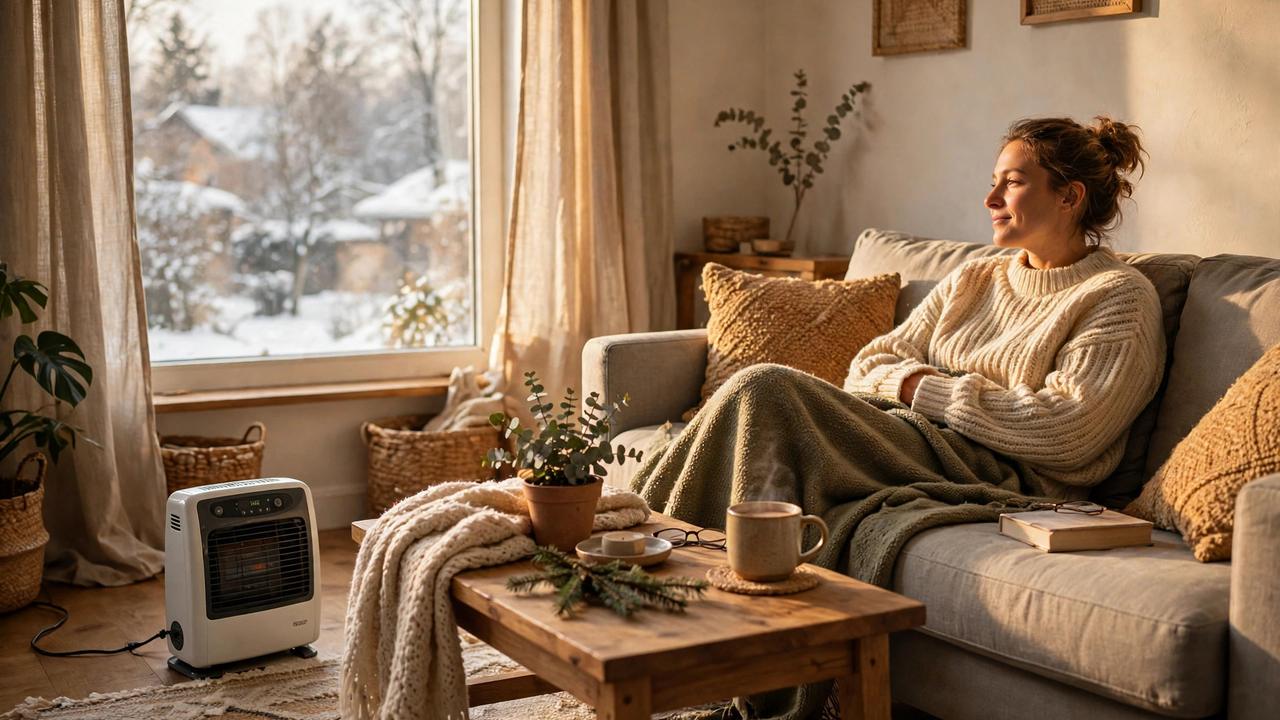
It is worth pausing on the floor-versus-furniture question, because it is the placement decision readers argue with most. A heater on a table or desk feels warmer because it is closer to your hands and face, and it keeps the cord off the floor. The guidance, however, is consistent across sources. Consumer Reports says portable heaters are intended to sit on the floor, not on a table, and to place the heater on a hard, level and nonflammable surface. The CPSC guidance says to place heaters on the floor, never on tables or furniture, since they may fall, dislodging or breaking parts of the heater. Lasko lists placing its heater on a firm, level surface and, in another of its ceramic manuals, warns against placing the heater on soft surfaces like beds or rugs where openings may become blocked.
The reasoning is practical rather than fussy. Tables and desks are narrower than the floor, so a heater near an edge can be knocked off by a sleeve, a pet or a pulled cord. Furniture surfaces are often wood, fabric or cluttered with paper, which puts combustible material directly under and beside a hot appliance. A fall from height can damage the heater’s housing or its safety switches even if it does not start a fire immediately. And an elevated heater still needs its 3-foot zone, which on a desk usually means the zone covers your keyboard, your papers and you.
There is one narrow exception pattern, and it comes from the maker, not from preference. If a specific model’s manual explicitly lists tabletop use for that model, on a firm, level surface, with the listed clearances, then follow that manual for that model. Lasko’s tower manual, for example, describes a firm, level surface without inviting you to improvise a different one. The general rule stands: unless your manual says otherwise in writing, the heater belongs on the floor. Never place a heater on a bed, a sofa, an armchair, a rug pile, a stack of boxes or any soft or unstable surface, because soft surfaces can block the air openings the makers warn about and can let the unit tip or sink out of level.
What about thick carpet?
Carpet deserves its own note because so many bedrooms and living rooms have it. The CPSC and USFA guidance says not to put space heaters on rugs or carpets, and to place them on a floor that is flat and level. A deep pile carpet is neither flat nor stable in the way a hard floor is: a tall tower heater can lean or rock on it, and the base may not sit evenly. If the only available spot in the room is carpeted, that is a reason to reconsider the spot, and in some rooms it is a reason the honest answer is that the room has no good portable heater position. Do not solve the carpet problem by putting the heater on a board, a tray table or a low stool unless your manual lists that arrangement, because you would be inventing an elevated surface the authorities advise against.
Cord and outlet placement: the other half of the layout
A heater’s position is only final once its cord reaches a wall outlet safely. The authorities treat the electrical side of placement as part of placement itself. The CPSC lists plugging electric space heaters directly into a wall outlet, never into an extension cord or power strip. The NFPA checklist says to plug the heater directly into the wall outlet and never use an extension cord. The USFA flyer says the same: plug space heaters directly into wall outlets, and do not use an extension cord or power strip. Lasko lists the rule in the strongest form in its manual: always plug heaters directly into a wall outlet or receptacle, and never use them with an extension cord, power strip, surge protector, multiple outlet adapter, cord reel or outlet-type air freshener, because using such devices may create a fire hazard.
That rule shapes the layout more than any other after the 3-foot zone. The heater has to live within its own cord’s reach of a suitable wall outlet, without stretching the cord across the room, across a doorway or under furniture. Consumer Reports notes that most space heaters come with a cord that is 6 feet long, and advises never to use an extension cord or power strip, and not to cover the cord with an area rug or furniture, which could cause damage or overheating. If the only outlet that works is behind the sofa, the answer is not an extension cord and not a heater behind the sofa. The answer is a different wall, a different outlet, or a different room layout, even if that means rearranging furniture for the winter.
Routing the cord once the heater is placed
The CPSC habits sheet says never to run the heater’s cord under rugs or carpeting. Lasko lists the same instruction: do not run the cord under carpeting, do not cover it with throw rugs, runners or similar coverings, and arrange the cord away from traffic areas where it will not be tripped over. A covered cord can be damaged invisibly by feet and furniture, and the covering traps heat around it. Route the cord visibly along the wall from the heater to the outlet, keep it out of the walking path, and do not pinch it behind the heater or under a furniture leg.
Two checks from the authorities belong in every setup. The CPSC habits sheet says that if the heater’s cord or plug is hot, you should disconnect the heater and contact an authorised repair person, and if any part of the outlet is hot, you should contact a certified electrician. Lasko similarly lists making sure the plug fits tightly in the outlet and checking that the plug is not overheating during use, with a qualified electrician checking or replacing the wall outlet if necessary. Consumer Reports adds not to plug another electrical device into the same outlet as a heater, because that can cause overheating. So give the heater its own outlet, check the plug fit before you settle the layout, and treat a hot plug, cord or outlet as a stop sign rather than a quirk.
Placement also affects how long you run the heater, and running time affects cost. If you are weighing a well-placed heater against heating the whole home, our companion guide on how much it costs to run a space heater all day breaks down the running-cost side of that decision, which often settles which room is worth heating in the first place.
Placements to never use
Some placements come up again and again in homes, and the guidance rules them out directly. Keep this list in mind as a final check on any layout you are considering. If your chosen spot matches anything below, move the heater, however convenient the spot feels.
- Next to, or at the foot of, a bed. The CPSC lists bedding among the materials to keep at least three feet away, and says never to place a space heater close to any sleeping person.
- On a table, desk, nightstand, shelf or any furniture. Consumer Reports and the CPSC both list floor placement instead, because a heater on furniture may fall.
- On a bed, sofa, rug or thick carpet. The CPSC and USFA guidance says not to place heaters on rugs or carpets, and Lasko warns against soft surfaces where openings may become blocked.
- Under a desk or in an enclosed nook. The clear zone cannot be kept there, paper and upholstery sit inside it, and the heater runs out of sight.
- In a doorway, hallway or any exit route. The NFPA lists never blocking an exit, and the CPSC lists placing heaters out of the flow of foot traffic.
- Beside curtains or drapes that can move. Every authority list includes curtains among the items to keep at least 3 feet away, and moving fabric closes that gap on its own.
- In a bathroom, unless the manual lists that exact use. The CPSC advises keeping heaters away from water, and makers such as Lasko list their standard models as not intended for bathrooms or laundry areas.
- Near flammable liquids, paints or a workshop store. Consumer Reports advises not to use a heater in a workshop or garage near flammable paints, gas cans or matches, and Lasko lists not using its heaters where gasoline, paint or flammable liquids are used or stored.
- Within reach of small children as a room heater in their room. Consumer Reports says never to put a space heater in a child’s room, and the NFPA says to keep children away from the heater.
- Anywhere it will run while you sleep or while nobody is in the room. The CPSC, NFPA and USFA all list turning heaters off when you leave the room or go to bed.
Common placement mistakes and safety checks
Most placement mistakes are small and understandable. The heater starts in a good spot and migrates. Someone moves it closer to the sofa during a film, a blanket gets draped nearer, the cord gets tucked under the rug to tidy it, or the heater ends up on a power strip because the good outlet is taken. The fix is a short reset routine each time you set the heater up, built from the authority checklists in this guide.
First, re-measure the circle. Furniture moves during the week, laundry appears, and a heater returned to roughly the same spot may now be a foot closer to the curtain. The CPSC’s all-sides 3-foot rule is the whole check: front, sides and rear, against beds, sofas, curtains, papers and clothes. Second, look down. Is the heater on a hard, flat, level floor, standing straight, with its intakes and exhaust unobstructed, as Lasko lists? Third, trace the cord with your eyes from heater to outlet. It should be visible, uncovered, untripped-over, and plugged directly into the wall, with nothing else sharing that outlet. Fourth, check the plug and outlet by touch after the heater has run for a while; the CPSC says a hot cord or plug means disconnecting the heater and getting help, and a hot outlet means calling a certified electrician.
Fifth, check the room’s alarms. The CPSC advises installing smoke alarms on every level of the home and inside each bedroom, placing carbon monoxide alarms on every level and outside sleeping areas for homes with fuel-burning equipment, and testing alarms every month. Consumer Reports similarly advises working smoke alarms on every level and in every bedroom, tested monthly. Alarms are not a placement feature, but they are the safety net that makes a supervised, well-placed heater a reasonable appliance rather than a gamble.
Finally, respect the off switch as part of the placement. The NFPA checklist phrasing is the simplest: space heaters should be turned off and unplugged when you leave the room or go to bed. A heater in the perfect spot that runs all night in an empty or sleeping room is still being used against the guidance of the CPSC, the NFPA and the USFA. Build the switch-off into the layout by keeping the heater where you will pass it on your way out of the room, not hidden behind furniture where it is easy to forget.
Frequently asked questions
How far should a space heater be from a bed?
The CPSC lists keeping all sides of a heater at least 3 feet from beds, and its winter guidance lists bedding among the materials to keep at least three feet from a portable heater. It also says to turn heaters off when sleeping and never to place a heater close to a sleeping person, so the practical bedroom layout is a floor position at least 3 feet from the bed, used while you are awake, and switched off before sleep.
Can I put a space heater on a table or desk to warm my hands?
The guidance says no. Consumer Reports states that portable heaters are intended to sit on the floor, not on a table, on a hard, level and nonflammable surface, and CPSC guidance says to place heaters on the floor, never on tables or furniture, since they may fall. Place the heater on the floor beside the desk instead, keeping the full 3-foot clear zone, and aim it toward your seating from there.
Can a space heater go in the corner of a room?
Yes, if the full clear zone still fits. The CPSC rule covers all sides, front, sides and rear, and Lasko lists the same 3-foot clearance in those directions for its tower heater. Corners often fail because curtains hang there or furniture is pushed into them, so measure a corner placement carefully, angle the heater out into the room, and choose a straight wall position if the corner cannot keep 3 feet clear in every direction.
Is it safe to put a space heater in the bathroom while I shower?
For most portable heaters, no. The CPSC advises keeping heaters away from water and never touching one if you are wet, and Consumer Reports reports that the CPSC does not recommend a portable electric heater in a bathroom unless it is intended for use there and meets the applicable testing requirements. Lasko lists its standard ceramic models as not intended for bathrooms or laundry areas. Only use a heater in a bathroom if its own manual lists that use, and then follow the manual exactly.
Can I run the cord under a rug to reach a better outlet?
No. The CPSC habits sheet says never to run a heater’s cord under rugs or carpeting, and Lasko lists not running the cord under carpeting or covering it with throw rugs or runners, and arranging it away from traffic areas. The authorities also list plugging the heater directly into a wall outlet, never an extension cord or power strip, so if the cord cannot reach a wall outlet visibly and safely, the heater’s position has to change.
How close can a space heater be to a sofa or curtains?
At least 3 feet, measured to the nearest part of the sofa or curtain, including when curtains move. The CPSC lists sofas and curtains among the items to keep 3 feet from all sides of the heater, the NFPA lists keeping heaters at least 3 feet from anything that can burn, and Consumer Reports notes that taller heaters may need to be even farther away. If your heater’s manual lists a greater distance, the manual’s figure is the one to use.
Conclusion
Placing a space heater well is mostly a layout exercise you do once per room, and then defend against small daily changes. Put the heater on a hard, flat, level floor, out of the walking path and clear of every exit. Keep at least 3 feet of open space on all sides, as the CPSC, the NFPA, the USFA and makers such as Lasko all list, and measure that circle against the items that actually fill homes: beds, sofas, curtains, clothes and papers. Plug the heater directly into its own wall outlet, run the cord visibly and uncovered, and never let an extension cord, a power strip or a rug become part of the setup.
Then adapt the layout to the room. In a bedroom, keep the zone clear of bedding and switch the heater off before sleep. In a living room, face the seating from a clear wall position and watch the throws and curtains that move. In an office, resist the under-desk spot and place the heater beside the desk instead. In a bathroom, let the manual decide, and accept no as an answer when it does not list bathroom use. Do that, and the warmest spot in the room will also be the one the safety authorities would recognise as the right one.










Write Your Review
No reviews yet. Be the first to share your experience!