We independently review everything we recommend. When you buy through our links, we may earn a commission. As an Amazon Associate we earn from qualifying purchases.
Best Towels for Hand Embroidery Designs: 6 Blank Picks
Find the best towels for hand embroidery designs: smooth flour sack, tight-weave cotton and hemstitched linen blanks that take a needle cleanly and wash well.
Find the best towels for hand embroidery designs: smooth flour sack, tight-weave cotton and hemstitched linen blanks that take a needle cleanly and wash well.
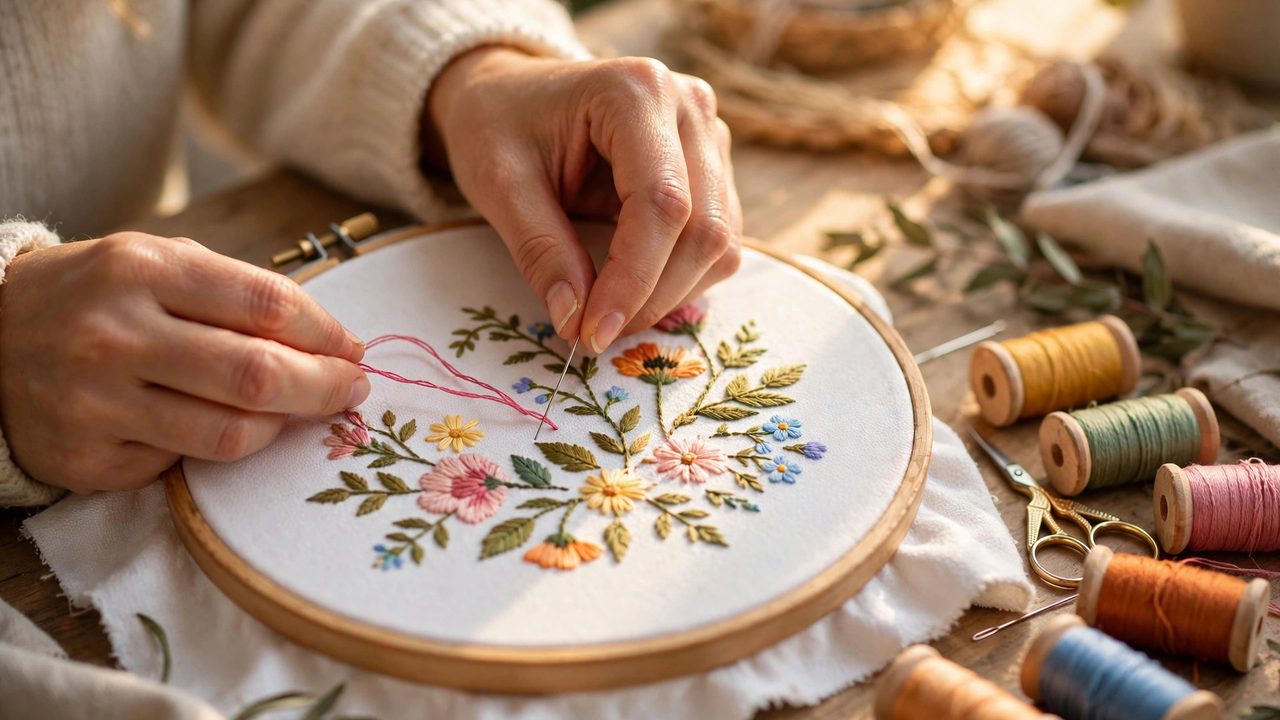
Hand embroidery lives or dies on the ground fabric. A towel that is too loosely woven lets stitches sink and wander, a towel with a raised terry loop catches the needle on every pass, and a towel with a printed pattern already on it fights the design you actually want to stitch. What you need is a blank: a smooth, flat, even surface with enough body to hold a hoop, enough openness for the needle to pass without a fight, and hems that are already finished so the finished piece can go straight into service as a tea towel, dish towel or hand towel. This guide to the best towels for hand embroidery designs compares six blank towels that are sold specifically with stitching, crafting or plain kitchen use in mind, from classic flour sack cotton to a hemstitched linen blend for smaller, more formal pieces.
Five of the six picks are flour sack towels, and that is not an accident. Flour sack cotton is a plain, flat weave with no pile, which is exactly the surface a transferred pattern needs: iron-on transfers and traced lines sit visibly on it, split stitches and satin stitch lie flat instead of sinking into loops, and the fabric is thin enough to hoop easily while still being a working kitchen towel afterwards. The sixth pick breaks the pattern deliberately. It is a smaller linen and cotton hand towel with a hemstitched edge, included for stitchers who want a finer, more decorative blank for monograms, small motifs and guest towels rather than a full-size kitchen square.
Size is the second decision after weave. Most flour sack blanks here are squares of roughly twenty-seven or twenty-eight inches, which leaves generous room around a hoop and lets you centre a large design, run a border along one edge, or stitch a days-of-the-week set with a different motif on each towel. One pick is considerably larger, at thirty-three by thirty-eight inches, for oversized designs and towels that will be folded in thirds on display. One is much smaller, at fourteen by twenty-two inches, which suits a single centred motif far better than a big square you would have to cut down. Pack size matters too, because embroidery is a gift-giving craft: a set of ten, twelve or thirteen blanks lets you stitch a matching set without reordering, while a two-pack is the sensible way to test a fabric before committing to a whole project run.
Quick verdict
For most stitchers, start with the Aunt Martha’s thirty-three by thirty-eight inch set of seven. It is the blank most explicitly made for this job: the maker lists a durable one hundred and thirty thread count cotton, a four-sided hem and a corner hanger loop, and describes the towels as suitable for hand embroidery, which means the weave density has been chosen with a needle in mind rather than adapted from a cleaning cloth. The extra size gives you the most forgiving canvas in this guide for large transfers, long borders and designs that need breathing room.
If you stitch in batches, the Aunti Em’s Kitchen set of thirteen is the volume pick with a craft pedigree: the maker lists one hundred percent pure all-natural ring-spun cotton, a tightly woven plain fabric and hems on all four sides, and positions the set squarely for hand stitching, cross-stitch and personalised lettering. The Utopia Kitchen twelve pack is the everyday workhorse, a plain-weave ring-spun cotton square with professionally hemmed edges that doubles as a hard-working kitchen towel once stitched. The Madras Collections set of ten is the organic cotton option, and the small Aunt Martha’s two-pack is the low-commitment way to test the classic flour sack surface. For monograms and smaller formal pieces, the Mixweer hemstitched linen blend is in a class of its own here.
Every pick in this guide had to pass the same screen. First, the towel had to be a genuine blank: plain, solid and free of a printed or woven design that would compete with a stitched one. Striped vintage-style towels, however charming, were left out of the main list because a stripe running through a motif limits where a design can sit. Second, the surface had to be flat. Terry cloth and textured weaves were excluded, because loops snag floss and distort fine lines; plain weave flour sack cotton and smooth linen blends are the surfaces that take a transfer cleanly.
Third, the maker had to state the fabric, the dimensions and the pack count clearly, and those stated details are what this article reports, phrased as the maker lists them. Where a maker gives a thread count, a weave type or a model number, it is included; where a maker does not state a detail, the article does not guess at it. Fourth, each towel had to be a real, currently orderable product sold new, checked on its own product page, rather than a name copied from a roundup. Finally, the set as a whole had to cover the real range of projects stitchers actually make: a large display towel, a standard square in several pack sizes and fabrics, a small starter pack, and a finer hand towel format for monograms.
Within those rules, the differences that decided the order are practical ones. Explicit embroidery suitability in the maker’s own description counts for a lot, because it signals the weave has been kept smooth and even on purpose. Hem quality counts too: a towel hemmed on all four sides can be displayed and used the moment the last stitch is in, while an unfinished edge would need machining first. Pack count counts for gift stitchers, who rarely make just one towel. And fibre counts for stitchers with a preference, which is why the guide includes an organic cotton option and a linen blend alongside the conventional ring-spun cotton squares.
The largest blank in this guide is also the most purpose-built. The maker lists these towels as one hundred percent cotton with a durable one hundred and thirty thread count, hemmed on all four sides with a corner hanger loop, and pre-washed and bleached in the larger Aunt Martha’s flour sack line. Most importantly, the maker describes this exact towel as perfect for both machine and hand embroidery, as well as silkscreen and painting, which makes it the clearest match in the guide for a stitcher who transfers a design and works it by hand.
The thirty-three by thirty-eight inch format changes what you can stitch. A design that would feel cramped on a standard square can be centred with a wide margin, a long border can run down one long edge, and a towel folded in thirds for display still shows a generous field of stitching. The bright white ground is the traditional canvas for coloured floss work, from vintage-style fruit and floral motifs to lettering, and the hanger loop means the finished towel can be hung by its corner in the kitchen it was stitched for. A set of seven maps neatly onto a days-of-the-week project, one towel per day, which remains the classic way these large flour sack towels are used.
There are trade-offs to the size. A towel this large takes more hoop repositioning for an all-over design, and it is more fabric than a small motif needs. It is also a single-purpose purchase in the sense that you are buying stitching canvas first and a dish towel second, although once stitched it does ordinary kitchen work perfectly well. For the stitcher planning a substantial piece, that is the right order of priorities.
Buy it if: you stitch large transfers, borders or days-of-the-week sets and want the blank the maker lists specifically for hand embroidery, with the most room per towel in this guide.
Skip it if: your designs are small single motifs, or you want a big pack of standard squares for batch gifts; the Aunti Em’s or Utopia Kitchen sets below will suit you better.
Aunti Em’s Kitchen built this set around a tighter weave. The maker lists one hundred percent pure all-natural ring-spun cotton, describes the fabric as tightly woven and plain, and states that the towels are hemmed on all four sides. The maker’s own positioning is craft-forward: the plain fabric is presented as space for hand stitching, cross-stitch and personalised lettering, and for making embroidered dish towels for your own kitchen, as a housewarming gift or as a matching personalised set. That combination of a dense, even surface and a thirteen-towel pack is what earns it the batch-stitching spot in this guide.
Weave density is the detail that matters most for fine work. A tighter plain weave gives satin stitch a firmer foundation, keeps small lettering legible, and reduces the chance of the needle slipping into a gap and pulling a stitch off line. At twenty-seven by twenty-seven inches the towels are a touch smaller than the twenty-eight inch squares elsewhere in the guide, which most stitchers will not notice in the hoop, and the square format still leaves room for a centred design with a border or a corner motif with lettering beneath it.
Thirteen towels is a genuinely useful number for this craft. It covers a full gift run, a set for a market stall, or a household set with spares for the inevitable project that goes wrong at the final French knot. The maker also lists the towels as lint free and super absorbent, with machine wash care, so the finished pieces can be used as real kitchen towels rather than kept for display only. The set is made by TLC Brands, and the model number the maker lists is f-1224.
Buy it if: you stitch sets and gifts in batches and want a tightly woven ring-spun cotton blank the maker lists for hand stitching and lettering, in the largest pack in this guide.
Skip it if: you want organic cotton, a linen blend, or a very large towel for an oversized design; look at the Madras Collections, Mixweer or large Aunt Martha’s picks instead.
Utopia Kitchen’s flour sack towels are the generalists of the guide: a twelve pack of twenty-eight by twenty-eight inch squares that the maker lists as one hundred percent cotton, manufactured using one hundred percent pure ring-spun cotton knitted in a diagonal fashion, with a plain weave listed in the product details and professionally hemmed edges. The maker describes the towels as lightweight and lint-free, quick drying and highly absorbent, and lists the model number as UK0062.
For embroidery, the relevant qualities are the flat plain-weave surface, the standard square size and the hemmed edges. A twenty-eight inch square is the size most published towel patterns assume, so transfers sized for a standard tea towel sit on it without trimming or awkward margins. The diagonal knit the maker describes is a construction detail aimed at durability in kitchen use, and in practice these are the towels in the guide most likely to be stitched and then put into heavy daily rotation, because the pack is large and the towels are built as everyday kitchen cloths first.
That dual role is both the strength and the limit here. Unlike the Aunt Martha’s and Aunti Em’s picks, this listing is written for kitchen use rather than for stitchers, so the maker does not single out embroidery in its description of this pack. The fabric is nonetheless the same class of flat cotton blank that flour sack embroidery uses, and the value of a twelve pack is that a stitcher can dedicate some towels to stitching and keep the rest plain without buying two products. Machine wash care is listed, and the maker states the towels resist shrinking and minimise lint across washes.
Buy it if: you want one large pack of standard twenty-eight inch cotton squares that can split duty between stitched gifts and everyday kitchen towels.
Skip it if: you want a blank the maker lists specifically for embroidery, or a certified organic or linen fabric; the Aunt Martha’s, Madras Collections and Mixweer picks cover those needs.
This two-pack is the same classic flour sack fabric as the large Aunt Martha’s set, in the standard size and the smallest commitment. The maker lists one hundred percent cotton with a durable one hundred and thirty thread count, a four-sided hem and a corner hanger loop, pre-washed and bleached, and describes the towels as perfect for both machine and hand embroidery, silkscreen and painting. The model number the maker lists is PKTT28, and the size is twenty-eight inches by twenty-eight inches.
A two-pack earns its place in a guide like this for a simple reason: fabric feel is personal. Some stitchers love flour sack cotton immediately, while others prefer a denser or heavier ground, and the cheapest way to find out is to stitch one towel, wash it, and live with it for a week. Two towels let you do exactly that, or to make a single matched pair as a gift without buying a dozen blanks. The pre-washed and bleached finish the maker lists also matters for a first project, because the towel starts closer to its finished size and colour than an unprepared cloth would.
The obvious limit is value per towel and project scale. Two towels will not cover a days-of-the-week set or a run of gifts, and if you already know you like the Aunt Martha’s surface, the set of seven in the larger size is the more capable purchase. Treat this pack as the audition: if the finished towel pleases you, the same fabric family scales up within this guide.
Buy it if: you are new to stitching on flour sack cotton, or you need exactly one pair of towels for a single project, and want the maker-listed embroidery fabric without a large pack.
Skip it if: you already know the fabric suits you and you stitch in quantity; the larger Aunt Martha’s set or the thirteen-pack from Aunti Em’s Kitchen will be the better buy.
Madras Collections is the organic option in the guide. The maker lists these towels as eco friendly one hundred percent organic cotton, in a set of ten at twenty-eight by twenty-eight inches, describes them as commercial grade flour sack towels, and states plainly that the organic flour sack towels are best for embroidery too, alongside kitchen uses such as drying produce and covering bread dough. The manufacturer the maker lists is Nature Is Gift, and the model number listed is 43235-126417.
The stitching case rests on the same flat flour sack format as the other cotton squares: a plain, pile-free surface in the standard twenty-eight inch square, in a pack size that suits a matching set. What distinguishes this pick is the fibre sourcing. For stitchers making gifts for households that prefer organic textiles, or selling finished towels to customers who ask about materials, an organic cotton blank answers a question the conventional cotton picks cannot. Ten towels is enough for a full set with spares, and the maker notes that washing the towels before use improves absorbency, which is also the right preparation before transferring a design, since a pre-wash settles the fabric before you commit stitches to it.
As with the Utopia Kitchen pack, this is a kitchen-first listing, so the maker’s description covers many uses besides embroidery, and no thread count is stated for this towel in the details checked, so none is claimed here. Stitchers who want a stated thread count should look at the Aunt Martha’s picks. Stitchers who want the organic fibre in the standard format have exactly one option in this guide, and this is it.
Buy it if: organic cotton matters for your project or your gift recipients, and you want it in the standard twenty-eight inch flour sack format in a set of ten.
Skip it if: you want a stated thread count or a listing written specifically for embroidery; the Aunt Martha’s towels above list both.
The Mixweer set is the deliberate exception in this guide: not a flour sack square at all, but a set of twelve hand towels at about fourteen by twenty-two inches, made from a blend the maker lists as fifty-five percent linen and forty-five percent cotton, with a hemstitched finish. The maker lists the towels as absorbent and quick drying, machine washable, and suitable to iron if needed, and the model number listed is PRI-Mixweer-0720. The listing presents them as tea towels for embroidery as well as for kitchen and bathroom use.
Linen changes the stitching experience. A linen and cotton ground has a slightly firmer, crisper hand than flour sack cotton, which suits counted and precise work, monograms, and small formal motifs that will be seen up close on a guest towel or a hand towel by a sink. The hemstitched edge is a decorative drawn-thread style border that frames a design without any extra finishing from you: stitch a monogram or a small sprig above the hemstitching and the towel already looks complete. At fourteen by twenty-two inches, the field is sized for exactly that kind of single, centred composition rather than a sprawling scene.
The limits follow from the format. There is no room here for a large transfer, a long border design or a days-of-the-week motif at full scale, and the linen blend surface will feel different under the needle from the cotton squares, which some stitchers will love and others will not. This is a specialist blank, included because hand embroidery designs are not all kitchen scenes: for initials, wedding dates, small florals and guest-bathroom sets, it is the most appropriate surface in the guide.
Buy it if: you stitch monograms, initials and small motifs for hand towels and guest towels, and want a linen blend blank with a hemstitched edge that needs no further finishing.
Skip it if: your designs are large kitchen motifs that need a full square of fabric; any of the flour sack picks above will give you the room they need.
Buying guide
Start with the weave. Hand embroidery needs a flat, even surface. Plain weave flour sack cotton is the default for a reason: there is no pile to swallow stitches, transferred lines stay visible, and the fabric is light enough to hoop without strain. The maker-listed details to look for are a stated thread count, as on the Aunt Martha’s towels, or a stated tight weave, as on the Aunti Em’s Kitchen set, because both point to a surface that will hold satin stitch and fine lettering without the needle wandering. Avoid terry and heavily textured weaves for design work, however good they are as drying towels.
Match the size to the design, not the other way round. Measure your transfer or pattern first. A standard motif with a border sits comfortably on a twenty-seven or twenty-eight inch square with room to centre it in a hoop. A large scene, a long border or a design meant to show on a folded display towel justifies the thirty-three by thirty-eight inch format. A monogram or small sprig belongs on the fourteen by twenty-two inch hand towel, where it will not look lost. Buying the blank to fit the design is far easier than shrinking a beloved pattern to fit the wrong towel.
Think in packs, because embroidery is repetitive by nature. Sets, gifts and seasonal runs all consume blanks faster than expected, and a ruined towel mid-project is a normal cost of the craft. A pack of ten or more keeps a project consistent, since every towel in a set then shares the same fabric, size and white. A two-pack is for testing and for one-off pairs. If you sell or gift finished towels, buy the pack that covers the whole run in one order, because a second order of a nominally identical towel may not match the first exactly.
Prepare the blank before you stitch. Wash and dry the towel before transferring your design, following the care the maker lists; the Madras Collections listing states that washing before use improves absorbency, and a pre-wash also settles any sizing and shrinkage before stitches go in. Iron the towel flat, transfer the design onto the smooth surface, and hoop the area you are stitching with the fabric taut but not stretched. Work large designs in sections, moving the hoop rather than forcing the whole towel into it. When the stitching is finished, a gentle wash and press from the back sets the piece ready for display or use.
Consider the fibre for the recipient. Conventional ring-spun cotton is the versatile default and appears in three of the six picks here. Organic cotton, in the Madras Collections set, suits gift projects where fibre sourcing is part of the gift. The linen and cotton blend in the Mixweer towels gives a crisper, more formal result for monograms and guest towels. None of these choices is wrong; they are different finishes for different finished pieces, and the maker’s stated fabric is the detail to check before you order.
Check the finishing. A towel hemmed on all four sides, as the Aunt Martha’s and Aunti Em’s Kitchen makers list, can go from hoop to hook with no sewing machine involved. A corner hanger loop, listed on the Aunt Martha’s towels, is a small detail that matters once the towel is in daily use. A hemstitched edge, on the Mixweer towels, does decorative work for you. If a blank you are considering elsewhere does not state its hemming, that silence is worth noticing before you plan a no-sew finish.
FAQ
What makes flour sack towels good for hand embroidery? Flour sack cotton is a flat plain weave with no pile, so stitches lie on the surface instead of sinking into loops, and transferred or traced design lines stay easy to follow. The fabric is light enough to hoop comfortably, and a hemmed flour sack towel becomes a working kitchen towel once the stitching is done, which is why it is the traditional blank for embroidered tea towels.
What size towel should I choose for a design? Match the blank to the pattern. Standard motifs and bordered designs fit a twenty-seven or twenty-eight inch square. Large scenes and display towels suit the thirty-three by thirty-eight inch Aunt Martha’s set. Monograms and small motifs belong on a smaller hand towel such as the fourteen by twenty-two inch Mixweer set, where a small design fills the field properly.
Should I wash a blank towel before stitching it? Yes. A wash before you transfer the design settles the fabric and removes surface sizing, so the finished piece keeps its shape and the design sits where you placed it. One maker in this guide states that washing before use improves absorbency, and pre-washing is the standard preparation for the cotton squares listed here. Follow the care instructions the maker lists for the towel you choose.
Can I stitch on a linen blend towel as well as cotton? Yes, and the result looks different in a good way. The Mixweer towels in this guide blend linen with cotton and add a hemstitched edge, giving a crisper ground that suits monograms, initials and small formal motifs. Cotton flour sack towels remain the easier, more forgiving surface for large kitchen designs, so choose by project rather than by habit.
How many blank towels should I buy for a set? Buy for the finished set plus spares. A days-of-the-week project needs seven towels, which matches the large Aunt Martha’s pack exactly. Gift runs and matching household sets are better served by the packs of ten, twelve or thirteen in this guide, so every finished towel shares the same fabric and a mistake does not break the set.
Do these towels work for designs other than hand embroidery? The Aunt Martha’s listings also name silkscreen and painting among the uses for their flour sack towels, and the Aunti Em’s Kitchen listing mentions cross-stitch and personalised lettering alongside hand stitching. This guide has assessed the towels for hand embroidery designs, which is the use the keyword asks about, but a smooth blank that takes a needle well is generally a versatile craft surface.
Conclusion
The best towel for a hand embroidery design is a blank that respects the stitching: a flat, even weave, a size that fits the pattern, finished hems and a fabric you have prepared before the first stitch. For most stitchers that means the Aunt Martha’s thirty-three by thirty-eight inch set of seven, the one blank in this guide the maker lists with a stated thread count, a hanger loop and hand embroidery named outright, in a size that flatters large work. Batch stitchers should take the tightly woven Aunti Em’s Kitchen thirteen pack, everyday stitchers the Utopia Kitchen twelve pack, and anyone testing the craft the small Aunt Martha’s two-pack in the same classic fabric. Choose organic cotton with the Madras Collections set of ten when fibre sourcing matters, and choose the Mixweer hemstitched linen blend when the design is a monogram or a small motif on a hand towel. Pick the blank that fits your next design, wash it, hoop it, and stitch.
M
Modern Line Home Editorial Team
We compare specs, materials and verified owner reviews before a product earns a spot. Rankings are never paid.
Affiliate disclosure. As an Amazon Associate we earn from qualifying purchases at no extra cost to you. Prices accurate as of the date shown.
House cold even with the heat on? Walk this ordered checklist: thermostat and filter first, then drafts, insulation, leaky ducts and a failing heating system.
Windows fogging up in winter? Check where the fog sits: on the room side it is indoor humidity, outside it is harmless, and between panes the seal has failed.
Store the main firewood pile about 30 feet from your house, off the ground and covered only on top. Compare racks, woodsheds, garages and indoor spots safely.
Place a portable generator outdoors only, at least 20 feet from windows, doors and vents, exhaust pointed away. Exact distances, setup steps and CO rules here.
Keep houseplants in the right winter spot: match window direction to plant type, stay clear of radiators and cold glass, and fix dry air and low light at home.
Mice enter through pencil-width gaps at foundations, pipes, vents, doors and the roofline. Walk this room-by-room winter checklist to find and seal each one.
A winter outage timeline: what to do in the first hour, first night and multi-day outage, with food safety times, pipe protection, heat and CO safety steps.
Size a space heater by room area: 10 watts per square foot at 8-foot ceilings, adjusted for insulation and ceiling height, with full wattage and BTU tables.
Start dripping at about 20 degrees, sooner for exposed pipes. Set a pencil-lead stream, drip the right faucets on both lines, and know when to stop safely.
A fridge needs 800-1,200 starting watts, not just 150-400 running watts. Use the tables to total your fridge plus freezer, lights, furnace fan and more today.











Write Your Review
No reviews yet. Be the first to share your experience!