
Key takeaways
- Compare six supportive slippers for ladies with plantar fasciitis, with contoured arch support, deep heel cups, cushioned soles and adjustable fits for home.
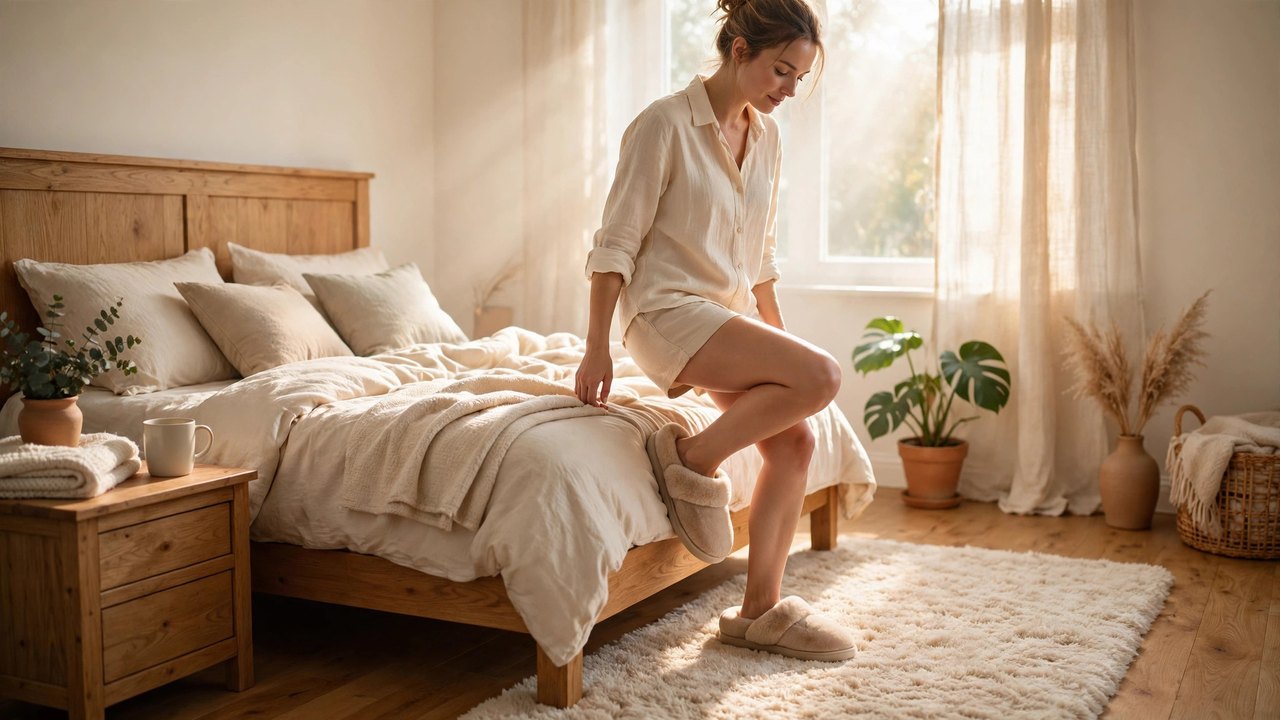
The first steps of the morning are often the moment that decides what kind of slipper a woman with sore heels actually needs. A flat, floppy house slipper may feel soft for five minutes on carpet, but on tile, hardwood or laminate it leaves the arch unsupported and the heel landing on a thin layer of foam. That is why the best slippers for ladies with plantar fasciitis look less like bedroom slippers and more like proper footwear: a contoured footbed that does not collapse flat, a heel cup that cradles rather than a flat pad, cushioning that absorbs the impact of hard floors, and a sole firm enough to bend mainly at the toes. Fit matters just as much, because a supportive footbed only works when the foot stays centred on it, so adjustable straps and a secure shape score highly in this guide.
This guide compares six women’s slippers built around those ideas. Two come from Vionic, a maker whose slippers carry a built-in orthotic-style footbed, in a closed mule and an open cross-strap design. Two come from Orthofeet, one in a breathable stretch knit for warmer rooms and one in a warm, faux fur lined suede build for winter. The fifth is a clog from PowerStep, a maker best known for replacement insoles, with a removable wool insole of its own. The sixth is a boiled wool slipper from Haflinger, with a moulded latex midsole, for women who prefer natural materials. Every product was checked against maker or retailer product pages, and every specification below is described as the maker lists it.
One boundary needs to be clear from the start. These are comfort slippers with supportive features as their makers describe them. Nothing in this guide claims that a slipper treats, cures or relieves plantar fasciitis, and no slipper is a substitute for assessment when heel pain is new, severe, one-sided or not settling. What a well-built slipper can do is give the foot a supported, cushioned surface for the hours spent at home, instead of bare feet or a collapsed flat sole on hard flooring, and that is the basis on which the six picks below were chosen and compared.
Quick verdict
For the strongest all-round package, the Vionic Gemma II is the first pick: the maker lists a built-in VIO MOTION footbed with contoured arch support and a deep heel cup, an adjustable hook-and-loop closure, a taller instep for easy entry, and an APMA Seal of Acceptance. For women whose feet run warm, or who prefer an open design, the Vionic Relax II puts the same style of footbed under an adjustable cross strap with faux fur or faux shearling uppers. The Orthofeet Louise is the breathable choice, with a stretch knit upper, a seam-free interior, an anatomical arch insole and extra depth for a custom insert. The Orthofeet Charlotte is the warm, structured winter pick, with a strap that opens wide, fitting spacers and an Arch Booster. The PowerStep ArchWear Women’s Clog suits women who already know they like a firm, neutral arch, because the maker lists a removable Pinnacle Wool insole with a deep heel cradle and a machine washable clog body once the insole is removed. The Haflinger AT Classic is the natural materials option, with a boiled wool upper and lining, a latex moulded midsole and a rubber outsole, in European whole sizes.
Comparison table
| Product | Best for | Closure | Upper | Footbed and sole |
|---|---|---|---|---|
| Vionic Gemma II Women’s Mule Slippers | Built-in orthotic support in a closed mule | Adjustable hook-and-loop | Terry, shearling and flannel options | VIO MOTION footbed, EVA midsole and outsole |
| Vionic Relax II Women’s Slippers | Open, adjustable support for warmer feet | Adjustable cross strap | Faux fur or faux shearling | VIO MOTION footbed, EVA midsole, synthetic outsole |
| Orthofeet Louise Women’s Orthopedic Slippers | Breathable stretch fit and extra depth | Adjustable strap, open back | Stretch knit | Orthotic insole, Ortho-Cushion System sole |
| Orthofeet Charlotte Women’s Orthopedic Slippers | Warmth, width choice and spacer tuning | Adjustable side strap | Suede leather, faux fur lining | Orthotic insole with Arch Booster, Ortho-Cushion System sole |
| PowerStep ArchWear Women’s Clog Slippers | Firm neutral arch with a removable wool insole | Slip-on clog with raised back | Synthetic upper, fleece lining | Pinnacle Wool insole, non-slip tread outsole |
| Haflinger AT Classic Wool Hard Sole Slippers | Natural boiled wool with a moulded midsole | Slip-on | Boiled wool upper and lining | Latex moulded midsole, rubber outsole |
How we selected
Every slipper in this guide had to pass the same baseline first. It had to be a real, currently listed women’s product sold new on Amazon US, with a brand, a product name and an identifiable model that could be checked on an opened product page, either the maker’s own page, a specialist retailer page carrying the full listing details, or an Amazon listing surfaced with full details. A product whose existence or specifications could not be confirmed on an opened page was excluded entirely rather than written up from snippets or guesswork, and no specification in this article was invented.
Beyond that baseline, selection favoured the design features that makers themselves associate with supportive house footwear. A defined, contoured arch came first, whether that meant a built-in orthotic footbed, a removable orthotic insole or a moulded midsole, because a flat foam pad offers cushioning without support. A heel cup or heel cradle came next, since the heel is where the first step of the day lands. Cushioning that absorbs shock on hard floors mattered, as did a sole with stated grip and enough structure for short trips outside. Adjustability and fit range were also scored: straps that let the wearer centre the foot on the footbed, extra depth for an own insert, and width or size ranges that give women a real chance of a correct fit. Warmth and materials were treated as the deciding differences between otherwise supportive picks, which is why this list deliberately spans faux shearling, stretch knit, suede, synthetic clog and boiled wool designs.
Top picks
Vionic Gemma II Women’s Mule Slippers
The Gemma II is Vionic’s updated version of its best-known support slipper, and it is the most complete closed slipper in this guide. Retailer listings for the model describe it as a soft, spa-style mule with a hook-and-loop adjustable closure and a taller instep that makes it easier to get on and off than the original design. The upper, liner and covered footbed are listed as polyester in terry, shearling and flannel finishes, so the wearer can choose between a lighter terry feel and a warmer shearling-style lining without changing the support underneath, which stays the same across the finishes.
Underfoot is where this pick earns its place. The maker lists a built-in VIO MOTION Technology footbed featuring contoured arch support, shock-absorbing cushioning, a deep heel cup for stability and forefoot flexibility. The listing also describes the footbed as podiatrist-designed and biomechanically contoured, with an EVA midsole that absorbs shock, and the footbed is treated with an antibacterial, odour-resistant finish the maker calls Ecofresh. The heel height is listed at 1.4 inches, which gives the Gemma II a more shoe-like stance than a flat bedroom slipper. The model carries the APMA Seal of Acceptance, and it is offered in women’s whole sizes across a broad range in a medium width.
The trade-offs are care and openness. The maker lists care as wiping with a damp cloth and air drying, so this is not a throw-in-the-wash slipper, and the closed mule shape with a warm lining will be too much for some women in summer. The footbed is built in rather than removable, so a woman who needs to use her own custom insert should look at the Orthofeet or PowerStep picks instead, where the insole lifts out. For a woman who simply wants the support already built in, correctly shaped and ready the moment she steps out of bed, the Gemma II is the straightforward answer in this list.
Buy it if: you want a closed, warm mule with a built-in contoured footbed, a deep heel cup and an adjustable strap, and you do not need to swap in your own insole.
Skip it if: you need a removable insole for a custom insert, a machine washable slipper, or a cool open design for warm rooms.
Vionic Relax II Women’s Slippers
The Relax II takes the same support idea as the Gemma II and puts it in a more open, adjustable shape. The maker lists plush uppers in textured materials with a soft, cosy lining, an adjustable cross strap and a padded footbed. Retailer listings for the model specify faux fur or faux shearling uppers and an adjustable hook-and-loop top strap, so the wearer can set how firmly the slipper holds across the top of the foot rather than accepting a fixed opening. That adjustability matters for support, because it lets the foot sit back into the heel cup instead of sliding forward inside a loose slipper.
The footbed specification mirrors the Gemma II. The maker lists a built-in VIO MOTION Technology footbed featuring contoured arch support, shock-absorbing cushioning, a deep heel cup to provide stability and forefoot flexibility, plus a flexible EVA midsole that absorbs shock. The outsole is listed as a durable synthetic design for everyday wear, intended for indoor and outdoor use, and the heel height is listed at 1.4 inches. The model is also listed as having received the APMA Seal of Acceptance. In practical terms, this is the Vionic to choose when the closed mule feels too warm or too enclosed, but the wearer still wants the same footbed family underneath.
The open design is also its limitation. Toes are less protected than in the closed picks, the heel is less enclosed than in a clog with a raised back, and plush faux fur uppers are a winter-leaning choice even in an open shape. Sizing is in whole sizes, so women between sizes should follow the maker’s guidance for this model rather than guessing. Within its lane, though, the Relax II is a well-judged design: the strap does real fitting work, the footbed is a proper contoured one, and the sole is built for more than carpet.
Buy it if: you want Vionic’s contoured footbed in a more open slipper, with a cross strap you can adjust to keep your foot centred on the support.
Skip it if: you want a fully closed toe and heel for warmth and protection, or a removable insole.
Orthofeet Louise Women’s Orthopedic Slippers
The Louise is the breathable pick in this guide, and the one best suited to women who find lined winter slippers uncomfortably warm. The maker lists fabric uppers infused with elastic stretch material that expands and conforms to the shape of the foot, an open back with an adjustable strap, and a seam-free interior with no protruding stitching or overlays. The maker describes the upper as an airy mesh that keeps feet feeling cool and dry, which makes the Louise the natural summer and warm-home choice among the six, and a comfortable one for sensitive feet that dislike seams and pressure points.
The support specification is a removable orthotic approach rather than a built-in footbed. The maker lists an orthotic insole with an anatomical arch and a cupped heel, an extra depth design with a wide, round toe box, and room to accommodate a custom insert if the wearer uses one. That combination is useful in two directions: the included insole gives the slipper its support out of the box, and the depth means a woman whose clinician has supplied her own insert is not forced to choose between her insert and her slippers. The maker lists the Louise in women’s sizes across a wide span of widths, from narrow through to extra wide, which is a broader width offer than most slippers in this category make.
The compromises follow from the design. An open back is easy to step into but holds the heel less securely than the PowerStep clog’s raised back, and a stretch knit upper offers conforming comfort rather than the structure of suede or leather. The knit also provides little weather protection, so this is an indoor-first slipper despite its sole. None of that undermines its purpose: for a warm room, a sensitive foot, or a wearer who needs depth and width choice, the Louise answers needs the warmer picks do not.
Buy it if: you want a cool, breathable slipper with an anatomical arch insole, a seam-free interior, extra depth for your own insert and a wide choice of widths.
Skip it if: you want a warm lined slipper for cold floors, or a closed heel that holds the foot firmly on stairs.
Orthofeet Charlotte Women’s Orthopedic Slippers
The Charlotte is the warm, structured counterpart to the Louise from the same maker. The maker lists a suede leather upper with a faux fur lining, a water-repellent finish, and a wide strap across the instep that opens completely so the wearer can step straight in and then fasten the strap at the tension she needs. A back lip at the heel helps keep the slipper in place once it is on. Even the orthotic insole is lined, the maker notes, so the warmth is consistent across the whole interior rather than only around the top of the foot.
Inside, the maker lists the Ortho-Cushion System with a premium orthotic insole, an included Arch Booster and fitting spacers that sit under the insole to fine-tune the internal volume. The maker describes an ergonomic sole design with cushioning properties, a roomy toe box and non-binding uppers, and lists the Charlotte in three widths with a weight of 10.4 ounces for a size 7 medium and a heel-to-toe drop of 16.2mm. The spacers are a genuinely practical detail: they let the wearer adjust the fit in small steps, and removing or adding one changes how the foot sits on the insole without changing the slipper itself.
This is a substantial house shoe rather than a light slipper, and that is both its strength and its trade-off. The faux fur lining and suede upper are cosy on cold floors but warm in summer, the build is heavier than the knit and wool picks, and suede needs more care than a washable synthetic. A woman who spends long stretches on her feet at home in cooler months, and who wants width choice plus spacer tuning as well as an orthotic insole, will find the Charlotte the most adjustable warm pick in this guide.
Buy it if: you want a warm, structured slipper with an orthotic insole, an Arch Booster, fitting spacers and a strap that opens wide for easy entry.
Skip it if: you want the lightest, coolest slipper for warm rooms, or a simple pull-on with nothing to fasten.
PowerStep ArchWear Women’s Clog Slippers
PowerStep comes at slippers from the opposite direction to most makers: it is an insole company first, and the ArchWear clog is essentially its insole given a slipper body. The maker lists a women’s clog with a raised back that helps secure the slipper on the foot and increase stability, a faux fur trim around the ankle, a fleece lining, and a non-slip tread outsole intended for indoor and outdoor wear. Amazon listing details for the model list a faux suede outer, a flat heel, a closed toe and whole women’s sizes, with the maker’s guidance to go up to the next whole size when a half size is needed.
The insole is the headline. The maker lists the slipper as now including its Pinnacle Wool insole, described as having a firm but flexible arch and a deep heel cradle for standard arches, and notes that the insole is removable and can be replaced with the maker’s Pinnacle High or Low insoles for a different arch height, sold separately. The maker also describes its slipper footbed shape as cradling the arch and heel for support and stability for mild to moderate pronation. For a woman who already uses PowerStep insoles in her daytime shoes and likes that firmer, neutral arch feel, this clog is the closest match at home, and the removable design makes it the easiest pick here to customise or refresh.
Practical care is a strength too. The maker lists the slippers as machine washable in cool water on a delicate cycle once the insoles are removed, dried flat and not tumble dried, which is simpler than the wipe-clean care of the Vionic picks. The cautions are fit and firmness: whole sizes only can leave a half-size wearer compromising, a break-in period may be needed while the feet adjust to the arch shape, as the maker itself notes, and a firm neutral arch will feel like too much to a woman who prefers soft cushioning above all. Judged on support that can be swapped and tuned, though, the ArchWear clog is a distinctive and well-specified pick.
Buy it if: you want a firm, neutral arch in a clog with a raised back, a removable wool insole you can swap for a higher or lower arch version, and a washable body.
Skip it if: you wear a half size and need a precise fit, or you prefer soft, plush cushioning to a firm arch shape.
Haflinger AT Classic Wool Hard Sole Slippers
The Haflinger AT Classic is the natural materials pick, from a German maker built around boiled wool. The manufacturer lists a 100 percent boiled wool upper and lining, describing the natural fibre as wicking moisture and acting as a natural insulator, keeping feet warm in cold weather and cooler in warm weather. That temperature behaviour is the wool argument in one line: unlike a synthetic fleece lining that only warms, boiled wool is the choice for women whose feet overheat in lined slippers but still want a covered, supportive house shoe through the year.
Support comes from the midsole rather than an orthotic insole. The manufacturer lists a latex moulded midsole that provides arch support, a generous cut with room for the toes to move, and a sturdy rubber outsole that provides cushioning and durability. Retailer descriptions of the AT Classic Hardsole add a latex and double felt insole and a lightweight rubber outsole offering grip on a variety of surfaces, and list the weight at 11 ounces for a size 42. The shape is a classic slip-on clog-style slipper with no strap and no fastening, so the fit depends on choosing the right European whole size; the maker suggests the larger size for women between sizes.
The trade-offs are adjustability and insole flexibility. There is no strap to centre the foot and no removable insole to replace with a custom insert, so a woman who needs either should choose one of the Orthofeet, Vionic or PowerStep picks. The arch support here is a moulded midsole, which will feel gentler than the firm contoured footbeds above. What the Haflinger offers instead is durability, breathability and a simple, long-lived design in a natural fibre, and for many women that combination, on cold wood floors especially, is exactly the point.
Buy it if: you prefer natural boiled wool that regulates temperature, a moulded latex midsole and a hard-wearing rubber outsole in a simple slip-on shape.
Skip it if: you need an adjustable strap, a removable insole for your own insert, or the firmest contoured arch in this guide.
Buying guide
Start with the footbed, not the lining. A supportive slipper is defined by what is under the arch. Look for a contoured footbed, an orthotic insole with an anatomical arch, or a moulded midsole, as listed on the picks above, and be wary of any slipper whose only claim is soft foam. Softness feels good in the shop and collapses within weeks; a shaped footbed keeps its arch under the foot, which is the whole reason for choosing this category of slipper in the first place.
Decide between built-in and removable support. A built-in footbed, as on the two Vionic picks, is simple and always correctly positioned, but it cannot be swapped. A removable insole, as on the Orthofeet and PowerStep picks, lets you use your own insert, replace a worn insole, or in the PowerStep’s case choose a different arch height. Neither is automatically better; the right answer depends on whether you already have an insert you rely on in your daytime shoes.
Check the heel as carefully as the arch. A deep heel cup or cradle, listed on the Vionic and PowerStep models, centres the heel on the cushioning instead of letting it roll off the edge of a flat pad. Heel security is a separate question: a raised back or a closed heel holds the slipper on, an open back is easier to step into, and a strap can compensate for an open shape by holding the midfoot. Match that choice to how much you walk at home and whether stairs are part of your day.
Get the size and width right. Support only works when the arch of the slipper sits under the arch of the foot, so a wrong size quietly defeats the design. Measure, follow the maker’s own chart, and note the quirks in this guide: the Vionic and PowerStep picks come in whole sizes, the Haflinger in European whole sizes with a suggestion to take the larger size when between sizes, and the Orthofeet picks offer the widest choice of widths. If your feet are wide, choose a width option rather than sizing up in length, which moves the arch out of place and adds a tripping toe.
Match warmth to your home, and plan the break-in. Faux shearling, faux fur and fleece linings suit cold floors and winter; stretch knit and boiled wool suit warmer rooms and feet that overheat. Several makers of supportive slippers advise wearing a new pair for a few hours a day at first while the feet adapt to a contoured footbed, and that advice is worth following rather than judging the slipper on the first ten minutes. Finally, keep the boundary in view: a supportive slipper is everyday comfort footwear. Heel pain that is new, worsening, follows an injury, or does not settle belongs with a clinician, not with a new pair of slippers.
FAQ
What should a woman with plantar fasciitis look for in a slipper?
On the maker listings in this guide, the recurring features are a contoured arch or anatomical arch insole, a deep heel cup or cradle, cushioning that absorbs shock on hard floors, and a sole with grip and enough structure for indoor and short outdoor use. Adjustable straps, extra depth and width options help the foot stay centred on that support. A flat, unsupportive slipper offers none of those features, however soft it feels at first.
Do these slippers treat or cure plantar fasciitis?
No, and this guide makes no such claim. The slippers above are comfort footwear whose makers list supportive features such as arch support, heel cups and cushioning. They are not presented here as a treatment for any condition. Persistent, new or worsening heel pain should be assessed by a healthcare professional, who can advise on the full picture rather than footwear alone.
Is a built-in footbed or a removable insole better?
It depends on what you already use. A built-in footbed, like the Vionic VIO MOTION designs in this guide, is fixed in the correct position and needs no managing. A removable insole, like the Orthofeet orthotic insoles and the PowerStep Pinnacle Wool insole, can be replaced when worn, swapped for a different arch height in the PowerStep’s case, or removed to make room for your own insert in the extra-depth Orthofeet designs.
Why do supportive slippers feel strange at first?
A contoured arch feels unfamiliar after flat slippers, and makers of the picks in this guide acknowledge a break-in period. PowerStep, for example, advises wearing its slippers for a few hours a day until the feet adjust, then wearing them full time, and Vionic gives similar guidance for its footwear. Build up gradually, and judge the fit after the adjustment period rather than in the first few minutes.
Can these slippers be worn outside?
Most of the picks list soles intended for indoor and outdoor use, which covers hard floors at home and short, dry trips outside such as stepping onto a porch. They remain slippers: uppers such as suede, knit and boiled wool are not waterproof footwear, and none of these designs replaces a proper shoe for longer walks or wet ground.
How should I choose between the warm and breathable picks?
Choose by your floors and your feet. The Orthofeet Charlotte and the lined Vionic finishes suit cold floors and women who feel the cold. The Orthofeet Louise, with its stretch knit upper and seam-free interior, suits warm rooms and sensitive feet. The Haflinger’s boiled wool is the middle path, listed by its maker as insulating in cold weather while wicking moisture and staying cooler in warm weather.
Conclusion
The right slipper for a woman dealing with sore heels is the one whose support she will actually wear all day at home. Choose the Vionic Gemma II for a built-in contoured footbed in a warm closed mule, the Vionic Relax II for the same footbed family in an open, adjustable design, the Orthofeet Louise for breathable stretch knit with extra depth and width choice, the Orthofeet Charlotte for a warm, structured fit tuned with spacers, the PowerStep ArchWear Clog for a firm neutral arch on a removable wool insole, and the Haflinger AT Classic for natural boiled wool over a moulded latex midsole. Measure carefully, respect the break-in, and let the footbed, the heel cup and the fit, in that order, make the final decision.
More from Amazon
Programs that pair well with the guide above. Offers and eligibility are set by Amazon and may change.
Collect the home and kitchen items you want in one registry that guests can shop from.
Create a wedding registrySet up recurring deliveries of everyday items on eligible products. Terms and savings are set by Amazon.
Explore Subscribe & SaveFree shipping on eligible items, Prime Video and more. Eligible new members can start with a free trial.
Start a Prime free trialAudiobooks and podcasts to listen to on the go. Eligible new members can start with a free trial.
Try Audible freeAs an Amazon Associate we earn from qualifying purchases.










Write Your Review
No reviews yet. Be the first to share your experience!