
Key takeaways
- Compare breathable, washable slippers for bare feet: wool felt, terry and knit picks with moisture-wicking linings and easy-care designs for fresher daily wear.
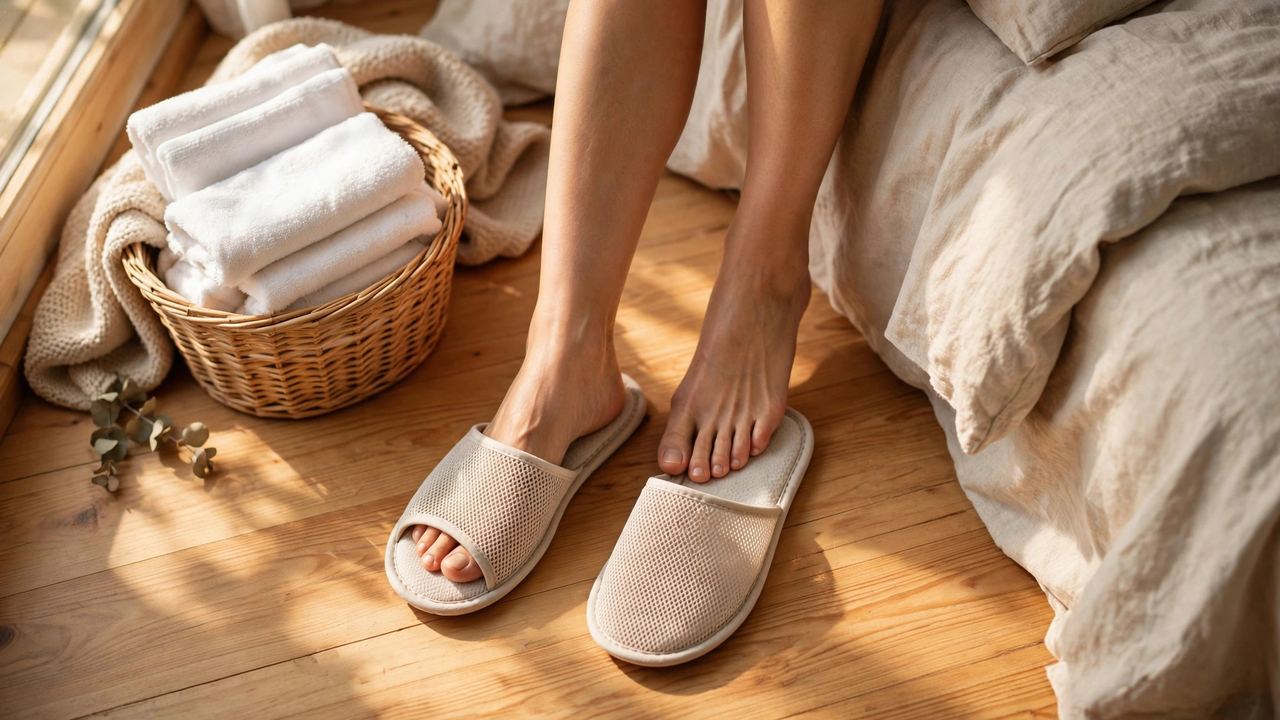
If you wear slippers the way most people do — straight onto bare feet, first thing in the morning and again the moment you get home — the inside of that slipper becomes a warm, damp, rarely washed place. That is exactly the environment where feet stop feeling fresh. Shoppers searching for the best slippers for bare feet that don t cause athlete’s fot are usually not looking for a medical product at all. They are looking for slippers that breathe, that move moisture away from the skin instead of trapping it, and that can actually be cleaned when they start to smell less than fresh.
One thing needs to be said plainly before any product names: no slipper can prevent, treat, or cure athlete’s foot or any other foot condition, and nothing in this guide should be read as medical advice. Athlete’s foot is a fungal infection, and if you have symptoms — itching, scaling, cracking, or a rash that does not settle — the right move is to talk to a pharmacist or clinician, not to buy footwear. What a well-chosen slipper can do is support ordinary foot hygiene: let air circulate, wick sweat away from the skin, dry out fully between wears, and go through the wash (or be aired and cleaned) so you are not putting bare feet back into yesterday’s moisture. This guide compares only maker-listed construction features — materials, linings, washability, and design — and judges each pick on how well its design suits bare feet worn day after day.
The six picks below split into two camps. The wool camp — Haflinger and Glerups — relies on natural felted wool, which the makers list as breathable, moisture-absorbing, and temperature regulating. The washable camp — RockDove, Dearfoams, Isotoner, and Vionic — relies on terry and knit fabrics, moisture-moving linings, and, in several cases, full machine washability, so the slipper itself can be reset to clean on a regular laundry cycle. Both approaches can work well for bare feet. Which one suits you depends on whether you would rather have a natural fiber that manages moisture passively, or a synthetic or terry design you can throw in the machine without thinking twice.
Quick verdict
If you want one recommendation: the RockDove Men’s Original Two-Tone Memory Foam Slipper is the easiest bare-feet pick for most households, because the maker lists a waffle knit upper that ventilates the interior and full machine washability, so keeping it clean takes no special routine. If you prefer natural materials and dislike washing footwear, the Haflinger AT Classic Hardsole and the Glerups Wool Slip-On use boiled or felted wool that the makers list as moisture-absorbing and temperature regulating, and wool’s habit of drying out between wears suits bare feet well. For women who want a washable terry lining, the Dearfoams Women’s Olive Memory Foam Sweatshirt Clog pairs a breathable, absorbent terry lining with machine wash care. The Isotoner Women’s Terry Slip-In Memory Foam Clog is the soft, low-profile terry option, and the Vionic Women’s Gemma II Mule Slipper adds an adjustable strap and a contoured EVA footbed for people who want more structure underfoot while still wearing a terry upper against bare skin.
Comparison table
| Product | Design | Upper and lining the maker lists | Care the maker lists | Best for |
|---|---|---|---|---|
| RockDove Men’s Original Two-Tone Memory Foam Slipper | Slip-on clog, closed toe | Waffle knit upper that ventilates the interior; memory foam insole | Machine washable, cold gentle cycle, dry flat | Easy-care everyday wear for bare feet |
| Haflinger AT Classic Hardsole Slipper | Slip-on clog, closed toe | 100% boiled virgin wool upper; wool felt insole lining | Gentle wash and air-dry per maker care notes | Natural-fiber breathability with arch support |
| Glerups Wool Slip-On Slipper with Leather Sole | Low slip-on shoe, closed toe | Natural wool felt upper; chrome-free leather sole | Air out between wears; not a machine-wash design | Bare feet that run warm and need moisture absorption |
| Dearfoams Women’s Olive Memory Foam Sweatshirt Clog Slipper | Slip-on clog, closed toe | Sweatshirt-style upper; breathable, absorbent terry lining | Machine wash cold, gentle cycle, lay flat to dry | Washable terry comfort with a rubber sole |
| Isotoner Women’s Terry Slip-In Memory Foam Clog | Slip-in clog, closed toe | Terry fabric upper; plush memory foam with heel cushion | Machine washable per the maker’s listing comparison chart | Soft terry feel in a light, low clog |
| Vionic Women’s Gemma II Mule Slipper | Open-back mule, adjustable strap | Terry upper in the Black Terry version; EVA footbed | Spot clean and air dry per maker guidance for terry uppers | Adjustable fit and contoured support for bare feet |
How we selected
Every product in this guide was checked on its opened Amazon listing, and the specifications quoted are the ones the maker lists there — materials, lining descriptions, care instructions, style numbers, and sole construction. We did not test these slippers, and we have not repeated any claim a maker makes about health outcomes, because this topic does not allow that shortcut: a slipper is a hygiene-supporting household item, not a treatment.
The selection criteria were built around what actually matters when a slipper touches bare skin for hours a day. First, moisture behavior: the maker had to list a breathable upper, a moisture-wicking or absorbent lining, or a natural fiber known for absorbing and releasing moisture. Second, cleanability: machine washability scored highest, followed by removable or washable insoles and designs that air out quickly; a slipper that can never be cleaned is a poor match for bare feet no matter how soft it feels in week one. Third, airflow and design: open or low-cut designs and ventilating knits were favored over sealed, heavily padded constructions that hold heat. Fourth, the footbed had to suit bare skin — no scratchy seams called out in the maker’s own materials, and linings described as soft against the foot. Finally, each pick had to be a real, currently listed product with an identifiable brand, model name, and style number, sold new on Amazon US.
Just as important is what was excluded. Slippers with sealed synthetic linings and no stated care route were left out. So were products whose listings made disease-related promises; a maker claiming a house slipper prevents a fungal infection is a reason to walk away, not a feature. The result is six honest designs that approach the same problem — keeping the bare-foot environment drier and cleaner — from different directions.
Top picks
RockDove Men’s Original Two-Tone Memory Foam Slipper
RockDove’s two-tone clog is the most straightforward answer to the bare-feet problem in this roundup, because it attacks the issue from both directions at once: ventilation while you wear it, and a full wash when you do not. The maker lists a waffle knit upper that ventilates the interior, letting the foot breathe and stay sweat-free, and that open knit structure is exactly what a bare foot needs inside a closed-toe slipper. Instead of sealing warm air against the skin the way a solid synthetic upper does, the knit gives moisture somewhere to go during wear.
- Brand and model: RockDove Men’s Original Two-Tone Memory Foam Slipper, style number the maker lists as M302
- Upper: the maker lists a waffle knit upper designed to ventilate the interior
- Insole: the maker lists a memory foam insole that conforms to the contours of the foot
- Care: the maker lists all RockDove slippers as machine washable — cold water, gentle cycle, dry flat
- Sole: the maker lists a rubber outsole for indoor and outdoor use
- Design: slip-on clog with a closed toe and a low heel collar
The washability is the real headline for bare-foot wearers. A slipper worn on bare skin picks up sweat and skin oils every single day, and a design that goes through a normal cold gentle cycle and dries flat can be kept genuinely clean instead of merely aired and hoped for. The memory foam insole is a comfort feature rather than a hygiene one, but it matters for bare feet in a different way: a footbed that conforms to the foot reduces the friction hotspots that can leave skin sore during long hours of standing on hard floors. The rubber outsole also means the pair can step outside to a mailbox or patio without soaking up ground moisture through a fabric sole — damp soles are one of the quiet ways slippers stay wet longer than they should.
Buy it if: you want the lowest-effort hygiene routine in this guide — a ventilating knit for daily wear and a machine wash whenever the pair needs refreshing — in a men’s clog that works indoors and out.
Skip it if: you strongly prefer natural fibers against your skin, or you want an open-toe design for maximum airflow in a hot climate; look at the wool picks or an open design instead.
Haflinger AT Classic Hardsole Slipper
Haflinger takes the opposite approach to RockDove: no synthetic knit, no foam-first design, just boiled wool doing what wool has done in European house shoes for generations. The maker lists a 100% boiled virgin wool upper and a wool felt insole lining, and describes boiled wool and wool felt as breathable, absorbent materials that keep feet pleasantly dry and ventilated, warm in cold weather and cooler in warm weather. For bare feet, that absorbency is the point — wool fibers take up moisture from the skin and release it as the slipper dries, rather than leaving sweat sitting against the foot.
- Brand and model: Haflinger AT Classic Hardsole Slipper, style number the maker lists as AT74
- Upper: the maker lists 100% boiled virgin wool
- Lining and insole: the maker lists a wool felt insole lining over a latex molded midsole with arch support
- Sole: the maker lists a non-skid, waterproof rubber outsole in the hardsole version
- Care: the maker’s care notes describe a short gentle wash and air-drying, with the slipper stuffed with paper while it dries
- Design: generous, roomy slip-on cut with space for toes to move
The AT Classic also suits bare feet in a way that is easy to overlook: the roomy cut. The maker emphasizes a generous fit with space for the foot to expand and move, and air space around bare toes is a genuine comfort and dryness advantage over a tight, padded slipper that presses damp fabric against the skin from all sides. The latex molded arch support gives the pair more structure than a flat felt slipper, which helps if you wear your slippers for hours of standing rather than just padding to the kitchen. Because the upper is a natural fiber with no synthetic lining, there is nothing clammy between wool and skin.
Buy it if: you want a natural-fiber slipper whose material itself manages moisture, you like a roomy fit around bare toes, and you want arch support in a durable hardsole clog.
Skip it if: you want to machine wash your slippers on a normal cycle without special care steps, or you dislike the feel of wool directly against bare skin.
Glerups Wool Slip-On Slipper with Leather Sole
Glerups builds its slipper from a single idea executed carefully: a foot-shaped upper of natural wool felt, worn directly against the skin, with nothing synthetic in between. The maker lists high-quality New Zealand wool felted into a flexible upper, and states that the wool absorbs moisture and helps regulate warmth and coolness around the feet, keeping them feeling dry and balanced through changing temperatures. The design is deliberately minimal — a low slip-on shoe shape with a closed toe and a soft chrome-free leather sole — so there is very little material to trap heat in the first place.
- Brand and model: Glerups Wool Slip-On Slipper, model number the maker lists as B-01-00
- Upper: the maker lists pure natural wool felt from New Zealand wool
- Sole: the maker lists a chrome-free leather sole intended for indoor use
- Fit: the maker lists a foot-shaped design with closed-toe coverage
- Feel: the maker lists the wool as soft, comfortable, and itch-free against the skin
- Care: a wool felt design meant to be aired out between wears rather than machine washed
This is the pick for people whose feet run warm in conventional slippers. A thick fleece-lined slipper can feel wonderful for the first ten minutes and clammy by the end of the evening; the Glerups approach is thinner, closer, and built around wool’s natural habit of absorbing moisture vapor before it condenses on the skin. The leather sole keeps the whole slipper soft and quiet on floors, and because there is no foam insole to hold onto moisture, the pair dries out readily when it is set aside. The trade-off is care: felted wool slippers are aired and rested rather than laundered, so this pick rewards wearers who rotate or air their slippers and do not need a machine-wash routine.
Buy it if: your feet overheat in padded slippers, you want natural wool directly against bare skin, and you are happy to air your slippers out instead of washing them.
Skip it if: you need a rubber outsole for stepping outdoors, or regular machine washing is non-negotiable for you.
Dearfoams Women’s Olive Memory Foam Sweatshirt Clog Slipper
Dearfoams aims the Olive clog squarely at the bare-feet use case with the material it puts against the skin: terry. The maker lists a breathable, absorbent terry lining that keeps feet dry and comfortable, and terry cloth earns that description honestly — its looped pile is the same construction used in towels, built to pull moisture off a surface and hold it away until it can evaporate or be washed out. Around that lining sits a soft sweatshirt-style upper and a multi-density memory foam insole, so the clog feels relaxed rather than technical.
- Brand and model: Dearfoams Women’s Olive Memory Foam Sweatshirt Clog Slipper, style number the maker lists as 26566
- Lining: the maker lists a breathable, absorbent terry lining
- Insole: the maker lists a multi-density memory foam insole
- Care: the maker lists machine wash on cold, gentle cycle, and lay flat to dry
- Sole: the maker lists a durable rubber sole for indoor wear and quick trips outside
- Design: slip-on clog with a round toe and a loose, comfortable fit
What makes the Olive a strong bare-feet pick is the combination rather than any single feature. Terry handles the moisture at the skin, the wash cycle resets the lining completely, and the rubber sole keeps the footbed from wicking up dampness from a kitchen or patio floor in between. The loose clog fit also helps: bare feet are not pressed hard against the lining on all sides, so air can move a little inside the shoe. If your current slippers are fleece-lined and feel wonderful in January but swampy by spring, a terry-lined washable clog is the natural correction — similar softness, far better moisture behavior across the year.
Buy it if: you want a towel-like terry lining against bare skin, genuine machine washability, and a rubber sole, in a relaxed women’s clog.
Skip it if: you prefer natural fibers only, or you want an adjustable fit — this is a fixed slip-on with a deliberately loose fit.
Isotoner Women’s Terry Slip-In Memory Foam Clog
Isotoner’s terry clog is the lightest, simplest design in this guide: a low slip-in clog in a terry fabric, with plush memory foam underfoot and an impact-absorbing heel cushion. The maker describes the clog as wrapping the foot in a soft, cozy fit, and the terry construction does the same job here as it does in the Dearfoams pick — a looped, absorbent surface against bare skin instead of a smooth synthetic lining that sweat can pool on. The low, open-back clog shape also means the heel is exposed to the air, which helps the whole foot run cooler than in a fully enclosed slipper boot.
- Brand and model: Isotoner Women’s Terry Slip-In Memory Foam Clog, style number the maker lists as A96035BLK
- Upper: the maker lists a terry fabric clog upper
- Cushioning: the maker lists plush memory foam with an impact-absorbing heel cushion
- Care: the maker’s listing comparison chart marks this clog line as machine washable
- Design: low slip-in clog with a closed toe and an open heel
- Fit: the maker lists a soft stretch fit that hugs the foot
The Isotoner suits a specific bare-feet routine very well: frequent, short wears throughout the day. Because it slips in and out in a second and sits low on the foot, it is the pair most likely to be chosen for quick trips around the house, and its terry surface deals with the light moisture of short wears gracefully. The heel cushion is a small but real comfort point for bare heels on hard floors. Where it gives ground to the washable leaders in this guide is structure — this is a soft clog without a rugged outsole story — so it is best treated as a true indoor slipper and kept off wet patios and driveways, where a soaked fabric sole would undo its dryness advantages.
Buy it if: you want the softest, lightest terry option for indoor bare feet, with memory foam comfort and an easy slip-in shape.
Skip it if: you regularly step outside in your slippers and need a hard rubber outsole, or you want strong arch support.
Vionic Women’s Gemma II Mule Slipper
The Gemma II is the structured outlier in this lineup: an open-back mule with a terry upper, an adjustable hook-and-loop strap, and a footbed built with far more intent than the average house slipper. The maker lists a flexible EVA midsole that absorbs shock and a built-in Vio Motion footbed with contoured arch support, a deep heel cup, and forefoot flexibility. For bare feet, the open-back mule shape is itself a feature — the heel and much of the top of the foot sit in open air, so heat escapes instead of building up inside a closed shoe.
- Brand and model: Vionic Women’s Gemma II Mule Slipper, style number the maker lists as J0892FE005
- Upper: the maker lists a terry upper in the Black Terry version, with an adjustable hook-and-loop closure
- Footbed: the maker lists a Vio Motion footbed with contoured arch support and a deep heel cup
- Midsole: the maker lists a flexible EVA midsole that absorbs shock
- Outsole: the maker lists a durable synthetic outsole for indoor and outdoor use
- Design: open-back mule with a round toe
The adjustable strap deserves attention from bare-foot wearers specifically. Slippers are usually sized generously to slip on over socks, which means a bare foot can slide around inside, and that sliding creates friction and encourages the foot to sweat against the lining. A strap that snugs the mule to a bare foot reduces that movement, and the terry surface handles the moisture that remains. The trade-off is care: a structured EVA footbed design like this is a spot-clean-and-air-dry slipper rather than a machine-wash one, so its hygiene routine is airing, resting between wears, and cleaning the terry as the maker directs. Choose it for support and airflow, not for laundry-day convenience.
Buy it if: you want real arch support and an adjustable fit in a breathable open-back mule, and you are comfortable with spot cleaning instead of machine washing.
Skip it if: machine washability is your top priority, or you dislike any strap hardware on a house slipper.
Buying guide: what actually keeps bare feet comfortable
Start with the lining, not the cushioning. When a slipper touches bare skin, the lining is the product. The maker-listed materials that behave best against bare feet share one trait: they move moisture away from the skin and let it escape. Terry cloth does it with a looped pile that absorbs like a towel. Wool felt and boiled wool do it by absorbing moisture vapor into the fiber itself and releasing it as conditions dry. Ventilating knits do it by letting air pass through the upper. What to avoid is a sealed, non-breathable synthetic lining with no stated moisture behavior — against bare skin it becomes a small greenhouse, and no amount of memory foam underneath changes that.
Treat washability as a core feature, not a bonus. Bare feet transfer sweat, oils, and skin cells into a slipper every day. A machine-washable design — like the RockDove and Dearfoams picks above — lets you reset that completely on a normal laundry cycle, which is the single most practical hygiene advantage a slipper can offer. If a design is not machine washable, look for the next best things: a removable insole you can wash or replace, a natural fiber that airs out quickly, and a shape that dries fully overnight. Whatever you choose, let slippers dry completely between wears; rotating two pairs is a simple, effective habit for anyone who wears slippers on bare feet daily.
Match the design to your climate and habits. Open-back mules and low clogs expose more of the foot to the air and run cooler, which suits warm homes and people whose feet sweat easily. Closed wool clogs suit cooler homes while still managing moisture through the fiber. A rubber outsole matters if you step outside, because a fabric sole that soaks up ground moisture will keep the footbed damp for hours afterward. Fit matters too: a bare foot should not be compressed by padding on all sides, and it should not slop around either — roomy-but-secure, or adjustable, is the target.
Keep expectations honest. A breathable, washable slipper supports good foot hygiene: drier skin, cleaner fabric against the foot, fewer stale odors. It does not disinfect anything, and it is not a barrier against infection. Wash your feet, dry them thoroughly — especially between the toes — before putting slippers on, wear clean socks when a clinician advises it, and do not share slippers. If you notice persistent itching, peeling, or cracking, treat that as a health question for a pharmacist or clinician rather than a shopping problem. The slippers in this guide were chosen to make the everyday environment around your feet drier and cleaner; that is a worthwhile goal, and it is the whole of what footwear can honestly promise.
FAQ
Can any slipper actually prevent athlete’s foot?
No. Athlete’s foot is a fungal infection, and no house slipper can prevent, treat, or cure it — be skeptical of any product that claims otherwise. What breathable, washable slippers can do is support ordinary hygiene by keeping the environment around bare feet drier and cleaner. If you have symptoms, speak to a pharmacist or clinician.
Is wool or terry better for wearing slippers without socks?
Both work, in different ways. The makers of the wool picks list wool felt and boiled wool as absorbing moisture and regulating temperature, and wool airs out well between wears but is generally not machine washed. Terry linings absorb moisture like a towel and, in designs like the Dearfoams Olive, come with full machine washability. Choose wool for passive moisture management, terry for a wash-it-clean routine.
How often should I wash slippers I wear on bare feet?
There is no medical rule, but a practical routine is to wash machine-washable pairs whenever they start to feel or smell stale — for daily bare-foot wear, many people fold them into a regular weekly or fortnightly laundry cycle, following the maker’s care instructions (typically cold, gentle, and dried flat). Non-washable pairs should be aired out after every wear and rested between days of use.
Are open-back slippers better for bare feet than closed ones?
Open-back mules and low clogs let more air reach the foot and usually run cooler, which helps moisture escape. Closed designs can be just as suitable if the upper genuinely breathes, as with the ventilating knit and boiled wool picks in this guide. The material and lining matter more than the silhouette alone.
Should I wear socks with slippers if I am worried about foot hygiene?
Clean socks add a washable barrier between skin and slipper, and some people prefer that combination. This guide is for people who prefer bare feet: for them, the closest equivalent is a slipper with an absorbent lining that can itself be washed or aired effectively. Either way, starting with clean, thoroughly dried feet matters more than the slipper choice.
Conclusion
The honest version of this search is simple: you cannot buy a slipper that guarantees anything about a fungal infection, but you can absolutely buy slippers that keep bare feet drier, air out properly, and can be kept genuinely clean. For most people, that means the RockDove two-tone clog’s ventilating knit and machine washability, or the Dearfoams Olive’s absorbent terry lining with the same easy care. If you prefer natural materials, the Haflinger AT Classic Hardsole and the Glerups Wool Slip-On let boiled and felted wool handle moisture passively, wear after wear. The Isotoner terry clog keeps things light and simple indoors, and the Vionic Gemma II adds structure and an adjustable fit for feet that want support with their airflow. Pick the care routine you will actually follow — a washable pair you wash beats a perfect pair you never clean — let your slippers dry fully between wears, and leave medical questions to medical professionals.
More from Amazon
Programs that pair well with the guide above. Offers and eligibility are set by Amazon and may change.
Collect the home and kitchen items you want in one registry that guests can shop from.
Create a wedding registrySet up recurring deliveries of everyday items on eligible products. Terms and savings are set by Amazon.
Explore Subscribe & SaveFree shipping on eligible items, Prime Video and more. Eligible new members can start with a free trial.
Start a Prime free trialAudiobooks and podcasts to listen to on the go. Eligible new members can start with a free trial.
Try Audible freeAs an Amazon Associate we earn from qualifying purchases.










Write Your Review
No reviews yet. Be the first to share your experience!