We independently review everything we recommend. When you buy through our links, we may earn a commission. As an Amazon Associate we earn from qualifying purchases.
Best Rugs That Work as Car Floor Mats: 6 Top Picks
Searching for the best rugs that work as car floor mats? Compare six low-pile, rubber-backed, washable rugs and tiles for footwells, rear floors and trunks.
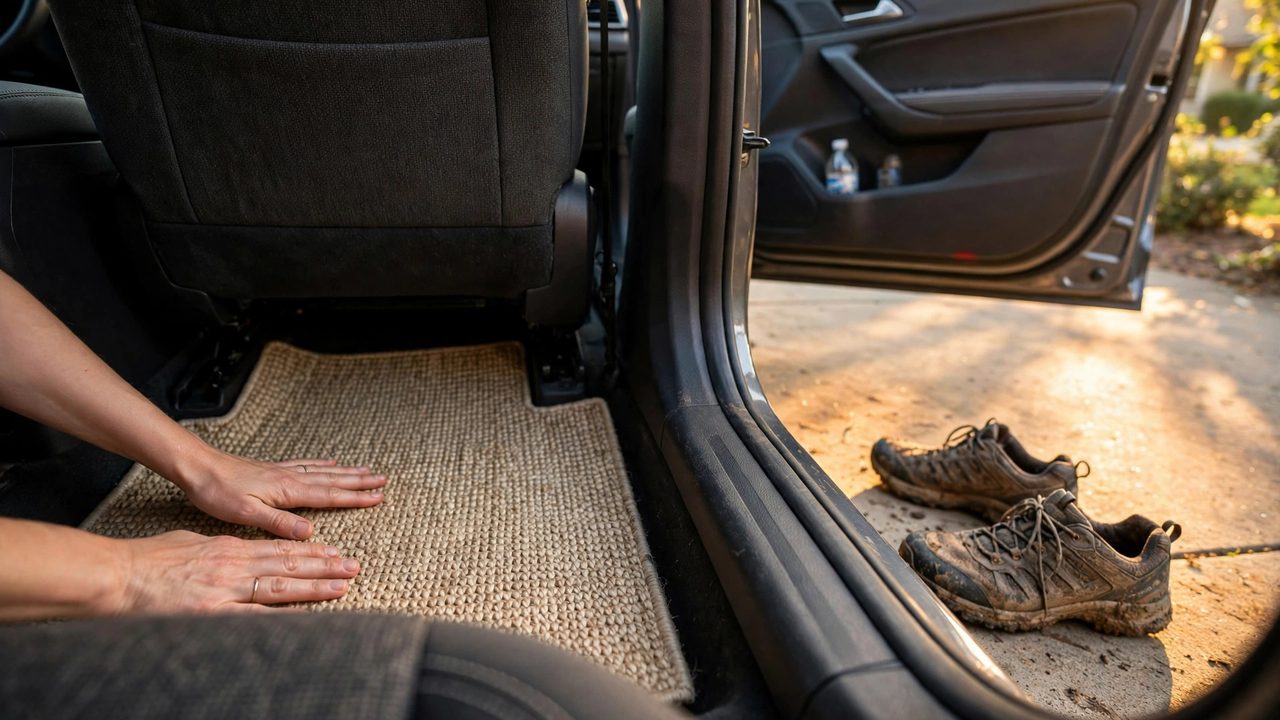
Dedicated car floor mats are not the only way to protect a vehicle interior. A flat, low-pile household rug with a real rubber backing can do the same job in a rear footwell, under a child seat, across a cargo floor or inside a trunk, often with better dirt-trapping texture and easier washing than a basic molded mat. The catch is that most rugs are wrong for the job: thick pile bunches under pedals, unbacked woven rugs slide on carpet, and decorative mats curl at the corners. This guide to the best rugs that work as car floor mats narrows the field to six household rugs and carpet tiles that share the traits a vehicle actually demands: a low profile, a grippy rubber or thermoplastic backing, a surface that traps grit instead of spreading it, and care instructions simple enough that a muddy rug can be hosed off, shaken out or machine washed and put straight back into service.
One safety rule runs through every pick below. A loose rug should never sit where it can slide forward and interfere with the pedals, so the driver footwell is the last place to use one, and only when the rug is flat, fully secured and completely clear of the pedal travel. The natural homes for these rugs are the rear seat floor, the passenger side of a parked work vehicle, the cargo area and the trunk, where a sliding rug is an annoyance rather than a hazard. Every pick was chosen with that placement in mind.
Quick verdict
For most drivers, the iCustomRug Spartan Weather Warrior Berber Loop Runner is the strongest all-round choice: its waterproof thermoplastic rubber backing, recycled polyester loop surface and hose-down care suit muddy boots, wet dogs and cargo duty better than anything else here. If washability matters most, the Lahome Checkered Easy Jute Rug and the Wash + Dry Arthur Diamonds Washable Rug both go in a home washing machine, and the Wash + Dry design can go in the dryer as well. For a long, narrow space such as a van floor or a trunk channel, the Ottomanson Contemporary Bordered Ottohome Runner Rug covers six feet in one piece. The Ottomanson Lifesaver Scraper Pile Utility Rug is the pick for grit and gravel because its ribbed surface is built to scrape and it can be trimmed to fit. Finally, the Mohawk Home Peel and Stick Carpet Tile suits drivers who want a semi-permanent, cut-to-shape carpet layer in a cargo area or work van rather than a loose rug at all.
Every product in this guide started as a household rug, runner or carpet tile rather than an automotive accessory, so each one had to clear a set of vehicle-specific hurdles before it earned a place. First, pile height: nothing here is plush. The maker lists low pile or a stated thickness of a quarter inch or less for every pick, because a thin rug lies flat on a vehicle floor, does not bunch under a heel and does not hold the deep folds that make thicker rugs creep. Second, backing: each pick has a rubber, thermoplastic rubber, TPE, nitrile rubber or adhesive backing that the maker lists, since grip against the vehicle carpet or cargo floor is what keeps a rug in position. Third, size: each pick is either small enough for a footwell at two by three feet, long enough to run a van or trunk channel as a runner, or modular enough to be cut and tiled across an irregular cargo floor.
Fourth, cleaning: a rug used as a car floor mat collects road salt, gravel, spilled coffee and pet hair, so every pick here can be vacuumed, shaken, hosed or machine washed according to the maker’s own care instructions, with no dry-clean-only or spot-clean-only divas in the list. Fifth, verification: each product was checked on its opened Amazon listing, including the availability block, and only products showing a live featured offer sold new were kept. A well-known washable rug system that showed no live offer at checking time was excluded for exactly that reason, and a plush area rug whose listing did not confirm a live offer was also left out. Specs in this article are the maker’s own listed figures, phrased as the maker lists them, and nothing has been filled in by guesswork.
The Spartan Weather Warrior is the most car-like household rug in this guide. The maker lists a three by six foot runner in black, with a surface of recycled material in a Berber loop construction and a pile height of 0.25 inches. The loop texture matters in a vehicle: short, dense loops scrape mud and grit off boot soles and hold it in the surface instead of letting it migrate across the car carpet, and the non-shedding construction means the loops stay put rather than shedding fibres over the interior. Underneath, the maker lists a waterproof thermoplastic rubber backing, and that waterproof barrier is the single most valuable feature for car use, because melted snow, wet umbrellas and spilled drinks sit on the backing instead of soaking through to the vehicle carpet below.
At three feet wide and six feet long, one runner covers a full cargo floor in many hatchbacks and crossovers, or runs the length of a rear floor across both footwells in a larger vehicle. Care is as simple as car accessories get: the maker lists vacuuming, hosing down and hanging dry, so a salt-crusted runner can be dragged out at a car wash, rinsed and left to dry over a rail. The maker also notes the rug may need up to 72 hours to relax flat after unpacking, which is worth respecting before judging the fit, since a curled edge in a cargo area catches on loading gear. The indoor and outdoor rating means it also tolerates the temperature swings of a parked vehicle better than a purely decorative indoor rug.
Buy it if: you want one rugged runner to protect a cargo floor or rear floor through wet, muddy seasons, and you value a waterproof backing and hose-down cleaning over softness.
Skip it if: you need a small single footwell mat, since three by six feet is far more rug than one footwell needs, or you want a machine-washable pick, because this one is hose-clean only.
The Lahome Checkered Easy Jute Rug is the footwell-sized pick. The maker lists a two by three foot rug in a black checkerboard pattern, made from a polyester material the maker calls Easy Jute because it recreates the look of woven jute without natural jute fibres. For car use, that synthetic construction is a genuine advantage: natural jute absorbs water, holds odours and degrades in a damp footwell, while this flat woven polyester surface is non-shedding, does not pill and can be machine washed when road grime builds up. At 0.15 inches thick as the maker lists it, this is the thinnest rug in the guide, so it sits almost flush on a rear footwell floor and slides under a child seat base without adding meaningful height.
The backing is a slip-resistant TPE layer that the maker lists as helping the rug stay in place on hard floors; on vehicle carpet it adds useful resistance to shifting, though a rug this light should still be checked and repositioned regularly, and kept out of the driver footwell entirely. The two by three footprint suits a single rear footwell, the floor under a booster seat where crumbs and juice accumulate, or the well behind a front seat in a coupe. Care instructions from the maker include machine washing, shaking off and using a small handheld vacuum, which maps neatly onto car life: shake it out at the kerb weekly, wash it when the checkerboard starts to grey. The maker notes the rug is foldable, so a spare can live in the trunk and rotate in while the other is in the wash.
Buy it if: you need a small, thin, machine-washable rug for rear footwells or under child seats, and you want the jute look without natural fibres in a damp car.
Skip it if: you need cargo coverage, since two by three feet covers very little floor, or you want the heaviest grip, because a rug this light depends on placement and checking rather than weight to stay put.
The Wash + Dry Arthur Diamonds rug, made by Kleen-Tex, takes a different construction route from the printed washable rugs that dominate this category. The maker lists a two by three foot rug with a tufted nylon pile permanently bonded to a non-slip nitrile rubber backing, in one piece with no separate pad to align or reattach after washing. That one-piece build is a real benefit in a car: there is nothing to separate, curl apart or reassemble in a cold garage, and the bonded nitrile backing keeps the rug flat and grippy on a footwell floor. The maker lists the thickness at 0.25 inches, with a low-profile tufted surface that traps moisture, mud and debris in its absorbent fibres while the rubber backing stops leaks reaching the carpet below.
Care is the headline here. The maker lists these rugs as fitting directly in standard home washing machines and drying quickly in standard home dryers, so unlike air-dry-only rugs it can be washed in the evening and be back in the car the next morning. The maker also lists OEKO-TEX Standard 100 certification and manufacture in Poland, and describes the low-profile design as meeting ADA compliance standards, which speaks to how flat and stable the rug sits. In vehicle terms, the two by three size fits a rear or passenger footwell, the floor of a small hatchback cargo bay, or under a pet carrier, where its absorbency handles wet paws and shaken-off rain. The tan and cream Arthur Diamonds pattern will show road dirt sooner than a black rug, so it suits drivers who genuinely will wash it often rather than those who want dirt to hide.
Buy it if: you want a one-piece rug you can machine wash and tumble dry on a regular cycle, with a bonded nitrile rubber backing that stays flat in a footwell.
Skip it if: you want dirt-camouflaging dark colours only, or you need coverage larger than a single small footwell or pet area.
Some vehicle floors are long and narrow: the load channel of a van, the floor between the front seats and a rear bench in a camper conversion, or the flat trunk floor of an estate car. That is the shape this Ottomanson runner is built for. The maker lists the Contemporary Bordered Ottohome rug at one foot ten inches by six feet, in a Border Dark Brown pattern, made from nylon with a machine-made low pile and a rubber backing. The maker lists the thickness at 0.2 inches, thin enough to lie flat under sliding doors and loading ramps without catching, and the nylon face is the durable, abrasion-resistant choice among common rug fibres, which suits a surface that boots and box corners cross daily.
The rubber backing helps the runner stay stable on hard floors, and in a van or on a bare metal or vinyl cargo floor that grip is doing the same job it does on tile at home. The bordered pattern is more than decoration in this role: the framed edge gives a visual guide when you are aligning the runner down a channel, and dark brown hides the scuffs that load floors collect. Care is the trade-off to note. The maker lists hand wash only, with regular vacuuming and spot cleaning as the everyday routine, so this is a vacuum-and-shake rug rather than a machine-wash one. For a semi-permanent van floor layer that gets vacuumed in place, that is a reasonable exchange for six continuous feet of coverage at a narrow width few other rugs offer.
Buy it if: you need long, narrow coverage for a van floor, camper aisle or trunk channel, in a durable nylon with a rubber backing.
Skip it if: machine washing is non-negotiable, since the maker lists hand wash care, or your space is a standard single footwell, where a six-foot runner is the wrong shape entirely.
The Lifesaver utility rug from Ottomanson is the grit specialist. The maker lists a flat woven polyester rug with a scrape rib pile texture, sized at two feet by thirty-one inches in grey, with a thermoplastic rubber backing and a thickness of 0.2 inches. The ribbed surface is the point: fine, closely spaced ribs brush dirt, gravel and dried mud off soles and trap it at the surface, which is exactly the behaviour you want at the threshold of a cargo area, in the footwell of a work truck used on site, or under the loading edge of a boot where grit otherwise grinds into the carpet. The maker rates it for indoor and outdoor use and lists fade resistance among its features, so sun through a windscreen and weather at an open tailgate are both within its brief.
Two practical details set it apart for vehicle fitting. The maker describes unfinished edges that allow precise cuts to the dimensions you need, so an awkward footwell or a cargo corner can be fitted by trimming rather than folding, and a folded rug edge is precisely what you do not want in a car. Cleaning matches the scraper role: the maker lists garden hose and hang dry care, plus sweeping and spot cleaning, so trapped grit can be hosed out rather than ground deeper by a vacuum beater bar. The TPR backing grips hard floors including concrete and tile per the maker, and on a ribbed cargo floor or under the weight of carried gear it stays where it is laid. It is a utility surface first and a rug second, and for mud-season vehicles that ordering is correct.
Buy it if: your vehicle’s problem is grit, gravel and dried mud, and you want a trimmable, hose-clean scraper surface for a cargo threshold or work vehicle footwell.
Skip it if: you want a soft or decorative finish, since the ribbed utility surface is built for scraping rather than comfort, or you need machine washing.
The Mohawk Home carpet tile is the option for drivers who do not want a loose rug at all. The maker lists twenty-four by twenty-four inch tiles in grey, fifteen tiles to a box covering sixty square feet, made from polyester with a low pile at 0.25 inch pile height and a peel and stick installation. In a cargo area, a work van or a camper build, tiles solve the two problems loose rugs cannot: they can be trimmed to fit around wheel arches, seat rails and irregular corners, and once pressed down they cannot slide, bunch or migrate the way a loose mat does. The maker lists the model as AZCT2 14349 024B15 and describes the polyester fibre as offering soil and stain protection, fade-resistant colour and all-weather resilience for indoor and outdoor use.
The modular format has a maintenance advantage unique in this guide: a single tile ruined by a paint spill or battery leak can be peeled up and replaced from the same box instead of replacing a whole rug. The maker lists care as vacuuming or sweeping, spot cleaning, and rinsing with a garden hose for outdoor installations, followed by air drying. Two honest cautions belong with this pick. Adhesive and vehicle interiors are a commitment, so tiles suit cargo floors, van builds and utility vehicles far better than a leased car’s footwells, and heat inside a parked vehicle is hard on any adhesive, so expect to press edges down again after hot spells. Used where it belongs, though, it is the closest thing here to fitting a vehicle with proper carpet rather than laying a mat over the problem.
Buy it if: you are carpeting a cargo floor, van or camper and want cut-to-fit, replaceable tiles that cannot slide around like a loose rug.
Skip it if: you want a removable mat you can shake out in seconds, or the vehicle is leased or borrowed and an adhesive-backed product is not appropriate.
Buying guide
Start with placement, not product. Measure the exact space the rug will occupy: a rear footwell, a full cargo floor, a trunk, a van aisle. Rugs that work as car floor mats fail most often on size, not quality. A two by three foot rug is the natural footwell unit. Runners of five to six feet suit cargo floors and channels. Anything destined for the driver footwell demands extreme caution: it must lie perfectly flat, be secured so it cannot travel forward, and leave the pedals completely unobstructed through their full movement. If any of those conditions is doubtful, put the rug anywhere else in the car, or choose a fitted automotive mat for that one position and use rugs for the rest of the vehicle.
Backing is the safety feature. The maker lists rubber, thermoplastic rubber, TPE or nitrile rubber backings for the loose rugs in this guide, and that backing is what resists sliding on hard cargo floors and slows movement on carpet. An unbacked woven rug, however attractive, is a poor car mat because it can skate on smooth floors and ruck up on carpet. Weight helps too: a heavier rug with a full rubber backing stays planted better than a featherweight printed mat, which is why the lightest pick here is recommended for rear footwells and under child seats, where it is partly trapped by the seat itself, rather than anywhere near pedals.
Match the surface to your dirt. Berber loops and ribbed scraper piles trap grit and dried mud at the surface where it can be shaken or hosed away. Flat woven washable rugs handle crumbs, spills and pet hair well and go in the machine, which matters for family cars. Smooth, low printed piles vacuum fastest. Think about your actual soil: a dog walker’s car needs absorbency and hose-down care, a school-run car needs crumb tolerance and machine washing, a trades vehicle needs a scraper texture and a surface that does not care about appearance.
Check the care label before buying. Machine washable is the most convenient claim, but read what the maker actually lists: some rugs here are machine wash and tumble dry, some are machine wash and air dry, some are hose and hang dry, and one is hand wash only with vacuuming as the routine. A rug you cannot clean the way your life requires will simply stay dirty in the car. Also note thickness: everything in this guide is a quarter inch or less as the maker lists it, and that thinness is deliberate. Thick, plush rugs feel luxurious at home and are a liability in a footwell, where they bunch, hold folds and raise the foot closer to pedal height.
Plan the rotation. Washable rugs work best in pairs for the positions that get dirtiest, so one can be in the wash while the other is in the car. However you configure it, lift the rugs out at every deep clean of the vehicle and check the carpet underneath: a waterproof backing protects the carpet from spills, but grit that works under any mat will abrade the carpet if it is left there for months, and a quick vacuum underneath keeps the whole system honest.
FAQ
Is it safe to use a rug as a driver-side car floor mat?
Only with great caution, and for most drivers the answer should be no. A loose rug in the driver footwell can slide forward, bunch, or ride up behind the pedals, and anything that interferes with pedal movement is dangerous. If a rug is used there at all, it must be thin, fully flat, secured against any forward movement and checked before every drive. The safer pattern, and the one this guide is built around, is a proper fitted mat for the driver and rugs for the passenger side, rear footwells, cargo area and trunk.
What size rug fits a car footwell?
A two by three foot rug is the standard small size that fits most rear and passenger footwells without folding. Measure your own footwell before ordering, because seat rails and transmission tunnels vary, and never fold a rug to make it fit: a folded edge creates a ridge that catches heels and encourages the rug to move. For cargo floors and trunks, runners around three by six feet or a six-foot narrow runner usually cover the space in one piece.
Can I cut a rug to fit my car?
Some rugs are made for it and some are not. The Ottomanson Lifesaver utility rug is listed by the maker with unfinished edges that allow precise cuts, and carpet tiles such as the Mohawk Home tiles are designed to be trimmed to shape. Bound or serged rugs, by contrast, can fray or unravel from a cut edge, and cutting a washable rug can damage the backing layer that keeps it flat. Check the maker’s description for trimming guidance before taking scissors to any rug.
How do I stop a rug sliding around in the car?
Start with a rug that has a rubber or thermoplastic backing, place it on a clean, dry surface, and position it where weight or surrounding trim helps hold it, such as under a child seat base or beneath cargo. Check and reposition it whenever you clean the car. Avoid stacking a rug on top of an existing loose mat, since two loose layers slide against each other more easily than one layer on the floor. If a position simply will not hold a loose rug, carpet tiles or a fitted automotive mat are the better answer for that spot.
How often should a rug used as a car mat be cleaned?
Shake or vacuum it whenever you clean the car’s interior, and wash or hose it whenever it looks grey, smells stale or has carried something wet. The washable picks in this guide are listed by their makers for machine washing, and the utility picks for hosing down, so there is no reason to let road salt sit in the fibres all winter. Always let a washed rug dry fully before putting it back, so moisture is not trapped against the vehicle carpet.
Conclusion
The best rugs that work as car floor mats share a recognisable formula: low pile, a real rubber-family backing, a size matched to the space, and care instructions you will actually follow. The iCustomRug Spartan Weather Warrior is the hard-wearing default for cargo and rear floors, the Lahome Checkered Easy Jute and Wash + Dry Arthur Diamonds bring true machine washability to footwell size, the two Ottomanson picks cover long channels and grit-scraping duty respectively, and the Mohawk Home tiles replace the loose rug entirely where a fitted carpet layer makes more sense. Choose by placement first, respect the driver footwell rule, and a household rug will protect a vehicle interior as faithfully as it ever protected a hallway.
M
Modern Line Home Editorial Team
We compare specs, materials and verified owner reviews before a product earns a spot. Rankings are never paid.
Affiliate disclosure. As an Amazon Associate we earn from qualifying purchases at no extra cost to you. Prices accurate as of the date shown.
House cold even with the heat on? Walk this ordered checklist: thermostat and filter first, then drafts, insulation, leaky ducts and a failing heating system.
Windows fogging up in winter? Check where the fog sits: on the room side it is indoor humidity, outside it is harmless, and between panes the seal has failed.
Store the main firewood pile about 30 feet from your house, off the ground and covered only on top. Compare racks, woodsheds, garages and indoor spots safely.
Place a portable generator outdoors only, at least 20 feet from windows, doors and vents, exhaust pointed away. Exact distances, setup steps and CO rules here.
Keep houseplants in the right winter spot: match window direction to plant type, stay clear of radiators and cold glass, and fix dry air and low light at home.
Mice enter through pencil-width gaps at foundations, pipes, vents, doors and the roofline. Walk this room-by-room winter checklist to find and seal each one.
A winter outage timeline: what to do in the first hour, first night and multi-day outage, with food safety times, pipe protection, heat and CO safety steps.
Size a space heater by room area: 10 watts per square foot at 8-foot ceilings, adjusted for insulation and ceiling height, with full wattage and BTU tables.
Start dripping at about 20 degrees, sooner for exposed pipes. Set a pencil-lead stream, drip the right faucets on both lines, and know when to stop safely.
A fridge needs 800-1,200 starting watts, not just 150-400 running watts. Use the tables to total your fridge plus freezer, lights, furnace fan and more today.












Write Your Review
No reviews yet. Be the first to share your experience!