We independently review everything we recommend. When you buy through our links, we may earn a commission. As an Amazon Associate we earn from qualifying purchases.
Best Rugs for Heavily Decorated Furniture: 6 Calm Picks
Find the best rugs for heavily decorated furniture: solid colours, subtle texture and low-contrast designs that calm busy sofas, cabinets and patterned chairs.
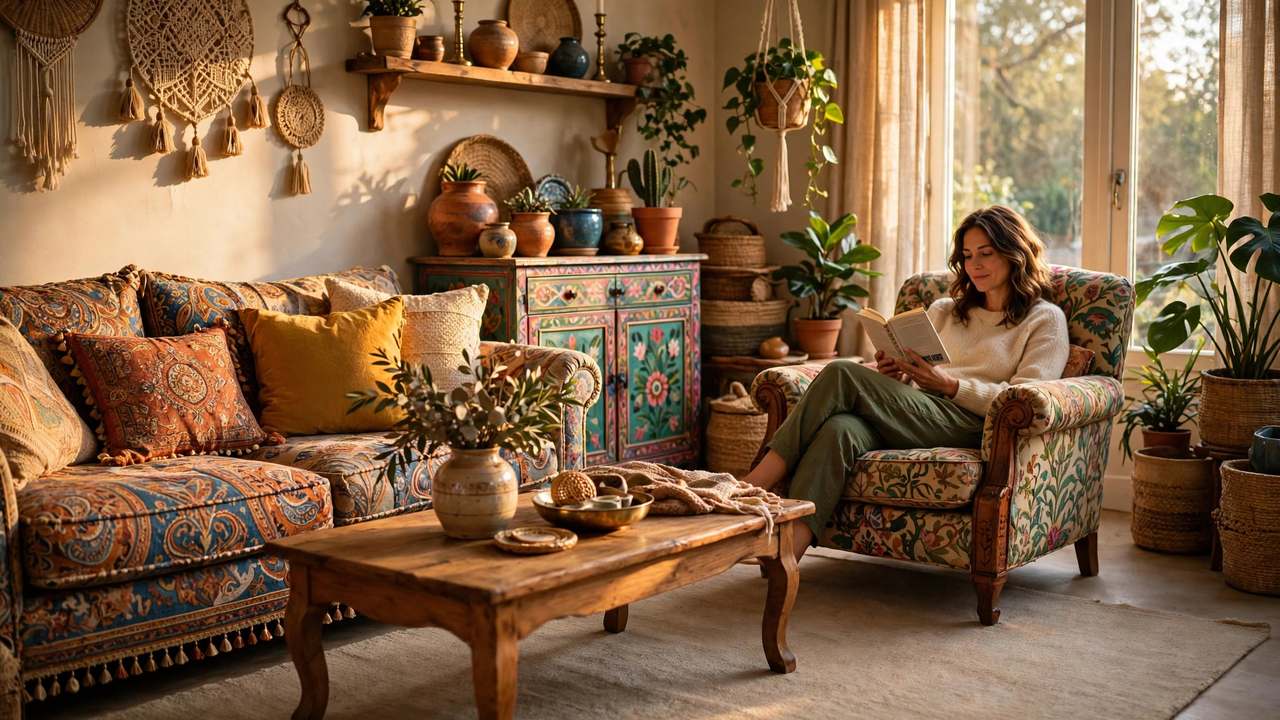
When the furniture already does the talking, the rug should lower its voice. A carved cabinet, a floral sofa, a patterned armchair, painted side tables and shelves full of objects can all be beautiful on their own, yet together they compete for the same attention. The floor is the largest quiet surface left in a room like that, and choosing best rugs for heavily decorated furniture really means choosing a rug that refuses to compete. Instead of another medallion, border or high-contrast pattern, the right rug gives the eye a place to rest, separates busy pieces from each other, and makes the whole arrangement feel deliberate rather than accidental.
That does not mean the rug has to be dull. In the six picks below, interest comes from texture rather than print: hand-woven jute, woven seagrass, a faux wool loop, and solid shags in ivory and beige. Each one is a real product sold on Amazon US, checked on its opened listing page, and each one brings a different kind of calm. Some are flat and firm, which suits dining chairs and heavy cabinets. Some are deep and plush, which suits a living room where the furniture is ornate but the floor still needs to feel welcoming. All of them share the important traits for this job: a solid or near-solid face, low contrast between any tones that are present, and a colour that can sit under pattern without arguing with it.
This guide explains why those traits matter, how pile and backing change the practical side of the choice, and where each pick works best. If your room already has plenty of decoration, read the quick verdict first, compare the six in the table, and then use the buying guide to check size, pile and care against the furniture you actually own.
Quick verdict
For most heavily decorated rooms, start with a natural, textured flatweave. The nuLOOM Rigo jute rug and the SAFAVIEH Natural Fiber NF114A both put a warm, even field under busy furniture, and their woven texture stops a plain floor covering from looking flat or cheap. If you want that same quiet look with more softness and easier washing, the Bedsure Faux Wool rug is the practical middle ground: a solid ivory face, a low pile, and a grip-focused backing. If comfort is the priority and the furniture can handle a taller pile, the SAFAVIEH California Shag SG151 and the Unique Loom Solo Solid Shag are both solid ivory shags that add softness without adding pattern. Finally, the nuLOOM Loni is the washable shag option, useful when a calm rug also has to survive everyday spills in a busy household.
In short: choose flatweave for dining rooms, offices and under heavy pieces; choose low pile for doors, casters and chairs that move; choose solid shag only where chair legs, door swing and vacuuming habits can cope with it. Colour matters less than contrast. A mid-tone or warm neutral with gentle tonal variation will usually calm a decorated room better than a stark, bright solid that creates a hard new block of colour on the floor.
The products in this guide
nuLOOM Rigo Jute Hand Woven Area Rug
This rug as 100 percent jute, made in India, with a flat woven construction and a handmade build
Best when your furniture is patterned, carved or colourful and you want a natural
Medium pile, power loomed, the maker lists a 0.65 inch thickness
Washable calm for family rooms with decorated furniture
How we selected
Selection started with the room problem, not with a list of popular rugs. A rug for heavily decorated furniture has to pass a visual test first: from across the room, does it read as one calm field, or does it introduce a new pattern that the furniture then has to fight? Medallions, strong borders, tribal motifs, distressed vintage prints and bold geometrics were excluded for that reason, even when the rugs themselves were well made. What remained were solid colours, natural woven textures, and designs where any second tone is close enough to the first that the contrast stays low.
Next, each candidate had to be a real, identifiable product: a named brand, a named collection or model, and a listing that could be opened and read. Specs in this article are phrased as the maker lists them, taken from those opened pages, including material, pile or thickness, weave and backing notes. A product whose listing could not be opened, or whose exact variant could not be pinned down, was left out rather than described from guesswork. That is also why the links in the headings point to the specific variant described in the text where a size and colour are named.
Practical filters came last. Pile had to make sense under furniture: flat and low piles for dining chairs, desks and doors, taller piles only flagged for seating areas. Backing and pad needs were checked because a calm rug that creeps under a heavy sofa is not calm for long. Care instructions mattered too, since natural fibres, shags and washable synthetics ask for very different routines. The final six are not the only quiet rugs available, but together they cover the main ways to calm a decorated room: natural flatweave, structured seagrass, washable low pile, and solid plush.
The Rigo is the clearest expression of the idea behind this guide: no print, no border drama, just a hand-woven field of jute that lets decorated furniture stand out against something honest and plain. The maker lists this rug as 100 percent jute, made in India, with a flat woven construction and a handmade build. The maker lists its thickness at 0.35 inches, which is low enough to sit under furniture and in doorways without becoming an obstacle, yet the woven surface still has enough texture to keep a large expanse of natural colour from looking empty.
That texture is the point. Under a floral sofa or beside a carved, painted cabinet, a completely smooth solid can look like a blank sheet. Jute gives the floor a fine, irregular grain instead, so the rug feels finished while staying visually quiet. Its natural tone also works with the mixed wood finishes that often come with heavily decorated furniture, bridging dark and light pieces without introducing a new colour story. In a dining room, the flat weave is a practical advantage: chair legs are less likely to sink, catch or wobble than they would on a deep pile, and crumbs sit on the surface rather than disappearing into it.
Care needs honesty here. The maker advises vacuuming a jute rug once or twice a week on the lowest power level or with a handheld attachment, and spot cleaning as needed with mild detergent. This is not a rug to soak, scrub or treat like a washable synthetic, and natural fibre will show its character over time. The maker also recommends a rug pad for cushioning and to help prevent slipping, which matters on hard floors and under heavy furniture that can drag a lightweight flatweave out of place. Budget for the pad as part of the purchase, and choose a low-profile pad so the total height stays door-friendly.
Buy it if: your furniture is patterned, carved or colourful and you want a natural, textured base that adds warmth without adding a single new motif, especially in a living room or dining area.
Skip it if: you want a soft, plush feel underfoot, need to machine wash your rug, or expect heavy spills, because jute is spot-clean territory and its firm woven surface will not suit bare-feet lounging as well as a shag or faux wool option.
The NF114A takes a slightly more structured approach to calm. The variant linked here is the 8 by 10 foot size in natural and beige. The maker lists a 100 percent seagrass pile, a flat woven construction, and a pile of about 0.25 inches, finished with a beige cotton border. That border is the one design element to consider carefully: it is tonal rather than contrasting, so it frames the rug without turning it into a picture that competes with the furniture. In a room where sofas and cabinets already have strong outlines, a soft frame on the floor can actually help, giving the seating area a defined edge while keeping the centre of the rug completely plain.
Seagrass feels different from jute. The maker describes a highly textured surface with a naturally firm, structured feel, and that firmness is useful under decorated furniture that is also heavy. A sideboard, a bookcase-footed sofa or a solid dining table will sit more steadily on a thin, flat seagrass weave than on a soft pile that compresses unevenly. The low profile also suits home offices in decorated rooms, where a chair needs to roll and a door needs to clear the rug without lifting it.
The maker is clear that, as an authentic plant fibre, colour and tone variations are expected and may vary with lighting. Treat that as a feature in this context: gentle variation breaks up a large floor area so it does not read as one flat, artificial block, while staying far too subtle to count as pattern. For care, the maker advises vacuuming with suction only or no beater bar, or gently shaking out debris, and trimming natural sprouting with scissors. A beater bar is the wrong tool for this weave, so check your vacuum settings before the rug arrives. Like most natural flatweaves, it will benefit from a pad on smooth floors, both for grip and to protect the underside from abrasion.
Buy it if: you want the firmest, most structured base in this list for heavy, decorated furniture, and you like a tonal cotton border that quietly defines the seating area.
Skip it if: you want softness underfoot, dislike the firm feel and natural variation of seagrass, or need a rug that tolerates a beater-bar vacuum and vigorous wet cleaning.
Not every decorated room is a formal one. Many are family living rooms where the furniture is busy because it is collected, patterned and well used, and the rug has to be calm, soft and washable at the same time. The Bedsure pick linked here is the 6 by 9 foot size in ivory. The maker lists a solid pattern, a low pile, a machine made construction and a thickness of 0.5 inches. On its listing, the maker describes a faux wool loop design with subtle patterning, and lists the pile and backing materials alongside a grip-focused build.
Visually, this is the softest-looking of the flat-to-low options. The looped, wool-look surface scatters light gently, so a solid ivory field gains depth without gaining a motif. Against a patterned sofa or busy upholstered chairs, that matters: the rug reads as a single pale, calm area, but up close it does not look like a flat sheet of plastic colour. The ivory tone is best used deliberately. It will lighten a room full of dark, decorated wood, but it will also show everyday marks sooner than a mid-tone natural fibre, which is exactly why the washable design is central to this pick rather than a bonus.
The practical details support busy-room use. The maker describes a dual-layer anti-slip design pairing a TPR backing with bonus grip pads, aimed at keeping the rug in place on smooth surfaces and under dining tables. The maker also describes the rug as machine washable, with low-temperature washing among its care guidance, and notes that it arrives folded, with a period laid flat to restore its shape. Plan for that settling time before you judge the fit under furniture, and follow the listing care instructions for your exact size, since large rugs and home machines vary. The low pile keeps doors and chair legs manageable, which makes this a sensible calm rug for a decorated dining or living space that is used hard every day.
Buy it if: you want a solid, soft-looking rug under busy furniture and you value machine washing and a grip backing more than natural fibre authenticity.
Skip it if: a pale ivory floor will worry you between washes, your washing machine cannot handle a rug of this size, or you prefer the firm, dry texture of jute or seagrass.
Sometimes a decorated room does not need the floor to disappear; it needs the floor to soften everything. The California Shag linked here is the 8 by 10 foot size in ivory, from the SG151 line. The maker lists a solid pattern, a machine made construction, and a deep 2 inch pile, power loomed from polypropylene fibres. There is no motif at all, so even at this size the rug contributes one thing only: a thick, even, ivory softness that takes the visual edge off ornate legs, carved aprons and busy upholstery by surrounding their bases with something simple.
Placement discipline is essential with a pile this deep. Put this rug where furniture mostly stays put: under a sofa and coffee table arrangement, or in a bedroom where decorated pieces stand around the edges. Avoid it under dining chairs that scrape in and out, under office casters, and across door swings, because a 2 inch pile will resist all three. Heavy furniture will compress the pile where its feet stand, so use suitable furniture coasters or pads and lift, rather than drag, pieces when you rearrange the room. The maker notes the rug may arrive rolled or folded and should be laid flat for a few days or reverse-rolled to relax creases, and that some shedding is normal at first.
Care is different from the flatweaves, not necessarily harder. The maker advises vacuuming on a high-pile setting with suction only and no beater bar, and blotting spills straight away with a clean, undyed cloth. That routine suits a living room or bedroom better than a dining room, where dropped food would work its way into the pile. The maker also notes that a rug pad adds grip and cushioning. On hard floors a pad is worth it here, because a large shag that shifts under a sofa quickly looks untidy, and untidiness is the opposite of the calm this rug is meant to create in a decorated room.
Buy it if: your decorated furniture is in a living room or bedroom, you want maximum softness, and a solid ivory field with real depth sounds like the right counterweight to ornate pieces.
Skip it if: the rug must go under a dining table, a desk chair or a door, or if you do not want the suction-only vacuuming and early shedding that come with a deep shag.
The Solo Solid Shag is the second plush option, and it differs from the California Shag in degree rather than in idea. The variant linked here is the 7 foot 1 inch by 10 foot rectangle in pure ivory. The maker lists a solid pattern, a high pile, a machine made construction and a thickness of 1.5 inches. That makes it noticeably deep and comfortable, but a step less extreme than a 2 inch pile, which can be the difference between a door that clears and a door that drags in some rooms. Measure your own clearances rather than assuming, because thresholds and door bottoms vary from house to house.
The maker describes this collection as solid shag rugs offered in a wide range of colours, and that range is strategically useful for decorated rooms. If ivory is too stark against your furniture, a different solid colour from the same quiet design may sit better, perhaps a soft grey under cool-toned pattern or a warm beige under mixed woods. The rule from the buying guide still applies: change the colour if you need to, but keep the contrast low and the face free of pattern. Do not solve a colour clash by choosing a busier rug, because that trades one problem for a worse one.
Underfoot, this is a lounging rug. It suits a decorated bedroom where an ornate bed frame and patterned bedding need a plain, soft surround, or a sitting room where people actually sit on the floor. It is less suited to formal dining or to walk-through routes, where a high pile collects traffic lanes and chair legs leave it looking disturbed. Keep furniture feet on coasters, vacuum gently and regularly so grit does not settle at the base of the pile, and use a pad on hard floors to stop the whole arrangement creeping. Handled that way, the Solo gives a decorated room a restful base with more presence than a flatweave, without introducing any competing design.
Buy it if: you want solid shag comfort that is deep but not the deepest available, in a bedroom or lounge where decorated furniture stays largely in place.
Skip it if: you need chairs to slide, doors to swing over the rug, or a low-maintenance flat surface for a dining or work area.
The Loni closes the list by combining two things that rarely meet: a solid shag look and machine washability. The variant linked here is the 8 by 10 foot size in beige. The maker lists a solid pattern, a medium pile, a power loomed, machine made construction and a thickness of 0.65 inches. The maker lists the material as polyester, with a back material listed as a TPR and polyester blend. Beige is a particularly forgiving choice under heavily decorated furniture, because it sits between dark wood and pale upholstery without matching either too closely, and it hides everyday dust better than a bright ivory.
At 0.65 inches, this rug reads as plush but behaves more like a practical family rug than a deep shag does. It will still slow down casters and should not be placed where a door must sweep freely, so check those clearances. Under a sofa, armchairs and a coffee table, though, the medium pile gives a decorated room a soft, single-colour foundation that does not demand careful living. The maker describes the collection as designed for everyday rooms including high-traffic areas, and as kid and pet friendly in its listing language; treat that as a statement about intended use, and rely on the washable design as the real practical advantage.
That washable design is specific, so follow it exactly. The maker advises regular vacuuming and spot cleaning for routine care, and for tougher marks, machine washing on a gentle cycle with cold water, followed by line drying or an air-only drying cycle without heat. Heat is the mistake to avoid. An 8 by 10 foot rug is also a large load, so confirm your machine capacity before counting on home washing, or plan to use a larger laundromat machine. If you can wash it as directed, the Loni solves the classic problem of calm rugs in busy homes: pale, plain surfaces show life sooner, but this one is built to be refreshed rather than replaced.
Buy it if: your decorated room is also a family room, you want a solid beige shag that can be machine washed, and a medium pile fits your doors and furniture layout.
Skip it if: you cannot wash an 8 by 10 foot rug in an available machine, you need a truly flat surface for dining chairs or casters, or you prefer natural fibres over polyester.
Buying guide
Start with contrast, not colour. The most common mistake in a decorated room is choosing a rug that is quiet in isolation but high-contrast in context. A bright white rug under dark, patterned furniture creates a bold new rectangle that competes with everything on it. A near-black rug under pale, ornate furniture does the same in reverse. Instead, pick a rug tone that sits somewhere inside the range already present in the room, ideally close to a secondary colour in your upholstery or to the floor and wood tones around it. Tonal variation within the rug, from natural fibre or a looped texture, is welcome, because it softens the field without forming a pattern.
Let texture do the decorating. In a plain room, a rug often supplies the pattern. In a decorated room, it should supply texture only. Hand-woven jute, woven seagrass, a faux wool loop and solid shag all add a tactile layer that makes the floor feel considered, while leaving the visual storytelling to the furniture. Run your hand, in your imagination, across the options: firm and dry, structured and flat, soft and looped, or deep and plush. Match that feel to how the room is used, not just how it photographs.
Size the calm properly. A rug that is too small leaves busy furniture stranded on separate islands of hard floor, which increases visual clutter. For a seating area, aim for a rug large enough that at least the front legs of sofas and chairs stand on it, so the pieces read as one group on one quiet field. In a dining room, the rug should extend beyond the table enough that chairs stay on it when pulled out, otherwise choose a flatweave and accept the edge, or skip the rug. Measure the furniture arrangement first, tape the outline on the floor, and live with the outline for a day before ordering.
Match pile to movement. Flat woven and low pile rugs suit dining chairs, desk chairs, doors and walkways. Medium pile suits seating that stays in place. Deep shag suits lounging and bedrooms. Pile also affects heavy decorated furniture: tall, soft piles compress under feet and can make a heavy piece feel less stable, while flatweaves spread the load evenly. Whatever pile you choose, use a rug pad suited to your floor, cut slightly smaller than the rug, for grip, cushioning and protection. Several makers in this list recommend a pad explicitly, and on smooth hard floors it is part of the installation, not an optional extra.
Plan care before you buy. Natural jute and seagrass want suction-only vacuuming and spot cleaning, and they reward gentle treatment with a long, characterful life. Deep shags want a high-pile, suction-only vacuum routine and prompt blotting. Washable synthetics want their exact cycle and drying instructions followed, including cold water and no heat where the maker says so. None of these routines is difficult, but they are not interchangeable. Choose the rug whose care you will actually keep up, because a calm rug that is visibly neglected stops calming the room.
Check the room as a whole. Stand in the doorway and squint. If your eye goes first to the rug, it is too strong for heavily decorated furniture. If your eye moves comfortably across the furniture, with the floor holding the arrangement together quietly underneath, the rug is doing its job. That simple test, applied to colour, contrast, texture and size together, is the surest way to choose well.
FAQ
What colour rug works best with patterned furniture?
A solid, low-contrast neutral usually works best, chosen from inside the colour range already in the room. Warm natural jute, beige, ivory and soft grey all appear in this list because they can sit under florals, stripes and carved wood without matching any one piece too exactly. Avoid a rug that is much lighter or darker than everything around it, because that contrast becomes a new focal point.
Can a rug with a border work in a heavily decorated room?
Yes, if the border is tonal, as on the SAFAVIEH Natural Fiber NF114A, where a beige cotton border frames natural and beige seagrass. A tonal border can define a seating area helpfully. A contrasting border, a wide patterned band or a strong geometric edge does the opposite, adding another decorated object to a room that already has enough.
Is a shag rug practical under heavy, decorated furniture?
It can be, in the right place. Solid shags such as the California Shag SG151 and the Solo Solid Shag work under sofas and beds that stay in place, especially with pads or coasters under the feet. They are a poor choice under dining chairs, desk casters and doors, where deep pile resists movement, compresses unevenly and is harder to keep clean.
Which of these rugs is easiest to clean?
The washable synthetics are the most forgiving of spills: the Bedsure Faux Wool rug and the nuLOOM Loni are both described by their makers as machine washable, with specific cycle and drying instructions on their listings. Natural jute and seagrass are easy in a different way, needing only gentle vacuuming and spot care, but they should not be soaked or machine washed.
Do I need a rug pad with a calm, plain rug?
In most cases, yes, especially on hard floors. A pad stops a flatweave or large shag from creeping under heavy furniture, adds a little cushioning without adding visible height, and protects both floor and rug underside. Choose a low-profile pad for low-pile rugs so doors still clear, and cut it slightly smaller than the rug so it stays hidden.
How large should the rug be under a decorated seating group?
Large enough to unite the group: at minimum, the front legs of the sofa and chairs should stand on the rug, and a larger rug with all legs on it usually looks calmer still. A small rug centred in a busy arrangement adds one more separate object to look at, which is the opposite of what a decorated room needs.
Conclusion
A heavily decorated room does not need a braver rug; it needs a quieter one. The six picks here achieve that quiet in different ways: the hand-woven jute of the nuLOOM Rigo, the firm seagrass structure of the SAFAVIEH NF114A, the washable faux wool softness of the Bedsure rug, the deep solid comfort of the SAFAVIEH California Shag SG151 and the Unique Loom Solo Solid Shag, and the washable medium-pile practicality of the nuLOOM Loni. Each one leaves the pattern, carving and colour in the room to the furniture, where it belongs, and gives that furniture a calm, even field to stand on.
Choose by movement and care first, then by tone. Flat and low piles for chairs, doors and dining; plush solids for lounging; washable designs where life is messy; natural fibres where texture matters most. Get the size generous, the contrast low and the pad in place, and a room full of decorated furniture will stop feeling busy and start feeling collected.
M
Modern Line Home Editorial Team
We compare specs, materials and verified owner reviews before a product earns a spot. Rankings are never paid.
Affiliate disclosure. As an Amazon Associate we earn from qualifying purchases at no extra cost to you. Prices accurate as of the date shown.
House cold even with the heat on? Walk this ordered checklist: thermostat and filter first, then drafts, insulation, leaky ducts and a failing heating system.
Windows fogging up in winter? Check where the fog sits: on the room side it is indoor humidity, outside it is harmless, and between panes the seal has failed.
Store the main firewood pile about 30 feet from your house, off the ground and covered only on top. Compare racks, woodsheds, garages and indoor spots safely.
Place a portable generator outdoors only, at least 20 feet from windows, doors and vents, exhaust pointed away. Exact distances, setup steps and CO rules here.
Keep houseplants in the right winter spot: match window direction to plant type, stay clear of radiators and cold glass, and fix dry air and low light at home.
Mice enter through pencil-width gaps at foundations, pipes, vents, doors and the roofline. Walk this room-by-room winter checklist to find and seal each one.
A winter outage timeline: what to do in the first hour, first night and multi-day outage, with food safety times, pipe protection, heat and CO safety steps.
Size a space heater by room area: 10 watts per square foot at 8-foot ceilings, adjusted for insulation and ceiling height, with full wattage and BTU tables.
Start dripping at about 20 degrees, sooner for exposed pipes. Set a pencil-lead stream, drip the right faucets on both lines, and know when to stop safely.
A fridge needs 800-1,200 starting watts, not just 150-400 running watts. Use the tables to total your fridge plus freezer, lights, furnace fan and more today.












Write Your Review
No reviews yet. Be the first to share your experience!