We independently review everything we recommend. When you buy through our links, we may earn a commission. As an Amazon Associate we earn from qualifying purchases.
Best Programmable Coffee Makers With Removable Reservoirs
Compare programmable coffee makers with removable water reservoirs, 24-hour delay brew, warming plates and easy-fill tanks from Ninja, Braun and Hamilton Beach.
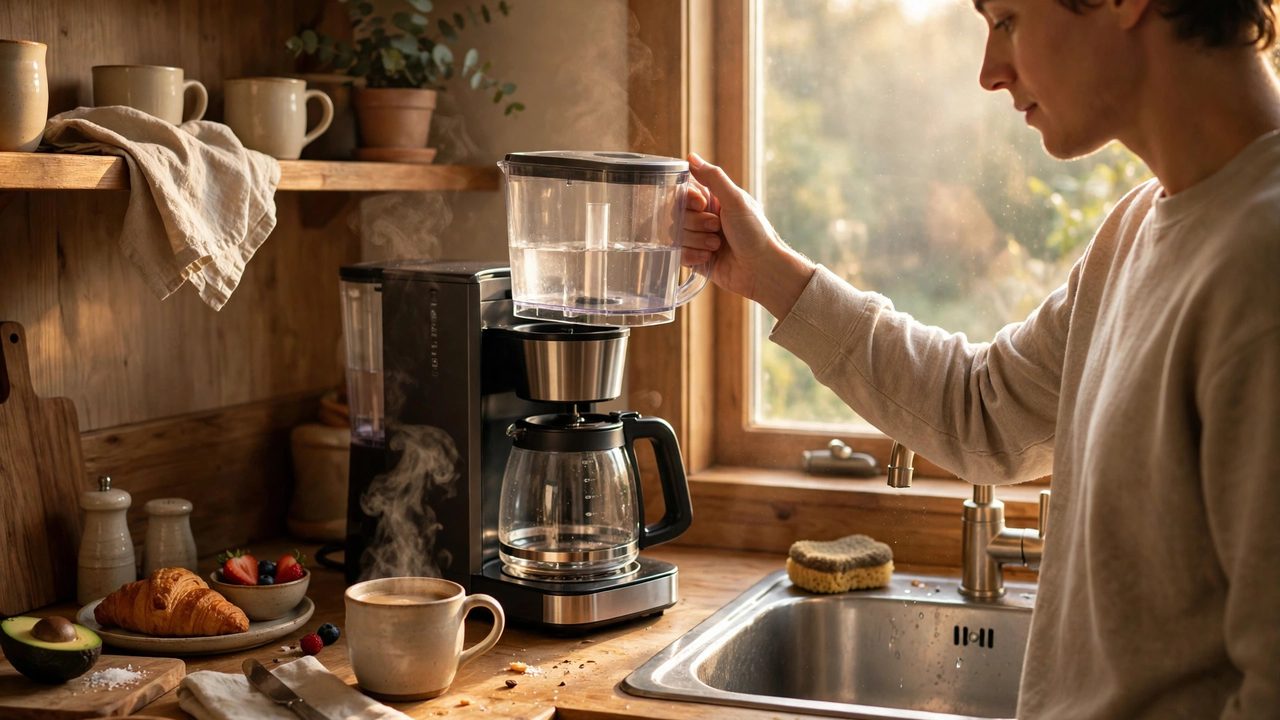
A coffee maker that brews on a schedule is only convenient if filling it is not a daily wrestling match. Models with fixed water tanks force you to pour from a carafe or a jug at an awkward angle, often under a low cabinet, and they are hard to scrub inside. The best programmable coffee makers with removable water reservoirs solve both problems at once: the tank lifts off, travels to the sink, fills straight from the tap, and clicks back into place, while a programmable timer means the pot can be ready before you are. This guide compares five drip coffee makers that combine a genuinely removable reservoir with real programming, from straightforward 12-cup machines to a multi-serve brewer that handles everything from a single travel mug to a full carafe.
Every machine below was checked against its maker’s listed specifications and its current Amazon listing. Each one is a drip coffee maker, each one lets you set brewing in advance, and each one has a water reservoir that physically detaches from the base for filling and cleaning. Where models differ — carafe size, reservoir capacity, brew styles, warming options — the sections below spell out the trade-offs so you can match a machine to your household’s actual routine rather than to a headline feature you will never use.
Quick verdict
For most households, the Ninja Programmable Brewer CE251 is the balanced pick: a 12-cup glass carafe, a removable reservoir the maker lists at 60 ounces, a 24-hour programmable delay brew, two brew styles and a small-batch function that protects flavour when you only want a few cups. If you regularly brew for a crowd, step up to the Ninja Programmable XL 14-Cup Coffee Maker PRO DCM201CP, which pairs the largest carafe here with a removable reservoir the maker lists at 70 ounces and a warming plate with three temperature settings. The Hamilton Beach 14-Cup Programmable Coffee Maker 46220 matches that 14-cup capacity and reservoir size, and adds a touch-activated display and a reusable filter with illuminated measuring marks. The KitchenAid 12-Cup Drip Coffee Maker KCM1208 is the pick for flavour-focused buyers, with a 29-hole spiral showerhead and a clear removable tank printed with a dosage chart. Finally, the Braun MultiServe Plus Coffee Maker KF9270SI is the most versatile machine in the group: seven brew sizes from a single cup to a full carafe, hot and cold brew settings, and a programmable timer with auto start.
The products in this guide
Ninja Programmable Brewer CE251
The CE251 is the machine that defines this category for most buyers
Best if you want the classic programmable drip experience done properly — a proper delay brew
Reservoir and programming details above are as the makers list them for each model. Note the pattern: the two 14-cup machines carry the biggest tanks, the Braun trades some carafe capacity for far more brew-size flexibility, and the KitchenAid directs its engineering at extraction rather than at batch size.
How we selected
Selection started with the two non-negotiable requirements in the keyword itself. First, the water reservoir has to be removable — not a fixed tank with a wide lid, not a water window on a sealed body, but a tank the maker describes as lifting away from the machine so it can be carried to a tap and washed properly. Several well-known programmable models were set aside at this stage because their reservoirs are fixed, however good their timers are. Second, the machine has to be programmable in a way that matters at breakfast time: a delay-brew or auto-start function you can set the night before, or, in the KitchenAid’s case, programmability the maker lists for its warming plate alongside a fully automatic brew cycle. Machines that merely had a clock display did not qualify.
Beyond those two gates, we compared the things that decide daily satisfaction. Reservoir capacity matters because a removable tank you still have to refill twice a day loses its point; the tanks here run from the Braun’s carafe-plus-single-serve arrangement up to 70 ounces on the two 14-cup models. Carafe type matters too — every pick here uses a glass carafe on a warming plate rather than a thermal carafe, so warming-plate behaviour, including how long it runs and whether its temperature is adjustable, was part of the comparison. We also looked at small-batch handling, because a 12- or 14-cup machine that brews a weak, under-extracted half pot is a poor fit for smaller households, and at cleaning: removable tanks, washable filters and dishwasher-safe parts all reduce the friction that makes people abandon a machine. Finally, every product had to be available new from its current Amazon listing at the time of checking; models whose listings showed no live offer were dropped and replaced, even when the machine itself fitted the brief.
The CE251 is the machine that defines this category for most buyers. The maker lists a 60-ounce removable water reservoir that you carry to the sink for filling, a 12-cup glass carafe, and a 24-hour programmable delay brew, so the full wake-up-to-coffee routine works exactly as it should: fill the tank at the tap in the evening, load the grounds, set the time, and let the machine handle the morning. Two brew styles, Classic and Rich, let you choose between a standard cup and a stronger, more intense extraction without changing your coffee dose, and the maker lists a hotter brewing technology designed to saturate the grounds evenly at a controlled temperature.
The detail that lifts the CE251 above basic programmable machines is its small-batch function. The maker lists it as a dedicated setting for brewing one to four cups that keeps the coffee from tasting diluted — a common failure of big machines brewing little pots. An adjustable warming plate keeps the carafe warm for up to four hours, according to the maker, which suits households where people pour at different times across the morning. The footprint is moderate for a 12-cup machine, and the removable tank means the daily fill never involves pouring water into a machine tucked under a cabinet. If your household drinks drip coffee every day, in full pots on weekdays and small batches at weekends, this is the most rounded set of features in the guide.
Buy it if: you want the classic programmable drip experience done properly — a proper delay brew, a sink-fillable tank, and small batches that still taste like coffee.
Skip it if: you regularly brew for more than twelve cups at once, or you want single-serve and cold-brew options from the same machine; the larger Ninja and the Braun below cover those needs.
The DCM201CP takes the CE251 formula and scales it for bigger households and entertaining. The maker lists a 14-cup carafe and a removable water reservoir of 70 ounces, the joint-largest tank in this guide, so a full batch needs one trip to the sink rather than a refill halfway through measuring. The 24-hour programmable delay brew returns, along with the same Classic and Rich brew styles and the same small-batch function for one to four cups, which matters even more on a machine this size: without it, a 14-cup brewer would be a poor choice for anyone who sometimes brews for one.
Where this model pulls ahead is the warming plate. The maker lists a variable warming plate with three temperature settings that keeps coffee hot for up to four hours, so you can hold a pot gently rather than scorching it on a single fixed heat — a real consideration with a 14-cup batch that may sit through a long brunch. The maker also lists a freshness timer, a permanent filter and dishwasher-safe parts, which keep running costs and cleanup simple, and the copper finish of this variant gives it a warmer look than the usual black and stainless. It is a bigger machine on the counter, so measure your space, but if your problem is running out of coffee when guests are over, this is the direct answer in this category.
Buy it if: you brew for a crowd, host often, or share a house where the pot empties fast and a second brew is a daily annoyance.
Skip it if: counter space is tight or you almost always brew four cups or fewer; the CE251 gives you the same core features in a smaller footprint.
Hamilton Beach’s 46220 matches the big Ninja on the headline numbers — the maker lists a 14-cup capacity and a removable water reservoir of 70 ounces with easy-to-read level markings — and then differentiates on the measuring and the controls. Its reusable cone filter carries illuminated level markings, an idea the maker describes as filling the filter directly from the bag to the right level instead of scooping and counting. Anyone who has miscounted scoops before the first coffee of the day will understand the appeal. The filter is dishwasher safe, according to the maker, which keeps the daily routine to a rinse most days and a proper wash when you choose.
The control panel is a smooth, touch-activated display that the maker lists as illuminating only when needed, so there are no dials or knobs to trap coffee splashes, and the glass front wipes clean in one pass. Programming is a 24-hour delay brew for wake-up-ready coffee, and the maker lists flexible shut-off behaviour: the machine can switch off right after brewing or keep the pot warm for up to four hours, depending on how you set it. An Auto Pause and Pour feature lets you pull the carafe mid-brew for a first cup without waiting for the full pot. In stainless and black, it looks at home in most kitchens, and for households that brew big pots daily, its combination of tank size, simple measuring and wipe-clean controls is a genuinely practical package.
Buy it if: you brew full 14-cup pots most days and want the filling and measuring routine to be as thought-free as possible.
Skip it if: you want multiple brew styles or strength settings; this machine focuses on one well-executed drip brew rather than a menu of options.
The KitchenAid KCM1208 approaches this category from the extraction side. Its signature part is a 29-hole spiral showerhead that the maker lists as saturating the grounds evenly for optimal extraction — the drip equivalent of a careful pour-over pattern, and a meaningful difference from machines that dribble water through a few central holes and leave the edges of the filter bed dry. The clear removable water tank carries a dosage chart and the gold-tone filter carries measuring marks, a pairing the maker presents as a consistency system: the same water level and the same grounds dose, marked out for you, pot after pot.
The tank itself is the other highlight. The maker lists it as clear with a large opening, designed to minimise spills when filling at the sink, and it lifts away from the machine for proper washing — no peering into a fixed tank with a torch to check for scale. The maker lists a programmable warming plate that keeps coffee at serving temperature for up to two hours, a charcoal water filter in the box alongside the gold-tone filter, and a brew button positioned so the machine can sit in more than one orientation on the counter and still be easy to start. A pour spout designed to prevent drips finishes a design that is clearly aimed at people who notice how their coffee tastes and how their machine behaves. One honest note on programming: this model’s listed programmability centres on the warming plate and its automatic operation rather than the longest delay-brew menu here, so check that its style of scheduling matches how you plan your mornings.
Buy it if: flavour consistency is your priority and you like the idea of dosage marks doing the measuring discipline for you.
Skip it if: a long set-ahead delay brew is the whole point of your purchase; the two Ninjas and the Hamilton Beach lean harder into scheduling.
The Braun MultiServe Plus is the outlier here, in a good way. Instead of a fixed carafe-or-nothing design, its MultiServe Dial offers seven brew sizes, from a pod-free single cup and a travel mug up to a full 10-cup carafe, all from ground coffee. The maker lists a programmable timer with auto start, so the scheduling requirement is covered, and a removable water tank with a charcoal filter, so the filling requirement is covered too. For a household split between one-person weekday cups and full-pot weekends, this single machine replaces two appliances.
The brew menu is the widest in this guide. BrewChoice Plus settings, as the maker lists them, include Gold, Bold, Over Ice and Cold Brew, with a cold-brew system the maker describes as producing a carafe of cold brew far faster than the traditional overnight steep, and a FastBrew function the maker lists as delivering a full pot of hot coffee in under eight minutes. The ExactBrew system is listed as calculating water flow, temperature and speed for each size and style, and the maker notes the machine’s Golden Cup certification from the Specialty Coffee Association. The keep-warm plate is programmable from fifteen minutes to four hours. It asks more counter depth than the simple 12-cup machines and rewards a few minutes spent learning the dial, but as a programmable brewer with a removable tank, nothing else here covers as many drinking habits at once.
Buy it if: your household mixes single cups, travel mugs, full carafes and iced or cold coffee, and you want one programmable machine to cover all of it.
Skip it if: you only ever brew a standard pot of drip coffee; the CE251 does that job with a simpler interface and a larger carafe.
Buying guide
Start with the reservoir, because it is the point of this category. A removable tank should lift clear of the machine in one motion, have a handle or a shape you can grip securely when it is full and wet, and carry legible level markings. Capacity deserves a moment of arithmetic: a tank that roughly matches the carafe, as on the 70-ounce 14-cup machines here, means one fill per pot. A much smaller tank than the carafe forces mid-measuring refills and quietly removes the convenience you paid for. Also check the tank opening — a wide opening, like the one the maker lists for the KitchenAid, fills faster under a tap and admits a brush or cloth for cleaning, which is the other half of why removable tanks matter: a fixed tank that never gets scrubbed eventually seasons every pot with stale residue.
Then interrogate the programming. The useful standard is a delay brew you can set up to 24 hours ahead, offered by both Ninjas, the Hamilton Beach and, through its timer and auto start, the Braun. Think about what happens around the timer, too: you load water and grounds the night before, so a machine whose tank lifts out makes that evening setup easier, and a freshness or keep-warm arrangement decides how the pot tastes if your morning runs late. Warming plates vary more than brochures suggest — a plate with adjustable temperature and a run time of up to four hours, as the maker lists for the Ninja models, treats a long morning very differently from a plate that switches off at two hours, as on the KitchenAid. Neither is wrong; match the plate to how long your household actually takes to finish a pot, and remember that coffee held gentler and finished sooner usually tastes better than coffee held hot for hours.
Match the carafe and batch range to your real drinking pattern. Fourteen-cup machines earn their counter space only if you use the capacity; otherwise their small-batch behaviour decides your daily cup, which is why the small-batch functions the maker lists for both Ninjas matter. Single-serve households should look honestly at the Braun: seven sizes mean the machine brews the amount you will drink rather than a pot you will waste. Brew styles are the next consideration — Classic and Rich options, brew-strength choices, and the Braun’s Gold, Bold, Over Ice and Cold Brew settings all change what ends up in the cup more than most cosmetic differences between machines. Finally, count the ongoing chores: permanent or reusable filters, as listed for the Ninja PRO and the Hamilton Beach, remove a recurring paper purchase; charcoal water filters, included with the KitchenAid and the Braun, need periodic replacement; and dishwasher-safe parts turn the weekly clean from a project into a rack space. None of these details is glamorous, and together they are exactly what decides whether a coffee maker is still pleasing you a year from now.
FAQ
Why does a removable water reservoir matter if I can fill a fixed tank with the carafe?
Three reasons: accuracy, spills and hygiene. A removable tank fills directly under the tap to a marked line, instead of relying on pouring from a carafe at counter height, often under a cabinet that blocks the pour. It also lifts out for washing, so the inside can be scrubbed and dried rather than left damp and sealed. On every pick in this guide the maker lists the tank as removable, and it is the feature owners tend to mention most after a month of use.
Can I set all of these machines to brew before I wake up?
The two Ninja models and the Hamilton Beach list a 24-hour programmable delay brew, and the Braun lists a programmable timer with auto start, so all four can have coffee ready at a set time. The KitchenAid’s listed programmability centres on its warming plate and automatic operation, so if a set-ahead start time is your single most important feature, choose one of the other four.
Is a 14-cup coffee maker a bad idea for a small household?
Not if it handles small batches properly. Both Ninja models list a small-batch function for one to four cups that is designed to stop the pot tasting diluted, and the Hamilton Beach’s illuminated filter markings help you dose a partial pot correctly. Without those aids, a big machine brewing a little coffee often under-extracts. If you rarely brew more than a mug or two, the Braun’s single-cup sizes are the more honest fit.
Glass carafe with a warming plate, or thermal carafe?
Every pick here uses a glass carafe on a warming plate, which lets you see how much coffee is left and keeps the pot at serving temperature for a set period — up to four hours on the Ninja and Hamilton Beach models, as the makers list them. A thermal carafe holds heat without power and is gentler on flavour over long stretches, but it hides the coffee level and usually cannot be programmed around in the same way. For the set-it-the-night-before routine this category is about, glass and a good warming plate are the practical pairing.
How do I keep a removable reservoir tasting clean?
Empty and rinse the tank regularly rather than endlessly topping it up, wash it with warm soapy water as the maker directs, and let it dry with the lid open when you can. Replace charcoal water filters on the maker’s schedule where fitted, as on the KitchenAid and Braun models here, and run the machine’s cleaning or descaling routine when prompted. Because the tank comes off, all of this takes minutes — which is precisely why removable-reservoir machines tend to stay cleaner in real kitchens.
What size reservoir should I choose?
Match it to the carafe and to your refill tolerance. The maker lists 60 ounces for the 12-cup Ninja CE251 and 70 ounces for both 14-cup machines, so each fills its own carafe in one trip. If you brew back-to-back pots for guests, the bigger tanks save a refill cycle; if you brew once a day, any size here is ample and the smaller machine’s footprint may suit you better.
Conclusion
A removable reservoir sounds like a small thing until you have lived with one: filling becomes a trip to the tap instead of a pour performed over the machine, and cleaning becomes a wash instead of a hope. Combined with genuine programmability, it turns the morning coffee routine into something that simply happens. Choose the Ninja CE251 for the best all-round balance, the Ninja DCM201CP or the Hamilton Beach 46220 when capacity rules, the KitchenAid KCM1208 when extraction and consistency come first, and the Braun MultiServe Plus when one machine has to cover everything from a single mug to a cold-brew carafe. Any of the five will wake up before you do — and none of them will ask you to fill a water tank with a jug, in the dark, ever again.
M
Modern Line Home Editorial Team
We compare specs, materials and verified owner reviews before a product earns a spot. Rankings are never paid.
Affiliate disclosure. As an Amazon Associate we earn from qualifying purchases at no extra cost to you. Prices accurate as of the date shown.
House cold even with the heat on? Walk this ordered checklist: thermostat and filter first, then drafts, insulation, leaky ducts and a failing heating system.
Windows fogging up in winter? Check where the fog sits: on the room side it is indoor humidity, outside it is harmless, and between panes the seal has failed.
Store the main firewood pile about 30 feet from your house, off the ground and covered only on top. Compare racks, woodsheds, garages and indoor spots safely.
Place a portable generator outdoors only, at least 20 feet from windows, doors and vents, exhaust pointed away. Exact distances, setup steps and CO rules here.
Keep houseplants in the right winter spot: match window direction to plant type, stay clear of radiators and cold glass, and fix dry air and low light at home.
Mice enter through pencil-width gaps at foundations, pipes, vents, doors and the roofline. Walk this room-by-room winter checklist to find and seal each one.
A winter outage timeline: what to do in the first hour, first night and multi-day outage, with food safety times, pipe protection, heat and CO safety steps.
Size a space heater by room area: 10 watts per square foot at 8-foot ceilings, adjusted for insulation and ceiling height, with full wattage and BTU tables.
Start dripping at about 20 degrees, sooner for exposed pipes. Set a pencil-lead stream, drip the right faucets on both lines, and know when to stop safely.
A fridge needs 800-1,200 starting watts, not just 150-400 running watts. Use the tables to total your fridge plus freezer, lights, furnace fan and more today.












Write Your Review
No reviews yet. Be the first to share your experience!