We independently review everything we recommend. When you buy through our links, we may earn a commission. As an Amazon Associate we earn from qualifying purchases.
Best Paper Towels for No-Rinse Baby Wipes: 6 Picks
Six towels that suit no-rinse DIY baby wipes: cloth-like Viva, strong Bounty and Brawny, plus fragrance-free bamboo and recycled picks that stay intact wet.
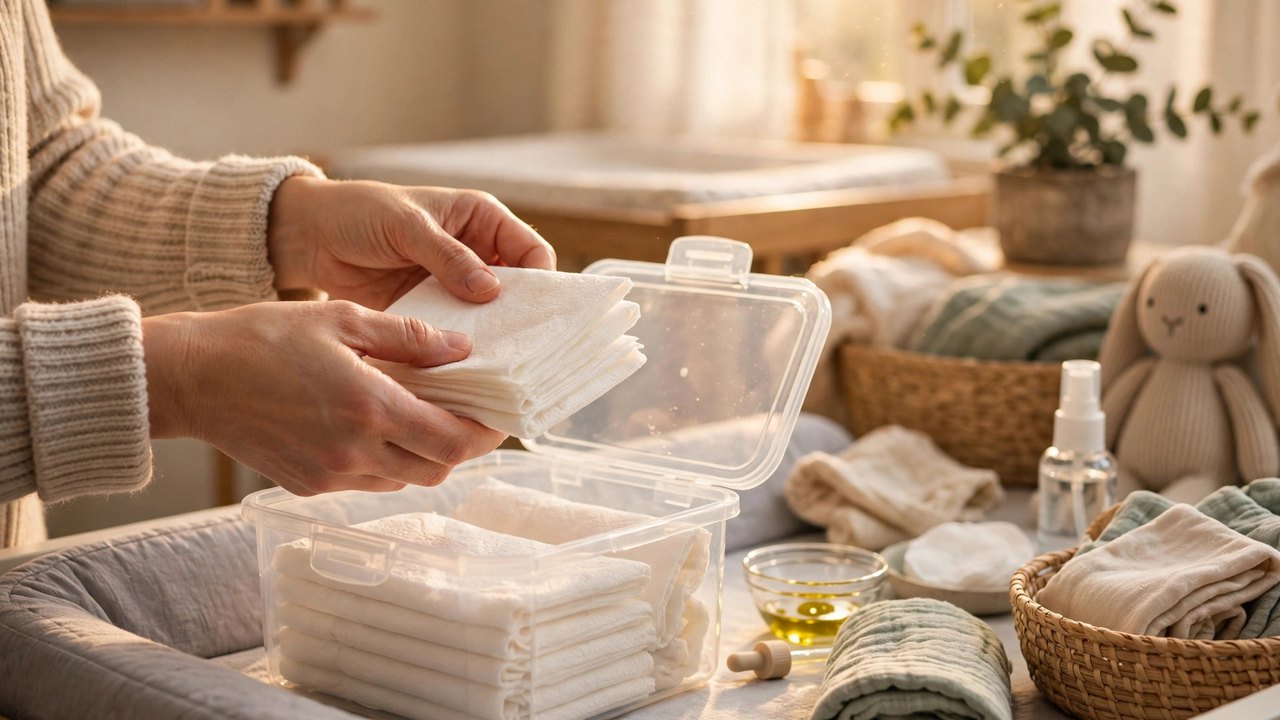
A no-rinse wipe routine puts unusual demands on a paper towel. In a typical homemade-wipe setup, the towel is soaked in a leave-on solution, stored damp in a container, pulled out one sheet at a time, and expected to wipe, fold, and wipe again without shredding, pilling, or leaving lint behind. A towel that feels fine dry in the kitchen can turn to mush the moment it sits in solution for a few days, and a towel with a heavily printed pattern or a scented finish is not what most parents want as the base for a wipe that stays on skin without a rinsing step afterwards. That is why choosing the best paper towels for no rinse baby wipes is less about raw absorbency for spills and more about four specific traits: softness against skin, strength when fully wet, low lint, and a plain, fragrance-free sheet.
This guide looks at six paper towels that fit that brief in different ways. Two are cloth-like towels from Viva, the brand most often named in homemade-wipe recipes. One is the mainstream strong option from Bounty, and one is a thick 3-ply towel from Brawny whose perforations let you tear off a small square instead of a full sheet. The last two are the ingredient-conscious picks: a bamboo towel from Caboo and a recycled, dye-free and fragrance-free towel from Seventh Generation. Every product below was checked on its opened product page, and the specifications quoted are the ones the maker lists there. This guide covers the towels only. It does not recommend any particular wipe solution, and it makes no claims about what any solution or towel does for skin — that choice belongs to you and to the directions of whatever solution you use.
Quick verdict
If you want one answer, start with Viva Signature Cloth. It is the most cloth-like towel in this group, the maker lists it as 2x more durable when wet than the leading 1-ply value brand, and its soft, fabric-like sheet is exactly the texture homemade-wipe makers ask for. If wet strength is your top priority and you like a familiar kitchen towel, Bounty Select-A-Size in the 8 Triple Roll pack is the dependable workhorse, with a 2-ply sheet and a diamond texture the maker lists as picking up messes quicker than the leading ordinary brand. If you want the thickest sheet and the smallest tear-off size, Brawny Tear-A-Square 3-Ply lets you use a quarter sheet for a quick wipe. Viva Multi-Surface Cloth is the bulk, budget-friendly cloth-like alternative with Choose-A-Sheet sizing and a fragrance-free material listing. Caboo is the pick for parents who want a tree-free bamboo sheet that the maker lists as lint free and fragrance free, and Seventh Generation is the pick for a 100% recycled sheet made with no added dyes, inks, or fragrances.
The products in this guide
Viva Signature Cloth Paper Towels, 12 Triple Rolls
Viva Signature Cloth is the towel homemade-wipe recipes name more than any other, and the reason is in the maker’s own description: the maker lists
We started from the way no-rinse wipes are actually made and used. A roll is usually cut in half, the cardboard core is removed once the roll is wet, and the solution is poured over the roll in a lidded container so the sheets pull up from the centre. That process ruled products in or out on practical grounds before softness ever entered the picture.
First, wet strength. A wipe towel spends its whole working life saturated, so the sheet has to survive being pulled from a damp roll, unfolded, used, folded over, and used again. We favoured towels whose makers list wet durability, multiple plies, or a cloth-like construction, and we treated single-ply value towels with no wet-strength claim as unsuitable for this use, however cheap they are for kitchen spills.
Second, softness and surface texture. A no-rinse wipe is used on skin and left unrinsed, so a soft, smooth sheet matters more here than scrubbing texture. Cloth-like towels scored highest on this measure. Heavily embossed towels were not excluded — embossing helps a sheet hold together — but we noted where a texture is designed for scouring rather than for a soft wipe.
Third, lint. Fibres left behind by a disintegrating towel are a nuisance in any wipe, so we looked for towels whose makers list low-lint or lint-free behaviour, tightly bonded sheets, or a construction that holds together when wet instead of pilling apart.
Fourth, what is in and on the sheet. Because a no-rinse wipe leaves the solution — and anything that transfers from the towel — on the skin rather than rinsing it away, we gave credit to towels whose makers list them as fragrance free and made without added dyes or inks, and to plain white, unprinted sheets. This is a product-selection preference based on the makers’ own listings, not a health claim about any towel.
Finally, sheet sizing. Perforation systems that let you tear a half or quarter sheet — Select-A-Size, Choose-A-Sheet, and Tear-A-Square — suit wipe making well, because a wipe rarely needs a full kitchen-towel sheet, and smaller sheets mean a cut roll lasts longer. Every product in this guide is sold on Amazon US, and each one was verified on its opened listing page, including its pack size, sheet count, and ply, before it was included. Prices change constantly and are not quoted here; check the current listing before you buy.
Viva Signature Cloth is the towel homemade-wipe recipes name more than any other, and the reason is in the maker’s own description: the maker lists it as the most cloth-like towel in its range, soft like cloth, and 2x more durable when wet than the leading 1-ply value brand. For a no-rinse wipe, that combination is the whole ballgame. The sheet feels like a thin fabric rather than a kitchen towel, it drapes instead of crinkling, and it keeps its integrity when it has been sitting in solution, which is when lesser towels start to tear as you pull them from the roll.
The pack verified here contains 12 triple rolls with 129 sheets per roll, for 1,548 sheets in total, and the maker lists the towel as 1-ply — which sounds like a drawback until you remember that the cloth-like construction is doing the work that a second ply does in a conventional towel. The maker also lists the towel as rinse-and-reuse for cleaning jobs; for wipe making, the relevant part of that claim is simpler: the sheet is built to stay in one piece when wet. Cut a triple roll down, and each section gives you a tall stack of wipes for a standard container.
Because the sheet is plain and soft, it suits the leave-on nature of a no-rinse routine well: there is no heavy embossing to drag, and the cloth-like surface wipes smoothly rather than scrubbing. If you make wipes regularly, this is also the towel whose texture most closely matches a disposable wipe from a tub, which matters if you are switching a reluctant caregiver or grandparent from store-bought wipes to homemade ones.
Buy it if: you want the closest match to a real wipe — the softest, most cloth-like sheet here, with maker-listed wet durability and a long track record in homemade-wipe recipes.
Skip it if: you go through wipes slowly and a 12 triple roll pack is more towel than you will use in a reasonable time, or you specifically want a recycled or tree-free sheet.
Bounty is the other brand that homemade-wipe makers reach for, and for the opposite reason to Viva: not softness first, but strength and absorbency. The maker lists Bounty paper towels as 2x more absorbent than the leading ordinary brand, with a durable diamond texture, and the listing for this pack describes sheets that stay strong when wet so you can use less. In wipe terms, that absorbency means the sheet takes up solution evenly through the roll instead of leaving the outer layers soggy and the centre dry, and the 2-ply construction gives you a sheet you can fold into quarters and keep using through a whole change.
This pack contains 8 triple rolls of white Select-A-Size towels, 123 sheets per roll and 984 sheets in total, and the maker lists the towels as 2-ply. Select-A-Size perforations are a genuine advantage for wipes: a half sheet is a natural wipe size, so a cut roll yields more, smaller wipes, and you can tear a fresh half sheet for hands and faces and save full sheets for bigger jobs. The diamond texture is more pronounced than Viva’s smooth cloth-like surface, which some parents like for grip on a messy change and others find more than they need on newborn skin — that is a texture preference, and it is the main reason Bounty sits second here rather than first for this particular use.
Bounty is also the easiest towel on this list to find consistently, in the widest range of pack sizes, which matters if your wipe-making becomes a standing weekly routine and you do not want to re-test a new towel every time your usual pack is unavailable. If you already keep Bounty in the kitchen, a single roll diverted to the wipes container is the lowest-effort way to try the no-rinse homemade routine before committing to a specialty towel.
Buy it if: wet strength and even absorbency matter most, you like Select-A-Size half sheets as a ready-made wipe size, and you want a towel that is easy to restock.
Skip it if: you want the softest possible sheet — the diamond texture is built for scrubbing up messes, and the cloth-like Viva towels feel gentler in the hand.
Brawny’s Tear-A-Square line takes a different approach to the wipe problem: thickness and sizing. The maker lists these as 3-ply towels — the maker describes the 3-ply sheet as combining strength, absorbency, and durability in one sheet — and a saturated 3-ply sheet is noticeably more substantial in the hand than a 1-ply cloth-like towel. If your frustration with homemade wipes is that they feel thin and bunch up, this is the towel that answers it.
The Tear-A-Square perforation system is the other half of the appeal. Each sheet can be torn as a quarter, a half, or a full sheet, so from one cut roll you can pull a quarter sheet for a quick face or hand wipe and a half or full sheet when you need more coverage. That flexibility is unique in this group — the other sizing systems stop at half sheets — and it stretches a pack further in a household where most wipes are used for small jobs. This pack is the 8 Triple Roll configuration, equal to 24 regular rolls.
The trade-off is texture and bulk. A 3-ply embossed sheet is the least cloth-like here, and a cut roll of thick towels makes a denser, heavier stack of wipes that drinks more solution per batch. Neither is a flaw; they simply suit a household that prioritises a sturdy, substantial wipe and small tear-off sizes over a soft, drapey one. Brawny is also a good choice if the same towels double for highchair trays, sticky hands after meals, and other toddler cleanup where a wipe needs a bit of scrubbing body behind it.
Buy it if: you want the thickest, sturdiest wipe sheet and the option of quarter-size sheets for small jobs, and your wipes double up for hands, faces, and highchair cleanup.
Skip it if: softness is your first priority, or you make wipes in a small container where a dense 3-ply roll takes up too much room and solution.
Viva Multi-Surface Cloth is the second cloth-like towel in the Viva range, and for wipe making it is the value play: this pack holds 24 double rolls with 110 sheets per roll, 2,640 sheets in total, in a Choose-A-Sheet format that lets you tear the sheet size each job needs. The maker lists the towels as 1-ply with a cloth-like texture designed to trap mess on multiple surfaces, and the listing’s materials information lists the towels as fragrance free — a listing detail that matters for a no-rinse wipe, where whatever is on the sheet stays on the skin instead of being rinsed away.
Compared with Signature Cloth, Multi-Surface is the lighter towel: a little less plush, a little more utilitarian, and sold in bigger, more economical configurations. In a wipes container that difference is modest. The sheet is still soft and cloth-like rather than papery, it still holds together when soaked, and the Choose-A-Sheet perforations mean a double roll cut in half gives you wipes in two sizes. For a family making wipes in volume — twins, a toddler and a newborn, or a container in every changing spot in the house — the arithmetic of 2,640 sheets is hard to argue with.
Multi-Surface is also the sensible choice if you want one towel for both jobs: wipes in the nursery container and general cleanup everywhere else. Signature Cloth is soft enough that using it on a counter feels like a waste; Multi-Surface is priced and packed like a household staple, so nobody has to ration it. If you are new to homemade wipes and unsure whether the routine will stick, starting here keeps the experiment inexpensive while still using a genuinely cloth-like sheet.
Buy it if: you make wipes in volume and want a cloth-like, fragrance-free-listed sheet in a bulk pack, with Choose-A-Sheet sizing for different jobs.
Skip it if: you want the softest towel Viva makes — Signature Cloth is the plusher sheet — or you have no storage room for a 24-roll pack.
Caboo is the tree-free option. The maker lists these towels as made from sustainably grown bamboo viscose rather than wood pulp, in a 2-ply sheet the maker describes as strong, durable, and super absorbent, using bamboo’s natural qualities to create a towel that holds together in use. This pack contains 6 rolls with 75 sheets per roll, 450 sheets in total, and the maker lists the model as a plastic-free, tree-free kitchen towel roll for households moving away from conventional paper.
For no-rinse wipes, Caboo’s listing details are the story. The maker lists the towels as lint free, BPA free, paraben free, and fragrance free, and free from elemental chlorine bleaching. Read as a checklist for a leave-on wipe base, that covers the two things parents in this niche ask about most: a sheet that does not shed fibres as it is used, and a sheet made without added fragrance. Bamboo fibre also gives the sheet a smooth hand feel that sits between a conventional paper towel and a cloth-like one.
The honest trade-offs are pack size and texture consistency. At 450 sheets, this is the smallest pack in the group, so a heavy wipe routine will reorder more often, and bamboo towels have a slightly different, less cushioned feel than the Viva cloth-like sheets. Households choose Caboo because the material story matters to them — a fast-growing grass fibre instead of tree pulp — and because the maker’s lint-free and fragrance-free listings line up neatly with what a no-rinse wipe needs. On those terms it earns its place here.
Buy it if: you want a tree-free bamboo sheet whose maker lists it as lint free and fragrance free, and you prefer smaller, more frequent packs.
Skip it if: you want the softest cloth-like texture or the largest pack — the Viva and Bounty options cover more changes per order.
Seventh Generation is the recycled-paper option, and its listing reads like it was written for the no-rinse wipe checklist. The maker lists these towels as made from 100% recycled paper, whitened without chlorine bleach, and — for the Free & Clear line — made with no added dyes, inks, or fragrances. The listing’s feature details describe the towels as dye-free, fragrance-free, and non-chlorine bleached, in a strong and absorbent 2-ply sheet. This pack contains 6 rolls and 840 sheets in total.
For a wipe that stays on skin unrinsed, a plain, undyed, unprinted, fragrance-free sheet is exactly what many parents go looking for, and Seventh Generation is the only towel in this group whose maker builds the whole product around that specification while also using recycled fibre. The 2-ply sheet is a conventional paper towel in construction — not cloth-like — so it feels more like a sturdy kitchen towel than a fabric wipe, but it is strong and absorbent in the maker’s description and holds up to being soaked, stacked, and pulled from a container in the usual homemade-wipe routine.
Where it gives ground is softness and sheet sizing. There is no select-a-size perforation system here, so wipes are full-sheet size unless you cut them, and the recycled sheet is a step less soft than the cloth-like towels. If your priority order puts what the sheet is made from — and what it is made without — ahead of plushness, this is your pick. It is also a natural choice for households already buying the same line for the rest of the house and wanting one consistent, fragrance-free paper product throughout.
Buy it if: a 100% recycled sheet made with no added dyes, inks, or fragrances is your top criterion, ahead of cloth-like softness.
Skip it if: you want a soft, drapey wipe or half-size sheets — choose one of the Viva towels or the Select-A-Size Bounty instead.
Buying guide: choosing a towel for no-rinse wipes
Start with wet strength, not dry feel. Every towel feels adequate in the store. The test that matters is the third day in the container, when the sheet has been saturated the whole time. Makers’ wet-durability claims, ply counts, and cloth-like constructions are your best predictors. If a towel tears as you pull it from a damp roll, it fails at the one job a wipe has.
Match softness to the job. For frequent changes on young babies, the cloth-like Viva sheets are the softest options here. For toddlers, meal cleanup, and hands-and-faces duty, a sturdier textured sheet like Bounty or the 3-ply Brawny can be the more practical wipe. Many households end up with both: a soft towel in the nursery container and a strong one in the kitchen container.
Check the maker’s fragrance and dye listings. A no-rinse wipe is a leave-on product by design, so what is on the towel matters more than it does for a kitchen spill. Towels whose makers list them as fragrance free and made without added dyes or inks — the Seventh Generation and Caboo listings state this most explicitly, and the Viva Multi-Surface materials listing includes fragrance free — are the straightforward choices if that is your preference. Plain white, unprinted sheets are the simplest option of all; avoid decorative prints for wipe rolls.
Use sheet sizing to control waste. Select-A-Size, Choose-A-Sheet, and Tear-A-Square perforations let one roll serve several wipe sizes. If your chosen towel has none of these, you can still cut full sheets in half after soaking — but perforations are cleaner and faster, and they make it easier for other caregivers to tear the right amount.
Think in cost per wipe, not cost per roll. Triple rolls, double rolls, and sheet counts vary so much between brands that pack prices are meaningless on their own. Divide by the sheet count the maker lists, then by the fraction of a sheet you actually use per wipe. A bulk cloth-like pack used at half a sheet per wipe can work out cheaper per change than a small pack of premium towels used whole.
Make a small first batch. Whatever towel you choose, cut one roll section, soak it with your chosen solution, and live with it for a few days before committing a whole multipack. Check how the sheets pull, whether they pill or shed, and whether the texture suits your routine. Towel preference in this niche is personal, and a single roll will tell you more than any comparison table — including this one.
Store and use the container sensibly. Keep the lid closed so the sheets stay evenly damp, pull from the centre of the cut roll as most recipes direct, and remake batches in quantities you will use promptly rather than soaking a month of wipes at once. And as with any paper product, used wipes go in the bin, not the toilet, unless the product is specifically made and labelled to be flushed — none of the towels in this guide are.
FAQ
Why does the towel matter more for no-rinse wipes than for regular homemade wipes?
Because nothing gets rinsed off afterwards. The sheet is soaked in a leave-on solution and used as-is, so its softness, its lint behaviour, and what the maker lists as being in or on the sheet — fragrance, dyes, inks — all carry straight into the wipe. A towel that is merely fine for a rinse-off routine can be a poor base for a leave-on one.
Can I use any strong kitchen paper towel to make no-rinse wipes?
Strength alone is not enough. A strong but heavily textured, printed, or fragranced towel is a worse wipe base than a slightly less strong towel that is soft, plain, and listed as fragrance free. Judge towels for this use on wet strength, softness, lint, and the maker’s fragrance and dye listings together — that is how the six towels in this guide were chosen.
Which towel feels most like a store-bought baby wipe?
Viva Signature Cloth. The maker lists it as its most cloth-like towel, soft like cloth and 2x more durable when wet than the leading 1-ply value brand, and that fabric-like drape is what homemade-wipe recipes have recommended it for over many years. Viva Multi-Surface Cloth is the next closest in feel.
Are bamboo or recycled paper towels good for homemade wipes?
They can be, on the makers’ own listings. Caboo lists its bamboo towels as lint free and fragrance free in a strong 2-ply sheet, and Seventh Generation lists its recycled towels as made with no added dyes, inks, or fragrances. Both trade a little softness against the cloth-like towels, so the choice depends on whether material and ingredient listings or plush feel matters more to you.
How many wipes does one roll make?
It depends on the roll and the sheet size you tear. A roll is usually cut in half before soaking, and each half-roll yields roughly its sheet count in full-sheet wipes — more if you use half or quarter sheets from a Select-A-Size, Choose-A-Sheet, or Tear-A-Square roll. The packs in this guide list their sheet counts in the comparison table, which is the easiest way to estimate a batch before you buy.
Should I flush homemade paper towel wipes?
No. These are paper towels, not flushable wipes, and none of the makers list them as flushable. Put used wipes in the bin. If a flushable product is what you need, buy a product made and labelled for that purpose instead of making wipes from towels.
Conclusion
For most households building a no-rinse wipe routine, Viva Signature Cloth is the towel to start with: the softest, most cloth-like sheet, with maker-listed wet durability that survives days in the container. Bounty Select-A-Size is the strong, absorbent, easy-to-restock alternative, and Brawny Tear-A-Square 3-Ply is the pick for a thick sheet in quarter, half, or full sizes. Viva Multi-Surface Cloth covers high-volume wipe making in a bulk, fragrance-free-listed pack, while Caboo and Seventh Generation serve parents who put material and ingredient listings first — bamboo and lint free on one side, 100% recycled with no added dyes, inks, or fragrances on the other. Pick the towel whose strengths match your routine, make one small batch, and let a few days of real changes confirm the choice.
M
Modern Line Home Editorial Team
We compare specs, materials and verified owner reviews before a product earns a spot. Rankings are never paid.
Affiliate disclosure. As an Amazon Associate we earn from qualifying purchases at no extra cost to you. Prices accurate as of the date shown.
House cold even with the heat on? Walk this ordered checklist: thermostat and filter first, then drafts, insulation, leaky ducts and a failing heating system.
Windows fogging up in winter? Check where the fog sits: on the room side it is indoor humidity, outside it is harmless, and between panes the seal has failed.
Store the main firewood pile about 30 feet from your house, off the ground and covered only on top. Compare racks, woodsheds, garages and indoor spots safely.
Place a portable generator outdoors only, at least 20 feet from windows, doors and vents, exhaust pointed away. Exact distances, setup steps and CO rules here.
Keep houseplants in the right winter spot: match window direction to plant type, stay clear of radiators and cold glass, and fix dry air and low light at home.
Mice enter through pencil-width gaps at foundations, pipes, vents, doors and the roofline. Walk this room-by-room winter checklist to find and seal each one.
A winter outage timeline: what to do in the first hour, first night and multi-day outage, with food safety times, pipe protection, heat and CO safety steps.
Size a space heater by room area: 10 watts per square foot at 8-foot ceilings, adjusted for insulation and ceiling height, with full wattage and BTU tables.
Start dripping at about 20 degrees, sooner for exposed pipes. Set a pencil-lead stream, drip the right faucets on both lines, and know when to stop safely.
A fridge needs 800-1,200 starting watts, not just 150-400 running watts. Use the tables to total your fridge plus freezer, lights, furnace fan and more today.












Write Your Review
No reviews yet. Be the first to share your experience!