We independently review everything we recommend. When you buy through our links, we may earn a commission. As an Amazon Associate we earn from qualifying purchases.
Best Microfiber Towels for Washing Floors: 6 Top Picks
Compare the best microfiber towels for washing floors by size, pack count, absorbency and weave, with six verified picks for tile, hardwood and laminate today.
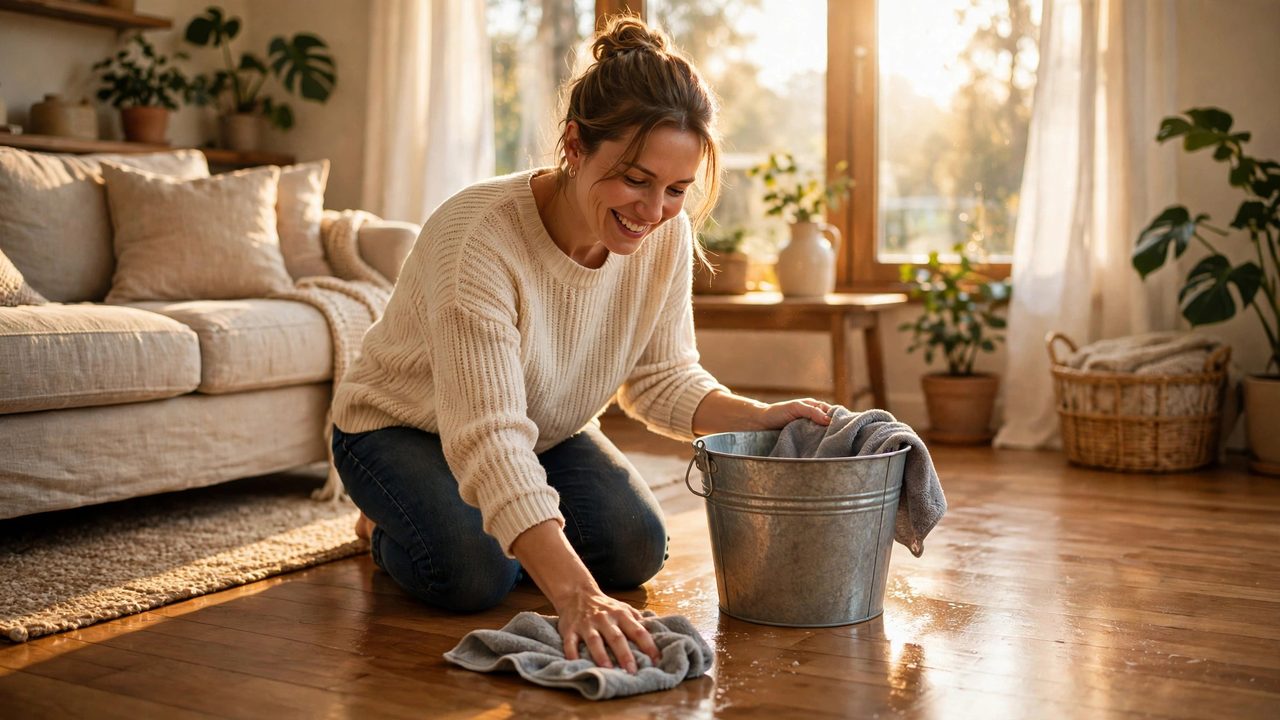
Washing a floor by hand, on your knees with a bucket beside you, is a very different job from wiping a counter. The towel has to hold a lot of water without dripping it everywhere on the way from the bucket, it has to pick up grit instead of pushing it ahead of your hand, it has to rinse clean in dirty water again and again, and it has to survive being wrung out hard dozens of times in a single session. That is why choosing the best microfiber towels for washing floors is less about softness for its own sake and more about size, weave, absorbency and how many towels you have in rotation. A single good towel is never enough for floor work, because once a towel is saturated with dirty water it stops cleaning and starts redistributing soil. The six picks below were chosen for exactly that rotation-based way of working: large multi-packs for the wash-and-rinse cycle, a plush premium option for delicate sealed floors, and one genuinely large towel for covering open floor area and for the final dry pass.
Every floor type puts a slightly different demand on the cloth. Tile and grout reward a towel with a short, grippy terry weave that can work into grout lines and textured surfaces. Sealed hardwood and laminate reward the opposite instinct: a soft, non-abrasive towel used damp rather than soaking, so you lift dirt without leaving excess water sitting on boards or seams. Vinyl and linoleum sit in the middle and tolerate almost any weave, which makes them a good place to use older towels that have lost some softness. The picks in this guide cover all of those cases, and the buying guide further down explains how to match weave and size to your floor, how many towels a room actually takes, and how to wash microfiber so it keeps working instead of slowly turning into a linty rag.
Quick verdict
For most households, the Amazon Basics Microfiber Cleaning Cloths in the pack of 24 are the sensible starting point: the maker lists them at 16 by 12 inches, the three colours make rotation and sorting easy, and having 24 towels means you can wash a whole floor without stopping to rinse and wring the same cloth into grey water. If you want a plusher, more absorbent towel for the same rotation job, the Zwipes 924 cloths are the step up, with a short terry weave the maker says holds eight times its weight in liquid. The MR.SIGA cloths are the compact, grippy option for smaller rooms, bathrooms and detail work around fixtures. The Chemical Guys Professional Grade Premium towels are the softest pick here and suit sealed hardwood and laminate where surface care matters most. The Chemical Guys Miracle Dryer is the outlier in size alone, a single large towel that covers ground quickly and excels at the final dry pass. The HOMEXCEL grey cloths round out the list as a tidy mid-size pack that hides floor grime well between washes.
The products in this guide
Amazon Basics Microfiber Cleaning Cloths, Pack of 24
Each cloth at 16 by 12 inches, which folds neatly into quarters to give you a thick pad under your hand with eight clean faces to work through before
We started from the way floors are actually washed by hand rather than from generic cleaning-cloth rankings. A towel earned consideration only if it was a real, currently listed product sold new on Amazon US, with its size, pack count and material stated on an opened product page or the maker’s own listing, so that every specification in this article traces back to a page we opened rather than to a roundup or a snippet. Products whose size or construction could not be confirmed that way were excluded entirely, however familiar their names were.
Within that verified pool, we prioritised four things. First, working size: a floor towel is folded in quarters and used under a flat palm, so anything much smaller than about 12 inches on its short side becomes slow and frustrating, while a larger cloth covers more floor per pass. Second, pack count, because floor washing is a rotation task and a pack of 12 or 24 lets you move to a fresh towel as each one loads up with soil. Third, weave and absorbency claims stated by the maker, since a short terry weave grips grit and grout while a plush weave holds more water and treats delicate finishes more gently. Fourth, care simplicity: every pick here is machine washable, because a floor towel that needs special handling will simply stop being used. We also spread the list across roles deliberately, so that instead of six near-identical packs you get a budget rotation pack, a plush rotation pack, a compact pack, a premium soft pack, a single oversize towel and a mid-size grey pack, and you can choose by the job in front of you.
The Amazon Basics cloths are the workhorse rotation pack of this list, and for floor washing that is high praise. The maker lists each cloth at 16 by 12 inches, which folds neatly into quarters to give you a thick pad under your hand with eight clean faces to work through before the towel needs rinsing. The pack of 24 arrives in blue, white and yellow, and that colour split is more useful than it sounds: assign one colour to the wash pass, one to the rinse pass and one to drying, and you stop accidentally drying a floor with the towel that just came out of the dirty bucket. The listing describes the cloths as ultra-soft and non-abrasive, and the fabric type is listed as a blend dominated by polyester with polyamide, which is the standard split-microfiber recipe for picking up fine dirt rather than skating over it.
On tile, vinyl and linoleum these cloths behave exactly as a floor towel should: dampen one, work a small section, and the weave pulls grit and dried spills into the cloth instead of smearing them outward. On sealed hardwood they are better used well wrung out, so the floor is cleaned with a damp pass rather than a wet one. Their honest limitation is thickness. These are not plush towels, and a single cloth saturates faster than the Zwipes or Chemical Guys options below, which is precisely why the generous pack count matters: you compensate with rotation rather than with one heroic towel. They are also light enough that a full load of them washes and dries quickly, which keeps the whole system turning over between cleaning days.
Buy it if: you wash floors regularly by hand and want a large, colour-sorted rotation of towels for tile, vinyl, laminate or sealed wood, and you would rather have many good cloths than a few thick ones.
Skip it if: you want one very plush, high-capacity towel per session, or you mostly clean small delicate surfaces where a softer premium weave matters more than pack size.
The Zwipes 924 cloths take the same rotation idea and add plushness. The maker describes a super-soft plush microfiber construction with a short terry weave, lists the cloths at 12 by 16 inches, and states that they hold eight times their weight in liquid and can be washed hundreds of times. The listing also cites a very dense fibre construction, which matches how the cloth feels in use: the uncut loops of a short terry weave present a lot of fibre ends to the floor, so the towel grips dried-on kitchen drips and bathroom soap film with less downward pressure than a flat weave needs. For floor work that grip is the difference between scrubbing and wiping.
These are the pick we would hand to someone washing a tiled kitchen or bathroom floor by hand, where the mess is a mixture of grit, grease near the cooker and grout lines that need a towel that can be pushed into them with a fingertip. The 24 count again supports a proper system: a stack for the wash bucket, a stack for rinsing, and spares for the inevitable dropped-in-the-bucket moment. The maker notes the cloths dry in about half the time of ordinary towels, which is a genuine practical advantage when a whole pack comes out of the wash at once and needs to be ready again soon. Care follows the usual microfiber rules stated on the listing: wash in cold to warm water with liquid detergent, avoid fabric softener, bleach and dryer sheets, and dry on the lowest heat, because those products coat the fibres and undo the absorbency you bought the towels for.
Buy it if: your floors are mainly tile, vinyl or stone, you want a plush towel with real grip for grout and dried spills, and you like the discipline of a big colour-varied rotation pack.
Skip it if: you prefer a square towel shape for folding, or your floor is delicate sealed hardwood where you plan to work nearly dry and do not need this much absorbency.
The MR.SIGA cloths are the compact specialists here. The maker lists them at 32 by 32 centimetres, which is 12.6 by 12.6 inches, in a pack of 12, with a blend the listing gives as polyester and nylon. A square towel folds into a neat, even pad, and at this size it is the easiest cloth on the list to control in tight floor areas: around the base of a toilet, behind a pedestal sink, along the kick plates under kitchen cabinets, and on the treads and landing of a staircase, where a big towel bunches and a small one lets you feel the surface through the cloth. The listing describes the cloths as soft, lint free and non-abrasive, and as absorbing water more and faster than cotton, which is the relevant comparison for anyone still washing floors with cut-up cotton towels that push dirty water around.
Used for a whole open floor, a 12.6-inch square simply covers less ground per pass than the 16-inch cloths above, so these are not the fastest choice for a large kitchen. Used where they belong, in bathrooms, entryways, laundry rooms and small kitchens, the size stops being a compromise and becomes the point. The pack of 12 is enough for a small-space rotation: four for washing, four for rinsing and four drying or in the laundry. Because the cloths are square and relatively thin, they also rinse out cleanly under a tap mid-session, which suits the stop-start rhythm of bathroom cleaning better than a thick towel that needs a full bucket dunk to clear. If your floor-washing life is mostly small rooms done thoroughly rather than big rooms done quickly, this is the pack that fits it.
Buy it if: your floor work is concentrated in bathrooms, entryways and other tight spaces, and you value control, easy rinsing and a square fold over raw coverage.
Skip it if: you regularly wash large open floors by hand and want the fewest passes possible, in which case the 16-inch or oversize picks will serve you better.
Chemical Guys built its name on car care, and the Professional Grade Premium towels, model MIC_506_12, show it: the maker lists them at 16 by 16 inches in a pack of 12, and describes them as fluffy, soft, lint free and scratch free, designed for washing, drying and buffing without marking delicate surfaces. Translate that from paintwork to flooring and you get the gentlest towel on this list, which is exactly what sealed hardwood, laminate and high-gloss tile want. Those floors do not need grip and pressure; they need a towel that lifts fine grit fully into its pile, because grit dragged under a thin cloth is what dulls a finish over time. A plush 16-inch square, folded in quarters, gives you a cushioned pad that holds its collected dirt away from the surface.
The square format is the other quiet advantage. Sixteen inches square folds into a pad that covers a generous area per pass while still fitting a two-bucket hand-washing rhythm, and the pack of 12 supports a full rotation for a medium-sized floor. The maker positions these for household cleaning as well as vehicle work, and the care instruction on the listing is simple machine washing. The trade-off to accept is that plush towels hold more dirty water in their pile, so they reward rinsing in clean water rather than the wash bucket, and they take a little longer to dry after laundering than the thinner Amazon Basics cloths. For a household whose floors are mostly wood or laminate and whose worry is protecting the finish rather than attacking grout, that is the right trade to make.
Buy it if: your floors are sealed hardwood, laminate or glossy tile, you want the softest, most surface-friendly towel here, and a square 16-inch format suits how you fold and work.
Skip it if: your main job is scrubbing textured tile and grout, where the shorter, grippier terry weave of the Zwipes cloths will work harder for you.
The Miracle Dryer, model MIC721, is in this guide for one overwhelming reason: size. The maker lists it at 36 by 25 inches, which is several times the area of a standard cleaning cloth, in a yellow microfiber the listing describes as absorbent and scratch free. On a floor, a towel this large changes the method. Spread flat and pushed ahead of you with both hands, or folded once and used under two palms, it covers an open stretch of tile, vinyl or sealed concrete in a fraction of the passes a 12-inch cloth needs. It is at its best in two specific floor jobs: the rinse pass over a large area, where its capacity lets you pick up wash water without constant trips to wring it out, and the final dry pass, where a big, thirsty towel leaves a hard floor evenly dry instead of streaked with the damp trails a small cloth leaves behind.
There are honest limits to name. This is a single towel, not a rotation pack, so it cannot be your whole system for a dirty floor: once it is loaded with soil it needs a proper rinse, and you will want smaller cloths for the wash pass and for edges, corners and around furniture legs, where 36 inches of towel is simply unwieldy. It also needs storage and laundry room to match its size. Think of it as the specialist that pairs with one of the multi-packs above rather than a replacement for them: the pack does the washing, the Miracle Dryer does the covering and the drying. For large kitchens, open-plan living areas, garages with sealed floors and anyone who finishes a hand wash by drying the floor to a shine, that pairing is genuinely faster than cloths alone.
Buy it if: you have large open floor areas, you want a fast rinse and dry pass, and you already own or plan to buy a multi-pack for the actual washing rotation.
Skip it if: you need one purchase that does everything, or your floors are small, divided rooms where a very large towel would mostly get in its own way.
The HOMEXCEL cloths close the list as the tidy, no-nonsense mid-size option. The maker lists them at 12.5 by 12.5 inches in a pack of 12, in grey, and describes them as ultra absorbent, lint free and streak free cleaning cloths for household surfaces including floors, kitchens and windows. The grey colour is a small decision with a real payoff for floor work: floor towels pick up grey-brown soil no matter how well you rinse them, and a grey cloth keeps looking serviceable between washes instead of permanently grubby the way a white towel does after its first month on floor duty. If your cleaning cloths live in a visible spot, or you simply dislike the sight of stained white rags, that matters more than it should.
In use these sit between the MR.SIGA cloths and the larger packs: the same manageable square format, the same easy rinsing, with HOMEXCEL’s emphasis on absorbency for washing rather than just wiping. A pack of 12 gives a workable rotation for one or two rooms at a time, which suits apartments and smaller homes where floor washing is a room-by-room job rather than a whole-house event. They handle tile, vinyl, laminate and sealed wood competently when used damp and well wrung, and the square shape folds into the standard quartered pad without fighting you. What they do not offer is a speciality: no oversize coverage, no ultra-plush pile, no colour-coded system. They are the straightforward answer for a household that wants one decent pack of floor-capable cloths, in a forgiving colour, without overthinking the purchase.
Buy it if: you want a mid-size, easy-care pack for room-by-room floor washing in a smaller home, and you prefer grey cloths that do not show floor soil between washes.
Skip it if: you wash large floors in one session and need a bigger pack or larger cloths, or you want colour coding to separate wash, rinse and dry towels at a glance.
Buying guide
Match the towel to the floor first. Textured tile, stone and grout reward a short terry weave with grip, used with a little pressure and a wash bucket you change as soon as the water clouds. Smooth sealed hardwood and laminate reward a soft, plush towel used damp, never soaking, because standing water is the enemy of boards and seams and because fine grit must be lifted into the pile rather than dragged. Vinyl, linoleum and sealed concrete are forgiving and accept almost any weave, which makes them the right place to retire older towels. If your home mixes floor types, buy for the most delicate floor you wash often and use those towels everywhere, rather than maintaining separate systems you will eventually mix up.
Size and folding decide your speed. A floor towel is normally folded in quarters, giving a pad roughly a quarter of its flat area and eight usable faces as you refold to a clean section. A 12-inch cloth makes a small pad suited to bathrooms and detail work. A 16-inch cloth makes the all-round pad most people will be happiest with. A towel above 24 inches stops being a hand pad at all and becomes a coverage and drying tool, pushed flat across open floor. Most households do best with one main size for washing plus, if the floors are large, one oversize towel for the final pass, rather than a drawer of random sizes.
Pack count is a cleaning feature, not a luxury. Floor washing loads a towel with soil quickly, and a loaded towel spreads a thin film of dirty water that dries as streaks and dullness. Working with a rotation, typically a handful of towels for the wash pass, a handful for rinsing in clean water and a few dry ones for finishing, keeps every pass honest. That is why the packs of 24 in this guide exist and why even the packs of 12 are sized for small-space rotation. If you are choosing between a smaller pack of thicker towels and a larger pack of thinner ones for the same job, choose the larger pack for dirty floors and the thicker towels for delicate ones.
Use two buckets and work in sections. One bucket holds your cleaning solution, the other holds clean rinse water. Wash a section small enough to finish before it dries, rinse the towel in the rinse bucket rather than the wash bucket, and change both when the rinse water clouds. Work your way toward the door so you never strand yourself on a wet floor, and finish with a dry pass using a fresh towel if the floor will be walked on soon or if it is a glossy surface that shows water marks. This method matters more than any single product choice in this article, and it is the reason rotation packs outperform a single expensive towel.
Wash microfiber like microfiber. The makers of these towels repeat the same care rules because the chemistry is unforgiving: wash in cold to warm water with liquid detergent, wash microfiber separately from cotton so it does not load up with lint, and never use fabric softener, dryer sheets or bleach, which coat or damage the split fibres and quietly destroy absorbency. Dry on low heat or air dry. Wash new coloured cloths separately the first time. Followed consistently, those rules are what let a towel survive the hundreds of washes the makers describe; ignored, even the best towel on this list will smear within a few months.
FAQ
How many microfiber towels do I need to wash a floor by hand?
For one medium room, plan on roughly eight to twelve towels in rotation: several for the wash pass, several for rinsing and a couple of dry towels for finishing. Larger or dirtier floors need more, which is why packs of 24 suit whole-house cleaning and packs of 12 suit bathrooms and small kitchens.
Can I use the same towels on hardwood and tile?
Yes, provided the towels are clean and you adjust the water. Use the towel well wrung out on sealed hardwood and laminate so the pass is damp rather than wet, and use it wetter with more pressure on tile and grout. If a towel has picked up grit from a tiled entryway, do not move it straight to a wood floor; switch to a fresh towel so grit is not dragged across the finish.
Why does my floor look streaky after washing with microfiber?
Streaks usually mean the towel was overloaded with dirty water, the cleaning solution was too strong, or softener residue has coated the fibres. Rinse towels in a separate bucket of clean water, rotate to a fresh towel sooner, use less detergent in the wash bucket, and launder the towels without fabric softener or dryer sheets to restore absorbency.
How do I wash microfiber floor towels without ruining them?
Shake out loose grit first, then machine wash separately from cotton in cold to warm water with liquid detergent. Skip bleach, fabric softener and dryer sheets, and dry on the lowest heat or air dry. Washing separately matters because microfiber attracts lint from cotton items, and lint-loaded fibres clean noticeably worse.
Are bigger towels always better for floors?
No. Bigger towels cover open floor faster and hold more water, which is ideal for rinse and dry passes, but they are clumsy around fixtures, on stairs and in small bathrooms, and a single large towel cannot rotate. Most households do best with mid-size towels for washing plus one large towel for finishing large areas.
When should I replace a microfiber floor towel?
Replace it when it stops absorbing, feels stiff or scratchy after a proper wash, or leaves lint and streaks it did not leave before. Towels demoted from delicate floors can still serve on vinyl, in garages or for outdoor jobs before they are retired completely.
Conclusion
Good floor washing is a system, not a single cloth: the right weave for your surface, enough towels to rotate before each one starts spreading dirty water, a rinse bucket that keeps the wash honest, and laundry habits that protect the fibres. Start with the Amazon Basics pack of 24 if you want that system at its simplest and most flexible, step up to the Zwipes 924 cloths for plush grip on tile, choose MR.SIGA or HOMEXCEL for smaller rooms and tighter spaces, protect delicate wood and laminate with the Chemical Guys Professional Grade Premium towels, and add the Miracle Dryer when large areas make a fast, even dry pass worth a specialist tool. Match the pick to your floor and your rooms, keep the rotation turning, and hand washing stops being the chore you postpone and becomes the method that actually leaves a floor clean.
M
Modern Line Home Editorial Team
We compare specs, materials and verified owner reviews before a product earns a spot. Rankings are never paid.
Affiliate disclosure. As an Amazon Associate we earn from qualifying purchases at no extra cost to you. Prices accurate as of the date shown.
House cold even with the heat on? Walk this ordered checklist: thermostat and filter first, then drafts, insulation, leaky ducts and a failing heating system.
Windows fogging up in winter? Check where the fog sits: on the room side it is indoor humidity, outside it is harmless, and between panes the seal has failed.
Store the main firewood pile about 30 feet from your house, off the ground and covered only on top. Compare racks, woodsheds, garages and indoor spots safely.
Place a portable generator outdoors only, at least 20 feet from windows, doors and vents, exhaust pointed away. Exact distances, setup steps and CO rules here.
Keep houseplants in the right winter spot: match window direction to plant type, stay clear of radiators and cold glass, and fix dry air and low light at home.
Mice enter through pencil-width gaps at foundations, pipes, vents, doors and the roofline. Walk this room-by-room winter checklist to find and seal each one.
A winter outage timeline: what to do in the first hour, first night and multi-day outage, with food safety times, pipe protection, heat and CO safety steps.
Size a space heater by room area: 10 watts per square foot at 8-foot ceilings, adjusted for insulation and ceiling height, with full wattage and BTU tables.
Start dripping at about 20 degrees, sooner for exposed pipes. Set a pencil-lead stream, drip the right faucets on both lines, and know when to stop safely.
A fridge needs 800-1,200 starting watts, not just 150-400 running watts. Use the tables to total your fridge plus freezer, lights, furnace fan and more today.












Write Your Review
No reviews yet. Be the first to share your experience!