We independently review everything we recommend. When you buy through our links, we may earn a commission. As an Amazon Associate we earn from qualifying purchases.
Best Fabric Blankets for Cat Hair That Release Fur
Compare the best fabric blankets for cat hair by weave and care: cotton percale, linen, bamboo rayon, wool and microfiber picks that shake and wash clean well.
Compare the best fabric blankets for cat hair by weave and care: cotton percale, linen, bamboo rayon, wool and microfiber picks that shake and wash clean well.
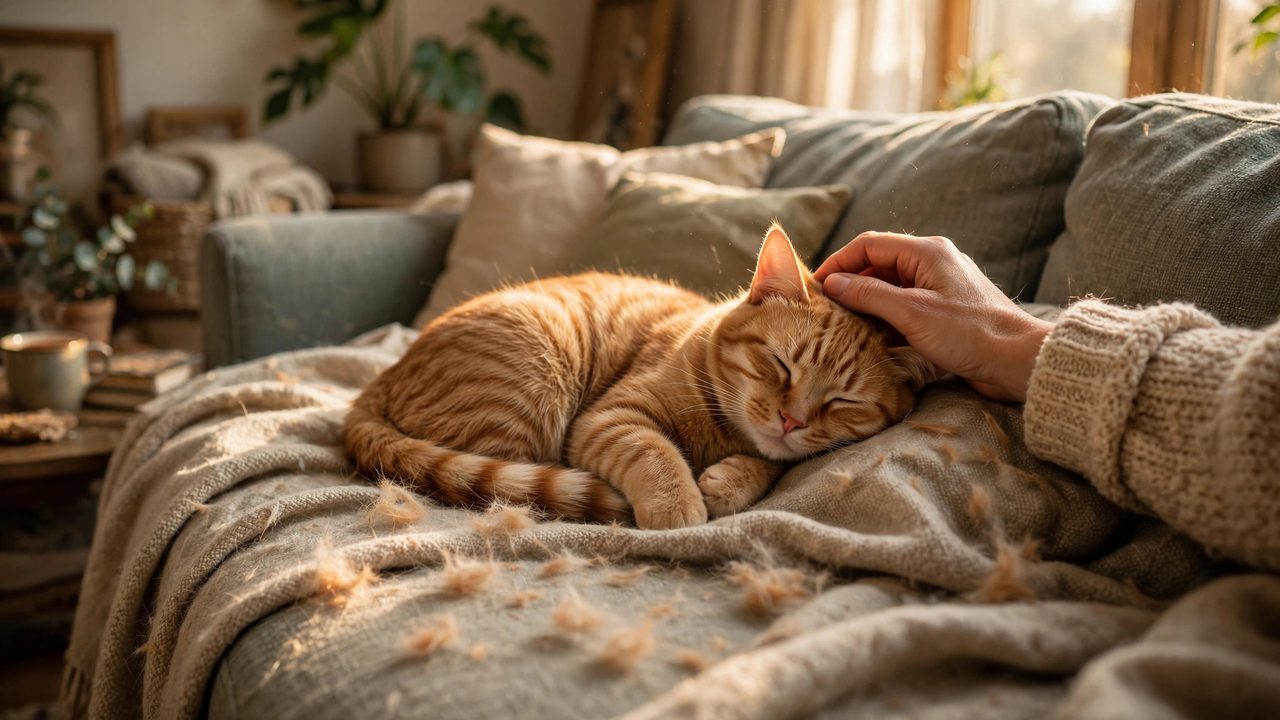
If a cat shares your bed or sofa, the blanket is where the evidence collects first. Loose hair lands after every nap, works its way into fuzzy surfaces during the night, and then reappears on clothes, pillows and dark bedding for days. Choosing the best fabric blankets for cat hair is therefore less about finding a fabric that no hair ever touches, and more about finding a fabric that lets hair go again. Hair will land on every blanket in a cat home. The practical difference is whether it sits on the surface where a shake, a lint roller or a normal wash can remove it, or whether it burrows into a deep, brushed or loosely woven pile and stays there through repeated cleaning.
This guide compares six real blankets built from very different fabrics, so you can match the material to how your cat actually uses the space. A tightly woven cotton percale blanket behaves nothing like a linen throw, a bamboo rayon waffle, a dense wool camp blanket or a microfiber fleece, even when all of them are described as soft or all-season. We explain what each maker lists for fibre content, weave, size and care, and we are honest about trade-offs. Some of the easiest fabrics for hair release are not the warmest. Some of the warmest fabrics need the most careful washing routine. One pick on this list is dry clean only, and that matters enormously if your cat sleeps on it every day. Read the fabric first, the size second and the care label third, and you will end up with a blanket you can actually keep clean instead of one you hide when guests arrive.
Colour matters more than most guides admit, too. A mid-tone, heathered or patterned blanket will show loose hair far less between washes than a solid black or solid white blanket, whatever the fibre. If your cat is a pale longhair, a light natural or beige blanket will look cleaner for longer. If your cat is dark, a charcoal, grey or deep blue will be more forgiving. None of that changes how much hair is present, but it changes how urgent every clean feels, and for daily life that visual difference is worth planning for when you choose a size and colourway.
Quick verdict
For most cat owners who want a bed blanket that releases hair easily and survives frequent washing, the LANE LINEN Classic 3 Layer Cotton Blanket is the strongest starting point. The maker lists a percale weave, and percale is the classic tight, smooth, one-over-one-under cotton weave that leaves hair fewer gaps to lodge in. It is machine washable, sized for a real bed, and built in layers for all-season use rather than as a thin decorative throw.
For a sofa throw in warm weather, the folkka Eden linen blanket is the most distinctive alternative. Linen has a naturally smooth, low-static character compared with many synthetics, and a plain woven linen throw can be shaken out hard outdoors without babying it. For hot sleepers who want a light, breathable layer, the Bedsure Cooling Cotton Waffle Blanket blends cotton with rayon derived from bamboo, although its waffle texture needs a more deliberate shake-and-wash routine than a flat percale surface. The Mayfair Linen Herringbone Cotton Blanket, despite the brand name, is a cotton blanket, and its long staple cotton and thermal weave suit people who want a traditional bed blanket with a firmer, less fuzzy hand. The Pendleton Yakima Camp Throw Blanket is the durable wool option, dense and long-lived, but its dry clean only care makes it a poor choice for a blanket your cat claims nightly unless you protect it with a washable cover layer. The Utopia Bedding Fleece Blanket is the warmth-first microfiber option. Its tight synthetic surface keeps hair mostly near the top compared with deep sherpa or faux fur, and it washes easily, but fleece as a family will always hold more hair than a smooth percale or linen, so it earns its place for cold rooms and frequent laundering rather than for effortless hair release.
In short, choose smooth and tight if hair is your main problem, choose washable if your cat is on the blanket daily, and be sceptical of any deep pile, brushed back or loose knit that promises easy cleaning. Texture you can feel with your fingertips is texture cat hair can grip.
The products in this guide
LANE LINEN Classic 3 Layer Cotton Blanket
This blanket as a classic three-layer design in 100% cotton, with two cotton layers around a soft flannel core, and the listing describes a percale
Best if you want one washable bed blanket whose smooth percale cotton surface gives cat hair
Cold rooms where warmth and easy laundering matter most
The table is a starting map, not a ranking by softness. A blanket that feels plushest in a shop is often the one that will look furriest after a week with a cat. Use the fabric and care columns to narrow the list, then read the full pick for the size and construction details that decide whether it fits your bed, sofa or chair.
How we selected
We started with fabric behaviour, not brand popularity. Published guidance for pet owners consistently points to the same physical principles: tightly woven, smooth surfaces let hair sit on top and release with shaking, brushing or washing, while loose weaves, brushed finishes, deep fleece, sherpa, velvet, chenille and chunky knits trap hair in their texture. Static also matters, because dry synthetic surfaces can attract loose hair in winter heating season. We therefore prioritised blankets whose makers list a tight or plain weave, a smooth fibre such as percale cotton or linen, or a dense construction that keeps hair near the surface, and we included one fleece blanket deliberately so readers who need maximum warmth can see the trade-off explained rather than hidden.
Every product in this guide was verified on an opened page with full details. We recorded the brand, the exact product name, the fibre content the maker lists, the weave where the maker lists it, the size in the listing covered, and the care instructions the maker lists. A product whose existence or specifications could not be confirmed on an opened page was excluded entirely, with no filler description. We did not invent thread counts, weights or treatments that the listing did not state, and where a maker lists a range of sizes or colours we describe the specific listing covered so you can check the variant you actually buy.
We also weighted washability heavily. A cat blanket is not a decorative object that gets cleaned twice a year. It will be washed often, sometimes weekly, and a fabric that releases hair beautifully but cannot go in a home washing machine will lose that advantage for most households. That is why the wool pick carries an explicit caution despite its excellent durability, and why machine washable cotton and microfiber picks rank ahead of it for everyday cat use. Finally, we checked that each blanket is sold as a real bed or throw blanket in a usable size, not a pet-only pad, because this keyword is about blankets people use themselves in homes they share with cats.
The maker lists this blanket as a classic three-layer design in 100% cotton, with two cotton layers around a soft flannel core, and the listing describes a percale weave made for durability and breathability. That combination is exactly why it leads this guide for cat homes. The outer surfaces are the part that matters for hair, and a percale outer is flat, crisp and closely woven compared with a brushed or fuzzy blanket. Loose cat hair tends to rest on that kind of surface rather than working down into a pile, so a firm shake outside, a pass with a lint roller or a damp rubber glove, and then a normal wash will clear most of what a cat leaves behind in a day or two of use.
The maker lists the queen size covered here at 88 by 90 inches, with other bed sizes in the same range including twin, full, king and California king, so it can work as the main blanket on a real bed rather than only as an accent throw. The maker lists it as lightweight and all-season, and as machine washable and suitable for tumble drying, which is essential if it will be the layer your cat actually sleeps on. Cotton also has a practical advantage over many synthetics in a heated bedroom: it builds less static cling in dry air, so hair is less likely to be pulled back onto the surface immediately after you have cleaned it. The blanket is described as becoming softer with washing, which suits a high-wash routine better than a fabric that depends on a delicate surface coating to feel good.
Be clear about the limits. The flannel core is inside the construction, but if an edge or worn area exposes a brushed surface, that area will grip hair more than the smooth outer. Inspect stitching and edges when you wash it, and keep the smooth side facing up where the cat lies. Cotton will also wrinkle more than microfiber and will not feel as instantly plush as fleece on a cold night. Those are acceptable costs for the easiest hair release in this group. Choose a mid-tone colour such as the French Blue in the listing covered, or another heathered shade, and loose pale or dark hair will show less between washes.
Buy it if: you want one washable bed blanket whose smooth percale cotton surface gives cat hair the fewest places to hide, and you wash blankets often.
Skip it if: you want a deep, plush, winter-weight feel above all else, or you dislike the crisper hand and natural wrinkling of cotton.
The maker lists the Eden blanket as 100% European linen, woven at 230 GSM, in an extra-large throw size of 45 by 78 inches, with a striped Blue and White finish in the listing covered and a softened hand. Linen earns serious attention in a cat home for reasons that have little to do with trends. Flax fibres are naturally smooth and relatively low in static compared with many synthetic fabrics, and a plain woven linen surface has no raised pile for hair to sink into. Hair lands, sits visibly on the surface, and can be shaken off with surprising completeness if you take the throw outside and snap it firmly a few times. That shake-out routine is faster than lint rolling a whole sofa throw, and it keeps most loose hair out of your washing machine filter in the first place.
The size makes this a personal throw, a sofa layer or a foot-of-bed blanket rather than a full queen bed blanket. At 45 by 78 inches it is long enough to cover legs and lap properly or to drape lengthwise over the part of the bed a cat favours, which is a smart way to use it: place the linen throw as a sacrificial top layer over your main bedding, let the cat claim it, then shake and wash the throw far more often than the bedding underneath. The maker lists it as lightweight yet substantial, breathable and suitable as a summer blanket, beach layer or sofa throw, and that breathability matters if your cat seeks out the blanket in warm weather and leaves hair concentrated in one warm spot.
Linen does ask for a different mindset. It starts firmer than cotton fleece, softens gradually with washing, wrinkles readily and looks relaxed rather than pressed. If you love a perfectly smooth bed, that rumpled character will bother you. It is also a single-layer woven throw, so it will not replace a warm winter blanket on its own in a cold room. Layer it over a warmer blanket in winter and use it alone in summer, and its hair behaviour stays useful all year. Avoid folding it away unwashed after heavy shedding, because hair shaken off promptly is far easier than hair pressed into folds for weeks.
Buy it if: you want a low-pile, low-static throw you can shake out hard outdoors, and you like linen as a breathable summer and sofa layer.
Skip it if: you need full bed coverage in a large size, a wrinkle-free look, or a single blanket warm enough for midwinter on its own.
The maker lists this Bedsure blanket as 50% cotton and 50% rayon derived from bamboo, in a waffle weave, with the throw size covered here at 50 by 70 inches in Beige. The fibre blend is the attraction for hot sleepers. The maker lists the fabric as breathable and moisture-wicking, and rayon derived from bamboo has a smooth, cool hand that feels very different from a fuzzy synthetic throw on a warm night. For a cat owner who sleeps hot and whose cat insists on sleeping on the blanket rather than beside it, a cooler surface can mean the cat spreads out on top instead of burrowing and kneading, which in turn keeps more hair on the surface where it can be removed.
Honesty about the weave is important. A waffle weave is a three-dimensional texture with recessed squares, and those recesses can catch hair more than a flat percale surface does. This blanket is therefore not the easiest in the guide for hair release, despite its smooth fibres. It sits in the middle: smoother and less static-prone in feel than a deep fleece, but more textured than the LANE LINEN percale or the folkka linen. The routine that works is to shake it outside first, paying attention to the textured side, then wash it rather than relying on a quick lint roll alone. The maker lists machine wash care with do not bleach guidance in the product information for the king variant, and the throw listing presents it as an everyday bed, couch and sofa blanket, so frequent washing is part of its intended use.
The Beige colour in the listing covered is a forgiving choice for many cats, sitting between pale and dark hair in visibility. Larger sizes exist in the same family, including queen and king listings, so if the throw works on your sofa you can scale the same fabric to a bed. Keep expectations aligned with the season: this is a lightweight cooling blanket, excellent in spring, summer and heated apartments, and best layered over a warmer blanket in winter rather than used alone. If your cat is a heavy shedder in peak season, use it as the top layer and wash it more often than the blanket beneath it.
Buy it if: you sleep hot, want a smooth cotton and bamboo rayon blend with a cool hand, and you are willing to shake and wash a textured weave regularly.
Skip it if: effortless hair release is your only priority, because a flat percale or linen surface will clear faster than any waffle texture.
Despite the brand name, the maker lists this blanket as 100% long staple cotton, in a herringbone weave, with the Twin and Twin XL size covered here at 68 by 92 inches in White. That distinction matters, because buyers searching by brand could easily assume it is flax linen. It is a cotton thermal blanket, and it should be judged as one. Long staple cotton uses longer fibres, which the maker lists as the basis for its softness and woven herringbone texture, and longer fibres generally produce a smoother, stronger yarn with fewer loose ends than short staple cotton. Fewer fuzzy fibre ends means fewer tiny hooks for cat hair to cling to compared with a cheap, loosely spun cotton blanket that pills quickly.
The herringbone weave gives the blanket a visible diagonal pattern and a traditional bed blanket character. It is more textured than a flat percale sheet-style weave, but far flatter than fleece, sherpa or a chunky knit. Hair behaviour sits accordingly in the middle of this guide, closer to the smooth end when the blanket is new and well kept, and worse if the surface pills or roughens after harsh washing. Wash it gently, avoid over-drying, and shake it outside before washing so the textured pattern does not carry a full load of hair into the machine. The maker lists it as an all-season thermal throw for bed, couch, chair and outdoor use, and the twin size is generous enough for a single bed, a guest bed or a long sofa layer.
White, the colour in the listing covered, is the least forgiving choice for a dark cat and the most forgiving for a white or cream cat, so choose the colourway with your own cat in mind if other colours are offered in the same listing family. As a cotton blanket it will breathe well, layer cleanly under a duvet or over a sheet, and avoid the static pull that some synthetic blankets develop in winter. It will not feel like a plush throw, and it is not meant to. Its value in a cat home is a firm, woven, washable cotton surface that does not invite hair to disappear into a deep pile.
Buy it if: you want a traditional woven cotton thermal blanket in a generous twin size, with a smoother long staple yarn than basic cotton blankets.
Skip it if: you are actually shopping for flax linen, want a queen or king bed size in the specific listing covered, or prefer a completely flat weave.
The maker lists the Yakima Throw at 54 by 66 inches, woven from 86% virgin wool and 14% cotton, in Mineral Umber, with a whipstitch binding, a heavyweight feel and dry clean only care. Wool is a complicated fabric for cat hair, and this guide includes it because many cat owners already own or are considering a wool camp blanket and deserve a straight account. A dense wool camp weave is tight and durable, with no deep synthetic pile, so hair does not vanish into it the way it vanishes into sherpa. It tends to sit on or lightly grip the surface, and a stiff brush or a thorough vacuum can clear a surprising amount from a firm wool throw used on a chair or at the foot of a bed.
The problem is not the weave. The problem is care. The maker lists this blanket as dry clean only, and a blanket a cat sleeps on daily needs washing, not occasional dry cleaning. Wool also has a slightly grippy natural fibre scale compared with silk-smooth synthetics or linen, and a cat that kneads wool can work hair and loose fibres together over time. The sensible way to use this blanket in a cat home is as a durable top or accent layer in a spot the cat visits rather than claims, or protected by a washable cotton or linen throw placed where the cat actually lies. Used that way, its density, warmth and longevity are real advantages, and its striped camp pattern hides scattered hair visually better than a solid pale fleece ever will.
Do not buy it as your main washable cat blanket and hope the care label is a suggestion. Repeated home washing of a dry clean only wool blanket risks shrinkage and felting, which would make the surface rougher and even better at trapping hair. If you already own one, brush it outdoors, vacuum it with an upholstery tool, air it regularly, and keep the washable layer between the wool and the cat. If you are buying new specifically for a cat who will sleep on the blanket every night, choose one of the machine washable cotton picks above instead and enjoy wool in a less cat-central place.
Buy it if: you want a dense, heavyweight wool and cotton camp throw for a chair or foot of bed, and you will protect it with a washable layer where the cat lies.
Skip it if: the blanket will be your cat’s daily sleeping surface and you need home machine washing, because the maker lists this wool throw as dry clean only.
The maker lists this Utopia Bedding blanket as a fleece bed blanket in 100% microfiber polyester, with the queen size covered here at 90 by 90 inches in Grey and a plush, lightweight, all-season character. Including a fleece blanket in a guide about cat hair requires candour. Fleece has a brushed, fuzzy surface, and fuzzy surfaces hold hair more than smooth woven surfaces do. If hair release were the only measure, this blanket would not be here. It is here because many households choose fleece anyway for warmth, softness and easy care, and within the fleece family a relatively tight microfiber fleece behaves better than a deep sherpa, a faux fur throw or a loose flannel with a heavily raised nap.
Microfiber fleece has two practical points in its favour. First, its fibres are very fine and densely packed, so a large share of loose hair stays near the surface rather than sinking through a loose weave, and a lint roller, a damp hand or a rubber brush can pull up a visible layer quickly before washing. Second, it tolerates the frequent washing that cat ownership requires without the special handling wool demands, and it dries fast, which makes a twice-weekly wash realistic in winter. Grey, the colour in the listing covered, is also a sensible middle tone that shows both pale and dark hair less starkly than black or white. The queen size gives full bed coverage, and the same family includes throw and other bed sizes if you want a matching sacrificial layer for a sofa.
Manage it actively and it can work. Shake it outside before every wash, use a lint roller or rubber brush on the side the cat sleeps on, wash it separately from smooth cotton bedding so hair does not transfer, and clean the machine filter regularly during heavy shedding season. Expect to de-hair it more often than the percale or linen picks, and expect static in very dry heated air to make hair cling until you do. If you accept that routine in exchange for warmth and softness on cold nights, this is a reasonable fleece choice. If you know you will not keep up the routine, be honest with yourself and choose a smooth woven blanket instead, because an unmanaged fleece blanket in a cat home becomes a hair reservoir that redistributes fur onto everything it touches.
Buy it if: warmth, softness and fast, frequent washing matter most, you choose a forgiving mid-tone, and you will brush and shake it before every wash.
Skip it if: you want the easiest possible hair release, dislike static cling in winter, or know a brushed fuzzy surface will frustrate you within a week.
Buying guide
Start with weave, not fibre name alone. Two blankets can both say cotton and behave oppositely: a tight percale cotton releases hair well, while a brushed cotton flannel grips it. Ask what the surface actually feels like. If your fingertips catch on a raised, fuzzy or deeply textured surface, cat hair will catch there too. Flat, smooth, closely woven surfaces are the safest default. Plain weave, percale and smooth sateen-style finishes belong at the top of a cat owner’s list. Herringbone and other woven patterns sit in the middle when they are firm and low. Waffle textures need more work because of their recesses. Deep fleece, sherpa, velvet, chenille, faux fur and chunky knits sit at the difficult end, however soft they feel.
Next, think about static and season. Dry winter air and synthetic fibres are a combination that pulls loose hair onto a blanket and holds it there. Natural fibres such as cotton and linen generally build less static, which is one reason they feel easier to keep clean even before washing. Smooth rayon derived from bamboo also has a slick, cool hand that many hot sleepers prefer in summer. Wool is natural and durable but grippy and, in the pick covered here, dry clean only. There is no single best fibre for every home. There is a best match between fibre, weave, your climate, your heating and how often you will wash the blanket.
Size the blanket for the cat’s real territory. If your cat sleeps in one corner of a king bed, a washable throw placed over that corner, washed twice as often as the main bedding, will keep the whole bed cleaner than replacing the main blanket with a slightly better fabric. If your cat stretches full length on the sofa, a throw needs to be long enough to cover that stretch or hair will simply land on the sofa fabric beside it. Measure the bed or sofa, compare it with the size the maker lists for the exact variant, and remember that throw sizes vary widely, from compact lap throws to the extra-long linen size in this guide.
Read the care label as a hair decision. Machine washable is not a convenience detail in a cat home, it is the feature that decides whether the blanket stays clean in month three. Check whether the maker lists machine wash, whether bleach is excluded, and whether tumble drying is allowed, because a blanket that dries slowly on a line in winter will be washed less often than you plan. Dry clean only blankets have a place, but not as a cat’s nightly bed. Also consider washing the blanket separately during heavy shedding, shaking it outdoors first, and using a lint roller or rubber brush before it goes into the machine, so you are not washing hair deeper into other bedding.
Choose colour strategically. Match the blanket broadly to your cat’s coat or choose a heathered, striped or patterned mid-tone that camouflages both pale and dark hairs. Solid black shows every pale hair. Solid white shows every dark hair and every paw print. A grey, beige, taupe, French blue or patterned camp stripe will look acceptable for more days between washes, which matters if the blanket lives on a sofa in a room guests use. Camouflage does not replace cleaning, but it removes the constant visual pressure that makes a perfectly serviceable blanket feel dirty.
Finally, plan a simple routine and buy for it. One smooth washable blanket used as the cat’s layer, shaken outside several times a week, brushed before washing and washed on a regular cycle, will outperform an expensive blanket with no routine. Many owners do best with two washable blankets in rotation, so one can be in the wash while the other is on the bed. If you are choosing between two similar cotton blankets, pick the one with the smoother surface, the size that truly covers the cat’s spot, and the colour that hides your cat’s hair best. Those three details will decide your daily experience far more than any marketing word on the listing.
FAQ
Which fabric releases cat hair the easiest?
Smooth, tightly woven fabrics release hair the easiest, with cotton percale and plain woven linen at the strong end of this guide. Hair sits on their flat surfaces instead of sinking into a pile, so shaking, brushing and washing remove it more completely. The tighter and smoother the surface feels to your hand, the less grip it offers to loose hair.
Is microfiber good or bad for cat hair?
Microfiber is mixed. A tight microfiber surface can keep hair near the top where a roller or brush can lift it, and microfiber blankets wash and dry easily. But brushed microfiber fleece has a fuzzy texture and can build static in dry air, both of which make hair cling more than it does to smooth cotton or linen. Judge the specific surface, not the word microfiber alone.
Does a waffle weave blanket trap cat hair?
It can catch more hair than a flat weave because the recessed squares of a waffle texture give hair places to settle. A waffle blanket in smooth fibres such as a cotton and bamboo rayon blend is still manageable if you shake it outside and wash it regularly, but it will not clear as quickly as a flat percale blanket. Choose waffle for breathability and texture, not for the fastest hair release.
How often should I wash a blanket my cat sleeps on?
Wash it whenever loose hair, odour or visible soiling builds up, which for a daily cat blanket often means a regular weekly rhythm and more often during heavy shedding. Shaking it outside and brushing it between washes stretches the interval and keeps most hair out of the machine. Always follow the care the maker lists for that blanket, and avoid home washing a blanket the maker lists as dry clean only.
What blanket colour hides cat hair best?
A mid-tone close to your cat’s coat, or a heathered, striped or patterned fabric, hides loose hair best between washes. Grey, beige, taupe and muted blue are forgiving for many cats. Solid black highlights pale hair and solid white highlights dark hair, so both will look furry sooner even when the amount of hair is identical.
Should I use a throw over my main blanket for my cat?
Yes, for most homes that is the most practical system. A smooth, washable throw placed where the cat actually lies collects most of the hair in one layer you can shake out and wash frequently, protecting the larger bedding underneath. Linen and percale cotton throws work especially well in that role because they release hair readily and tolerate regular washing.
Conclusion
The best fabric for a cat home is the one that lets hair go. Tightly woven cotton percale leads this guide because its smooth surface, machine washable care and real bed sizes match the daily reality of living with a shedding cat, and the LANE LINEN Classic 3 Layer Cotton Blanket is the clearest expression of that approach. Linen is the outstanding throw alternative for people who will shake it out outdoors and enjoy its breathable, low-pile character. The Bedsure cotton and bamboo rayon waffle suits hot sleepers who accept a little extra texture management, and the Mayfair Linen herringbone cotton blanket offers a traditional woven option with longer staple fibres. Treat the Pendleton wool throw as a durable layer to protect rather than a washable cat blanket, and treat the Utopia microfiber fleece as a warmth-first choice that only works with an active brush, shake and wash routine.
Whichever fabric you choose, buy the size that covers your cat’s actual sleeping territory, pick a colour that forgives your cat’s coat, and commit to the simple routine of shaking, brushing and washing on schedule. Do that, and the blanket stops being the furriest object in the room and becomes what it should be: a comfortable layer you and your cat can share without a negotiation every laundry day.
M
Modern Line Home Editorial Team
We compare specs, materials and verified owner reviews before a product earns a spot. Rankings are never paid.
Affiliate disclosure. As an Amazon Associate we earn from qualifying purchases at no extra cost to you. Prices accurate as of the date shown.
House cold even with the heat on? Walk this ordered checklist: thermostat and filter first, then drafts, insulation, leaky ducts and a failing heating system.
Windows fogging up in winter? Check where the fog sits: on the room side it is indoor humidity, outside it is harmless, and between panes the seal has failed.
Store the main firewood pile about 30 feet from your house, off the ground and covered only on top. Compare racks, woodsheds, garages and indoor spots safely.
Place a portable generator outdoors only, at least 20 feet from windows, doors and vents, exhaust pointed away. Exact distances, setup steps and CO rules here.
Keep houseplants in the right winter spot: match window direction to plant type, stay clear of radiators and cold glass, and fix dry air and low light at home.
Mice enter through pencil-width gaps at foundations, pipes, vents, doors and the roofline. Walk this room-by-room winter checklist to find and seal each one.
A winter outage timeline: what to do in the first hour, first night and multi-day outage, with food safety times, pipe protection, heat and CO safety steps.
Size a space heater by room area: 10 watts per square foot at 8-foot ceilings, adjusted for insulation and ceiling height, with full wattage and BTU tables.
Start dripping at about 20 degrees, sooner for exposed pipes. Set a pencil-lead stream, drip the right faucets on both lines, and know when to stop safely.
A fridge needs 800-1,200 starting watts, not just 150-400 running watts. Use the tables to total your fridge plus freezer, lights, furnace fan and more today.











Write Your Review
No reviews yet. Be the first to share your experience!