We independently review everything we recommend. When you buy through our links, we may earn a commission. As an Amazon Associate we earn from qualifying purchases.
Best Cotton Towels for Holding Cast Iron: 6 Top Picks
Find the best cotton towels for holding cast iron: thick terry, waffle and herringbone picks sized for folding over hot skillet handles, with safe-use tips.
Find the best cotton towels for holding cast iron: thick terry, waffle and herringbone picks sized for folding over hot skillet handles, with safe-use tips.
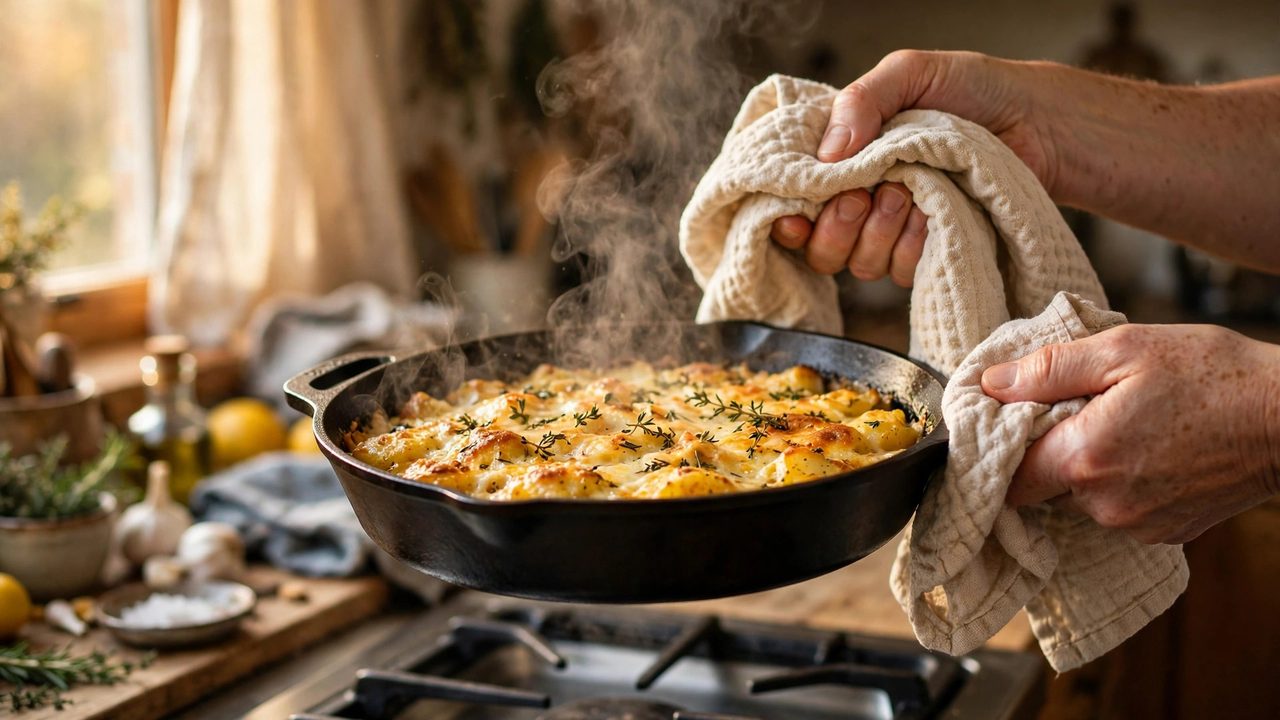
A cast iron skillet handle does not announce how hot it is. It looks the same at room temperature as it does after twenty minutes over a burner, and the moment you grab it bare-handed is the moment you learn the difference. Cooks have folded kitchen towels over those handles for generations, and cotton is the fibre that makes the trick work: it does not melt, it grips metal well, and folded into several layers it puts real fabric between your palm and the iron. Finding the best cotton towels for holding cast iron is therefore less about pretty patterns and more about thickness, size, weave and how a towel behaves when it is folded four layers deep over a hot handle.
This guide compares six cotton towel sets sold on Amazon US, each checked on its opened listing page. They range from plush terry built for grip, to a heavy waffle weave with a published fabric weight, to large flat herringbone towels that fold into a wide pad. Along the way we explain how to fold a towel for handle duty, why a damp towel is dangerous near hot iron, when a towel is the wrong tool and a proper oven mitt should take over, and how to wash cotton towels so they stay thick and absorbent instead of going thin and slick.
Quick verdict
For most cast iron cooks, the Homaxy terry set is the first pick: the maker lists an upgraded terry structure in 100 percent cotton, a long 13 by 28 inch shape that folds into a thick pad, and a hanging loop so a dry towel is always within reach of the stove. If you want the heaviest fabric in the group, the COTTON CRAFT Euro Café set publishes a 420 GSM weight and a two-ply ringspun cotton build at a generous 16 by 28 inches. Households that burn through towels quickly should look at the Utopia 12-pack and the Zeppoli 15-pack, which make it easy to keep a clean, dry towel in rotation. The Harringdons set brings the largest single towel at 20 by 28 inches, useful under big skillets and Dutch ovens, and the small RITZ three-pack suits cooks who want a compact, dedicated handle towel in classic terry.
The products in this guide
Homaxy 100% Cotton Terry Kitchen Towels, 4 Pack, Black
The fabric as 100 percent natural cotton with an upgraded terry structure, designed to be lightweight yet highly absorbent and quick to dry between
Every product in this guide had to clear the same bar. The listing had to state cotton construction, because synthetic fibres can soften or melt against hot metal and because this guide is specifically about cotton. The towel had to be big enough to fold into at least four layers over a skillet handle while still leaving fabric to grip, which ruled out small dishcloth squares. We favoured weaves that add thickness or grip when folded: looped terry, waffle weave with its recessed grid, and denser flat weaves that layer cleanly without bunching. Pack size mattered too, because a handle towel only protects you when it is dry, and a dry towel is only guaranteed when the drawer holds spares.
Each set was verified on its opened Amazon listing page, and the specifications below are the ones the maker lists there, including dimensions, pack counts, fabric descriptions and care instructions. Where a listing gives a fabric weight, we report it; where it does not, we do not guess one. We also excluded products whose own detail fields contradicted their titles, and sets whose fabric turned out to be a blend rather than the cotton the keyword calls for. No towel here is presented as a certified heat protectant: these are kitchen towels used the way cooks have always used them, folded dry and used briefly, and the buying guide explains the limits of that method honestly.
Homaxy builds this set around terry, the looped weave that gives a folded towel both cushion and grip, and for handle work that combination matters more than almost anything else. The maker lists the fabric as 100 percent natural cotton with an upgraded terry structure, designed to be lightweight yet highly absorbent and quick to dry between uses. The loops bite gently against a smooth iron handle instead of sliding on it, and when the towel is folded into quarters the looped layers stack into a pad with genuine loft, which is what slows heat on its way to your palm during the short carry from stove to trivet.
The dimensions suit the job. The maker lists each towel at 13 by 28 inches, a long, slightly narrow shape that folds neatly along its length. Folded in half and then in half again, it becomes a long pad that wraps a skillet handle with fabric to spare at the sides, so your fingers are not hunting for coverage mid-lift. The listing also notes a hanging loop among its features, which sounds minor until you consider the routine it creates: the towel lives on a hook beside the stove, visible and dry, rather than buried in a drawer or, worse, draped damp over the oven door.
Care follows the usual cotton terry rules. The maker lists machine washing in cold water on a gentle cycle with a low tumble dry, and specifically warns against bleach and fabric softeners because they affect longevity and absorbency. That warning is worth honouring for handle duty as well: softener-coated fibres feel slicker and drink less, and a towel that grips less is a towel you trust less over hot iron. In black, the set also hides the scorch-adjacent grime and seasoning smears that cast iron cooking leaves on lighter fabrics.
Buy it if: you want one dependable terry towel shape dedicated to the stove, with a loop that keeps it hanging dry and ready.
Skip it if: you cook with several large pans at once and need more than four towels in rotation, or you prefer a wider towel for doubling as a trivet pad.
Most kitchen towel listings never publish a fabric weight, which makes the COTTON CRAFT Euro Café set easy to take seriously: the maker lists 420 GSM and describes a two-ply construction in 100 percent ringspun cotton. Weight is not the whole story, but for a towel that will be folded over hot metal, more cotton per square metre generally means more insulation per fold and a pad that feels substantial rather than apologetic in the hand. If you have ever folded a thin tea towel over a skillet handle and felt the heat arrive almost immediately, you already understand what the extra substance is for.
The waffle weave adds a second advantage. Its recessed square grid creates texture across the whole surface, and texture is grip: the folded pad keys against the handle and against your own palm instead of skating. The maker lists each towel at 16 by 28 inches, the joint-largest footprint in this guide alongside the Harringdons set, so a quarter fold still leaves a broad pad that suits two-handed lifts of heavier skillets and grill pans. Twelve towels in the set mean the rotation problem solves itself; there is always another dry one while the used ones are in the wash.
The maker lists easy care with a gentle machine wash and low tumble dry, and notes honestly that some minimal shrinkage may occur because of the nature of the cotton fabric. That note is a useful reminder to wash and dry the set before judging the fit over your handles, and to fold with a little margin rather than to an exact edge. In plain white, the set also bleaches back to a clean look more readily than patterned towels, which matters in a kitchen where towels meet tomato sauce and turmeric as often as they meet hot iron.
Buy it if: you want the heaviest maker-listed fabric weight in this group and a textured weave that grips handles securely.
Skip it if: you dislike white towels in a working kitchen, or you want terry loops rather than a waffle grid against the metal.
Utopia’s long-running kitchen towel set is the rotation specialist of this guide. The maker lists twelve towels in 100 percent ring-spun cotton, each measuring 15 by 25 inches, in a dobby weave style with a terry character that the listing describes as soft, absorbent and made for handling hot cookware among its everyday tasks. Twelve towels change the safety maths of cast iron cooking: the most common way a towel fails at a handle is by being damp from the last job, and with a deep stack in the drawer there is never a reason to reach for yesterday’s wet one.
The 15 by 25 inch size is a practical middle ground. It is wide enough to fold into a pad that covers a standard skillet handle completely, long enough to double over twice without fighting the fabric, and small enough that the folded pad stays tidy in one hand while the other steadies the pan. Ring-spun cotton, which the maker lists as the construction, uses twisted fibres that tend to feel smoother and hold together well through repeated washing, and the maker lists simple care: machine wash and tumble dry on low.
The black colourway earns its place in a cast iron kitchen. Seasoned skillets leave dark smears, stovetops collect carbonised splatter, and a black towel keeps looking presentable through all of it, which encourages the habit that actually matters: using a fresh towel for each cooking session instead of nursing one grubby towel for a week. The maker lists the set weight at two pounds for the twelve, a reminder that these are midweight towels; fold them fully rather than grabbing a single layer, and they do the handle job the way generations of cooks have done it.
Buy it if: your household cooks daily and needs a deep bench of dry towels so a damp one never gets pressed into handle duty.
Skip it if: you want the thickest single towel available; a midweight towel in a 12-pack trades some per-towel loft for quantity.
Size is the Harringdons argument. The maker lists each towel at 20 by 28 inches, the largest in this guide, in a herringbone weave of 100 percent cotton with a hanging loop on each towel. That extra width changes what the towel can do around cast iron: folded, it makes a broad pad for two-handed carries of a loaded Dutch oven; spread flat, it becomes the landing zone under a hot skillet on a wooden table; draped, it covers more of a long griddle handle than narrower towels manage. Big pans are exactly where towel technique matters most, because the weight tempts you to rush, and rushing with a skimpy fold is how handles get dropped.
Herringbone is a flat, dense weave, and flat weaves layer predictably. There are no loops to compress unevenly, so a four-layer fold stays even, and the pad feels the same thickness at the edges as in the middle. The maker describes the towels as lint free and fast to soak up liquids, and notes that they become more absorbent with use, which is typical of natural cotton as its fibres open through the first washes. The listing also presents them as bleach friendly and washable at high temperatures, a practical trait for towels that work near a stove and collect grease.
Twelve towels in assorted colours let you run a simple system that many cooks swear by: one colour family lives by the stove for handles and hot work, the rest handle dishes and counters elsewhere. Colour-coding removes the half-second of doubt about whether the towel in your hand is the dry, clean one. The maker lists the set at 2.7 pounds, consistent with a substantial flat-weave towel rather than a gauzy tea towel, and the hanging loops keep the big towels off the counter and drying between uses.
Buy it if: you cook in large skillets, griddles or Dutch ovens and want the widest fold and a towel that doubles as a landing pad.
Skip it if: you prefer looped terry texture for grip, or your storage is tight and oversized towels feel cumbersome for everyday drying.
Fifteen towels is the headline here, and in a cast iron kitchen quantity is a safety feature in its own right. The maker lists the Zeppoli Classic set as 100 percent natural cotton, each towel 14 by 25 inches, in a lightweight woven construction described as basket-woven, quick to dry and low in lint. These are the classic flat side towels that line cooks keep tucked at the waist, and their virtue for handle work is discipline: with fifteen in the drawer, the used towel goes straight to the laundry and a fresh dry one takes its place, every single time.
Flat woven cotton folds crisply, and that matters when you are wrapping a handle quickly. The pad lies flat against the iron with no looped bulk to shift, and the edges stay where you put them, so the grip feels predictable from the first lift of the evening to the last. The maker lists the towels as machine washable and dryer friendly, designed to minimise lint and resist shrinkage, and the set weight of 2.2 pounds across fifteen towels confirms the lightweight build: these protect by layering, so fold deliberately, at least twice over, before the handle leaves the burner.
The blue colourway is the traditional kitchen look, and it hides a fair amount of working grime between washes. Because the towels are light, they also dry fast on a hook, which suits smaller kitchens where the rotation is limited by drying space rather than drawer space. Keep expectations aligned with the construction: this is the set for cooks who value an endless supply of clean, dry, foldable cotton over maximum single-towel thickness, and who are happy to add one more fold for a long carry.
Buy it if: you want the deepest stock of towels in this guide and a fresh dry towel for every cooking session without laundry pressure.
Skip it if: you want to grab a handle with a single quick fold; lightweight towels need an extra fold to build the same pad.
RITZ, made by the John Ritzenthaler Company, is one of the old names in kitchen textiles, and this small set is the minimalist option in the guide. The maker lists three towels in 100 percent cotton terry, each 25 by 15 inches, in a deep Federal Blue with the brand’s classic check styling. Three towels is not a rotation strategy; it is a dedication strategy. This is the set you buy to live permanently at the stove, used for handles and hot work only, while your general kitchen towels live elsewhere.
Terry is the traditional handle weave for a reason. The looped surface grips iron, the loops compress into a cushioned pad when folded, and cotton terry tolerates the heat of a handle without the melting risk that rules out synthetic fibres near a burner. The 25 by 15 inch footprint folds into a pad sized much like a potholder, which makes the hand position familiar: thumb on top, fingers curled under, fabric everywhere skin would otherwise meet metal. The maker lists machine wash care, keeping the routine simple.
At a listed weight of just 3.2 ounces for the set, these are light towels, and honesty about that matters: fold them fully, keep the contact brief, and let a proper oven mitt handle anything coming out of the oven itself. Within those limits, a small dedicated set has a real advantage. It never gets borrowed for mopping a spill, so it is never damp when the skillet needs moving, and its small count makes it easy to wash the whole set at once and start again with all three clean and dry.
Buy it if: you want a compact, dedicated handle towel set in classic cotton terry that stays at the stove and nowhere else.
Skip it if: you need volume for a busy household; three towels will cycle through the wash constantly if they take on general kitchen duty too.
Buying guide
Fold first, then judge. A towel’s handle performance is decided by the folded pad, not the flat sheet. As a rule, fold the towel so at least four layers of cotton sit between your palm and the handle, with the fold lines running across the handle rather than along it. Longer towels, around 28 inches, fold into a pad that also shields your wrist from the pan’s edge; shorter or lighter towels simply need one more fold. If a towel feels thin when folded into quarters, it is telling you something: retire it to dish duty.
Dry is non-negotiable. Water conducts heat far faster than dry cotton, and a damp towel against a hot handle can turn to steam against your skin. This is the single most important rule in this guide. Keep handle towels separate from sink towels, hang them where they dry fully, and the moment one gets wet, swap it for a dry one. This is why pack size appears so often above: spares are not a luxury, they are the mechanism that keeps the rule easy to follow.
Choose the weave for the grip you like. Terry loops give the most friction and cushion and are the classic choice for handles. Waffle weave offers a textured grid that keys against metal and often comes in heavier fabric weights. Flat weaves such as herringbone layer evenly and fold crisply, which suits wide pads and big pans, but they rely on layering rather than loft. None of these is wrong; match the weave to whether you prioritise cushion, texture or a broad, even pad.
Know the limits of a towel. A folded cotton towel is for brief contact: moving a skillet on the stove, carrying it to a trivet, steadying it while you plate. It is not an oven mitt. For pulling a Dutch oven from a hot oven, reaching across burners, or holding a pan for an extended scrape and stir, use purpose-built heat protection with a rated design. Keep towels away from open flame, never leave one draped over a handle while the pan is on the heat, and never use a towel that is frayed, holed or worn thin at the fold line.
Wash for grip, not just for looks. Fabric softener and dryer sheets coat cotton fibres and make them slicker and less absorbent, which is the opposite of what a handle towel needs. Wash cotton towels in warm or hot water as the maker allows, skip the softener, and dry them fully before they return to the hook. Towels that come back stiff with detergent residue should get an extra rinse. Over time, thinning is the retirement signal: hold the folded pad up to the light, and if you can see through the layers easily, that towel’s handle days are over.
FAQ
Is it safe to hold a cast iron skillet with a cotton towel?
With the right technique, it is the method cooks have used for generations: a completely dry cotton towel, folded to at least four layers, used for brief contact with a stovetop-hot handle. The towel must be dry, the fold must be full, and the contact must be short. For oven work or long holds, use a proper oven mitt instead.
Why cotton rather than a synthetic towel?
Cotton does not melt against hot metal, while many synthetic fibres soften or melt at temperatures a skillet handle can reach. Cotton also grips iron well and stays grippy when folded. The maker listings in this guide all state cotton construction, which is the first thing to check on any towel you plan to use near heat.
How thick should the folded towel be?
Thick enough that you feel fabric, not metal, and that heat arrives slowly rather than immediately. In practice that means at least four layers of a midweight towel, and more layers for lightweight flat weaves like the Zeppoli set. If you feel sharp heat within the first seconds of a short carry, the pad is too thin: set the pan down and add a fold.
Can I use the same towel for drying dishes and holding handles?
You can, but it is a poor system, because a dish towel is often damp and a damp towel near a hot handle is a steam risk. A better routine keeps one or two towels dedicated to the stove, hung on a hook to dry fully, while other towels handle the sink. Several sets in this guide include hanging loops that make that separation easy.
What size towel works best for cast iron handles?
Around 15 by 25 inches is the versatile middle: big enough for a four-layer pad, small enough to control with one hand. Longer towels near 28 inches suit two-handed lifts of heavy pans, and the widest towels double as landing pads under hot skillets. Small dishcloth squares are too small to fold safely and were excluded from this guide.
How do I know when to retire a handle towel?
Retire it when the fabric thins at the fold, when holes or frayed edges appear, or when it stays slick after washing. A towel that has done months of dish duty often looks fine but has lost the substance that made it protective. Move it to cleaning duty and promote a fresh towel to the stove hook.
Conclusion
The right cotton towel turns a cast iron handle from a hazard into a handle again. Start with the Homaxy terry set if you want looped grip, a long fold and a hook-ready loop in a compact pack. Choose the COTTON CRAFT Euro Café set for the heaviest maker-listed fabric and waffle texture, the Utopia or Zeppoli packs for a deep rotation of dry spares, the Harringdons set for the widest pad under big pans, or the small RITZ set for a dedicated stove-side trio. Whichever you pick, the habits matter as much as the towel: fold it fully, keep it dry, keep the contact brief, and let oven mitts do the oven work. Do that, and your cotton towels will serve your cast iron faithfully for years.
M
Modern Line Home Editorial Team
We compare specs, materials and verified owner reviews before a product earns a spot. Rankings are never paid.
Affiliate disclosure. As an Amazon Associate we earn from qualifying purchases at no extra cost to you. Prices accurate as of the date shown.
House cold even with the heat on? Walk this ordered checklist: thermostat and filter first, then drafts, insulation, leaky ducts and a failing heating system.
Windows fogging up in winter? Check where the fog sits: on the room side it is indoor humidity, outside it is harmless, and between panes the seal has failed.
Store the main firewood pile about 30 feet from your house, off the ground and covered only on top. Compare racks, woodsheds, garages and indoor spots safely.
Place a portable generator outdoors only, at least 20 feet from windows, doors and vents, exhaust pointed away. Exact distances, setup steps and CO rules here.
Keep houseplants in the right winter spot: match window direction to plant type, stay clear of radiators and cold glass, and fix dry air and low light at home.
Mice enter through pencil-width gaps at foundations, pipes, vents, doors and the roofline. Walk this room-by-room winter checklist to find and seal each one.
A winter outage timeline: what to do in the first hour, first night and multi-day outage, with food safety times, pipe protection, heat and CO safety steps.
Size a space heater by room area: 10 watts per square foot at 8-foot ceilings, adjusted for insulation and ceiling height, with full wattage and BTU tables.
Start dripping at about 20 degrees, sooner for exposed pipes. Set a pencil-lead stream, drip the right faucets on both lines, and know when to stop safely.
A fridge needs 800-1,200 starting watts, not just 150-400 running watts. Use the tables to total your fridge plus freezer, lights, furnace fan and more today.












Write Your Review
No reviews yet. Be the first to share your experience!