We independently review everything we recommend. When you buy through our links, we may earn a commission. As an Amazon Associate we earn from qualifying purchases.
Best Cooling Towels for Baseball: 6 Picks for Dugout Days
Find the best cooling towels for baseball, from PVA pads to microfiber multi-packs sized for dugout benches, batting practice and tournament days in the sun.
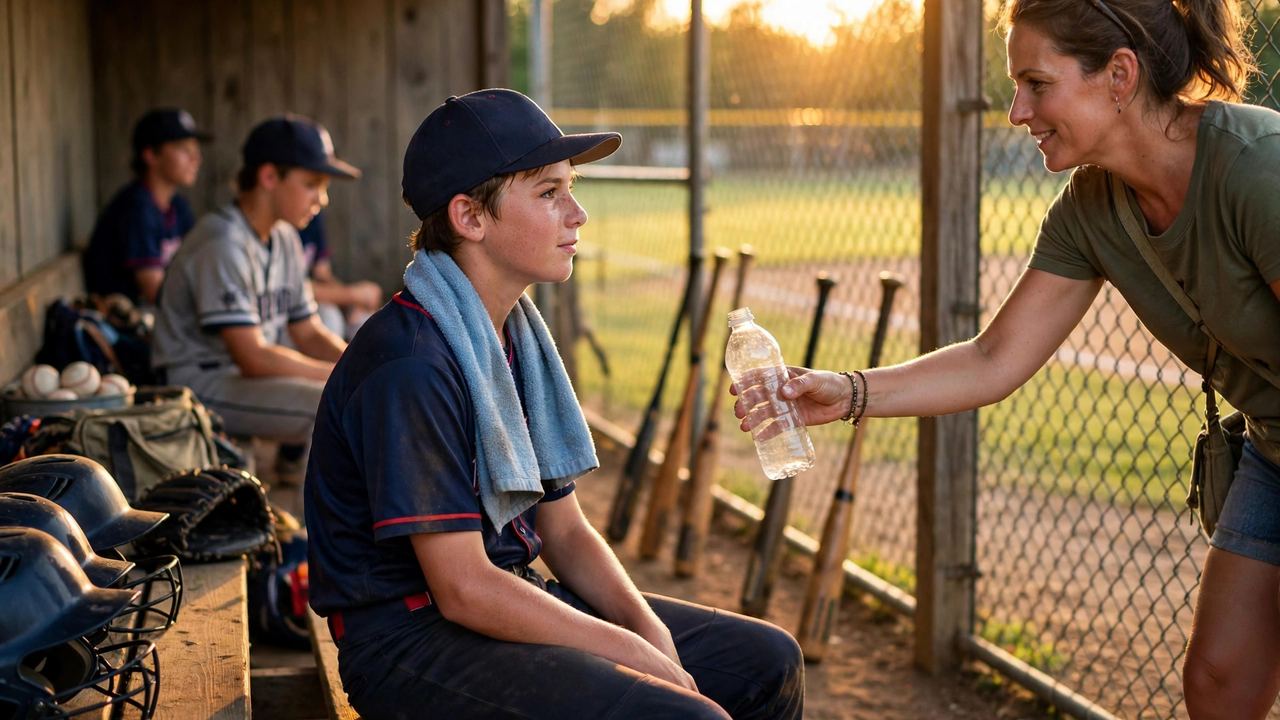
Baseball is a stop-and-start sport played in the open sun, and that rhythm is exactly what makes a cooling towel so useful. A player sprints, fields, hits, and then sits in the dugout for long stretches while the temperature keeps climbing. Between innings there is time to soak a towel at the water cooler, wring it out, snap it, and drape it over the neck before the next half-inning starts. On tournament weekends, when a team can play three games in a day with barely an hour between them, that small routine becomes part of the gear bag checklist, right next to the glove and the batting helmet. This guide to the best cooling towels for baseball focuses on that dugout reality: towels that activate fast at a water jug, survive being stuffed into an equipment bag, come in sizes that work for youth players and adults, and can be re-wet again and again across a long day at the field.
The six picks below cover the two material families that dominate this category. PVA towels, the sponge-like sheets sold by FROGG TOGGS, Ergodyne, and Chill Pal, hold a lot of water and feel cool for a long stretch, but they dry stiff and need to be re-wet before they soften. Microfiber and mesh towels, like the ones from MISSION, Sukeen, and CADONO, stay soft and flexible, pack down small, and are easy to toss in the wash after a dusty doubleheader. Neither family is automatically better. The right choice depends on whether the towel lives in a player’s own bag, gets shared across a whole dugout bench, or needs to cover a coach, an umpire, or a parent keeping the book in the sun.
Quick verdict
For most baseball players, the MISSION Original Cooling Towel is the easiest recommendation: the maker lists a compact 10 x 33 inch brushed microfiber towel that stays soft wet or dry, cools for up to 2 hours per activation, and carries a UPF 50 rating, which suits a single player who wants one towel that lives in the bat bag all season. Players who prefer the heavy water-holding feel of PVA should look at the FROGG TOGGS Chilly Pad, the classic 33 x 13 inch sheet in this category, or the Ergodyne Chill-Its 6602, which the maker rates for up to four hours of cooling per soak. Teams and families are better served by the multi-packs: the Sukeen 4 Pack Cooling Towels and the CADONO 4 Pack Cooling Towel put a towel in every bag on the bench, each with its own pouch. The Chill Pal PVA Cooling Towel is the thick-PVA alternative for players who want maximum water retention in a 12 x 32 inch sheet.
The products in this guide
MISSION Original Cooling Towel
It at 10 x 33 inches, cut from a brushed microfiber blend of 90% polyester and 10% nylon with no seaming, so there is no rough edge to rub against
Every product in this guide is a real, currently listed cooling towel sold new on Amazon US, and every specification quoted here comes from the maker’s own product information as published on the opened listing: dimensions, fabric blends, stated cooling durations, and care instructions are all phrased the way the maker lists them. Where a maker states a cooling duration or a sun-protection rating, we report it as the maker’s claim, not as a measured result, because evaporative cooling depends heavily on humidity, airflow in the dugout, and how thoroughly the towel was soaked and wrung before use. A towel rated for up to three hours on a dry afternoon in Arizona may need re-wetting far sooner during a humid evening game in Florida, and no towel in this guide should be treated as protection against heat illness; they are comfort gear for breaks between innings, nothing more.
We also filtered for baseball-specific practicality. A dugout towel has to activate with plain water from a cooler jug, because that is the only water source at most fields. It has to tolerate being draped over a bench, dropped on dugout concrete, and stuffed damp into a bag next to a dusty glove. Sizes mattered too: a towel around 10 to 13 inches wide and roughly 30 to 40 inches long drapes over the neck and shoulders of both youth and adult players without so much extra fabric that it tangles with a jersey or a chest protector. Finally, we deliberately included both single towels and four-packs, because the buying decision for an individual player is completely different from the decision a coach or team parent makes when outfitting an entire roster for a summer tournament schedule.
The MISSION Original is the towel most players picture when they think of this category, and its dugout manners are the reason it leads this list. The maker lists it at 10 x 33 inches, cut from a brushed microfiber blend of 90% polyester and 10% nylon with no seaming, so there is no rough edge to rub against the neck during a long game. Activation follows the standard three steps the maker prints on the listing: wet it, wring it out, and snap it. MISSION states that the towel cools to 30 degrees below average body temperature in under 30 seconds once activated, and that it stays cool for up to 2 hours, which comfortably covers the gap between a player’s turns in the field during most youth and high school games. The maker also lists UPF 50 sun protection built into the fabric and describes the cooling technology as chemical-free and permanent, meaning it does not wash out over the season.
The practical advantage for baseball is how the towel behaves when it is not in use. Unlike PVA sheets, this microfiber towel stays soft whether it is wet or dry, so it can live folded in a bat bag pocket from March through August without turning into a stiff board that needs a soak before it can even be unfolded. It is machine washable per the maker’s care instructions, which matters after a weekend of dust, sunscreen, and dugout grime. The 10-inch width is narrower than the PVA pads in this guide, so it covers the neck neatly without a lot of fabric hanging over a jersey, and it tucks under a collar between innings without bunching. For a catcher coming off the field after a long inning behind the plate, or a pitcher waiting through a long offensive half, that quick snap-and-drape routine at the water cooler takes under a minute.
Buy it if: you want one soft, bag-friendly towel per player that stays flexible in the equipment bag, activates in three steps at the dugout cooler, and carries the maker’s UPF 50 listing for sunny afternoon games.
Skip it if: you want the heavy, water-loaded feel of a PVA sheet, or you need several towels at once for a whole bench, in which case the four-packs below are the smarter buy.
The Chilly Pad is the original PVA cooling towel, model CP100, and it is built around water capacity. The maker lists the towel at 33 x 13 inches in 100% polyvinyl alcohol, a hyper-evaporative material that the maker says retains water while remaining dry to the touch. FROGG TOGGS states that the material can absorb up to 8 times its weight in water, and that once wet the towel activates to cool up to 30 degrees. In dugout terms, that absorbency is the whole point: a Chilly Pad soaked at the cooler before the game holds enough water to stay cool through several innings of sitting, standing, and short trips back onto the field, and when it warms up, a quick re-wet and wring at the jug brings it back within minutes, as the maker describes.
The trade-offs are the standard PVA ones, and the maker’s own care guidance reflects them. The towel ships in a handy storage container, which the maker includes for care and carry, and that tube is worth using: PVA dries stiff, so storing the towel in its container keeps it manageable between games instead of letting it harden into whatever shape it was left in inside a gear bag. At 33 inches long and a full 13 inches wide, this is one of the broadest drapes in the guide, which suits adult players, coaches standing in the coaching box, and umpires between innings. Youth players can fold it once and still get full neck coverage. It is machine washable per the listing’s care instructions. Players who have never used PVA should know the first soak takes a little patience while the sheet softens, but after that the routine is the same wet, wring, and drape cycle as every other towel here.
Buy it if: you want the classic PVA sheet with the maker’s highest stated water absorbency in this guide, a wide 33 x 13 inch drape for adults, and the included storage container for keeping it in the team gear bag.
Skip it if: you dislike the stiff-when-dry behavior of PVA, or you want a towel that stays soft and foldable in a pocket of your own bat bag between games.
Ergodyne comes to cooling towels from the work-gear world, and the Chill-Its 6602 (item 12420) is the pick in this guide for the longest stated cooling window. The maker lists up to four hours of cooling from its hyper-evaporative PVA material, the longest duration claim among these six towels, and lists the dimensions at 13 x 29.5 inches (33 x 75 cm), a slightly shorter and equally wide alternative to the Chilly Pad. The maker’s activation instructions are specific: run the towel under water for one minute or until saturated, wring out the excess, and twirl or snap it in the air for no-drip cooling, then drape it around the neck or head. That one-minute soak is a realistic dugout routine during a pitching change or between games of a doubleheader.
Ergodyne also describes the wet towel as remaining soft and bulk-free around the neck or head, which matters for players who wear it during batting practice rather than only on the bench. A towel that stays out of the way during soft toss and tee work gets used more, and a towel that gets used more is the one that earns its place in the bag. Care follows the PVA pattern: the maker lists the towel as machine washable and instructs users to air dry it until stiff, then rewet to reactivate and soften it. For coaches, scorekeepers, and umpires who spend the entire day at the field rather than rotating on and off it, that up-to-four-hour maker rating is the headline feature, because it stretches the interval between trips to the water cooler across a full game. It is also a sensible single purchase for a parent who runs the bench and wants one dependable towel rather than a pack of spares.
Buy it if: you spend whole tournament days at the field as a coach, umpire, or team parent and want the longest maker-stated cooling duration in this guide, with clear one-minute activation instructions.
Skip it if: you prefer a soft microfiber towel that never dries stiff, or you are buying for several players at once and need a multi-pack instead.
A single towel is a personal purchase, but a four-pack is a team purchase, and the Sukeen 4 Pack is built for the bench. Each towel measures 40 x 12 inches, the longest cut in this guide, in a mesh microfiber the maker lists as 55% polyamide and 45% polyester. Sukeen states that the towels cool for up to 3 hours depending on conditions after the standard soak, wring, and snap activation, and that no chemicals are used in producing the cooling effect. The extra length is genuinely useful in a dugout: a 40-inch towel wraps the neck with enough left over to tuck into a jersey front, covers the shoulders of a player sitting in full sun on an open bench, and gives adult coaches and older travel-ball players a drape that shorter towels cannot match.
The pack format solves the two problems that kill single-towel routines over a season. First, sharing: instead of one towel passing around a dugout, four towels mean the on-deck hitter, the catcher, and the pitcher can each have one cooling at the same time. Second, laundry lag: with spares in the bag, a towel that comes home caked in field dust does not leave the player empty-handed at the next day’s game. The maker includes individual storage pouches with carabiner clips for the towels, so a damp towel can hang off a bat bag or a dugout fence hook instead of soaking the inside of a pocket. The maker lists care as machine washable on a gentle cycle with no softeners or bleach, air dried. Youth coaches running a full roster may want two packs, but for a family with two or three players, or a single player who rotates towels across a tournament weekend, one pack covers the schedule.
Buy it if: you are outfitting several players, want the longest towels in this guide at 40 inches, and like the individual pouches and clips for hanging damp towels on the dugout fence.
Skip it if: you only need one towel for yourself, or you specifically want the water-heavy feel of PVA rather than a soft mesh microfiber.
Chill Pal’s pitch is thickness. The maker describes its towel (model OF-SCF7-LDVY) as high-grade, extra-thick PVA with evaporative technology, and the logic it gives is simple: the more water the sheet comfortably holds, the longer evaporation takes, and the longer the towel stays cool. The listed size is 12 x 32 inches, squarely in the standard neck-drape range, and the instructions could not be shorter: the maker says to remove the towel, soak it in cold water, wring it out, and drape it around the neck, then simply rinse and repeat when it warms up. For a player between innings, that no-fuss routine at the cooler jug is exactly the right level of complexity. The towel now ships in a pouch rather than the older tube packaging, per the maker’s note, which makes it easier to drop into a bat bag.
Two maker notes deserve attention before buying. First, the PVA behavior: like the other PVA towels here, the Chill Pal is a sponge-like sheet that firms up as it dries and softens again when re-wet, so it is happiest stored in its pouch and re-soaked at the field rather than left to harden loose in a bag for a week. Second, the maker’s own precaution: because the material is very absorbent, the maker advises avoiding excessive use where the towel stays in contact with the skin for longer than 30 minutes at a stretch, and states the product is not intended for children under the age of 3. For baseball use, that guidance fits naturally with the sport’s rhythm anyway: drape it during your half-inning in the dugout, hang it on the fence when you take the field, and re-wet it when you come back in. Players who like PVA but want a thicker sheet than the standard pads will find this the most substantial-feeling option in the guide.
Buy it if: you prefer PVA and want the extra-thick sheet the maker positions for longer evaporation, in a standard 12 x 32 inch size with dead-simple soak, wring, and drape instructions.
Skip it if: the maker’s 30-minute skin-contact guidance does not fit how you plan to use a towel, or you want a stated multi-hour cooling rating, which this maker does not publish as a fixed figure.
The CADONO 4 Pack is the straightforward value entry: four microfiber mesh towels at 40 x 12 inches each, the same generous cut as the Sukeen pack, in a format meant to put a towel in every bag without much deliberation. The maker states that the towels are chemical-free and stay cool for up to 3 hours after activation, and describes the mesh as wicking sweat away while the towel provides a cool, dry feeling during activity. Activation is the familiar soak, wring, and shake sequence. Each towel comes with a waterproof plastic pouch and a carabiner clip, per the maker, so the towels can hang from fence hooks, bat bags, or belt loops around the dugout instead of piling up on the bench.
Where this pack earns its spot is as dugout infrastructure. Tournament baseball eats gear: towels get left at fields, borrowed by teammates, and retired mid-season after one too many encounters with infield dirt. A four-pack of long, soft microfiber towels absorbs those losses without drama, and because the towels stay flexible when dry, they fold into small pouches that fit anywhere in a team equipment bag. The maker lists them as washable by hand or machine, which keeps the Sunday-night laundry routine simple after a weekend tournament. Compared with the Sukeen pack, the CADONO set covers the same size and stated cooling window with a plainer presentation; compared with the single premium towels, it trades brand heritage for quantity. For a rec-league coach buying with team funds, or a parent who knows exactly how often gear disappears between the field and home, that trade is usually the right one.
Buy it if: you want four long 40 x 12 inch towels with pouches and clips as affordable dugout spares that can be lost, loaned, and laundered without worry.
Skip it if: you want one premium towel from an established cooling-gear brand for a single player, or you prefer PVA’s water-holding feel over microfiber mesh.
Buying guide
Choose the material first. PVA towels, like the Chilly Pad, the Chill-Its 6602, and the Chill Pal, are sponge-like sheets that hold a large amount of water and feel distinctly cool for a long stretch. Their quirks are consistent across brands: they dry stiff, they need a soak to soften before use, and they are best stored in the container or pouch they came with. Microfiber and mesh towels, like the MISSION Original and the two four-packs, behave like ordinary fabric: soft wet or dry, easy to fold into a bag pocket, and simple to machine wash. Players who will use a towel daily and stash it in a personal bat bag usually prefer microfiber; players who want maximum water-loaded cooling on the bench often prefer PVA.
Match the size to the wearer. Most towels in this guide fall between 29.5 and 40 inches long and 10 to 13 inches wide. That range drapes an adult neck and shoulders comfortably. For youth players, a 40-inch towel can feel like a blanket, which some kids love after a hot inning and others find cumbersome; the 10 x 33 inch MISSION or the 13 x 29.5 inch Ergodyne sit more neatly on smaller frames. Coaches and umpires, who wear a towel for hours rather than minutes, generally get the most from the wider PVA sheets or the long 40-inch microfiber cuts.
Read cooling-time claims the right way. Every duration in this guide is a maker-stated maximum under the maker’s own conditions, and evaporative cooling weakens as humidity rises, because damp air slows evaporation. Plan around the rhythm of the game instead: soak the towel before first pitch, re-wet it whenever you are back at the cooler, and treat any stated hour figure as a best case rather than a schedule. A towel that is easy to reactivate in thirty seconds at a water jug will outperform a longer-rated towel that is a hassle to use.
Think about the dugout system, not just the towel. Where will the towel live between innings: on a fence hook, in its pouch on a carabiner, or draped over the bench? Pouches and clips, included with both four-packs here, keep damp towels off clean uniforms and out of the dirt. If several players will share, buy the multi-pack and assign colors or pouches per player. Finally, follow each maker’s care instructions: PVA towels generally air dry and rewet to soften, microfiber towels generally machine wash without softener, and every towel in this guide lasts longer when it is rinsed of sunscreen and field dust after tournament weekends.
FAQ
How do you activate a cooling towel in the dugout?
Every towel in this guide activates with plain water: soak it at the dugout cooler or a water bottle, wring out the excess, and snap, twirl, or shake it as the maker directs. Ergodyne specifies about one minute under water for the Chill-Its 6602 until saturated; the others use the same soak, wring, and snap routine. No ice, batteries, or refrigeration are involved, which is why these towels work at fields with nothing but a water jug.
Can youth players use these towels?
Yes, with the maker’s own notes in mind. The towels are simple fabric or PVA sheets with no chemicals in the cooling process, per the makers. Chill Pal states its towel is not intended for children under the age of 3 and advises against prolonged continuous skin contact beyond 30 minutes, which fits normal between-innings use. As with any gear, younger players should use towels under the same adult supervision as the rest of the dugout routine.
How long will a cooling towel stay cool during a game?
Only as long as conditions allow, and the makers’ stated figures are maximums: up to 2 hours for the MISSION Original, up to 3 hours for the Sukeen and CADONO packs, and up to 4 hours for the Ergodyne Chill-Its 6602, all as the makers list them. Heat, humidity, sun, and airflow in the dugout all change the real interval. The dependable approach is to re-wet the towel whenever you return to the bench, rather than timing it against the stated maximum.
What is the difference between PVA and microfiber cooling towels?
PVA is a sponge-like material that absorbs a large volume of water; FROGG TOGGS states its Chilly Pad absorbs up to 8 times its weight in water. PVA towels feel very cool and hold that water a long time, but they dry stiff and must be re-wet to soften. Microfiber towels feel like normal soft fabric, stay flexible in a bag, and are usually machine washable, but they hold less water and may need re-wetting sooner. Neither is better in the abstract; it depends on whether the towel lives on a bench or in a personal bag.
How should a team store cooling towels between games?
Keep each towel in its own pouch or container: the Chilly Pad includes a storage container, and the Sukeen and CADONO packs include pouches with carabiner clips for hanging on a fence or bag. Rinse towels after dusty games, follow the maker’s wash instructions, and let microfiber towels dry fully before the next outing. PVA towels can be left to dry stiff and simply re-wet at the next game to soften, as their makers direct.
Conclusion
The best cooling towel for baseball is the one that fits your dugout routine. A single player who wants a soft, always-ready towel in the bat bag should start with the MISSION Original. Players who love the water-heavy feel of PVA can choose between the wide FROGG TOGGS Chilly Pad, the long-rated Ergodyne Chill-Its 6602, and the extra-thick Chill Pal. Coaches, team parents, and families with several players will get more baseball out of the Sukeen and CADONO four-packs, which put a long towel and a pouch in every bag on the bench. Whichever route you take, build the habit early in the season: soak before first pitch, drape between innings, re-wet at every trip to the cooler, and the towel will quietly become as standard as the glove on a hot tournament day.
M
Modern Line Home Editorial Team
We compare specs, materials and verified owner reviews before a product earns a spot. Rankings are never paid.
Affiliate disclosure. As an Amazon Associate we earn from qualifying purchases at no extra cost to you. Prices accurate as of the date shown.
House cold even with the heat on? Walk this ordered checklist: thermostat and filter first, then drafts, insulation, leaky ducts and a failing heating system.
Windows fogging up in winter? Check where the fog sits: on the room side it is indoor humidity, outside it is harmless, and between panes the seal has failed.
Store the main firewood pile about 30 feet from your house, off the ground and covered only on top. Compare racks, woodsheds, garages and indoor spots safely.
Place a portable generator outdoors only, at least 20 feet from windows, doors and vents, exhaust pointed away. Exact distances, setup steps and CO rules here.
Keep houseplants in the right winter spot: match window direction to plant type, stay clear of radiators and cold glass, and fix dry air and low light at home.
Mice enter through pencil-width gaps at foundations, pipes, vents, doors and the roofline. Walk this room-by-room winter checklist to find and seal each one.
A winter outage timeline: what to do in the first hour, first night and multi-day outage, with food safety times, pipe protection, heat and CO safety steps.
Size a space heater by room area: 10 watts per square foot at 8-foot ceilings, adjusted for insulation and ceiling height, with full wattage and BTU tables.
Start dripping at about 20 degrees, sooner for exposed pipes. Set a pencil-lead stream, drip the right faucets on both lines, and know when to stop safely.
A fridge needs 800-1,200 starting watts, not just 150-400 running watts. Use the tables to total your fridge plus freezer, lights, furnace fan and more today.












Write Your Review
No reviews yet. Be the first to share your experience!