We independently review everything we recommend. When you buy through our links, we may earn a commission. As an Amazon Associate we earn from qualifying purchases.
Best Cotton Towels for Cast Iron: 6 Lint-Free Picks
Find the best cotton towels for cast iron seasoning, drying and handling hot pans, from lint-free flour sack and t-shirt knit picks to waffle cloths compared.
Find the best cotton towels for cast iron seasoning, drying and handling hot pans, from lint-free flour sack and t-shirt knit picks to waffle cloths compared.
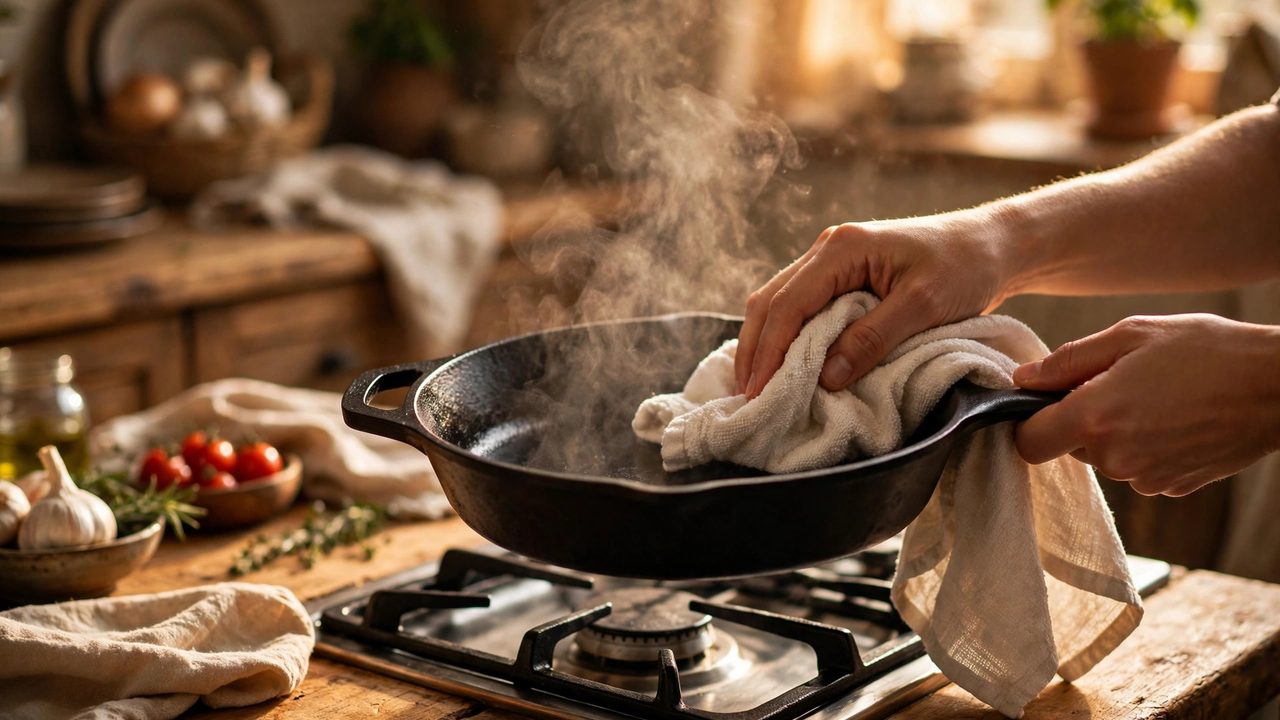
Cast iron asks more of a towel than almost any other pan in the kitchen. After washing, the surface has to be dried completely and quickly, before moisture can sit on bare iron. During seasoning, a thin layer of oil has to be spread evenly and then wiped back almost as if it was a mistake, and any loose fibre left behind will bake into that layer. When the pan is hot, the towel folded in your hand may be the only thing between your palm and a heavy handle. That is why choosing the best cotton towels for cast iron is really about weave, lint behaviour, size and heat handling, not about colour or a pretty stripe. A good cast iron towel is plain, absorbent, low in lint, and cheap enough in a pack that you can dedicate a few to oil work without worrying about staining your best kitchen linen.
This guide focuses on cotton kitchen towels, flour sack towels and cotton shop-style rags that suit those three jobs: drying a washed skillet, applying and wiping out seasoning oil, and handling hot cast iron safely with a folded pad. Microfibre is deliberately left out, because synthetic fibres can melt or soften against very hot iron and because many cast iron makers and care guides point cooks toward natural fibres for seasoning work. Paper towels are left out too, since they can shed and tear on a rough cast iron surface. Every pick below is cotton, is sold in a multi-pack, and was checked on its product page for fabric, size and pack details, with the specs in this article phrased as the maker lists them.
Quick verdict
For most cast iron owners, start with the Nabob Wipers New Lint Free Rags 15 Pack. The maker lists them as 100 percent ring spun cotton, describes them as lint free, and names cast iron and oil rag use directly, which makes them the closest match to seasoning work in this roundup. If you prefer a classic large flour sack towel that can dry a big skillet, cover dough on a rest day and still wipe out oil, the Simpli-Magic Flour Sack Kitchen Towels 12 Pack and the Utopia Kitchen White Flour Sack Towels 12 Pack give you the biggest flat surface and the smoothest wipe. The Aunt Martha’s Flour Sack Dish Towels Set of 7 is the traditional choice, with a listed 130 thread count and hems on all four sides. For everyday drying and folded hot-handle work where a thicker towel helps, the Utopia Towels Kitchen Towels 12 Pack Black brings a heavier dobby and terry style build in a dark colour that hides seasoning stains. The Homaxy Cotton Waffle Weave Kitchen Dish Cloths 6 Pack is the small, quick-drying option for drying rims, lids and smaller skillets, though its 12 by 12 inch size makes it a companion cloth rather than your only towel.
The products in this guide
Nabob Wipers New Lint Free Rags 15 Pack
The fabric as 100 percent ring spun cotton, lists the size as 18 by 18 inches, and lists the pack as 15 cloths
Best when seasoning is your main reason for buying
Selection started with the jobs, not with bestseller lists. A towel was only considered if the maker lists cotton as the fabric, if the weave could plausibly leave little lint on a seasoned surface, and if the size made sense for a skillet, a Dutch oven lid or a folded handle pad. Flour sack towels scored well on the first two points because their flat weave tends to glide over iron instead of snagging, and because a large square can be folded into quarters for a thick, even pad. T-shirt knit cotton rags scored well for seasoning because a smooth knit can spread oil thinly without the loops that terry can leave behind. Waffle and dobby towels were included for drying, where texture helps pick up water, with a clear note about where each one should and should not be used for oil work.
Each pick was then checked on an opened product page. Fabric, dimensions, pack count, care instructions and model details had to be present and consistent, and the listing had to show a live offer for a new product. Picks that could not be confirmed that way were excluded, however familiar the brand name was. No towel here is presented as a heat-proof mitt, because a kitchen towel is not a mitt: cotton can protect a hand briefly through several folded layers, but it does not replace an oven mitt or a handle holder for lifting a heavy, ripping-hot Dutch oven out of an oven. That distinction runs through every recommendation below.
Fabric first: only cotton picks, with the exact fibre content as the maker lists it.
Lint behaviour: flat flour sack and smooth knit ranked highest for seasoning, textured weaves ranked for drying.
Size in hand: large squares for folding into pads, smaller cloths only as companion drying cloths.
Pack logic: multi-packs so some towels can be dedicated to oil and stained without regret.
Care: machine washable picks, with notes on softener and bleach where the maker gives them.
The Nabob Wipers cloths are the most cast-iron-specific pick in this guide. The maker lists the fabric as 100 percent ring spun cotton, lists the size as 18 by 18 inches, and lists the pack as 15 cloths. The listing describes the cloths as lint free, calls them oil rags as well as cleaning rags, and names cast iron among their uses. That combination matters. Seasoning fails in a quiet way when a towel leaves fibres in a thin oil film or when it drags oil into puddles instead of spreading it. A smooth t-shirt knit style cloth tends to do the opposite: it glides, it picks up excess, and it leaves a more even film behind, which is exactly what you want before a pan goes into a hot oven or onto a burner to set the layer.
The 18 inch square is a useful middle size. Folded in half and then in quarters, it becomes a compact pad that still covers a palm, and unfolded it is large enough to dry a standard skillet without bunching into a wet ball halfway through. Because the pack contains 15 cloths, the sensible routine is to split it from day one. Keep a small stack in white, as-sold condition for drying washed iron, and mark a second stack, with a clip or a separate drawer, for oil work only. Once a cloth has been used to wipe seasoning oil, it will stain and it should not go back to drying clean pans or glassware. Having enough cloths to make that split without feeling wasteful is a real advantage, not just bulk for its own sake.
Care is simple on paper: the maker lists the cloths as machine washable and reusable. In practice, oil-heavy cloths need a hot, thorough wash and complete drying before storage, and they should be stored away from heat sources. Do not use oil-soaked cloths for handling a hot handle straight after seasoning work, because a greasy pad gives a poorer grip and transfers oil to everything it touches. Use a clean, dry, folded cloth for handles, and keep the oil cloths for the oiling step alone. That separation is the difference between a tidy cast iron routine and a smudged kitchen.
Buy it if: seasoning is your main reason for buying, you want a cloth the maker lists specifically for cast iron and oil work, and you like the idea of a generous pack you can split into drying and oiling stacks.
Skip it if: you want one large towel to dry oversize Dutch oven lids in a single pass, or you prefer a woven flour sack texture over a soft knit cloth.
Simpli-Magic takes the classic flour sack route. The maker lists these towels as 100 percent cotton, lists the size for this pack as 24 by 24 inches, and lists the count as 12 towels. The listing describes the fabric as knitted in a diagonal fashion, describes the towels as lint free and highly absorbent, and lists uses from drying dishes to straining and dusting. For cast iron, the relevant part is the flat, smooth surface. A flour sack towel does not have terry loops to catch on a rough sanded or lightly textured iron surface, so it wipes cleaner, and when you are wiping oil back out of a warm skillet, that smooth contact helps you see whether the film is even or whether a shiny puddle is still sitting in the corner.
At 24 inches square, this size folds beautifully. One fold gives you a long drying towel that can be pulled through a handle and around a rim. Two folds give you a square pad thick enough for briefly holding a hot skillet handle while you move the pan from burner to trivet, provided the towel is completely dry. A damp towel must never be used that way, because moisture turns to steam against hot metal. The 12 pack again allows a split routine: several towels for clean drying, several reserved for oil, and several left for general kitchen work so the cast iron towels are not constantly in the wash when you need them.
The maker lists these towels as machine washable. Wash new flour sack towels before first use for cast iron, and wash them without fabric softener if you can, because softener residue can reduce absorbency and can transfer to a pan you are about to season. Dry them fully before folding them away. Over time the oil-dedicated towels will darken, and that is expected. Retire a towel from seasoning work if it starts to shed, feels gummy after washing, or develops a persistent stale oil smell even after a thorough hot wash. The remaining clean towels in the pack mean retiring one does not leave you short.
Buy it if: you want a true flour sack towel in a slightly more manageable square than the largest options, with a smooth wipe for seasoning and enough towels to dedicate a set to oil.
Skip it if: you need maximum coverage for the largest lids and griddles in one sheet, or you prefer a thicker textured towel for everyday dish drying.
Utopia Kitchen offers the largest flour sack sheet in this roundup. The maker lists the towels as 100 percent cotton, lists the size as 28 by 28 inches, lists the pack as 12 towels, and lists the weave as plain weave. The listing describes the towels as highly absorbent and lists drying, cleaning and straining among their uses. Size is the headline for cast iron. A 28 inch square can dry a large skillet and its lid without swapping towels halfway, can be laid flat to rest a washed pan on while you finish the sink, and can be folded into a substantial pad with many layers between your hand and a hot handle.
That same size helps with seasoning a larger piece. When you are wiping oil over a big griddle or a wide Dutch oven base, a small cloth forces you to keep re-folding to find a clean, lightly oiled section. A large flour sack sheet gives you more clean surface to work with, so the film stays thin and even. The flat plain weave is well suited to that final wipe-back step, where the goal is to leave the pan looking almost dry before the heat sets the oil. If the pan still looks wet and glossy at that stage, the layer is too thick, and a smooth cotton sheet is the tool that fixes it.
The trade-off is handling. A 28 inch towel feels generous to the point of awkwardness for a small 8 inch skillet or for quick jobs like drying a single lid, and it takes more drawer space when folded. Many owners solve that by keeping these large towels for large pans and drying, and using a smaller cloth for small pans. The maker lists the towels as machine washable, and the same cast iron care rules apply: wash before first use, avoid softener on the towels you will use for seasoning, dry completely, and keep the oil set separate from the clean drying set. White cotton has a practical benefit here, because you can see at a glance which towels have picked up oil or carbon and which are still clean.
Buy it if: your cast iron collection includes large skillets, griddles or Dutch ovens, and you want the biggest flat cotton sheet for drying and for wiping seasoning oil evenly.
Skip it if: you mostly cook in small skillets, have very limited drawer space, or find oversize towels cumbersome for everyday drying.
Aunt Martha’s is the traditional flour sack name in this guide, and the details reflect that heritage. The maker lists this set as seven towels, lists the size as 28 inches by 28 inches, lists a premium 130 thread count, and notes that the towels are hemmed on all four sides and are pre washed and bleached. Hemming on all sides matters more than it sounds. A flour sack towel used for cast iron gets folded, pulled, twisted lightly to dry a handle junction and washed often. Neat, complete hems help the square keep its shape through that treatment instead of fraying at the edge you grip most.
In use, this is a drying and seasoning towel in the classic sense. The large flat sheet dries a skillet thoroughly, reaches into the curve where wall meets base, and then, with a clean towel from the set, can apply a very thin protective oil wipe to a warm, dry pan after everyday cooking. That daily wipe is different from a full oven seasoning session. It is lighter, faster and more frequent, and it is where a reliable flat cotton towel earns its place. Keep the amount of oil minimal, buff it with the flat weave until the surface looks matte rather than wet, and let the pan cool on the stove with that whisper-thin layer in place.
The set of seven is smaller than the 12 and 15 packs elsewhere in this guide, so the split routine needs a little more discipline. A workable split is four towels for clean drying, two for oil work and one spare in the wash rotation. If you cook cast iron daily and wash towels only once a week, you may run short, which is the main reason to consider a larger pack instead. The maker lists the fabric simply as cotton in the product details, with the 100 percent cotton description in the listing text, so check the pack on arrival and wash the towels before first use as you would with any flour sack towel. As with the other white options, visible staining on the oil towels is normal and is a sign the split system is working.
Buy it if: you value a traditional flour sack towel with a listed thread count, complete hemming and a large square format, and your wash routine can keep up with a seven towel set.
Skip it if: you need a large pack to run separate drying and oiling stacks without frequent laundry, or you prefer a coloured towel that hides stains.
This Utopia Towels set plays a different role. The maker lists the towels as 100 percent ring spun cotton, lists the size as 15 by 25 inches, and lists the pack as 12 towels in black. The listing describes a dobby weave style and a soft, absorbent terry character, and lists handling hot cookware among everyday kitchen uses. That thicker, more textured build is not the first choice for the final seasoning wipe, where a flat weave is cleaner. It is a strong choice for the two jobs around seasoning: drying a washed pan when you want more absorbency in hand, and providing a folded pad for handles, where extra thickness and a familiar rectangular towel shape feel secure.
The black colour is a practical cast iron decision. Seasoning work, carbon specks and the general reality of a well-used skillet will mark light towels quickly, even when those towels are kept for clean drying only. A black towel hides that everyday marking, so the set continues to look presentable hanging by the stove. Keep the same discipline anyway: black hides stains, it does not remove oil. A towel that feels greasy should move to the oil-only stack or to the wash, regardless of colour, and a clean, dry towel should always be the one used to grip a hot handle.
The rectangular 15 by 25 inch shape folds lengthwise into a long pad that wraps a handle well, which some cooks prefer to a folded square. It also hangs neatly over an oven door or a hook without the excess drape of a large flour sack sheet. The maker lists the towels as machine washable. Wash them separately at first, check for lint shedding on a dark pan before using a new towel for any oil work, and if a towel sheds noticeably, keep that towel for drying and counter work only and use a flat flour sack or knit cloth for seasoning. Used that way, this set and one flat set together cover the full cast iron routine better than either style alone.
Buy it if: you want a thicker cotton towel for drying and for folded handle protection, in a dark colour that suits a cast iron station, alongside a flat towel for seasoning.
Skip it if: you want a single towel style to do every job including the final seasoning wipe, because the textured weave is not ideal for that step.
Homaxy brings the waffle weave option, in a deliberately small format. The maker lists the cloths as 100 percent cotton, lists the weave as waffle weave with a honeycomb design, lists the size as 12 by 12 inches, and lists the pack as six cloths in dark grey with a hanging loop. The listing describes the cloths as soft, absorbent and quick drying, and gives care as machine wash in cold water on a gentle cycle, tumble dry low, with no bleach or fabric softener. Those care details are worth following, because waffle texture depends on the structure of the weave, and harsh treatment can flatten the pockets that make the cloth work.
For cast iron, think of these cloths as specialists for smaller work. A 12 inch square is well sized for drying a lid knob area, wiping a small skillet, drying the rim of a Dutch oven, or catching the last moisture around a handle junction after the main towel has done the large surfaces. The waffle pockets pick up water effectively and the cloth dries quickly between uses, which helps in a busy kitchen where a towel may be used, hung by its loop, and used again the same day. Quick drying also means less chance of a cloth sitting damp in a heap, which is good practice around iron that you have just worked to keep dry.
Be clear about the limits. This cloth is too small to fold into a safe, thick pad for a heavy hot pan, and its textured weave is not the smoothest choice for spreading seasoning oil over a large surface. Use it for drying and detail work, not as your only cast iron towel. In dark grey it hides everyday marks well and pairs sensibly with a large flour sack set: the flour sack towels handle the big drying and the seasoning, the Homaxy cloths handle lids, rims and small pans and dry fast on the hook in between. The maker notes the cloths soften with each wash and should not scratch delicate cookware, which aligns with using them on enamelled cast iron lids as well as bare iron, provided the cloth is clean and free of grit.
Buy it if: you want a quick-drying companion cloth for lids, rims and small skillets, with a hanging loop and a dark colour, to work alongside a larger flat towel.
Skip it if: you need one towel that can dry large pans, fold into a handle pad and wipe seasoning oil, because this size and weave cannot do all three.
Buying guide
Match the weave to the job. Cast iron care is three jobs wearing one name. Drying rewards absorbency and coverage, so a large flour sack sheet or a thicker cotton towel both work, as long as the pan ends completely dry, including the handle junction and the underside. Seasoning rewards smoothness and low lint, so a flat flour sack weave or a smooth knit cloth is the right tool for spreading oil and wiping it back. Handling hot pans rewards thickness when folded and a completely dry towel, so size and the ability to fold into several layers matter more than texture. Buying one pack and expecting it to be best at all three is the common mistake. Buying a flat pack for seasoning plus a thicker or larger pack for drying and handling is the routine that actually works week after week.
Size, honestly assessed. A 28 inch square is not automatically better than a 24 inch square or an 18 inch cloth. Larger sheets dry larger pans in fewer passes and fold into thicker pads, but they bunch in small pans and take more storage. Smaller cloths are faster for lids and small skillets and dry quicker after washing. Most cast iron kitchens end up happiest with two sizes: a large flat towel for big pans and seasoning, and a smaller cloth for detail drying. Use the comparison table to check the exact size the maker lists for each pack before you decide, because product names alone do not tell you whether you are buying a sheet or a cloth.
Lint, washing and the first use. Wash every cotton towel before it touches seasoned iron, and wash it without fabric softener for the towels you plan to use for oil work. New cotton can carry loose fibres and finishing residue, and a pre-wash removes much of both. After the first few washes, check a towel by wiping a clean, dark, dry skillet in good light. If you see fibres, reserve that towel for drying and counter work. Keep oil towels in a separate, labelled stack, wash them hot and thoroughly, dry them completely, and store them in a ventilated place away from the stove. Never store a bundled, oil-soaked cloth in a closed space, and never leave oil cloths near heat. When an oil towel stays gummy or stale smelling after a proper wash, retire it.
Heat safety, without shortcuts. A folded cotton towel can help you steady or briefly hold a hot handle, but it is not an oven mitt and it does not make a heavy pan light. The towel must be dry, folded into several layers, and gripped firmly, and the move should be short, from stove to nearby trivet. For taking cast iron out of a hot oven, for holding a pan while you tilt and pour, or for any move where a slip would be dangerous, use a proper oven mitt or handle holder as your main protection and treat the towel as a secondary layer at most. If a towel is thin, damp, greasy or frayed, do not use it near hot iron at all. Replace worn towels before the worn spot becomes the spot over a handle.
FAQ
Why cotton instead of microfibre for cast iron?
Cotton handles the heat around cast iron without the melting risk that synthetic fibres carry against very hot metal, and flat cotton weaves can wipe seasoning oil thinly without leaving the kind of residue that affects the next layer. For drying alone, many fabrics work, but for a towel that will also touch a warm pan during oiling, cotton is the safer and more traditional choice.
Can one towel do drying, seasoning and handle duty?
One towel style can cover drying and handle duty reasonably well if it is large enough to fold thickly, but seasoning is better with a dedicated flat or smooth cloth kept separate for oil. Once a towel is used for oil, it should stay in the oil stack. In practice, two stacks from any of the larger packs in this guide will serve you better than a single do-everything towel.
How do I stop towels leaving lint in seasoning?
Choose a flat flour sack weave or a smooth knit cloth, wash it before first use without fabric softener, and test it on a clean dry pan in bright light. Wipe the oil on, then wipe it back off with a clean section of the cloth until the pan looks almost dry. If a particular towel keeps shedding after several washes, move it to drying duty and use a different cloth for oil.
Should I dry cast iron on the stove or with a towel?
Both together work well. Towel dry the pan thoroughly first, including the underside and handle, then set it over low heat for a short time to drive off remaining moisture, and let it cool. A towel alone can miss moisture in textured areas, and heat alone can leave water spots if the pan goes on wet and unattended. The towel does the main work, the brief heat finishes it.
How many cast iron towels do I actually need?
Enough to run two stacks without waiting for laundry: several clean towels for drying, and at least two or three dedicated to oil work, plus spares in the wash. That is why the 12 and 15 packs in this guide are practical rather than excessive. A smaller set can work if you wash kitchen linen frequently, but daily cast iron cooking quickly exposes a too-small rotation.
Can I use these towels on enamelled cast iron too?
Yes, provided the towel is clean and free of grit. Cotton is suitable for drying enamelled surfaces, and the waffle and flour sack picks here are described by their makers as soft and non-scratching in normal kitchen use. Do not use an oil-dedicated towel on enamel, because it will smear oil over the coating, and do not use any towel to scrub baked-on residue, which is a job for washing, not for a drying cloth.
Conclusion
The right cotton towel makes cast iron care feel routine instead of fussy. Start with the Nabob Wipers New Lint Free Rags 15 Pack if seasoning is your priority, or with the Simpli-Magic or Utopia Kitchen flour sack packs if you want a large, flat, all-purpose cast iron towel that dries big pans and wipes oil back cleanly. Add the Aunt Martha’s set for a traditional hemmed flour sack option, the Utopia Towels black set for thicker drying and handle work that hides stains, or the Homaxy waffle cloths as fast-drying companions for lids and small pans. Whichever you choose, wash the towels first, split them into clean and oil stacks, keep handle towels dry and folded thick, and replace any towel that sheds, thins or stays greasy. With that simple system, your iron stays dry, your seasoning stays even, and the towel drawer finally matches the way you actually cook.
M
Modern Line Home Editorial Team
We compare specs, materials and verified owner reviews before a product earns a spot. Rankings are never paid.
Affiliate disclosure. As an Amazon Associate we earn from qualifying purchases at no extra cost to you. Prices accurate as of the date shown.
House cold even with the heat on? Walk this ordered checklist: thermostat and filter first, then drafts, insulation, leaky ducts and a failing heating system.
Windows fogging up in winter? Check where the fog sits: on the room side it is indoor humidity, outside it is harmless, and between panes the seal has failed.
Store the main firewood pile about 30 feet from your house, off the ground and covered only on top. Compare racks, woodsheds, garages and indoor spots safely.
Place a portable generator outdoors only, at least 20 feet from windows, doors and vents, exhaust pointed away. Exact distances, setup steps and CO rules here.
Keep houseplants in the right winter spot: match window direction to plant type, stay clear of radiators and cold glass, and fix dry air and low light at home.
Mice enter through pencil-width gaps at foundations, pipes, vents, doors and the roofline. Walk this room-by-room winter checklist to find and seal each one.
A winter outage timeline: what to do in the first hour, first night and multi-day outage, with food safety times, pipe protection, heat and CO safety steps.
Size a space heater by room area: 10 watts per square foot at 8-foot ceilings, adjusted for insulation and ceiling height, with full wattage and BTU tables.
Start dripping at about 20 degrees, sooner for exposed pipes. Set a pencil-lead stream, drip the right faucets on both lines, and know when to stop safely.
A fridge needs 800-1,200 starting watts, not just 150-400 running watts. Use the tables to total your fridge plus freezer, lights, furnace fan and more today.












Write Your Review
No reviews yet. Be the first to share your experience!