We independently review everything we recommend. When you buy through our links, we may earn a commission. As an Amazon Associate we earn from qualifying purchases.
Best Kitchen Towels for Embroidery: 6 Top Blank Picks
The best kitchen towels for embroidery are flat, tight-weave cotton blanks. Compare the six flour sack picks by size, weave, pack count and stitching surface.
The best kitchen towels for embroidery are flat, tight-weave cotton blanks. Compare the six flour sack picks by size, weave, pack count and stitching surface.
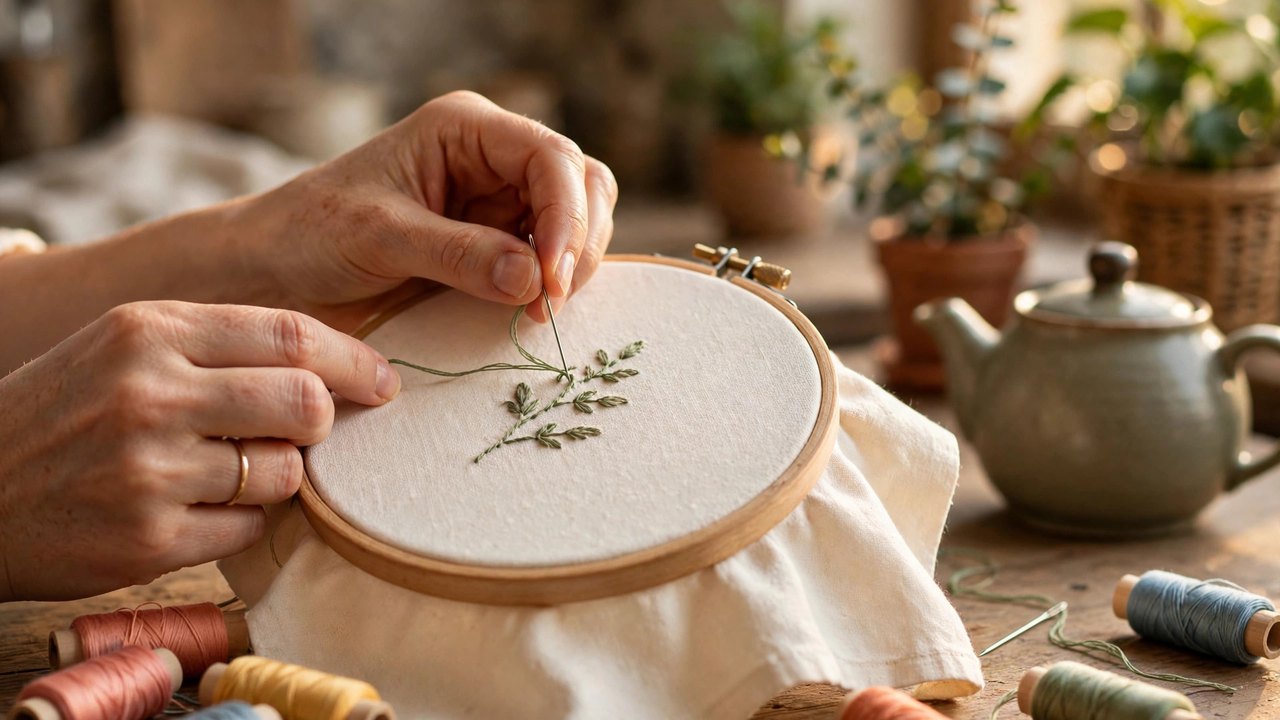
A kitchen towel that takes embroidery well is a different product from a kitchen towel that merely dries dishes well. Terry loops snag needles and swallow small stitches, loose weaves let satin stitch sink and pucker, and printed or striped surfaces fight with your design instead of framing it. The best kitchen towels for embroidery are plain, flat-weave cotton blanks: smooth enough for a transfer pencil or iron-on pattern to read clearly, tight enough for stitches to sit on the surface, and hemmed so the finished piece can go straight from the hoop to the towel rail. Flour sack towels dominate this category for good reason, and every pick below is a flour sack style blank that its maker or listing explicitly positions for embroidery, monogramming or craft stitching.
This guide compares six blank flour sack towels sold as sets, ranging from a compact six-pack of classic 18 by 28 inch tea towels to a thirteen-pack of 27 inch squares. They differ in the ways that actually matter at the hoop: weave density, thread count where the maker states it, towel dimensions, pack size, and whether the towels arrive pre-washed. Read the quick verdict for the short answer, the comparison table for the side-by-side facts, and the full reviews for who each set suits and who should pass it by.
Quick verdict
For most stitchers, the Aunt Martha’s 28 by 28 inch set of seven is the safest starting point: the maker lists a 130 thread count cotton, hems on all four sides and a corner hanger loop, and the brand’s own description names both machine and hand embroidery as intended uses. If you stitch in volume, for gifts, craft fairs or a small shop, the Aunti Em’s Kitchen set of thirteen gives you the largest count of tight-weave ring-spun cotton squares in this roundup. The DG Collections set of twelve is the pre-washed, ready-to-hoop option, while the WHITEWRAP six-pack is the pick for anyone who wants a heavier 160 GSM cloth in the traditional rectangular tea towel shape. The oversized Aunt Martha’s 33 by 38 inch set suits large designs and makers who cut towels down, and the Neolino set of twelve is a plain, economical square for everyday stitching and practice pieces.
The products in this guide
DG Collections Flour Sack Towels, 27 x 27 Inch, Set of 12
DG Collections offers a set of twelve 27 by 27 inch towels in 100% ring-spun cotton with a plain weave, and its listing is unusually direct about
Best if you want pre-washed, ready-to-stitch blanks in a generous twelve-pack, and your work is hand
We started with a simple rule: a towel only belongs in this guide if its maker or its listing actually positions it as an embroidery blank, or states a weave and material that the maker itself connects to stitching. Plenty of flour sack towels are sold purely as cleaning cloths, and those were left out even when the fabric looked similar, because suitability for embroidery should come from the maker’s own description rather than from guesswork. Each pick below is a flat-weave cotton flour sack towel with no terry pile, no printed pattern and no woven stripe across the stitching field, so a transferred design reads cleanly and a needle passes without catching loops.
Beyond that positioning test, we compared the facts the makers themselves publish: fabric content, thread count or fabric weight where stated, towel dimensions, pack count, hemming, and whether the towels are pre-washed. Those details decide real outcomes at the hoop. A tighter, higher-count weave supports finer stitches and denser fills. A pre-washed towel reduces the risk of a finished design distorting in its first laundry cycle. A square towel suits centred motifs and hoop work, while a rectangle suits borders, monograms near one end and the classic hanging tea towel format. We also favoured sets, because embroidery is a hobby with a natural failure rate: a multi-pack lets you practise a motif, gift the successes and keep a few blanks in reserve. Finally, every pick was checked on its product page for a live offer sold new, so the sets described here are sets you can actually order.
Aunt Martha’s is the name most closely associated with embroidered flour sack towels, and this 28 by 28 inch set of seven is the brand’s core blank. The maker lists a premium 130 thread count cotton fabric, hemmed on all four sides, with a corner hanger loop, and states that the towels come pre-washed and bleached to a bright white. That combination matters more than it might sound. The 130 thread count gives a smoother, denser surface than the gauzy flour sacks sold for polishing, so iron-on transfers stamp crisply and fine stitches such as French knots and lazy daisies sit on top of the cloth instead of sinking between threads. The bright white ground is the classic backdrop for the vintage-style days-of-the-week motifs this brand is known for, and it shows coloured floss at full strength.
The 28 inch square is a generous working size. It fits a standard hoop with room to spare for centred designs, and once stitched it still folds and hangs like a proper kitchen towel rather than a sample swatch. Because the towels are hemmed on all four sides, there is no finishing work after the stitching is done: hoop, stitch, press and hang. The corner hanger loop is a small detail that becomes useful the moment a finished towel goes into daily rotation. The maker explicitly describes these towels as perfect for both machine and hand embroidery, as well as silkscreen and painting, so whichever way you decorate, you are working within the product’s stated purpose. A set of seven maps neatly onto a week of towels, which is exactly how generations of stitchers have used them: one design per day, gifted or kept as a matched set.
Buy it if: you want the classic embroidery blank with a stated thread count, a bright white ground for transfers, and a square format that suits centred motifs and days-of-the-week sets.
Skip it if: you stitch very large designs that need more cloth in every direction, or you want the cheapest cost per towel for bulk production runs.
This is the same Aunt Martha’s flour sack cloth in a substantially larger cut: the maker lists each towel at 33 by 38 inches, in a set of seven, from the same durable 130 thread count bright white cotton, hemmed on all four sides with a corner hanger loop, and pre-washed and bleached. The maker’s description again names machine and hand embroidery among the intended uses, so the oversized format is a variation in dimensions, not a different product philosophy.
The extra area changes what you can do with the blank. A 33 by 38 inch towel accepts large, sprawling designs that would crowd a standard square: full-width borders, oversized monograms, scene-style motifs and machine embroidery designs that need generous stabiliser margins. It also gives hand stitchers a practical option that smaller towels cannot offer, which is cutting. One oversized towel can be divided into two smaller blanks, hemmed on the cut edges, when a project calls for a custom size, or trimmed down after stitching if a design sits better on a smaller ground. Bakers and cooks who embroider will also recognise the format: a towel this size doubles as a couche-style cover and a workhorse kitchen cloth once decorated, although most buyers will keep pieces this large for display and gifting rather than daily dish duty.
The trade-off is handling. A larger blank means more fabric to manage in the hoop, more care needed to keep tension even across a big design field, and more storage space per finished piece. For a beginner’s first project, the standard square above is the friendlier start. For an experienced stitcher planning a statement piece, this is the blank with room to work.
Buy it if: your designs run large, you machine-embroider with wide stabiliser margins, or you like the freedom to cut blanks down to custom sizes.
Skip it if: you are new to stitching towels and want the easiest possible hooping, or you prefer a towel that hangs at a conventional size.
Aunti Em’s Kitchen sells this set of thirteen 27 by 27 inch towels directly on the strength of their weave. The maker lists 100% pure all-natural ring-spun cotton, and the listing’s embroidery section argues the case plainly: instead of loosely woven fabric, the towels use a tighter weave that will not pull or gather, giving a crisp, even finish for detailed patterns. The brand attributes that density to air jet loom weaving, which it says produces a tighter weave and a softer finish than cheaper loom methods. For stitchers, the practical translation is a blank that resists the two classic flour sack frustrations: stitches that wander on a shifting ground, and fabric that puckers around dense fills.
The listing specifically names hand stitching, cross-stitch and personalised lettering such as monograms as uses for the plain fabric, and the towels are hemmed on all four sides so finished pieces present neatly. Thirteen towels is the largest pack in this roundup, and that count suits the way embroidered towels are actually consumed: a matched gift set of seven, a few spares for practice or mistakes, and a couple left for the maker’s own kitchen. The maker also lists the towels as zero-lint, which is a kitchen virtue that carries over to craft work, since loose fibres on the surface can fuzz fine stitch detail and dull the look of a finished piece. At 27 inches square, the format matches the other square picks here, so designs and hoop setups transfer between brands without adjustment.
One consideration is simply volume: thirteen towels is a commitment if you stitch one towel a year. Occasional stitchers may prefer a smaller set, while regular makers, gifters and anyone selling finished towels will work through a pack like this quickly.
Buy it if: you stitch in batches, sell or gift finished towels, and want the tightest-weave story in the group backed by the largest pack count.
Skip it if: you only embroider occasionally and would rather buy a small set now and reorder later.
DG Collections offers a set of twelve 27 by 27 inch towels in 100% ring-spun cotton with a plain weave, and its listing is unusually direct about craft use: the maker names embroidery, screen printing and crafting among the towels’ purposes, describes the smooth texture and tight weave as suitable for custom embroidery, and specifically addresses embroidery hobbyists who hand-stitch designs. That is the positioning this guide looks for, stated by the maker rather than inferred.
The detail that sets this set apart is preparation. The maker lists the towels as pre-washed, with minimal shrinkage, and ready to use straight from the pack. Pre-washing is the step stitchers are told never to skip, because cotton that shrinks after stitching can distort a finished design; a towel that arrives pre-washed removes most of that risk and saves a laundry cycle before a project can start. The towels are also listed as lint-free, with hemmed edges that the maker says are reinforced against fraying, plus a hanging loop for storage and display. In daily terms, that makes this the lowest-friction blank in the group: open the pack, hoop, and stitch.
The plain weave is the honest trade-off. A plain-weave flour sack is a touch less dense than the highest-count options here, so extremely fine, dense machine fills may need a good stabiliser choice, which is true of most flour sack cloth. For hand embroidery, monograms and printing, the smooth, even surface is exactly what the maker promises, and the dozen-count pack keeps the cost of experimentation low.
Buy it if: you want pre-washed, ready-to-stitch blanks in a generous twelve-pack, and your work is hand embroidery, monograms or printing.
Skip it if: you want the densest stated thread count for very fine, heavy-fill machine designs.
Neolino’s set of twelve keeps things simple: the maker lists 100% pure cotton flour sack towels in a 27 by 27 inch square, machine washable, with a hanging loop, and names embroidery among the craft uses for the cloth, describing the towels as suitable for craft and embroidery projects and as a gift-ready set for exactly that purpose. There is no thread count claim and no elaborate weave story, and that plainness is the product’s character: a straightforward blank for stitchers who care about the stitching, not the spec sheet.
In practice, a set like this earns its place as the practice-and-everyday tier. Twelve towels at a standard square size is the right inventory for learning new stitches, testing a transfer before committing to a gift piece, stitching seasonal towels you fully intend to use hard in the kitchen, or letting younger stitchers work on real towels instead of scraps. Because the towels are working kitchen cloths as well as blanks, pieces that graduate from practice to daily use still perform their day job of drying and wiping. The maker lists the fabric as soft and absorbent with quick drying, which matters once an embroidered towel enters rotation rather than hanging purely for show.
The absence of stated weave specifications is the reason this set sits where it does. If your project is an heirloom piece where every specification matters, the picks above state more. If your project is a stack of cheerful, usable, personalised towels, this set covers it without ceremony.
Buy it if: you want a no-fuss dozen of standard-size blanks for practice pieces, seasonal towels and everyday personalised gifts.
Skip it if: you choose blanks by stated thread count or fabric weight and want those numbers published before you buy.
WHITEWRAP is the shape outlier in this roundup: a pack of six towels in the classic rectangular tea towel format, 18 by 28 inches, rather than a square. The maker lists 100% ring-spun cotton at a 160 GSM weight with a 130 thread count, and describes the towels as a favourite for embroidery and personalised kitchen gifts, naming craft and embroidery use directly in the listing title itself. The 160 GSM figure is worth pausing on, because most flour sack towels are deliberately featherweight; a heavier cloth gives the needle more substance to work against, holds its shape on the rail, and reads as a more substantial finished gift.
The rectangle is the traditional format for the most common towel embroidery of all: a motif or monogram worked near one end of the towel, which then hangs folded so the design faces out. If that is your style of project, a rectangular blank saves you from folding a square into submission and gives cleaner proportions on display. The maker also lists the towels as pre-washed for minimal shrinkage, with reinforced stitching at the edges, and lint-free, which keeps the stitching field clean. Six towels is the smallest pack here, which suits makers who finish fewer, more considered pieces rather than production batches.
Choose this set with its shape in mind. Centred, square-format designs and large hoop compositions fit the square picks better. Border designs, end motifs, monograms and hanging display pieces are this towel’s home ground.
Buy it if: you embroider motifs or monograms near the end of a hanging tea towel and want a heavier-weight cloth with stated GSM and thread count.
Skip it if: your designs are centred squares that need equal cloth in every direction, or you need a large pack for batch work.
Buying guide
Weave comes first. Embroidery thread needs a ground that is flat, even and stable. Flat-weave flour sack cotton is the standard blank because it has no pile to swallow stitches and no slubs to deflect a needle. Within flour sacks, tighter is generally better for detailed work: a higher thread count or a maker-stated tight weave supports small stitches, dense fills and crisp lettering. Loose, gauzy cloth still accepts large, simple motifs, but fine detail can sink and wander. When a maker publishes a thread count, a fabric weight or a weaving method, treat that as useful evidence; when none is published, judge the set as a general-purpose blank rather than a precision one.
Match the shape to the design. Square towels, usually 27 or 28 inches, suit centred motifs, hoop-framed pieces and designs that spread in every direction. Rectangular tea towels, classically around 18 by 28 inches, suit end motifs, borders and monograms meant to be read on a hanging, folded towel. Oversized towels suit large designs and makers who prefer to cut their own blanks. Decide where the design will sit before you decide which pack to buy, because no stabiliser can fix a design that simply does not fit the cloth.
Pre-washed is a genuine feature. Cotton can shrink, and shrinkage after stitching can pucker or distort a finished design. A towel the maker lists as pre-washed has already done most of its shrinking before your needle touches it. If your chosen blank is not pre-washed, wash and press it before transferring any design. Either way, press the blank flat before hooping: transfers apply more evenly and hoops grip better on a smooth, crease-free surface.
Count the pack against your plans. Embroidered towels are given away, sold, displayed and used, often all in the same month. A six-pack suits slow, considered work. A twelve or thirteen pack suits gift sets, craft fair stock, practice pieces and households that rotate embroidered towels through daily kitchen duty. Buying the count you will actually use is better value than buying the largest pack by default, but running out of blanks mid-set is the more common frustration, so err one size up if you gift your work.
Plan stabiliser and transfer method around the cloth. Flour sack cotton is light, so machine embroidery generally needs a stabiliser behind the design, and hand embroidery benefits from the support on dense areas. Iron-on transfers, the traditional partner of flour sack towels, need a smooth, bright surface to stamp legibly, which is why the classic blanks are bleached white. If you draw designs freehand or use a lightbox, a plain unprinted surface is what matters most. None of this requires special towels beyond the blanks above; it simply rewards choosing the weave and size deliberately.
Care for the finished piece. The makers of these sets list their towels as machine washable, and embroidered towels are working textiles, not framed art. Wash finished pieces as the care label directs, expect the cloth to soften with use, and remember that a towel stitched on a quality blank will outlast several trends in kitchen decor. If a piece is purely decorative, hanging it by its loop keeps it out of the wash cycle more often and preserves crisp stitching longer.
FAQ
What makes a kitchen towel good for embroidery?
A flat, even weave with no pile, a plain unprinted surface, and enough density for stitches to sit on top of the cloth. Flour sack cotton is the classic choice, and the strongest signal is the maker itself positioning the towel for embroidery or stating a tight weave, thread count or fabric weight that suits stitching.
Is flour sack better than terry for embroidery?
For most towel projects, yes. Terry loops catch needles, distort small stitches and hide fine detail, while flat flour sack cloth gives a smooth, stable ground for transfers and stitching. Terry can be embroidered with the right technique, but a flat-weave blank is the easier and more predictable surface, especially for hand work.
Should I wash a blank towel before embroidering it?
If the maker does not list it as pre-washed, yes. Washing first removes the risk of later shrinkage distorting your design, and pressing afterwards gives you a flat surface for transferring and hooping. Several sets in this guide are listed as pre-washed, which removes that step.
What size towel is best for a first embroidery project?
A square around 27 to 28 inches is the friendliest starting point. It fits a standard hoop with margin to spare, accepts centred designs of almost any beginner pattern, and hangs as a normal kitchen towel when finished. Rectangular towels suit end motifs better, and oversized towels are best saved for larger designs once hooping feels routine.
Can these towels be machine embroidered as well as hand stitched?
The Aunt Martha’s sets are described by their maker as suitable for both machine and hand embroidery, and the other listings here name embroidery generally, including monograms and personalised lettering. Because flour sack cotton is lightweight, machine work typically calls for stabiliser behind the design; check your machine and design requirements and test on one towel from the pack first.
How many towels should I buy?
Match the pack to your output. A six-pack suits occasional, considered pieces. Twelve and thirteen packs suit gift sets, practice runs and sellers. Since every set in this guide contains multiple matching blanks, one pack is enough to complete a coordinated set of designs with spares for mistakes.
Conclusion
The right blank does half the embroidery work before the first stitch: a flat, tight cotton weave, a plain bright surface, a size matched to the design and, ideally, a pre-wash already done. Start with the Aunt Martha’s 28 by 28 inch set of seven if you want the classic all-rounder with a stated 130 thread count and a maker that designs for stitchers. Choose the oversized Aunt Martha’s set for large designs, the Aunti Em’s Kitchen thirteen-pack for tight weave in gift-making volume, the DG Collections twelve-pack for pre-washed convenience, the Neolino twelve-pack for unfussy everyday blanks, and the WHITEWRAP six-pack when a heavier rectangular tea towel suits your motif. Pick the set that matches how you stitch, and the towels will take care of the rest.
M
Modern Line Home Editorial Team
We compare specs, materials and verified owner reviews before a product earns a spot. Rankings are never paid.
Affiliate disclosure. As an Amazon Associate we earn from qualifying purchases at no extra cost to you. Prices accurate as of the date shown.
House cold even with the heat on? Walk this ordered checklist: thermostat and filter first, then drafts, insulation, leaky ducts and a failing heating system.
Windows fogging up in winter? Check where the fog sits: on the room side it is indoor humidity, outside it is harmless, and between panes the seal has failed.
Store the main firewood pile about 30 feet from your house, off the ground and covered only on top. Compare racks, woodsheds, garages and indoor spots safely.
Place a portable generator outdoors only, at least 20 feet from windows, doors and vents, exhaust pointed away. Exact distances, setup steps and CO rules here.
Keep houseplants in the right winter spot: match window direction to plant type, stay clear of radiators and cold glass, and fix dry air and low light at home.
Mice enter through pencil-width gaps at foundations, pipes, vents, doors and the roofline. Walk this room-by-room winter checklist to find and seal each one.
A winter outage timeline: what to do in the first hour, first night and multi-day outage, with food safety times, pipe protection, heat and CO safety steps.
Size a space heater by room area: 10 watts per square foot at 8-foot ceilings, adjusted for insulation and ceiling height, with full wattage and BTU tables.
Start dripping at about 20 degrees, sooner for exposed pipes. Set a pencil-lead stream, drip the right faucets on both lines, and know when to stop safely.
A fridge needs 800-1,200 starting watts, not just 150-400 running watts. Use the tables to total your fridge plus freezer, lights, furnace fan and more today.











Write Your Review
No reviews yet. Be the first to share your experience!