We independently review everything we recommend. When you buy through our links, we may earn a commission. As an Amazon Associate we earn from qualifying purchases.
Best Slippers for Arthritis Ankle: 6 Easy-On Picks
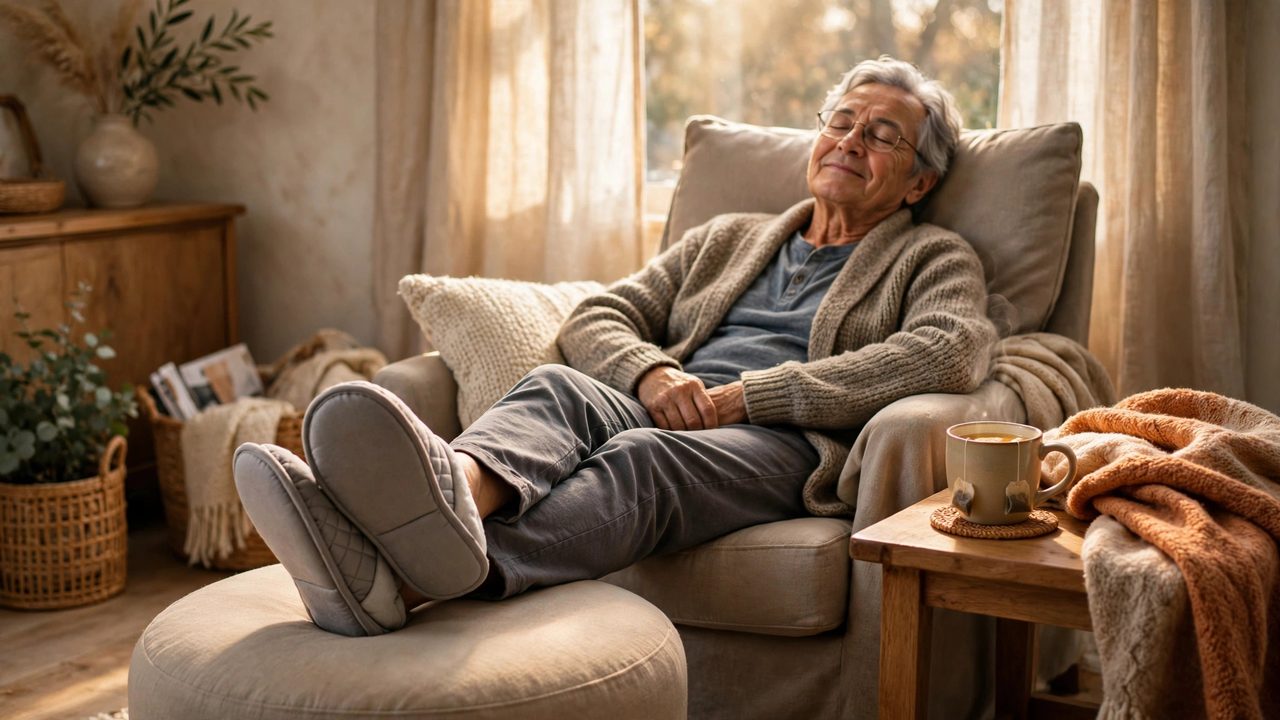
Compare slippers with wide openings, hook-and-loop straps, and plush cushioning — physical features that make daily wear easier around stiff, tender ankles.
Compare slippers with wide openings, hook-and-loop straps, and plush cushioning — physical features that make daily wear easier around stiff, tender ankles.
When your ankles are stiff and tender, the hardest part of wearing slippers is often getting them on. A narrow opening forces you to point your toes, twist the joint, and push through a tight collar, and a fixed elastic band can dig in exactly where the ankle feels most sensitive. The best slippers for arthritis ankle comfort are built around that moment: they open wide, close with a strap you can work with one hand or limited grip, and surround the joint with soft materials instead of stiff seams. This guide compares six slippers sold new on Amazon US that take that approach, from fully opening adaptive designs to plush adjustable-strap house shoes.
A note on scope before we start: this article describes physical features only — closures, openings, materials, cushioning, and fit. Slippers are footwear, not treatment. Nothing here is medical advice, and no slipper in this roundup is presented as a way to relieve arthritis pain, reduce inflammation, or improve mobility. If you have arthritis in your ankles, follow your own clinician’s guidance on footwear, and treat the notes below as a shopping aid for comparing construction details the makers themselves list.
Quick verdict
If you want one recommendation, start with the Orthofeet Charlotte for women or the Orthofeet Asheville for men: both use straps that open completely, so the foot steps straight down into the slipper instead of sliding through a tight throat, and both include the maker’s premium orthotic insole and a wide toe box. If maximum room is the priority, the Silverts Extra Extra-Wide Easy Closure Slippers open all the way, add a removable insole and foam spacer, and come from a maker that specializes in adaptive clothing and footwear. The Propét Cush ‘N Foot is the pick for stretch: its neoprene upper gives around the ankle rather than resisting it, and the maker lists a Medicare/HCPCS A5500 diabetic shoe code for the model. The LongBay Women’s Adjustable Wide Slippers are the softest budget-friendly route, with a hook-and-loop strap the maker says adjusts up to 5cm and a machine-washable build. The FitVille Extra Wide Men’s Slippers round out the list as a high-instep moccasin for men who want a slip-on with a wide toe and a plush lining that wraps the ankle.
The products in this guide
Orthofeet Charlotte Slipper
The Charlotte is Orthofeet’s women’s slipper built around a wide-opening adjustable strap
Best when Women who want step-in entry plus structure
Every slipper in this guide had to pass the same checks. First, the model had to be a real, identifiable product — a named brand, a named model, and a listing sold new on Amazon US with a live featured offer at the time of checking. Listings showing no available new offer were excluded, however good the design looked on paper.
Second, the design had to address the ankle directly. That meant at least one of the following, as the maker lists it: a closure that opens fully or nearly fully so the foot enters from above, an adjustable strap that can be set with limited hand strength, a stretch upper that gives around the joint, or an extra-wide, high-volume fit that leaves room around the ankle bones. Ordinary fashion slippers with narrow collars and fixed elastic did not make the cut, even from well-known brands.
Third, we only used specifications the maker or the listing itself states — materials, closure type, insole construction, lining, sole material, and stated size and width ranges. Where a maker uses therapeutic language in its marketing, we have not repeated those claims as fact; you will find the physical feature described instead, so you can discuss relevance with your clinician. Finally, we balanced the list across women’s and men’s models, strap and slip-on formats, and softer and more structured builds, because ankle stiffness shows up differently from person to person and there is no single right answer.
The Charlotte is Orthofeet’s women’s slipper built around a wide-opening adjustable strap. The maker lists a side strap that opens fully, which changes the whole motion of putting the slipper on: instead of pointing your toes and working your foot through a narrow throat — the movement that bothers a stiff ankle most — you set your foot straight down into the open shoe and pull the strap across. A built-in heel lip then helps keep the slipper in place as you walk, so the easy entry does not come at the cost of the heel sliding out with every step.
The upper is suede with a plush faux fur interior, and the maker describes that lining as wrapping the foot in warmth while protecting sensitive areas from irritation and pressure. Around an arthritic ankle, the relevant point is simpler: there is no stiff collar or raw seam pressing on the joint, and the soft lining covers the ankle bones. Inside, the maker lists a premium orthotic insole with anatomical arch support and multilayered cushioning in every pair, plus a wide toe box and a true-to-size fit. That insole is a physical feature worth noting for anyone whose clinician has discussed arch support in indoor footwear — but it is a construction detail, not a treatment claim, and Orthofeet’s own marketing language about easing various foot conditions is not something we can verify or repeat as fact.
For daily life, the Charlotte suits women whose main obstacle is the on-and-off routine itself: mornings, when ankles tend to feel stiffest, are exactly when a fully opening strap earns its keep. The strap can also be re-set through the day if your feet feel different by evening. The trade-offs are that it is a structured slipper rather than a soft scuff, so it feels more like a shoe around the house, and the suede upper needs a little more care than a washable knit.
Buy it if: you want a women’s slipper that opens fully for step-down entry, with a lined suede upper, a wide toe box, and a removable-style orthotic insole as the maker lists it.
Skip it if: you prefer a completely soft, unstructured house slipper, or you want a machine-washable upper — look at the LongBay pick below instead.
The Asheville is the men’s counterpart to the Charlotte, and it goes one step further on access: the maker lists a fully adjustable dual strap design in which both side straps open completely. With both straps open, the top of the slipper lies essentially flat, giving the widest step-in entry in this roundup. For a man whose ankle does not like to flex, or whose hands cannot manage fiddly fastenings, two broad straps that simply lay open and press shut are about as undemanding as a closure gets.
Materials follow the same pattern as the women’s model. The maker lists a suede and leather upper with a wall-to-wall faux fur lining, so the inside surface that touches the ankle is soft along its whole length rather than only in patches. Inside sits the same style of premium orthotic insole with anatomical arch support and multilayered cushioning, and the fit is listed as true to size with a wide toe box; wide widths appear in the model’s size range, which matters if ankle stiffness comes with a generally fuller foot. As with the Charlotte, we are describing listed construction — cushioning layers, lining, straps — not endorsing the maker’s broader comfort claims, which you should weigh with your clinician.
In practice, the Asheville is the pick for men who may need a caregiver’s help or who dress seated: the open top lets a helper guide the foot in from above without pulling the slipper along the floor. The dual straps also give two points of adjustment, so the fit over the instep and around the ankle can be set independently as the day changes. The downsides mirror the Charlotte’s: it is a substantial, shoe-like slipper, warmer than a scuff in summer, and the suede and leather upper is not one to throw in the wash.
Buy it if: you want the most open entry of any pick here, with two straps to adjust, a fully lined interior, and wide sizes available.
Skip it if: you run warm and want a light, breathable slipper, or you prefer a strap-free slip-on like the FitVille below.
Silverts is an adaptive-clothing maker, and these men’s slippers are designed for self-dressing with limited mobility. The maker lists adjustable hook-and-loop closures and a design that allows the slippers to open all the way for easy access — the same step-down entry principle as the Orthofeet models, in an even roomier last. Silverts describes a deep, roomy design intended to deliver comfort for feet and ankles, and the extra extra-wide fit leaves genuine space around the joint rather than asking the upper to stretch to its limit.
Two features set this model apart. The first is the removable insole and foam spacer: the maker notes you can take the spacer out or use your own custom orthotics, which is a practical point if your clinician has prescribed an insert and you need a house shoe that accepts it. The second is the Fluid Barrier Advantage the maker lists, a finish intended to protect against spills and smells, which Silverts recommends for settings where fluids are present. The sole is a tested slip-resistant design, per the maker — relevant for anyone whose stiff ankles make them less steady on smooth floors, though no sole can guarantee against a fall.
These are the slippers to look at when standard wide sizes still feel confining, or when dressing happens with help and the footwear needs to open flat and close fast. The styling is functional rather than fashionable, and the roomy fit can feel loose on a narrow foot even with the straps drawn in. They are men’s models, so women shopping for the same adaptive features should check Silverts’ women’s range rather than sizing down blindly.
Buy it if: you need the roomiest fit in this guide, a fully opening closure, and space for a custom orthotic or the included spacer system.
Skip it if: your feet are narrow to standard width — the extra volume will likely feel sloppy — or you want a more finished, shoe-like appearance.
Propét takes a different route to ankle comfort: instead of relying only on straps, the Cush ‘N Foot uses a stretch neoprene upper. Neoprene gives as the foot enters and as the ankle moves, so the material accommodates the joint rather than resisting it, and it avoids the rigid collar edge that can press on tender ankle bones. Combined with the model’s adjustable strap closure, the fit can be set once and then flexes with you through the day.
The listing for this model states a rubber sole material and a neoprene upper, and notes a Medicare/HCPCS code A5500 diabetic shoe designation for the model — a classification detail the maker publishes, included here as a specification rather than as any promise about your own coverage or health. Width choice is a genuine strength: the model’s range runs to an XX-Wide (5E) fitting, among the widest in this roundup, which suits feet and ankles that need volume in every direction. Propét has a long history in comfort and orthopedic footwear, and the Cush ‘N Foot is one of its long-running designs rather than a seasonal novelty.
Choose this one if your ankles vary — a stretch upper forgives day-to-day changes in how your feet feel better than a fixed shape does — or if you wear through standard wide sizes. The neoprene look is plainly functional, closer to a therapy shoe than a fireside slipper, and neoprene holds warmth, which some wearers love in winter and find too much in summer. It is listed here in the women’s model; a men’s version exists in Propét’s range, so check the listing’s options carefully before ordering.
Buy it if: you want a stretch upper that gives around the ankle, an adjustable strap, and width options extending to XX-Wide (5E).
Skip it if: you dislike the feel of neoprene, run warm, or want a plush lined slipper for cold floors — the LongBay or Orthofeet picks are cozier.
LongBay’s adjustable slipper is the soft option in this guide. The maker lists a soft wool-like knit upper with a silky faux bunny fur lining, and a hook-and-loop closure that adjusts for a customized fit; the sizing notes say the strap adjusts up to 5cm, which is a concrete, useful figure — it tells you roughly how much give the closure offers over the instep and ankle area before you buy. The full-coverage style closes around the foot rather than leaving it in an open scuff, so the ankle stays covered and warm.
Underfoot, the maker lists high-density 80D memory foam cushioning, and a sturdy rubber sole described as non-skid and suitable for indoor and outdoor versatility — stepping out to the mailbox without changing shoes is the use case the maker names. The slippers come in women’s sizes 6 through 11, in six colors, and they are machine washable, which none of the suede picks above can claim. LongBay’s own copy suggests the cushioning soothes common foot pains; as with every pick here, treat that as marketing language and judge the shoe on its listed construction: knit upper, fur lining, memory foam, adjustable strap.
This is the pair for women who find structured orthopedic slippers too much shoe, or who want a second, washable pair for everyday wear while a more supportive pair handles longer stretches on their feet. The knit gives less lateral structure than the Orthofeet or Propét designs, and memory foam softens with use, so if your clinician has specifically discussed support in your footwear, raise this model’s softer build with them before choosing it as your only pair.
Buy it if: you want the softest, warmest feel, a strap with a stated 5cm of adjustment, and a machine-washable slipper for daily wear.
Skip it if: you need firm structure or an orthotic-ready insole — the Orthofeet Charlotte or the Silverts design fits that brief better.
Not everyone wants straps. The FitVille entry is a moccasin-style slip-on, and its contribution to this category is shape rather than closure: the maker lists a wide toe and high-instep design, so the top of the shoe sits higher over the foot and leaves more room through the ankle area than a standard loafer last. For a man whose ankle stiffness is mild and whose main complaint is ordinary slippers pressing across the top of the foot, that extra height can be the difference between wearing slippers and going barefoot.
The maker lists a microsuede moccasin upper — one bullet describes a soft suede texture — with a plush lining that wraps the ankles for warmth. Underfoot, the maker lists a 50mm EVA high-rebound memory foam outsole with a 5mm EVA insole, a thick, cushioned platform by slipper standards, with a non-slip tread. FitVille’s copy claims the wide toe relieves various foot pains; again, that is the maker’s therapeutic framing, and what we can stand behind is the geometry: wide toe box, high instep, thick EVA cushioning, warm lining.
The honest limitation is the fixed opening. A slip-on still asks the ankle to flex as the foot slides in, and there is no strap to loosen on a bad day or tighten on a good one. If your ankles are the reason you are reading this guide, weigh that carefully: this pick suits the milder end of the stiffness spectrum and men who strongly prefer a conventional slipper shape. Everyone else will get more from the opening designs above.
Buy it if: you want a strap-free men’s slipper with a wide toe, a high instep, thick EVA cushioning, and a warm plush lining.
Skip it if: getting a foot into a fixed opening is your main difficulty — choose one of the fully opening strap designs instead.
Buying guide: what actually matters around an arthritic ankle
Start with the entry, not the cushioning. Most slipper marketing leads with foam, but for a stiff ankle the decisive feature is how the foot gets in. A strap that opens fully lets the foot enter vertically, with the ankle close to its resting position. A partial strap helps. A fixed elastic collar helps least, because it demands the most ankle movement and then presses on the joint all day. When you compare listings, look for the maker’s own description of the closure and how far it opens.
Adjustability is a daily feature, not a fitting-room feature. Feet and ankles rarely feel identical at 8 a.m. and 8 p.m. A hook-and-loop strap you can re-set in seconds — with a broad tab that is easy to grip — lets the same slipper work across the day. Broad tabs also matter if arthritis affects your hands as well as your ankles, a common pairing: a wide strap needs far less pinch strength than a buckle or a narrow pull loop. The makers of several picks above explicitly design their closures for limited dexterity and self-dressing; that is a physical design choice you can verify from the listing, not a medical claim.
Mind the materials around the joint. Soft linings (faux fur, plush, fleece) reduce the chance of a seam or collar edge rubbing the ankle bones, and stretch uppers like neoprene give instead of resisting. Warmth is a personal comfort preference many readers with stiff joints mention, and lined slippers plainly provide more of it — but treat warmth as comfort, not therapy, and let your clinician advise on anything beyond that.
Check the sole for the floors you actually cross. Every pick here lists a rubber or treaded sole described by its maker as non-slip or slip-resistant. Stiff ankles can make gait less adaptable on hard, smooth floors, so a treaded sole and a secure heel fit are practical safety features. A heel lip or closed back also keeps the slipper from sliding off mid-step, which matters more than it sounds when you cannot quickly correct a slip.
Fit for volume, then verify the return route. Look for stated wide and extra-wide options, high-instep designs, and removable insoles if you use an insert your clinician has recommended. Sizes and width labels vary by brand, so measure your foot, compare against the maker’s own size notes where given, and keep the packaging until you have walked around the house. And a final, important step: if you have diabetes, circulation problems, or reduced sensation in your feet alongside arthritis, ask your clinician before choosing any slipper — the right questions about seams, pressure points, and fit are ones they can answer for your feet specifically.
FAQ
What type of slipper is easiest to put on with a stiff ankle?
A design whose upper opens fully — typically with one or two hook-and-loop straps — so your foot steps straight down into the shoe. The Orthofeet Charlotte and Asheville and the Silverts easy-closure slippers in this guide all work that way, as their makers describe. Fixed-collar slip-ons demand the most ankle flexion.
Are adjustable straps better than elastic for arthritic ankles?
For most readers of this guide, yes, as a matter of mechanics: a strap can be opened completely for entry and re-set during the day, while elastic applies the same pressure at all times and must be stretched during entry. Broad strap tabs are also easier to operate with limited hand strength, which the adaptive makers in this roundup design for explicitly.
Can slippers help my ankle arthritis?
Slippers are footwear, not treatment, and this guide makes no claim that any pair will relieve pain, reduce inflammation, or improve mobility. What a well-chosen pair can do is remove avoidable obstacles: difficult entry, pressure from stiff collars, and unsecured heels. For treatment questions, and for footwear advice specific to your joints, follow your own clinician’s guidance.
Should I choose a wide or extra-wide fit?
Choose based on volume, not habit. If ordinary wide slippers still press on your ankle bones or across the instep, an extra-wide or high-instep design — like the Silverts extra extra-wide model or Propét’s widths running to XX-Wide (5E) — gives the joint room without sizing up in length, which can make a slipper sloppy and unsafe. Check the maker’s width notes on the listing before ordering.
Is a soft memory-foam slipper or a structured orthotic slipper better?
They suit different needs. Soft memory-foam designs like the LongBay feel plush and warm and wash easily, but offer less structure. Structured designs like the Orthofeet pair include an orthotic insole with anatomical arch shaping, as the maker lists. If your clinician has discussed support or inserts, that conversation should decide this question; otherwise, comfort during entry and a secure fit are reasonable tie-breakers.
Can I wear these slippers outdoors?
Several picks list rubber soles their makers describe as suitable for brief outdoor use, such as fetching mail — the LongBay is one. They remain house slippers, though: for regular outdoor walking, a proper shoe chosen with your clinician’s input is the safer route.
Conclusion
For arthritic ankles, the winning slipper features are unglamorous and mechanical: an opening that does not fight the joint, a strap your hands can manage, soft or stretchy material where the shoe meets the ankle, and a sole and heel that stay put. The Orthofeet Charlotte and Asheville cover most readers with their fully opening straps and lined, structured builds; the Silverts adds maximum room and orthotic space; the Propét Cush ‘N Foot brings stretch neoprene and the widest width range; the LongBay offers soft, washable comfort; and the FitVille serves men who want a high-instep slip-on. Compare the listed features against your own clinician’s advice, and the pair that makes mornings easiest is the right place to start.
M
Modern Line Home Editorial Team
We compare specs, materials and verified owner reviews before a product earns a spot. Rankings are never paid.
Affiliate disclosure. As an Amazon Associate we earn from qualifying purchases at no extra cost to you. Prices accurate as of the date shown.
House cold even with the heat on? Walk this ordered checklist: thermostat and filter first, then drafts, insulation, leaky ducts and a failing heating system.
Windows fogging up in winter? Check where the fog sits: on the room side it is indoor humidity, outside it is harmless, and between panes the seal has failed.
Store the main firewood pile about 30 feet from your house, off the ground and covered only on top. Compare racks, woodsheds, garages and indoor spots safely.
Place a portable generator outdoors only, at least 20 feet from windows, doors and vents, exhaust pointed away. Exact distances, setup steps and CO rules here.
Keep houseplants in the right winter spot: match window direction to plant type, stay clear of radiators and cold glass, and fix dry air and low light at home.
Mice enter through pencil-width gaps at foundations, pipes, vents, doors and the roofline. Walk this room-by-room winter checklist to find and seal each one.
A winter outage timeline: what to do in the first hour, first night and multi-day outage, with food safety times, pipe protection, heat and CO safety steps.
Size a space heater by room area: 10 watts per square foot at 8-foot ceilings, adjusted for insulation and ceiling height, with full wattage and BTU tables.
Start dripping at about 20 degrees, sooner for exposed pipes. Set a pencil-lead stream, drip the right faucets on both lines, and know when to stop safely.
A fridge needs 800-1,200 starting watts, not just 150-400 running watts. Use the tables to total your fridge plus freezer, lights, furnace fan and more today.











Write Your Review
No reviews yet. Be the first to share your experience!