We independently review everything we recommend. When you buy through our links, we may earn a commission. As an Amazon Associate we earn from qualifying purchases.
Best Rugs for Outside Your RV: 6 Reversible Patio Mats
The best rugs for outside my RV compared: reversible polypropylene patio mats in 9x12, 9x18 and 8x20 sizes, UV-coated, foldable and easy to hose clean anywhere.
The best rugs for outside my RV compared: reversible polypropylene patio mats in 9x12, 9x18 and 8x20 sizes, UV-coated, foldable and easy to hose clean anywhere.
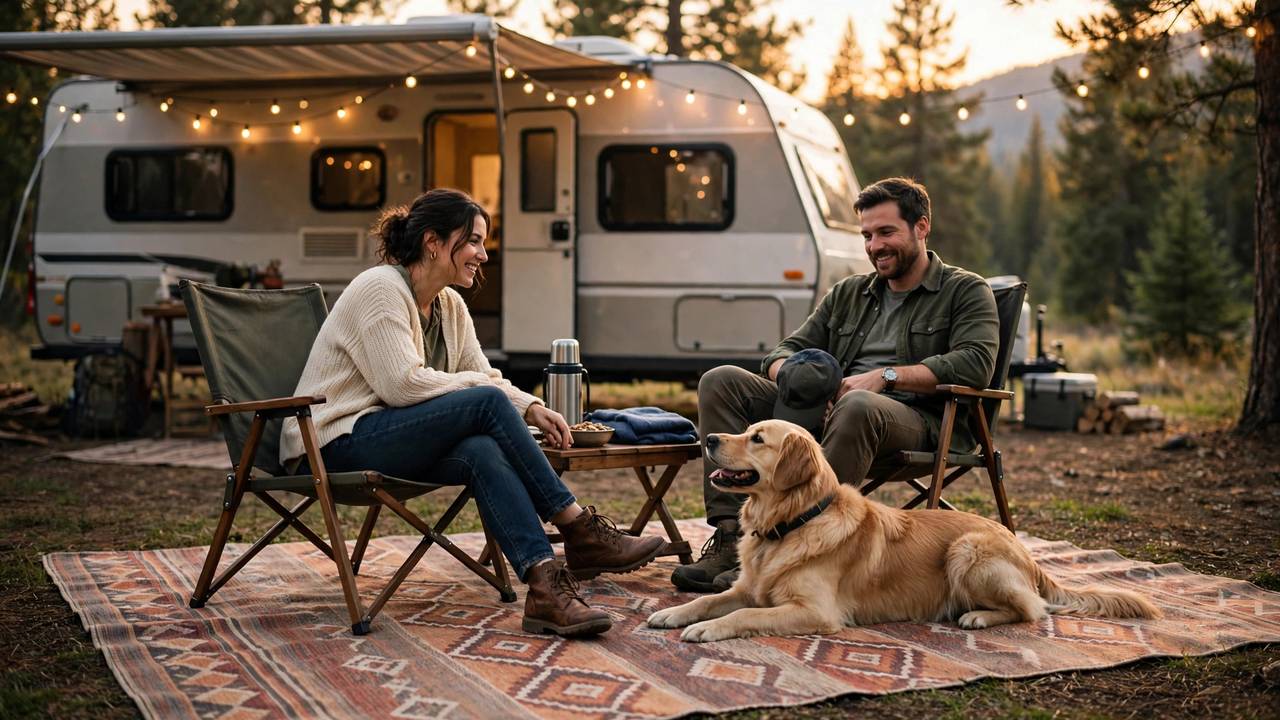
The patch of ground outside your RV door does more work than almost any other part of your campsite. It is where shoes get kicked off before they track grit across the floor, where chairs and a small table turn a parking pad into a living room, and where kids, dogs and coolers all pass through a dozen times a day. A good outdoor rug makes that space cleaner, softer underfoot and far easier to live with, which is why choosing the best rugs for outside my rv comes down to a short list of practical traits rather than looks alone: a woven polypropylene surface that sheds water instead of soaking it up, UV protection so the pattern survives a season of sun, a size that matches your awning, and a fold-flat design that disappears into a storage bay when it is time to move.
Every pick below is a reversible woven mat in the sizes RV owners actually use, from the standard 9 by 12 feet that fits under most awnings to a 9 by 18 for long rigs and an 8 by 20 runner for wide awning projections. Each one was checked against its maker’s listing details, and the specifications quoted here are the ones the maker lists for that exact model. Where the makers agree, the pattern is consistent: polypropylene straw weave, heat-treated or finished edges, corner loops for staking, and a surface you clean with a broom or a hose rather than a washing machine.
Quick verdict
If you want one mat that suits most travel trailers and motorhomes, start with the Camco 42853 in 9 by 12: it is the classic awning mat formula, reversible, UV-coated and easy to fold away. The RVGUARD 9 by 12 is the better choice if wind is your problem, because it ships with corner loops and four stakes to pin it down. Owners of long rigs should look at the SAND MINE 9 by 18 or the Ming’s Mark RC1 at 8 by 20, both of which cover the full length of a big awning. The Stylish Camping RA7 and the Reversible Mats Diamond mat round out the list as pattern-led 9 by 12 options with carrying bags included.
Best all-round 9×12: Camco 42853 Oriental Awning Leisure Mat
Best for windy sites: RVGUARD Outdoor Rug 9 x 12, with stakes included
Best for long awnings: SAND MINE Reversible Mat 9 x 18
Best runner shape: Ming’s Mark RC1 Reversible Classical Patio Mat, 8 x 20
Best classical pattern: Stylish Camping RA7 Classical Reversible RV Patio Mat
Best with carry bag and corner loops: Reversible Mats Diamond Outdoor Patio Rug 9 x 12
The products in this guide
Camco 42853 Oriental Awning Leisure Mat
The Camco 42853 is the mat that defined the category, and the charcoal 9 by 12 version is the safest single recommendation for a standard awning
Best if you have a standard awning, want the proven no-frills formula
We limited the field to mats designed for the RV patio job rather than general garden rugs. That meant four requirements. First, the mat had to be a woven outdoor mat in a size that maps to real awnings: 9 by 12 feet for the typical setup, with 9 by 18 and 8 by 20 options for longer rigs. Second, the material had to be suited to ground contact and weather: the makers of these picks list polypropylene or a breathable woven construction with UV coating, because a mat that absorbs water gets heavy, stays damp and is miserable to store in a bay. Third, the mat had to be reversible, which doubles the usable life of the pattern and gives you a second colorway for free. Fourth, it had to pack down: every pick here folds rather than rolls, and most include a carrying bag, loops or stakes that matter in real campsite use.
Just as important is what we left out. Indoor-outdoor rugs with a fabric pile or a rubber backing were excluded, because pile traps grit and moisture against the ground and a solid backing can smother grass on longer stays. Entry mats and small door rugs were also excluded; they solve a different problem at the step, not the patio. Finally, any model whose size, material or included accessories could not be confirmed from its maker’s own listing details was dropped rather than guessed at, so the specifications in each review below are the ones the maker lists for that exact model.
The Camco 42853 is the mat that defined the category, and the charcoal 9 by 12 version is the safest single recommendation for a standard awning. The maker lists measurements of 9 feet by 12 feet, which covers the ground under most travel trailer and motorhome awnings with room for a pair of chairs, a small table and a cooler while still leaving a border of ground around the edge. The construction is a lightweight, breathable woven material, and that breathability is the point: the maker notes it will not trap rain or snow, so water passes through the weave instead of pooling on top or soaking into a backing. After a wet night you are not dragging a sodden rug to the bay.
The mat is UV-coated for long life, which matters more than most buyers expect. An RV patio rug spends its life in direct sun at exactly the hours the awning is deployed, and unprotected plastic weave turns brittle and faded quickly. The design is reversible, with the pattern reading in inverted colors on the back, so when one face fades or stains you can flip it and start again. Camco lists it as a multi-purpose mat that helps keep dirt from being tracked into the RV or home, and it folds easily for storage, cleaning with soap and water when a hose-down is not enough. There is no carrying bag or stake set in the maker’s list of features, so if your sites are windy you will want to add your own stakes or weights, but as a straightforward, proven 9 by 12, this is the benchmark the others are measured against.
Buy it if: you have a standard awning, want the proven no-frills formula, and value a breathable weave that never holds rainwater.
Skip it if: you need stakes and loops included for windy sites, or your awning is longer than about 14 feet and a 9 by 12 will leave the ends bare.
The RVGUARD mat takes the same 9 by 12 footprint and fixes the most common complaint about lightweight patio mats: they lift, flap and wander in the wind. The maker lists four corner loops and includes four stakes in the box, so you can pin the corners down on grass or dirt and the mat stays where you put it. That one detail changes how the mat behaves all week, because a staked mat keeps its edges flat, and flat edges are what stop it becoming a trip hazard at the door step and stop grit blowing underneath it.
On materials, the maker lists 100% polypropylene with a heat-treated edge to avoid ripping, and describes the mat as breathable with a comfortable feel, noting the lightweight material will not hurt the lawn or floor beneath it. The gray and white pattern is reversible, so you get a lighter and a darker face from the same mat, and the maker lists a wide range of uses beyond the RV patio, including picnic, beach, backyard and deck. Cleaning is the standard routine for this class: it is reversible, folds into a compact size, and dirt washes off with water. If your camping is mostly on exposed sites, desert pads or anywhere the afternoon breeze picks up, the included stake set makes this the most practical 9 by 12 on the list.
Buy it if: you camp on windy or exposed sites and want corner loops and stakes included rather than bought separately.
Skip it if: you camp mainly on concrete pads where stakes cannot be driven, or you need a size other than 9 by 12 for a long awning.
Long rigs expose the weakness of the standard 9 by 12: under an 18 to 21 foot awning it covers barely half the shaded ground, and the uncovered ends are exactly where the outdoor kitchen and the extra chairs end up. The SAND MINE mat in 9 by 18 feet solves that in one piece. The maker lists it in four sizes, and this black and white 9 by 18 version gives you a continuous patio surface from the door to the far end of the awning, so the whole living setup sits on the mat instead of half on gravel.
The maker lists the material as 100% virgin polypropylene with edging that is heat treated to avoid fraying, and describes it as soft, durable and low-maintenance. The surface is UV coated to protect against fading and other sun damage, and the breathable material is listed as safe for grass, which matters on longer stays where a mat sits in one place for a week. Like the smaller RVGUARD, it comes with corner loops and four stakes, plus a carrying bag, and it folds into a compact size for storage despite its length. Cleaning is a sweep or a spray with water followed by air drying. A 9 by 18 is a lot of mat to fold and carry, and it is overkill for a small trailer, but for fifth wheels and long motorhomes it is the difference between a patio and a patch.
Buy it if: your awning runs 18 feet or more and you want one continuous mat under the whole outdoor setup.
Skip it if: your rig is compact, your storage bay is tight, or you mostly book short stays where unrolling 18 feet of mat is more work than it saves.
The Ming’s Mark RC1, sold under the Stylish Camping store, takes a different shape from everything else here: 8 by 20 feet. That long, slightly narrower runner suits awnings with a wide projection pattern and sites where the usable ground runs in a strip alongside the rig, and it is a natural fit for larger motorhomes whose awnings stretch well past what a 9 by 12 can serve. The classical pattern in black and beige is reversible, so the reverse face gives you the same design with the tones inverted.
The maker lists a soft and durable virgin polypropylene material, UV coated to protect against fading and other sun damage. It is listed as easy to clean and quick to dry: sweep away dirt or spray it clean with water, which is the right maintenance profile for a mat this size, since anything that needed scrubbing or machine washing would be impractical at 20 feet long. Despite the length, the maker lists it as lightweight and compact, folding for easy storage into an included carrying bag. That bag matters more at this size than any other, because a folded 8 by 20 without a bag is an armful of loose weave. If your awning is long and your sites are wide, the RC1 is the specialist pick; if your patio is a square, the 9 by 12 and 9 by 18 shapes will serve you better.
Buy it if: you have a long awning, prefer a runner layout along the side of the rig, and want the carrying bag included.
Skip it if: your patio layout is square rather than a strip, or an 8 foot width leaves your table and chairs straddling the edge.
The RA7 is Stylish Camping’s classical-pattern entry in the standard 9 by 12 size, and it is the pick for owners who want the mat to look like part of the campsite rather than a utility tarp. The maker lists the size as 9 feet by 12 feet and the material as 100 percent virgin polypropylene, soft and durable, with a UV coating to protect against fading and other sun damage. The classical design is reversible, so flipping the mat gives you the inverse colorway and a fresh face when the first side has taken a season of sun and foot traffic.
Practical details match the class standard: the maker lists it as easy to clean by sweeping away dirt or spraying clean with water, and as lightweight and compact, folding for easy storage into an included carrying bag. The bag is worth noting because not every 9 by 12 in this category includes one, and a bagged mat is far easier to slide into a pass-through bay without it unfolding across everything else. The RA7 does not list stakes or corner loops among its features, so on grass in a breeze you will be relying on furniture weight or your own anchors. Within those limits, it is a well-specified classical mat from one of the longest-running names in RV patio mats.
Buy it if: you want a traditional classical pattern in 9 by 12, with virgin polypropylene construction and a carrying bag included.
Skip it if: you need included stakes for windy grass sites, or you want a modern geometric pattern instead of a classical one.
The Reversible Mats Diamond mat, in black and brown at 9 by 12 feet, is the most feature-complete of the standard-size picks. The maker lists high-quality polypropylene with a heat treated edge, describes it as soft and hard wearing, and notes it will not hurt grass or scratch a deck, which makes it a reasonable choice for owners who split time between campsite ground and a home deck or patio. The diamond pattern is fully reversible, with an elegant pattern on both sides, so flipping it genuinely changes the look rather than just showing a plainer back.
The surface is UV coated to protect against fading and other sun damage, and the maker lists corner loops for securing the mat, along with a carrying bag for transport. Cleaning follows the class routine: sweep away dirt or spray with water and let it air dry, and it folds into a compact size for storage. The maker lists the range in four sizes from 4 by 6 up to 9 by 18, and this 9 by 12 is the one that matches a standard awning. Against the Camco it trades the benchmark name for a longer feature list; against the RVGUARD it offers loops and a bag but does not list stakes in the box. For most owners who want one mat that travels between the RV and the backyard, it is a strong all-rounder.
Buy it if: you want corner loops, a carrying bag and a reversible diamond pattern in the standard 9 by 12 size.
Skip it if: you want stakes included in the box, or you prefer the longest-established awning mat brand.
Buying guide
Match the mat to your awning, not your rig
The single most useful measurement is your awning’s length and projection. A 9 by 12 mat suits the common 12 to 14 foot awning: the 9 foot depth roughly matches the awning’s projection from the sidewall, and the 12 foot length covers the living area without running past the shade at both ends. For awnings of 18 feet and up, step to a 9 by 18 or the 8 by 20 runner shape, because two smaller mats side by side leave a seam exactly where chairs sit and grit collects. Measure before you buy; a mat that extends well beyond the awning drip line spends its edges in full sun and rain, and ages faster for it.
Why polypropylene straw weave dominates
Almost every serious RV patio mat is woven from polypropylene straws, and the reasons are practical. Polypropylene absorbs almost no water, so the mat cannot become heavy and sodden, and the fiber itself gives mildew nothing to feed on. The open weave lets rain pass through to the ground instead of pooling, which is why makers describe these mats as breathable and grass-friendly. The trade-offs are feel and stiffness: a straw weave is firmer and slightly slicker underfoot than a fabric rug, and it folds in panels rather than rolling. For a surface that lives on gravel, dirt and grass, those are the right trade-offs.
Edges, loops and stakes
Look at how the edge is finished. The better mats here list heat-treated edges, which seal the cut straw ends so the border does not fray through a season of folding. Corner loops are the second detail worth paying for: they let you stake the mat on grass or dirt, which keeps edges flat, stops wind lift and removes the main trip hazard at the door. Stakes only work on ground that accepts them, so on concrete pads you will rely on furniture and cooler weight instead. If a mat lists neither loops nor stakes, plan to add your own anchors if your sites are exposed.
Folding and storage
Every pick here folds rather than rolls, and that is deliberate: a folded mat is a flat rectangle that slides into a pass-through bay or under a dinette, while a 12 foot roll fits almost nowhere in an RV. A carrying bag, included with several of these picks, keeps the folded mat contained and clean in storage and makes the carry from bay to patio a one-hand job. Shake and, if needed, hose the mat before folding it away; folding grit into the weave and storing it damp in a closed bay is how mats pick up the odors owners blame on the material.
Cleaning and care
Maintenance for this whole category is deliberately simple, and the makers describe the same routine: sweep off loose dirt, spray or wash with water (the Camco adds soap and water for stubborn marks), and let the mat dry fully before folding it. Because the weave drains, drying is fast in sun. Avoid pressure washing at close range, which can damage the straw ends, and avoid storing the mat folded on the same creases in exactly the same way all season; alternating the fold lines and flipping to the reverse face evens out wear and fading.
FAQ
What size outdoor rug do I need for my RV?
Match the mat to your awning. A 9 by 12 foot mat is the standard choice under a 12 to 14 foot awning. For awnings around 18 to 21 feet, choose a 9 by 18 mat or an 8 by 20 runner so the whole shaded area is covered in one piece.
Will an outdoor RV rug kill the grass underneath?
Woven polypropylene mats are designed to be breathable: the makers of the picks above list breathable construction that lets water and light through and will not hurt the lawn. Solid-backed or rubber-backed rugs are the ones that smother grass, which is why they were excluded from this list. On long stays, lifting and moving the mat every few days is still good practice.
How do I stop my RV patio mat blowing away?
Choose a mat with corner loops and use the stakes on grass or dirt, as with the RVGUARD and SAND MINE picks above, which include stakes. On hard pads, weigh the edges with chairs, a cooler or dedicated mat weights, and fold the mat away before a storm rather than trusting anchors.
Can I leave an RV outdoor rug out all season?
The picks here are UV coated to protect against fading and sun damage, and polypropylene does not absorb water, so they tolerate a season outdoors better than fabric rugs. Even so, folding the mat away during long absences, and alternating which face is up, will extend its life and keep the pattern even.
How do I clean an RV patio mat?
Sweep off loose dirt, then spray or wash with water; the Camco 42853’s maker lists soap and water for a deeper clean. Let the mat dry completely before folding it for storage, so you are not sealing dampness and grit into a closed storage bay.
Conclusion
The right rug outside your RV is the one that matches your awning, drains instead of soaking, and folds away without a fight. For most owners that is a 9 by 12 reversible polypropylene mat: the Camco 42853 for the proven benchmark, the RVGUARD if wind makes stakes essential, the RA7 for a classical pattern with a bag, or the Reversible Mats Diamond for the longest feature list. Long rigs should skip straight to the SAND MINE 9 by 18 or the Ming’s Mark RC1 8 by 20. Pick by size first and by staking and storage details second, and the pattern, thanks to reversible designs, effectively chooses itself twice.
M
Modern Line Home Editorial Team
We compare specs, materials and verified owner reviews before a product earns a spot. Rankings are never paid.
Affiliate disclosure. As an Amazon Associate we earn from qualifying purchases at no extra cost to you. Prices accurate as of the date shown.
House cold even with the heat on? Walk this ordered checklist: thermostat and filter first, then drafts, insulation, leaky ducts and a failing heating system.
Windows fogging up in winter? Check where the fog sits: on the room side it is indoor humidity, outside it is harmless, and between panes the seal has failed.
Store the main firewood pile about 30 feet from your house, off the ground and covered only on top. Compare racks, woodsheds, garages and indoor spots safely.
Place a portable generator outdoors only, at least 20 feet from windows, doors and vents, exhaust pointed away. Exact distances, setup steps and CO rules here.
Keep houseplants in the right winter spot: match window direction to plant type, stay clear of radiators and cold glass, and fix dry air and low light at home.
Mice enter through pencil-width gaps at foundations, pipes, vents, doors and the roofline. Walk this room-by-room winter checklist to find and seal each one.
A winter outage timeline: what to do in the first hour, first night and multi-day outage, with food safety times, pipe protection, heat and CO safety steps.
Size a space heater by room area: 10 watts per square foot at 8-foot ceilings, adjusted for insulation and ceiling height, with full wattage and BTU tables.
Start dripping at about 20 degrees, sooner for exposed pipes. Set a pencil-lead stream, drip the right faucets on both lines, and know when to stop safely.
A fridge needs 800-1,200 starting watts, not just 150-400 running watts. Use the tables to total your fridge plus freezer, lights, furnace fan and more today.












Write Your Review
No reviews yet. Be the first to share your experience!