We independently review everything we recommend. When you buy through our links, we may earn a commission. As an Amazon Associate we earn from qualifying purchases.
Best Cleaners for Acrylic Bathtubs: Safe Picks and Care Tips
Compare the best cleaners for acrylic bathtubs by listed surfaces, form and directions, with Better Life, Seventh Generation, ForceField, Rejuvenate and more.
Compare the best cleaners for acrylic bathtubs by listed surfaces, form and directions, with Better Life, Seventh Generation, ForceField, Rejuvenate and more.
Our top picks at a glance
7 products from this guide, in the order reviewed below.
1
Better Life Natural Tub Cleaner
Better Life is a plant-based spray that one review page says handles everyday soap scum on acrylic, fiberglass, tile and grout.
As an Amazon Associate we earn from qualifying purchases. Prices and availability can change.
Acrylic scratches and dulls more easily than enamel, so a harsh powder or the wrong solvent can leave a finish worse than the soap scum it removed. This guide compares the best cleaners for acrylic bathtubs by the surfaces each page lists, the form and the directions, and it flags where acrylic is not named.
Quick verdict on the best cleaners for acrylic bathtubs
Only a few cleaners here are named for acrylic on the pages that were fetched: Better Life, Seventh Generation, ForceField ScumBlaster and Don Aslett Tub N Tile. Bring It On lists acrylic with a test-spot warning, and the others are listed for fiberglass or general bathroom surfaces, so their labels must be checked.
The safest routine for acrylic is gentle: a non-abrasive cleaner, a soft cloth or non-scratch pad, a rinse and a dry wipe. The picks below show how each product is described, and the buying guide explains what to avoid. Anything a page does not state is marked as not stated, and the label always has the final word.
Selection rests on published review text, not opinion. A cleaner needed a page that states its form and at least one surface or direction, and the list leans toward products whose pages name acrylic, with a few widely reviewed products included so you can see what is and is not stated for each.
Information comes from three review pages: a bathtub cleaner roundup, a soap scum remover roundup and a retailer-supported tub cleaner guide. Where a page left out acrylic, the active ingredient or a size, the entry says so. Where pages disagreed with themselves, the entry notes it.
The writer has not used these products. Nothing here describes how a cleaner performs or how an acrylic finish responds over time, and no result is promised. Treat the list as a way to narrow the field, then read the label and test on a hidden spot before using any product on the whole tub.
Cleaner picks for acrylic tub surfaces
The entries run from products whose pages name acrylic to products that do not. Read the surface line and the cautions in each entry, because a cleaner can be excellent on porcelain or fiberglass and still be the wrong choice for a glossy acrylic shell that scratches easily.
Better Life is a plant-based spray that one review page says handles everyday soap scum on acrylic, fiberglass, tile and grout. It suits a household that wants a gentle daily or weekly cleaner and does not want chlorine or alcohol in the bathroom, with a soft cloth in hand.
The page lists a ready-to-use spray in a 32 oz size.
It lists plant-based ingredients including tea tree, eucalyptus and peppermint oils, and says it contains no chlorine, alcohol or synthetic dyes.
Another review page lists a set with one sprayer and two bottles totaling 64 oz, and lists acrylic among the surfaces.
The page says stained spots need a longer dwell time, and the other page found it ineffective on hard water stains, mold or rust.
The directions on the second page are simply to spray, scrub and rinse, and to dry with a soft cloth for extra shine. Use a soft cloth or a non-scratch pad, not a stiff brush, on acrylic.
Pros are the acrylic listing and the gentle ingredients. Cons are the limited effect on hard water and mold that the review found.
Buy if you want a gentle everyday cleaner. Skip if your main problem is hard water scale.
Seventh Generation Tub & Tile Cleaner
Seventh Generation is a plant-based cleaner that the review page lists as safe on acrylic, ceramic, fiberglass, porcelain, satin-nickel and stainless steel. It suits a household that wants an eco-focused option with a citric acid base and a septic-safe label.
The page lists citric acid and 91 percent plant-based ingredients, with a USDA certification mentioned.
It lists essential oils for scent and says there is no chlorine bleach, synthetic fragrance, dye or solvent.
The page says it gently dissolves soap scum and hard water stains and is septic-safe.
Form, size and directions are not stated on the page.
Because directions are not stated, follow the label for dwell time and rinsing. A cleaner with a mild acid should still be rinsed well and kept off metal fixtures that the label warns about.
Pros are the explicit acrylic listing and the plant-based wording. Cons are the missing form, size and directions on the page.
Buy if you want a plant-based cleaner with acrylic named. Skip if you need a no-scrub formula for heavy scale.
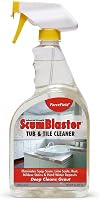
ScumBlaster is a concentrate with an organic salt active ingredient, listed as bleach-free and acid-free. It suits a household that wants one bottle that makes several spray bottles, with a stronger mix for heavy jobs and a lighter mix for weekly upkeep.
The retailer-supported page lists a 32 oz concentrate and says it makes roughly five spray bottles.
It lists fiberglass, acrylic, plastic, glass, rubber, porcelain and vinyl tile among the surfaces.
It lists soap scum, hard-water stains, rust and mildew as targets.
No mixing ratio is given on the page, so follow the label.
The soap scum review describes it as a spray, wait and rinse formula that does not need heavy scrubbing. Spray, give the label dwell time, then rinse and dry, and test the mix on a hidden spot first.
Pros are the acrylic listing and the concentrate value. Cons are the missing ratio and the need to dilute correctly.
Buy if you want a concentrate that lists acrylic. Skip if you want a ready-to-use bottle.
Tub N Tile is a mild-acid concentrate that the page says is rated safe for fiberglass, acrylic and grout, and that breaks down hard-water deposits and body oils. It suits a household with oily film and hard water on a tub that needs a stronger formula.
The page lists a concentrate you dilute, and sizes of 1 quart in the table and 32 oz in the title that the page does not reconcile.
The text lists safety on fiberglass, acrylic and grout, while the table lists bathtub and tiles.
It lists a mild acid formula that foams when diluted and sprayed.
No mixing ratio is given, and the page says to rinse well to avoid residue on chrome.
The conflicts on the page are a reason to read the bottle. A mild acid cleaner should be rinsed thoroughly, and you should keep it off metal trim that the label warns about.
Pros are the body oil and hard water focus. Cons are the conflicting size listing and the missing ratio.
Buy if you have oily film and mineral deposits. Skip if you want a ready-to-use spray.
Bring It On is a cream-style cleaner with oxygen bleach and a mild abrasive, and the page lists acrylic with advice to test a spot. It suits a household with hard water marks that a plain spray cannot lift and who will test the product first on a hidden area.
The page lists a 32 fl oz ready-to-use cream-style cleaner.
It lists fiberglass, porcelain, acrylic and glass and advises a test spot on acrylic.
It lists oxygen bleach plus a mild jewelers-grade abrasive and a fresh mint scent.
The steps are to apply, allow dwell time, scrub and rinse, and heavy stains may need a second pass.
The other review page lists a 16 oz version with a nontoxic oxygen bleach, tested on fiberglass and not mentioning acrylic, and notes the tester used a brush on a drill for scale. Do not use a drill brush on acrylic.
Pros are the hard water focus and the explicit test-spot advice. Cons are the abrasive element and the scrubbing it needs.
Buy if hard water marks are the problem and you will test first. Skip if you want a fully non-abrasive routine.
Rejuvenate is a spray designed to work with little scrubbing. The page lists glass, ceramic, porcelain, chrome, plastic, fiberglass and natural stone among its surfaces, and acrylic is not named, so it suits a household that checks the bottle label first before using it on a tub.
The page lists a spray in a 32 oz size from the retailer link.
It lists fragrance-free, bleach-free and acid-free wording.
The directions are to spray on, let it work for a few minutes and rinse.
For deeper stains, the page suggests a sponge or non-scratch scrub pad.
Plastic and fiberglass are listed, which are related surfaces, but that does not confirm acrylic. Look for acrylic on the bottle or the maker site before using it, and test a hidden spot.
Pros are the low-scrub approach and the fragrance-free wording. Cons are the missing acrylic mention on the page.
Buy if the label names acrylic. Skip if you cannot confirm that.
CLR Pro is a daily bath cleaner described as free of alcohol, ammonia and bleach, and the page does not name acrylic. It suits a household that wants a mineral and soap scum cleaner for glass, tile and fiberglass and will confirm acrylic on the label.
The page lists a 32 oz size from the retailer listing name.
It lists glass shower doors, tile, stainless steel, fiberglass, granite, porcelain and plastic.
It describes the product as biodegradable and EPA Safer Choice certified, with no abrasives.
The tester found it could not remove the toughest buildup and did better with a cloth than a paper towel.
The no-abrasive wording is helpful for a soft surface, but it is not a statement that the product is safe on acrylic. A separate CLR product, the calcium, lime and rust remover, says it should only contact surfaces for 2 minutes.
Pros are the no-abrasive wording and the daily use. Cons are the missing acrylic mention and the limit on heavy buildup.
Buy if the label confirms acrylic. Skip if you need heavy scale removal.
Oh Yuk is a jet line cleaner, not a surface cleaner, and the page says it is for jetted tubs, jacuzzis and whirlpools. It suits an acrylic whirlpool owner whose problem is film inside the plumbing and not on the visible shell, since the tub surface needs a different product.
The page lists a full-strength liquid in a 16 fl oz bottle.
It summarizes the steps as filling the tub above the jets, adding four ounces and running the system about 15 minutes before draining.
The page says a 16 oz bottle covers roughly four cleanings.
It is described as septic safe, and its image title says it dissolves body oils and soap scum.
The page summary is not a verbatim label, so follow the bottle and the tub maker guidance, since makers may limit what you run through the jets. Rinse the tub well after the cycle.
Pros are the focus on jet lines and the stated routine. Cons are that it does not clean the shell and the directions are a summary.
Buy if you own a jetted acrylic tub. Skip if you have a plain tub.
Buying guide for the best cleaners for acrylic bathtubs
Acrylic care is mostly about what you avoid. The sections below explain which cleaner traits suit a soft glossy shell, how to read a label, how to test a new product and how to handle soap scum, hard water and stains without scratching the finish or dulling the shine.
Why acrylic needs a gentler approach
Acrylic is a plastic shell, and the review pages advise avoiding harsh abrasives, chlorine bleach and strong acids on tub surfaces in general. A powder or a stiff pad can leave fine scratches that hold dirt, which makes the next cleaning harder and the surface duller.
Look for words like non-abrasive and for acrylic named on the label. A listing for plastic or fiberglass is a clue, not a confirmation, and the maker of your tub may publish its own approved cleaners that take priority over a cleaner label.
Sprays, concentrates and creams
Ready-to-use sprays are the simplest and usually the gentlest. Concentrates save money and storage but need correct dilution, and the ScumBlaster and Tub N Tile pages give no ratio, so the label matters. Cream-style cleaners can contain a mild abrasive and need more care.
The review page says more concentrate is not always better, and that high concentrations can damage surfaces and affect respiratory health. Measure carefully, ventilate the room and rinse the tub well after any acidic or oxygen-bleach product.
Powders and scrubbers to avoid
Powdered cleansers contain abrasive particles by their nature. The review page says Bar Keepers Friend can scratch some surfaces, and one page says to use Bon Ami with caution on fiberglass and plastic. For acrylic, skip powders unless the maker names them.
Foam scrubber pads such as the Mr. Clean Magic Eraser are listed for tubs on one page, but the page does not name acrylic. If you try one, test a hidden spot first and use light pressure, because the page describes the pad as applying abrasive force to the surface.
Test before you commit
Choose a hidden area, such as the underside edge or a corner near the wall, apply the cleaner as the label says, rinse and dry it, and look at the spot in good light. Dull patches or fine scratches mean the product is wrong for your tub, so stop and choose another.
Repeat the test for each new product, and do not mix cleaners. The review page warns about ventilation for chemical products, so open a window or run the fan, wear gloves and keep pets and children away while you clean.
A gentle routine for soap scum and hard water
Rinse the tub after bathing and wipe the walls and rim with a soft cloth. The soap scum review page suggests removing water spots and mineral deposits daily or weekly, and considering a shower head filter if you have hard water, which keeps the buildup thin.
When buildup returns, use the label-approved cleaner, a soft cloth or a non-scratch pad, and rinse thoroughly. For stubborn marks, ask the tub maker for approved methods instead of reaching for the strongest product on the shelf.
Jetted acrylic tubs need extra care
A whirlpool has plumbing that the surface cleaner never reaches, so a jet line cleaner such as Oh Yuk is a separate step. Follow the tub maker schedule, avoid bubble bath, oils or salts in the jets unless the maker approves them and drain the tub after each use.
Keep the pump accessible and report odd smells or slow flow to a service professional. A clean surface over dirty jets is only half of the job, and the maker guidance decides what products the system tolerates.
Acrylic tub cleaner FAQ
These answers cover the questions people ask most often about cleaning acrylic tubs. They follow the review pages and stay general where a page gives no numbers, and they send you to the cleaner label and the tub maker guidance for anything specific to your tub.
Can I use vinegar on an acrylic bathtub?
One review page offers a vinegar and soap mix as a do-it-yourself option for tubs generally, but it does not say the mix is safe for acrylic. Check your tub maker guidance first, test a hidden spot, and rinse well. A labeled acrylic cleaner is the lower-risk choice.
Is bleach safe for acrylic tubs?
The review pages advise avoiding chlorine bleach on tub surfaces, and the cleaners listed here that name acrylic are bleach-free or acid-free. Oxygen bleach appears in Bring It On with a test-spot warning for acrylic. Follow the maker guidance and never mix cleaners.
What should I use to scrub an acrylic tub?
Use a soft cloth or a non-scratch pad. The review pages suggest non-scratch pads and say to avoid harsh abrasives. Avoid steel wool, stiff brushes and drill-mounted brushes on acrylic, even though one page used a drill brush on a different surface for hard water scale.
How often should I clean an acrylic tub?
Often enough that buildup never gets thick. The review page suggests removing water spots and mineral deposits daily or weekly in hard water areas. A quick rinse and wipe after use, plus a label-approved cleaner on a regular schedule, is gentler than rare heavy scrubbing.
Do I need a special cleaner for a jetted acrylic tub?
The surface can be cleaned like any acrylic tub, but the jet lines need a separate cleaner or a method the maker approves. Oh Yuk is a jet line product, according to its page. Follow the tub maker schedule and avoid additives that the maker warns against in the jets.
What if my acrylic tub is already scratched or dull?
Do not try stronger cleaners to fix it. Check the tub maker for approved repair or polishing guidance, or ask a bathtub repair professional. Aggressive scrubbing usually adds more scratches, and no page used here states a repair method for acrylic surfaces.
Conclusion
Choose a cleaner whose label names acrylic, such as Better Life, Seventh Generation or ForceField ScumBlaster, and use it with a soft cloth. Treat Bring It On, Rejuvenate and CLR Pro as label-check products. Avoid powders and stiff scrubbers, test a hidden spot first and ask the tub maker for approved cleaners.
M
Modern Line Home Editorial Team
We compare specs, materials and verified owner reviews before a product earns a spot. Rankings are never paid.
Affiliate disclosure. As an Amazon Associate we earn from qualifying purchases at no extra cost to you. Prices accurate as of the date shown.
Compare the best inexpensive whirlpool bathtubs by listed jets, pump, size, material and limits, with electrical needs and tips for checking live listings.
Compare the best inexpensive deep bathtubs by listed water depth, capacity, size and material, with limits noted and tips for checking each live listing first.
Shopping for the best bathtubs under 600? Compare entry-level alcove, drop-in and freestanding tubs by their listed size, depth and features, with limits noted.
Searching for the best bathtubs under 250? See portable, foldable, inflatable and basic steel options ranked by listed features, with limits and what to check.
Looking for the best tape for bathtubs? Compare five self-adhesive caulk strips by width, length, material and limits, plus prep steps and when tape fails.
A practical guide to curtain rods for bathtubs: tension, curved, wall-mounted and corner designs, with listed lengths, materials, weight limits and trade-offs.
Choose the best bathtub trays by expandable range, material, book and wine glass slots and grip, with a clear buying guide, care tips and an FAQ for bath fans.
Find the best rust primer for bathtubs: compare rust converters, rust-bonding and oil or water-based primers, with prep steps, limits and an FAQ for metal tubs.
Compare the best epoxy paint for bathtubs by surfaces, curing times, odor and application, with prep steps, buying advice and a full FAQ for worn or dull tubs.
Compare the best wax for bathtubs by listed surfaces, form and limits, and learn the slip risk, prep needs and when to skip wax, with a buying guide and FAQ.














Write Your Review
No reviews yet. Be the first to share your experience!