We independently review everything we recommend. When you buy through our links, we may earn a commission. As an Amazon Associate we earn from qualifying purchases.
Best Supercapacitor Jump Starters for Extreme Cold
Compare the best supercapacitor jump starters for extreme cold: maker-listed temperature limits, engine sizes and charging needs for reliable winter starts.
Compare the best supercapacitor jump starters for extreme cold: maker-listed temperature limits, engine sizes and charging needs for reliable winter starts.
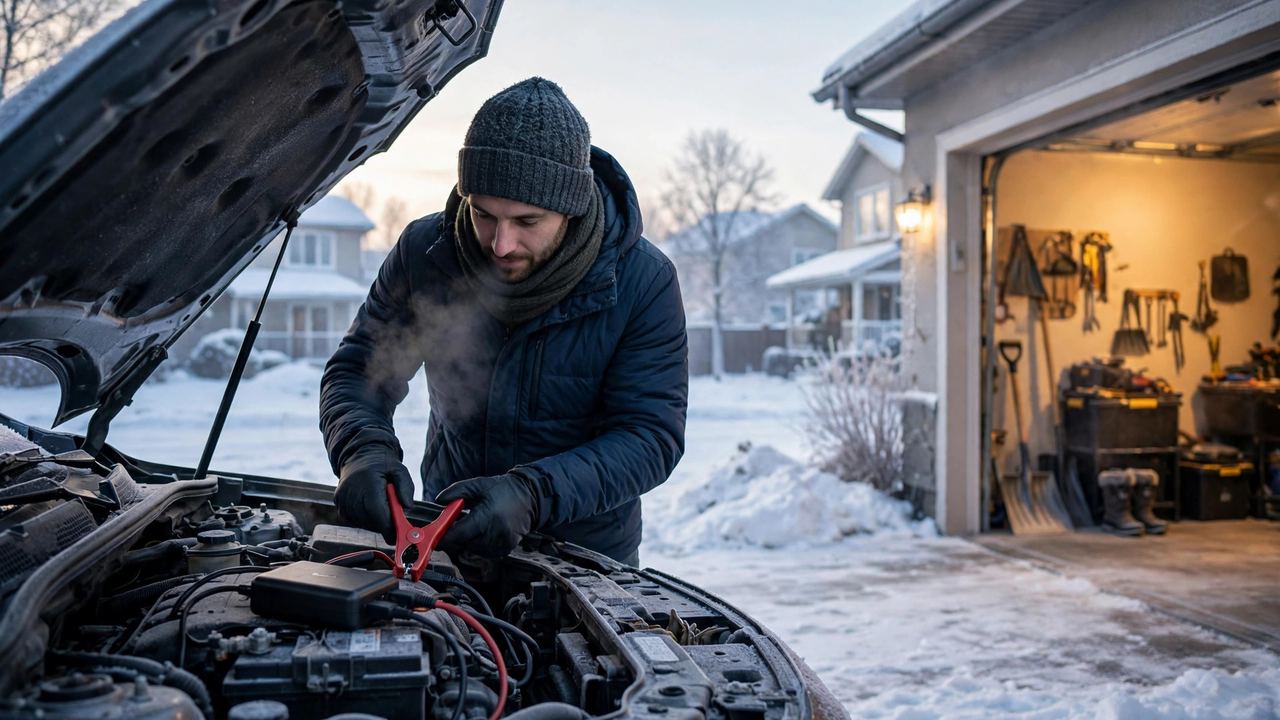
Extreme cold exposes the weakness of almost every conventional jump pack. A lithium battery loses usable output as temperatures fall, and a pack that sat in a freezing trunk for months may be flat on the one morning it is needed. Supercapacitor jump starters attack that problem from the opposite direction. Instead of storing a charge for months, they gather energy at the moment of use, usually from the weak vehicle battery itself, and release it in one short, powerful burst. Because there is little or no conventional battery inside to go flat, the design suits drivers who want an emergency tool that can live in the vehicle through winter after winter. This guide to the best supercapacitor jump starters for extreme cold covers only genuine capacitor-based models, batteryless or hybrid in design, that are sold new for 12-volt vehicles.
One honesty note matters before any product names. This is a narrow market. Many products marketed with capacitor language are ordinary lithium packs, and many older batteryless models are no longer sold with a live new offer. The roundup below therefore contains five verified models rather than a padded list, and it mixes two formats that buyers should not confuse. Three are portable clamp-on units you carry in the vehicle and connect when a start fails. Two are permanent under-hood systems that stay connected to the battery and assist automatically. Both approaches use supercapacitors, both carry maker-listed operating ranges that extend far below freezing, and both avoid the routine recharging discipline a lithium pack demands. Which format suits you depends on whether you want a tool you can move between vehicles or a system fitted to one vehicle and forgotten.
Every temperature limit, engine size and charging requirement in this article is reported only as the maker lists it. Peak amp figures in this category are maker figures measured under maker conditions, and they are not directly comparable across brands, so treat them as a rough guide to the class of vehicle a model is built for rather than as a promise about a specific frozen engine on a specific morning.
Quick verdict
For most drivers, the Autowit SuperCap 2 is the sensible default portable pick: the maker lists an operating range from -40 degrees to 158 degrees Fahrenheit, compatibility with gasoline engines up to 8.0 litres and diesel engines up to 4.0 litres, and four ways to charge the capacitors when a start is needed. Drivers who want the highest maker-listed output in a portable capacitor unit should look at the KeenPower 6000A Super Capacitor Jump Starter, which the maker builds around six 3000F supercapacitors and rates for work in temperatures down to -45 degrees Fahrenheit. Drivers who would rather fit a system once and never carry a pack at all should consider the ANCEL BS400 Super Starter for larger engines or the ANCEL BS300 Super Starter for smaller cars, both permanent under-hood supercapacitor systems with a maker-listed range of -40 to 176 degrees Fahrenheit. The Rezervo RZ-550 Batteryless Jump Starter is the older, simpler portable option, with a narrower maker-listed temperature range that shoppers in the coldest regions should weigh carefully.
The products in this guide
Autowit SuperCap 2
The Autowit SuperCap 2 is the model that defines this category for most buyers, and it earns the lead position here because its maker-listed figures
Best if you want the best-established portable batteryless option, your vehicle is a 12-volt gasoline
The first filter was technology, applied strictly. A model qualified only if its starting power genuinely comes from supercapacitors or ultracapacitors, either as a batteryless design or as a clearly described capacitor-based system. Conventional lithium jump starters were excluded even when their marketing mentioned capacitors, and even when they appeared in other publications’ supercapacitor roundups. That single rule removes most of the products a casual search surfaces, which is exactly why this niche needs care: a buyer shopping specifically for cold-weather capacitor performance should not be handed a lithium pack under a different label.
The second filter was verification on opened pages. Each model below was checked on its Amazon product page and against maker or manual information for three things the source research for this topic specifically demands: the maker’s stated operating temperature limits, the vehicle and engine sizes the maker lists as compatible, and what the unit needs as a charging source before it can deliver a start. A model whose temperature limit or engine compatibility could not be confirmed was left out rather than described with vague language.
The third filter was live availability as a new product. A listing that shows no featured offer does not count, however good the model once was. That gate removed some well-known names from this roundup, including a smaller sibling of our top portable pick and the original version of one portable model below, where only the upgraded version currently carries a live new offer. Where two versions of a model exist, only the version verified with a live new offer is recommended, and it is named as that version.
Finally, we weighted the cold-weather evidence itself. A maker-listed low-temperature limit at or below -40 degrees Fahrenheit or Celsius was treated as the serious extreme-cold tier, because that is the point at which the ranges of the strongest models here cluster. One included model lists a warmer low limit, and it is included transparently with that limit stated, because it remains a genuine batteryless design sold new; shoppers in the coldest climates can weigh that difference directly in the comparison table instead of discovering it after purchase.
The Autowit SuperCap 2 is the model that defines this category for most buyers, and it earns the lead position here because its maker-listed figures line up exactly with what an extreme-cold shopper needs. The maker lists an operating range from -40 degrees to 158 degrees Fahrenheit, which covers the coldest mornings in almost any inhabited region, and lists compatibility with 12-volt gasoline engines up to 8.0 litres and diesel engines up to 4.0 litres. The maker lists a peak output of 800 amps. That figure is modest beside the five- and six-thousand-amp claims common in lithium marketing, but capacitor output is delivered differently, and the honest way to read it is alongside the engine sizes the maker pairs it with, which cover the great majority of cars, pickups, SUVs and smaller diesel vehicles on the road.
The operating principle is the point of the product. The SuperCap 2 carries no internal battery to keep charged. When a vehicle will not start, you connect the clamps and the supercapacitors draw energy from the weak battery itself over a few minutes, then release it as a starting burst. The maker lists four charging methods in total, which matters when the vehicle’s own battery is too far gone to supply the charge: the weak vehicle battery, another vehicle’s battery, a 12-volt cigarette lighter socket, and a USB power source such as a power bank. That last pair of fallbacks is a genuine winter advantage, because the scenario that defeats a batteryless starter is a battery with almost nothing left, and a second source answers it.
There is a hard limit to understand, and the maker’s own answers state it plainly. If the vehicle battery’s voltage has fallen below the minimum the unit can draw from, the capacitors cannot charge from that battery and one of the alternative sources is required. A completely flat battery, a disconnected battery or a battery with a failed cell is therefore a different problem from a weak battery, and no honest roundup should blur that line. Within its intended job, though, the design removes the most common failure of stored jump packs: there is nothing inside quietly self-discharging through a cold season.
The maker also lists a service life of more than 100,000 uses under normal operating conditions and describes protection against sparks, reverse polarity, overcurrent, overload and overvoltage, with physical activation rather than a permanently live clamp output. For a tool that may be connected in the dark, in gloves, on a freezing roadside, that protection set and the absence of a stored lithium charge are meaningful practical points, stated here only as the maker lists them.
Buy it if: you want the best-established portable batteryless option, your vehicle is a 12-volt gasoline model up to the maker’s listed 8.0-litre limit or a diesel up to 4.0 litres, and you want several fallback ways to charge the capacitors when the vehicle battery is very weak.
Skip it if: your battery failures tend to involve a battery that is completely dead or disconnected, since the unit still needs a source to charge from, or you want a unit that also works as a power bank for phones, which a batteryless capacitor design does not do.
The KeenPower entry in this roundup is specifically the upgraded clamps and screen version of the maker’s 6000A super capacitor jump starter, because that is the version verified with a live new offer; the earlier version of the same model did not pass the availability gate and is not the one recommended here. The maker builds this unit around six 3000F supercapacitors with no traditional battery, and lists a peak output of 6000 amps for 12-volt vehicles. As with every model in this guide, that peak figure is a maker figure and should be read as the maker’s positioning of the unit for all 12-volt cars rather than as a laboratory comparison against the other picks.
Its cold-weather listing is the strongest low-temperature claim among the portable models here. The maker states that the unit works in a -45 degree Fahrenheit environment, and its manual lists an operating range down to -45 degrees Fahrenheit and up to 158 degrees Fahrenheit. For drivers in the coldest continental climates, that extra margin below the -40 degree cluster is the headline reason to consider this model, reported exactly as the maker lists it and with no additional performance promise attached. A temperature rating describes the conditions the maker says the unit operates in; it does not guarantee that a neglected engine with thick oil and a failing battery will start, and the buying guide below returns to that distinction.
Charging follows the batteryless pattern. The maker describes boost charging from a 12-volt car battery, including a weak or dead one, with the unit ready in minutes and no pre-charging routine to maintain at home. The upgraded version adds a display screen and revised clamps over the earlier version, which helps in winter use because the state of charge of the capacitors is the one thing a driver needs to see before attempting a start in the cold. The maker also emphasises that supercapacitors store energy electrostatically rather than chemically, which is the basis for its safety positioning against overheating and fire risk compared with traditional batteries.
Size is the trade-off to weigh. A bank of six large supercapacitors makes this a substantially bigger and heavier unit than a compact lithium pack, and the maker’s own manual lists a weight in a different class from the smallest portables here. That bulk lives in the vehicle rather than in a coat pocket, and for the intended job, a winter emergency tool that stays in the car, most owners will accept it. Drivers who want one small device to carry between a car, a boat and a motorcycle should compare the physical size against the Autowit before deciding.
Buy it if: you face the coldest temperatures covered in this roundup, you want the highest maker-listed output among the portable capacitor models, and you are comfortable with a larger unit that lives in the vehicle.
Skip it if: you want the smallest, lightest portable option, or you are shopping the earlier version of this model, which is a different listing and did not verify with a live new offer for this guide.
The ANCEL BS400 Super Starter represents the second format in this roundup, and for some winter drivers it is the more convincing answer. Instead of a pack you carry and clamp on after a failure, the BS400 is a supercapacitor system designed to be permanently connected under the hood. It monitors the battery, charges itself from the vehicle during normal driving, and delivers starting assistance automatically when the battery is weak. The emergency is handled before it becomes a roadside event, which is a fundamentally different promise from every portable unit in this guide, and it suits drivers whose cold-start problems are a recurring feature of one particular vehicle.
The maker’s listed figures are strong for the format. The maker lists a peak output of 1300 amps, compatibility with 12-volt gasoline and diesel engines up to 6.0 litres, and an operating range from -40 degrees to 176 degrees Fahrenheit, with an IP65-rated housing for under-hood conditions. That upper temperature figure matters for a permanently installed device, because an engine bay in summer is a far harsher home than a glovebox, and the maker has rated the unit for it explicitly. The maker also lists app-visible battery health monitoring, so the system reports on the battery it protects rather than only intervening at the moment of failure.
Setup has one step portable buyers do not face. The maker instructs that the BS400 be fully charged via its Type-C port before first use, after which it needs no routine manual recharging in normal use because it maintains itself from the vehicle. Installation is a fit-once task, with the option of a permanent connection or a quicker temporary connection in minutes, per the maker. Drivers who are not comfortable working around battery terminals should budget for fitting help, and anyone whose vehicle is under a warranty they care about should check the terms before permanently connecting any aftermarket system, which is ordinary prudence rather than a criticism of this model.
The deeper point for extreme-cold shoppers is where the capacitors live. A permanently connected system is already at the battery, already charged from the last drive, and already monitoring, on the morning the temperature falls through the floor. There is no pack to remember, no clamp connection to make with numb hands, and no question about whether the emergency tool itself survived the cold, because the maker’s listed range covers the same -40 degree territory as the best portables. The compromise is equally clear: the protection belongs to one vehicle only, and it does nothing for a second car, a neighbour’s car or a boat at a ramp.
Buy it if: one vehicle gives you repeated cold-start trouble, you want automatic assistance and battery health monitoring rather than a portable pack, and your engine is within the maker’s listed 6.0-litre compatibility.
Skip it if: you need to start more than one vehicle, you are not willing to install a permanently connected device, or your vehicle is a type the maker does not list as compatible.
The ANCEL BS300 Super Starter is the smaller sibling in the same permanent-install family, aimed at the ordinary passenger cars that make up most winter starting failures. The maker lists a peak output of 1000 amps and compatibility with 12-volt lead-acid battery vehicles with engines up to 3.5 litres. That ceiling excludes larger trucks and big diesels, which is what the BS400 above is for, but it covers a wide spread of sedans, hatchbacks, crossovers and compact SUVs, the vehicles most likely to be left outside through a cold season by drivers who have no garage.
The cold and heat ratings match its larger sibling where it counts. The maker lists an operating range from -40 degrees to 176 degrees Fahrenheit, describes the unit as safe for permanent installation year-round, and lists automatic recharging from the vehicle alternator and battery during normal driving, with Type-C charging from an external source also supported when needed. The maker further lists supercapacitors rated for up to 500,000 assist cycles, a figure that underlines the format’s premise: an assist that happens automatically, potentially on many cold mornings, needs a storage technology that tolerates very frequent cycling, which is the natural strength of capacitors over chemical batteries.
Like the BS400, the BS300 adds battery monitoring with app visibility, so a weakening battery can be spotted from its trend rather than discovered at the worst moment. For winter preparation that monitoring may be the most valuable feature in either ANCEL system, because the cheapest cold start is the one prevented by replacing a dying battery in autumn. The maker positions the system as maintenance-free once connected, and that claim, like every specification in this section, is reported as the maker lists it.
Choosing between the two ANCEL models is a simple compatibility exercise rather than a quality judgement. Check your engine size against the maker’s listed limits, choose the BS300 if your vehicle sits comfortably within 3.5 litres, and step up to the BS400 for larger gasoline or diesel engines. Choosing between an ANCEL and a portable is the harder decision, and it turns on whether your winter problem belongs to one vehicle or follows you across several.
Buy it if: your car has an engine up to the maker’s listed 3.5-litre limit, you want a fit-and-forget under-hood system with battery monitoring, and your cold starts happen in one main vehicle.
Skip it if: your engine exceeds the maker’s listed limit, you drive a larger diesel truck, or you want a portable unit you can lend or move between vehicles.
The Rezervo RZ-550 is the veteran of this roundup, an ultracapacitor batteryless jump starter that has been sold for years around a simple three-step routine: connect the clamps to the 12-volt battery, let the unit draw charge and show ready, then start the engine. The maker lists a starting current of 550 amps and describes the unit for cars, trucks, boats, RVs, ATVs and other gas engines. Note that last word carefully. Unlike the Autowit and the ANCEL systems, the Rezervo listing frames its compatibility around gas engines, so diesel owners should treat this as a gasoline-only option unless the maker’s current listing for their exact vehicle says otherwise.
Its temperature listing is the reason this model sits last despite its genuine batteryless design. The maker lists an operating range from -30 degrees to 140 degrees Fahrenheit. That covers a normal cold winter in many regions, and the maker specifically describes the ultracapacitors as keeping the same starting current in extreme cold. But -30 degrees is a materially warmer floor than the -40 and -45 degree listings of the other portables here, and this article’s topic is extreme cold specifically. In the coldest northern and mountain climates, that difference is not a footnote; it is the buying decision, and it is stated plainly so shoppers can make it with open eyes.
Within its listed range, the RZ-550 keeps the core batteryless virtues. There is no internal battery to maintain, the maker describes it as maintenance-free with a long shelf life, and it lists short-circuit and reverse-polarity protection against connection mistakes. The unit turns on automatically when connected to the battery, per the maker, which keeps the roadside routine short. A rubberised, impact-resistant casing suits a tool that will be handled in bad weather and stored loose in a vehicle.
The honest summary is that the Rezervo is a real supercapacitor jump starter, verified as sold new, with a narrower maker-listed operating window than the newer competition. For a driver in a moderate winter climate who values its simplicity and long track record, it remains a legitimate choice. For a driver whose thermometer regularly passes the maker’s listed low limit, the models above are the appropriate shortlist and this one is not, however appealing its simplicity may be.
Buy it if: your winters stay within the maker’s listed -30 degree floor, your vehicle is a gas-engine model, and you want the simplest established batteryless routine.
Skip it if: you face temperatures below the maker’s listed range, you need diesel compatibility, or you want the wider engine coverage of the newer portable picks.
Buying guide
Start with the temperature limit, and read it as a limit rather than a slogan. Every model in this guide carries a maker-listed operating range, and the low end of that range is the single most relevant number for this topic. A unit listed to -40 degrees covers a different climate from one listed to -30 degrees, even if both are described with words like extreme. Match the listing to the coldest conditions your vehicle actually sits in, remembering that a car parked outside overnight experiences the full ambient low, and that wind chill, often quoted in forecasts, does not cool an engine below the actual air temperature.
Next, check engine compatibility against the maker’s listing for your exact vehicle type, not against the peak amp figure. Peak amps are not standardised across this category, and a larger number from one maker does not reliably mean more real starting ability than a smaller number from another. The usable facts are the ones the makers state in plain terms: the Autowit lists gasoline up to 8.0 litres and diesel up to 4.0 litres, the ANCEL BS400 lists gasoline and diesel up to 6.0 litres, the ANCEL BS300 lists engines up to 3.5 litres, the KeenPower is listed for all 12-volt cars, and the Rezervo is framed around gas engines. Diesel engines in cold weather are the demanding case in general, so diesel owners should stay well inside a maker’s listed limit rather than at its edge.
Then think hard about the charging source, because a supercapacitor starter is only as ready as the energy it can gather at the scene. Portable batteryless models draw from the weak vehicle battery itself, which works when the battery is weak but not empty. Ask what happens when it is empty. The Autowit lists four charging methods including a 12-volt socket and USB, which gives it answers for that scenario. The ANCEL systems sidestep the question by staying connected and charged from the vehicle, but only for the vehicle they are fitted to. Whichever format you choose, read the maker’s stated minimum conditions before winter, not during the first failure.
Decide the format question honestly. A portable unit can start any compatible vehicle it is carried to, can be lent to a family member, and asks nothing of the vehicle in advance. A permanent system asks for one installation and then removes human memory from the equation entirely, adding battery monitoring that can warn of a failing battery before a freeze. Households with several vehicles and one unreliable one often end up with both logics at play: a permanent system on the problem vehicle and a portable in the household’s other car. There is no wrong answer, only an answer that does or does not match where your failures actually happen.
Finally, keep the rest of the winter system in proportion. No jump starter, capacitor or otherwise, repairs a battery that has reached the end of its life, corrects a failing alternator, thins oil that is wrong for the season, or fixes corroded terminals with high resistance. The makers of the monitoring systems in this guide build on exactly that truth by reporting battery health continuously. Use a supercapacitor starter as the resilient last line it is designed to be, check the battery it protects before the cold season, and treat repeated jump starts in a week as a diagnosis appointment waiting to happen rather than as a routine the starter should absorb indefinitely.
FAQ
How does a supercapacitor jump starter work without a battery?
It gathers energy at the moment of use instead of storing it for months. Connected to a weak vehicle battery, or to another source the maker lists such as a 12-volt socket or USB, the supercapacitors charge over a few minutes and then release that energy in a short burst to turn the starter motor. Because the charge is gathered fresh each time, there is no stored battery inside slowly going flat in a cold trunk.
Can a supercapacitor jump starter start a car with a completely dead battery?
Only if it can charge from somewhere. The makers are explicit that a battery with almost no voltage left cannot charge the capacitors, so a completely flat or disconnected battery requires an alternative source the maker lists, such as another vehicle, a 12-volt socket or a USB power source, or a permanently installed system that was already charged from previous driving. Check the minimum conditions in the maker’s listing for the model you choose.
Why do supercapacitors suit extreme cold better than lithium packs?
The models in this guide carry maker-listed operating ranges extending to -40 degrees Fahrenheit or below, far past the point where the makers of conventional battery packs typically limit use. Capacitors store energy electrostatically rather than through the temperature-sensitive chemistry of a lithium cell, and they are charged fresh at the scene rather than relying on a charge stored months earlier. Those are the design reasons; the specific limit that applies to any product is the one its maker lists, which is why this guide reports each range individually.
Are the big peak amp numbers comparable between brands?
No. There is no single standard test behind the peak figures in this category, so a 6000-amp maker figure and an 800-amp maker figure cannot be compared as if they were measured the same way. Use the engine sizes and vehicle types each maker lists as compatible, since those are the practical claims a buyer can match against a real vehicle.
Portable or permanently installed: which is better for winter?
They solve different problems. A portable batteryless unit can serve any compatible vehicle and travels with you, but it must be connected by hand in the cold when a start fails. A permanent under-hood system such as the ANCEL models here assists automatically and monitors battery health, but it protects only the vehicle it is fitted to. Choose by where your cold-start failures actually occur.
Do supercapacitor jump starters need maintenance?
The makers of the batteryless models here describe them as maintenance-free, with no regular pre-charging routine, because there is no internal battery to keep topped up. Permanently installed systems maintain themselves from the vehicle after their initial setup, per their makers. Sensible care is limited to keeping clamps and connections clean and storing a portable unit where you can reach it in winter.
Conclusion
The supercapacitor category rewards buyers who read listings closely, because the genuine market is small and the neighbouring lithium market is loud. Verified against opened pages and live new offers, five models stand up for extreme-cold use. The Autowit SuperCap 2 is the portable default, with a maker-listed -40 degree floor, broad engine coverage and four charging methods. The KeenPower 6000A, in its upgraded version, carries the coldest maker-listed portable rating at -45 degrees. The ANCEL BS400 and BS300 move the capacitors under the hood permanently, adding automatic assistance and battery monitoring for engines up to 6.0 and 3.5 litres respectively. The Rezervo RZ-550 remains a genuine batteryless choice for gas engines in winters that stay inside its narrower listed range. Match the maker’s temperature limit and engine list to your own vehicle and climate, decide portable against permanent, and a capacitor starter will be ready on the mornings when a stored battery pack is at its weakest.
M
Modern Line Home Editorial Team
We compare specs, materials and verified owner reviews before a product earns a spot. Rankings are never paid.
Affiliate disclosure. As an Amazon Associate we earn from qualifying purchases at no extra cost to you. Prices accurate as of the date shown.
House cold even with the heat on? Walk this ordered checklist: thermostat and filter first, then drafts, insulation, leaky ducts and a failing heating system.
Windows fogging up in winter? Check where the fog sits: on the room side it is indoor humidity, outside it is harmless, and between panes the seal has failed.
Store the main firewood pile about 30 feet from your house, off the ground and covered only on top. Compare racks, woodsheds, garages and indoor spots safely.
Place a portable generator outdoors only, at least 20 feet from windows, doors and vents, exhaust pointed away. Exact distances, setup steps and CO rules here.
Keep houseplants in the right winter spot: match window direction to plant type, stay clear of radiators and cold glass, and fix dry air and low light at home.
Mice enter through pencil-width gaps at foundations, pipes, vents, doors and the roofline. Walk this room-by-room winter checklist to find and seal each one.
A winter outage timeline: what to do in the first hour, first night and multi-day outage, with food safety times, pipe protection, heat and CO safety steps.
Size a space heater by room area: 10 watts per square foot at 8-foot ceilings, adjusted for insulation and ceiling height, with full wattage and BTU tables.
Start dripping at about 20 degrees, sooner for exposed pipes. Set a pencil-lead stream, drip the right faucets on both lines, and know when to stop safely.
A fridge needs 800-1,200 starting watts, not just 150-400 running watts. Use the tables to total your fridge plus freezer, lights, furnace fan and more today.











Write Your Review
No reviews yet. Be the first to share your experience!