
Key takeaways
- Compare the best lightweight packable down jackets for winter travel by fill power, shell fabric and packed size, with honest maker-listed specs for every pick.
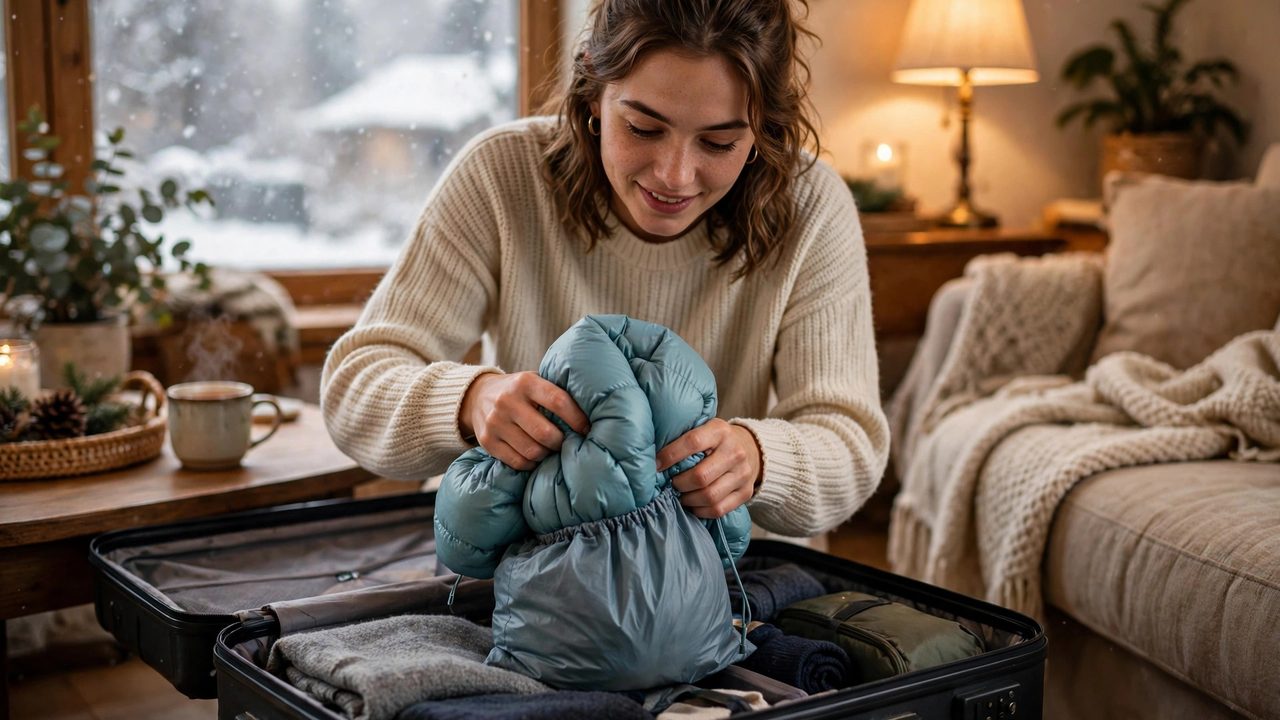
A winter trip punishes packing mistakes in both directions. Leave the warm layer at home and a delayed train, a cold rental hallway or an evening walk back from dinner becomes the memory of the trip. Bring a bulky coat instead and half the suitcase is gone before a single sweater goes in. That is exactly the problem the best lightweight packable down jackets for winter travel are built to solve: real down insulation that compresses into a corner of a carry-on, a weekender or a daypack, then shakes back out at the destination ready to wear.
This guide is written for the home reader planning winter travel, not for alpine expeditions. The jackets below are the kind of layer that lives by the front door at home, goes into the car for a weekend away, and earns its place in luggage because it weighs little, packs small and works over everything from a flannel shirt to a thermal base layer. Every pick is a real down jacket sold new, and every specification in this article is reported only as the maker lists it. Where a maker does not publish a fill weight or a packed size, this guide says so plainly instead of guessing, and no jacket here carries an invented temperature rating.
A quick note on fit and scope before the picks. Most packable down jackets are cut as mid-layers first and outer layers second, so the same jacket can feel trim over a T-shirt and snug over a chunky knit. Sizing notes from each maker matter more than usual with this category, and the buying guide near the end walks through how to read them. The six jackets below span hooded and hoodless designs, fill powers from the high fives to eight hundred on the wider market, and pack formats from stuff sacks to jackets that fold into their own pocket.
Quick verdict
For most winter travelers, the Eddie Bauer CirrusLite Down Jacket is the easiest recommendation: the maker lists 650 fill down in a nylon shell with a water-repellent finish, and the whole design is built around being an ultralight, packable traveler. If you want the warmest-feeling construction on this list, the Columbia Voodoo Falls 590 TurboDown II Jacket pairs its down blend with a heat-reflective lining the maker lists as Omni-Heat. The Marmot Highlander Jacket is the technical pick, with 700 fill down treated for moisture resistance and a shell that packs into its own pocket. On a tighter packing brief, the Wantdo Men’s Packable Down Jacket and the Bakery Men’s Down Jacket Hooded Packable both use duck down in nylon shells that stuff down small, while the 32 Degrees Men’s Ultra-Light Down Packable Jacket is the simplest, lightest-duty option for milder winter itineraries and heavy layering.
Comparison table
| Product | Fill the maker lists | Shell the maker lists | How it packs | Best for |
|---|---|---|---|---|
| Eddie Bauer Men’s CirrusLite Down Jacket | 650 fill Responsible Down Standard down | Nylon with StormRepel DWR finish | Ultralight, packable design | All-round winter travel |
| Columbia Men’s Voodoo Falls 590 TurboDown II Jacket | 590 TurboDown: RDS down plus polyester fill | 100% nylon, water resistant | Packs into its own interior pocket | Colder destinations, layering |
| Marmot Men’s Highlander Jacket | 700 fill down with Down Defender | Pertex Quantum recycled fabric | Packs into its own pocket | Technical travel, damp cold |
| Wantdo Men’s Packable Down Jacket | RDS duck down | 20D 400T nylon, windproof coating | Small carry bag included in the design | Carry-on-only trips |
| 32 Degrees Men’s Ultra-Light Down Packable Jacket | Down, 580 fill power as the maker lists | 100% nylon shell, polyester lining | Packable, pouch format | Mild winter trips, layering |
| Bakery Men’s Down Jacket Hooded Packable | 90% white duck down, 650 fill power | Shell and lining 100% nylon | Packable hooded design | Hooded warmth on a simple brief |
How we selected
Selection started with the category definition itself. A jacket only qualified if it was a genuine down jacket, meaning the maker lists down as the insulation, rather than a synthetic puffer using down in its name as a style word. It also had to be lightweight and genuinely packable, meaning the maker lists a packable design, a stuff sack or carry bag format, or the ability to pack into its own pocket. Jackets that were simply winter coats with no compression story were left out, however warm they looked.
Each candidate was then checked on opened pages. The maker’s own listing and the Amazon product page had to agree on the essentials: the brand, the exact model name, the fill the maker lists, and the shell fabric the maker lists. The Amazon page also had to show a live offer sold new at the time of checking; a page showing no featured offer does not count as verified, and any jacket that failed that check was replaced rather than written up from memory. That availability step is why this list contains six jackets rather than a longer, softer list padded with models that are hard to actually buy.
Honesty rules shaped the write-ups as much as the shortlist. Fill power, fill weight, shell fabric and packability are reported only as each maker lists them. No temperature ratings have been invented or borrowed from review sites, because down jackets do not carry a single standardised warmth rating and a number copied from a forum would mislead more than it helped. There are no medical or therapeutic claims anywhere in this guide, and no claim that any of these jackets will keep you warm in conditions the maker never described. Where a specification could not be verified on an opened page, the jacket was either described without that detail or excluded entirely.
Finally, the mix was balanced for travel use at home and away. The list includes a hooded and hoodless balance, a reflective-lined option for people who run cold, a treated-down option for damp climates, and simpler budget constructions for travelers who pack a down layer as insurance rather than as their main coat. If your winter travel is mostly city-based, with a shell or a heavier coat available at home for the coldest weeks, at least one of these six should match the way you actually pack.
Top picks
Eddie Bauer Men’s CirrusLite Down Jacket
The CirrusLite is the jacket this category is named for. Eddie Bauer describes it as ultralight and packable, a consummate traveler whether the destination is across town or far off the beaten path, and the specification supports the pitch. The maker lists 650 fill Premium Down insulation, responsibly sourced and certified to the Responsible Down Standard, inside a nylon shell. That fill power sits in the productive middle of the packable range: lofty enough to compress well and recover its puff when unpacked, without the delicate feel of the very highest-loft shells.
The shell finish matters on winter trips because down loses its loft when it gets wet. The maker lists a StormRepel durable water-repellent finish, described as causing moisture to bead and roll off rather than soak into the fabric. That is a shedding finish for splashes, drizzle and wet snow brushed off quickly, not a waterproofing claim, and this guide treats it exactly that way. Under a shell jacket on a properly wet day, the CirrusLite works as the insulating mid-layer; on a dry, cold sightseeing day it is the outer layer on its own.
Details are kept deliberately simple, which is part of the travel appeal. The maker lists secure zip side pockets, a higher neck for extra warmth, elastic cuffs and hem that help seal out cold, and a classic fit designed to fit over midweight layers. The average length the maker lists for the regular size is 27.5 inches, a hip-length cut that layers under a longer coat without bunching and does not ride up when you sit on a train or in a car. There is no long feature list to learn, no removable parts to lose in a hotel room, and nothing about the design that dates quickly in photos.
For packing, the value is in how forgettable the jacket is in a bag. It compresses into the gaps around shoes and wash bags rather than demanding its own compartment, and because the fit is a classic rather than athletic cut, it goes over the sweaters most people actually travel with in winter. Travelers building a one-bag winter kit around a separate rain shell will find this the most natural first pick on the list.
Buy it if: you want one proven, simple packable down jacket for general winter travel, with 650 fill down as the maker lists it, a water-repellent shell finish, and a classic fit that layers over midweight clothing.
Skip it if: you want a hood built in, since this is the hoodless jacket design, or you want a heat-reflective lining or treated down, which are the Columbia and Marmot picks below instead.
Columbia Men’s Voodoo Falls 590 TurboDown II Jacket
The Voodoo Falls takes a different route to warmth per packed inch. Instead of relying on down alone, the maker lists a 590 TurboDown construction that combines RDS certified down with 40 grams of polyester insulation, and lines the jacket with Omni-Heat, the maker’s thermal-reflective lining. Columbia describes that lining as a metallic dot pattern designed to retain body heat while the fabric remains breathable, and describes the jacket overall as one of the warmest, softest and lightest jackets it makes. Those are the maker’s own characterisations, and they explain the design logic: the reflective lining does part of the work, so the insulation package can stay slim enough to pack.
The shell is 100% nylon and water resistant, with the maker’s Omni-Shield rain and stain resistance described on the listing. For travel, the headline feature is the packing format: the maker lists this as a packable jacket that packs down into its own interior pocket. A jacket that becomes its own pouch removes the classic travel failure mode of losing a separate stuff sack somewhere between the airport and the hotel, and the packed jacket doubles neatly as a travel pillow substitute on a long coach or rail leg, a trick regular winter travelers will recognise.
The pocket layout suits travel days. The maker lists two zippered hand pockets and an interior security pocket, which is the right split for a phone and card wallet carried close while sightseeing. Binding at the cuffs and a drawcord adjustable hem let you close down the openings when the wind picks up along a riverfront or an exposed platform, and the regular fit is listed in extended sizing, which broadens the range of travelers this jacket can serve without a separate big-and-tall search.
One honest note on the insulation blend: because part of the fill is polyester, this jacket will not compress quite like a pure high-fill down jacket of the same warmth, and purists who want down and only down should look at the Eddie Bauer or Marmot picks. In exchange, the blend and the reflective lining make it a forgiving choice for mixed winter weather and for travelers who tend to feel the cold while standing still at markets, stations and viewpoints.
Buy it if: you run cold, travel to colder winter destinations, and like the idea of a heat-reflective lining and a jacket that packs into its own interior pocket with no separate sack to lose.
Skip it if: you want a pure down fill with a single fill-power figure, or the smallest possible packed size above all else, since the blended insulation and lining add a little bulk compared with the simplest picks.
Marmot Men’s Highlander Jacket
The Highlander is the most technical jacket on this list, built by a maker whose home ground is mountain insulation rather than high-street winter wear. The maker lists 700 fill power down, treated with Down Defender, Marmot’s moisture treatment described as giving the down an extra level of protection in damp conditions. Standard down is at its worst when humidity, drizzle and repeated packing leave it flat; treated down is the industry answer to exactly that travel pattern, and it is the main reason to choose this jacket over a simpler 650 fill design.
The shell the maker lists is Pertex Quantum, a lightweight recycled fabric described as windproof and water resistant, which helps the down keep its loft in gusty, exposed places where a packable jacket is usually working hardest. The jacket packs into its own pocket, keeping the travel format as tidy as the Columbia’s, and the feature set is practical rather than decorative: zippered hand pockets, an external zippered chest pocket for the items you reach for most, elastic bound cuffs, and an adjustable drawcord hem to seal the waist when the temperature drops in the evening.
Marmot positions the Highlander for cold resort days and everyday winter wear, and that framing translates well to travel. It is the pick for itineraries that mix town and trail: a morning walk above the village, a chairlift-adjacent viewpoint, then dinner in the same layer. The straight baffle construction gives it a plainer, more outdoor look than the fashion-leaning picks, which some travelers will count as a plus and others as the reason to choose the Eddie Bauer instead.
Because the fill power the maker lists is higher than most of this list, the Highlander also earns its keep as a home layer beyond the trip itself. It works as the warm mid-layer under a waterproof shell for dog walks, school runs and cold commutes, then goes back into the suitcase when the next winter break comes around. If you buy one packable down jacket and expect it to work hard in both roles for years, this is the strongest candidate here.
Buy it if: you travel to damp, windy winter places, want treated 700 fill down as the maker lists it, and value a chest pocket and a shell fabric with a technical pedigree.
Skip it if: your winter travel is mild and mostly urban, where the treated down and windproof shell are more capability than the itinerary needs, or you prefer a hooded design in this non-hooded jacket version.
Wantdo Men’s Packable Down Jacket
Wantdo’s packable down jacket is built around the carry-on problem in its purest form. The maker lists a shell of 20D 400T nylon, a light, fine fabric chosen so the jacket folds into a small carry bag for easy packing and storage when travelling or outdoors. The insulation is duck down with RDS certification as the maker lists it, described as providing the insulation while the lightweight fabric keeps the whole jacket easy to layer. A windproof coating is listed in the construction, which matters for a shell this light, since thin nylon alone lets gusts cut straight through the baffles.
The travel details are well judged. A small carry bag means the jacket travels as a defined parcel in the suitcase rather than a loose layer wrapped around other packing, and it can be clipped or tucked into a daypack as the just-in-case layer for a change of altitude or an evening temperature drop. The pocket count runs higher than the premium picks: zippered hand pockets, a chest pocket and internal pockets appear across the maker’s description, giving the traveler somewhere separate for a passport, a phone and a pair of gloves without opening the main bag.
Elastic cuffs and a straightforward hooded-or-collar silhouette, depending on the version selected on the listing, keep the design simple. This is not a jacket with a technical story to tell about treated down or reflective linings, and it should not be bought as one. Its case is compression, weight and simplicity: a genuine down layer, from a maker that lists RDS duck down, that disappears into luggage and comes out ready for a cold platform or a frosty morning walk to the bakery.
Sizing deserves a careful read on this pick. Lightweight travel jackets in this class are often cut closer than the classic-fit American brands above, so checking the maker’s own size chart against a jacket you already own is worth the two minutes it takes, especially if you plan to layer a thick sweater underneath for the coldest days of the trip.
Buy it if: carry-on space is the whole brief, and you want a genuine down jacket that packs into its own small carry bag, with a light 20D nylon shell as the maker lists it and pockets for travel documents.
Skip it if: you want a named technical shell fabric, treated down, or a classic roomy fit, which the Marmot and Eddie Bauer picks above are better built to provide.
32 Degrees Men’s Ultra-Light Down Packable Jacket
The 32 Degrees Ultra-Light is the minimalist of the group. The maker lists a shell of 100% nylon with a 100% polyester lining, a regular fit, a stand collar and a body length of 27 inches in the medium size. The down fill power the maker lists for the men’s Ultra-Light Down Jacket is 580, the lowest figure on this list, and this guide reports it exactly as listed rather than rounding it into company it does not keep. Lower fill power means less loft per ounce, so the honest way to read this jacket is as a light winter layer, not a deep-winter coat.
That positioning suits a real and common travel pattern. Many winter trips are not actually deep-winter trips: a city break where the cold is brisk rather than bitter, a drive between heated houses and heated restaurants, or an itinerary built around layering, where the down jacket is the middle of three layers rather than the only defence. In those patterns an ultra-light packable earns its place precisely because it is not overbuilt. It packs into a pouch format as the maker lists, takes almost no luggage room, and is the layer most likely to be carried on the days when the forecast is uncertain.
The design keeps to the essentials: a full zip front, two pockets, a stand collar that keeps the neck covered without a hood to manage, and machine-washable care as the maker lists it. For travelers who keep a down layer in the car through the whole winter at home, this is also the most natural glovebox-and-go option on the list, light enough to forget and present on the one cold evening that was not in the plan.
Be clear-eyed about the limits before choosing it. A 580 fill jacket worn alone on a still, freezing night in an exposed place will feel like what it is, a light layer, and travelers heading somewhere properly cold should either layer it under a shell with a warm mid-layer beneath, or step up to the Columbia or Marmot picks. Bought with the right itinerary in mind, it is a tidy, honest piece of travel kit; bought as a main winter coat for a severe climate, it would be the wrong tool.
Buy it if: your winter travel runs mild, your packing style is layering, and you want the simplest ultra-light down jacket on the list, with the maker’s listed 580 fill power and a clean stand-collar design.
Skip it if: the destination is properly cold and this would be your only warm layer, or you want a hood, a chest pocket or treated down, all of which sit elsewhere in this guide.
Bakery Men’s Down Jacket Hooded Packable
The Bakery jacket closes the list with the combination many travelers ask for first: a hood, a high duck down content, and a packable format. The maker lists the insulation as 90% white duck down with a 650 fill power, and the shell and lining as 100% nylon. That fill specification, reported exactly as the maker lists it, puts this jacket level with the Eddie Bauer on fill power while adding the hood that the CirrusLite jacket version does not have, which changes how the jacket behaves on cold evenings when a hat was left at the hotel.
The maker describes the jacket as a lightweight, water-resistant, insulated down jacket, and lists the practical details a traveler uses daily: two front zip hand pockets, a drawstring hem, elasticised cuffs and a fixed hood designed as part of the jacket rather than a detachable accessory. Zipped hand pockets matter more in travel than at home, because hands go in and out of them at ticket barriers and café counters all day, and a phone or a folded map stays put when the pocket is closed.
As a packing proposition it follows the same logic as the rest of this list: a nylon-shelled down jacket that compresses for the suitcase and comes back out as the main outer layer for dry, cold days, or as the insulating layer under a longer coat for a home winter as well as a trip. The hooded format also makes it the easiest of these six to wear as a single-layer answer on a simple itinerary, one jacket over a sweater, without a separate hat-and-hood plan.
The trade-off is brand infrastructure. Bakery is a marketplace label rather than a heritage outdoor maker, so the listing, rather than a deep catalogue of technical documentation, is the specification source, and this guide has written the jacket up strictly from what that listing states. Travelers who value a maker’s long public record on a model should weigh the Eddie Bauer and Marmot picks more heavily; travelers who value the hood-and-fill combination in a packable format will find this jacket answers the brief directly.
Buy it if: you want a hood built in, a high duck down content with 650 fill power as the maker lists it, and a packable nylon shell for straightforward winter trips.
Skip it if: you prefer a heritage outdoor brand with a long published record for the model, or a hoodless jacket for cleaner layering under a hooded shell.
Buying guide
Read fill power and fill weight as a pair. Fill power describes how much volume one ounce of down occupies: higher fill power lofts more, traps more still air and compresses smaller for the same warmth. Fill weight is simply how much down is in the jacket. A high fill power with very little fill can be a cool jacket, and a modest fill power with generous fill can be a warm one. Makers do not all publish both figures, and this guide reports each only where the maker lists it. When only fill power is published, treat it as a guide to compressibility and quality of down, not as a warmth promise on its own.
Understand what packable actually means on the listing. There are three formats in this guide. Some jackets pack into their own pocket, which is the tidiest system and the one to choose if you dislike loose accessories. Some come with a separate stuff sack or carry bag, which packs slightly smaller in some cases but can be mislaid. Some are simply described as packable, meaning the down compresses well in luggage without a dedicated pouch. All three work for winter travel; the difference is tidiness, not warmth. Whichever format you choose, store the jacket uncompressed at home, hung or loosely bagged, so the down keeps its loft between trips.
Match the shell to the weather you actually meet. The makers here list nylon and recycled technical fabrics, most with a water-repellent finish. A durable water-repellent finish sheds splashes and light drizzle and helps keep the down dry in wet snow, but none of these jackets is a rain jacket, and none is described that way by its maker. If the itinerary includes real rain, pack a waterproof shell to wear over the down layer. In dry, cold, windy places, a windproof-listed shell such as the Marmot’s earns its place, because wind stripping heat through the baffles is the most common way a light down jacket feels colder than expected.
Choose hooded or hoodless by layering plan, not habit. A hood adds real warmth around the head and neck and removes the need to pack a hat for cold evenings. It can also bunch under the hood of a waterproof shell or the collar of a heavier coat. If the down jacket will mostly be worn on its own, a hood is usually the warmer choice. If it will mostly live under other layers, hoodless designs such as the CirrusLite jacket and the Highlander jacket sit flatter and layer more cleanly. Many travelers own one of each over time, starting with the format that matches their next trip.
Get the fit over your bulkiest travel sweater. Packable down jackets are mid-layers by design, and cuts vary from classic to close. Before a trip, try the jacket over the thickest knit you plan to travel with, zip it fully, sit down, and reach forward as if lifting a bag into an overhead rack. If the hem rides up sharply or the shoulders bind, the size is wrong for layering, whatever it feels like over a T-shirt. Makers’ own size charts, checked against a jacket you already own, are more reliable than generic size labels in this category.
Care for down properly and it will outlast the itinerary. Follow the maker’s care instructions for the specific jacket. As a general pattern for down, that means gentle washing with a down-appropriate detergent when the jacket picks up city grime, thorough drying until the baffles feel fully lofted again, and never packing the jacket away damp in a stuff sack for weeks at home. A jacket that comes out of the suitcase flat usually recovers with a good shake and some air time; a jacket stored compressed and damp is the one that never quite recovers.
FAQ
How warm is a packable down jacket for winter travel?
There is no single standardised temperature rating for down jackets, and makers list their jackets in different ways, so this guide does not assign warmth numbers. In practical terms, the jackets here are winter layers designed for cold travel days, worn alone in dry cold or under a shell when wind and wet weather arrive. For a severe-climate trip, treat a packable down jacket as one part of a layering system rather than the whole system.
What fill power should I choose?
Fill power in this guide runs from the 580 the maker lists for the 32 Degrees jacket to the 700 the maker lists for the Marmot Highlander, with 650 fill designs in between. Higher fill power generally means more loft and better compression for the same weight of down. For most winter travelers, a well-made 650 fill jacket is a sound centre of the range; choose higher fill power if packed size matters most, and remember that fill weight, which not every maker publishes, matters alongside it.
Can a packable down jacket replace a winter coat on a trip?
For many city and resort itineraries, yes, especially worn over a warm sweater and with a hat and gloves packed alongside. For trips built around long periods standing still in severe cold, or around wet weather, a packable down jacket works better as the insulating layer under a longer coat or a waterproof shell. The honest answer depends on the destination, and the makers of these jackets describe them as lightweight layers and travel jackets rather than expedition coats.
Will rain ruin a down jacket?
Down loses loft when it soaks through, and loft is where its warmth lives, so sustained rain is the enemy of any down layer. The water-repellent finishes the makers list on these shells shed light moisture and buy time, and treated down such as the Marmot’s Down Defender is listed as an extra level of moisture protection. None of that makes a down jacket a rain jacket. Carry a shell for wet days, and dry the jacket fully before packing it away.
How should I pack a down jacket in a suitcase?
Use the format the maker provides: its own pocket where listed, or the stuff sack or carry bag included in the design. Place the packed jacket in a corner or along the edge of the case where it fills dead space, and unpack it on arrival so the down can loft again. Avoid vacuum-compressing a down jacket for longer than the trip itself, and store it uncompressed at home between journeys.
Is duck down or goose down better for travel?
Both are used in the jackets in this guide, and the useful comparison is not the bird but the specification the maker lists: fill power, fill weight where published, and the shell and pack format around it. A well-specified duck down jacket, such as the 650 fill designs listed here, is a sound travel jacket. Judge each jacket on its listed specification rather than on the type of down alone.
Conclusion
A good packable down jacket changes how a winter trip is packed: the warm layer stops being a decision and becomes a habit, folded into the corner of the bag every time. Start with the Eddie Bauer CirrusLite for the most straightforward all-round answer, step up to the Columbia Voodoo Falls or the Marmot Highlander if your destinations run colder or damper, and look at the Wantdo, 32 Degrees and Bakery jackets when packed size, simplicity or a built-in hood leads the brief. Whichever you choose, buy it from the listed specification rather than a warmth slogan, layer it honestly for the weather at the destination, and store it loose at home so it is ready, lofted and waiting by the door for the next winter trip.
More from Amazon
Programs that pair well with the guide above. Offers and eligibility are set by Amazon and may change.
Collect the home and kitchen items you want in one registry that guests can shop from.
Create a wedding registrySet up recurring deliveries of everyday items on eligible products. Terms and savings are set by Amazon.
Explore Subscribe & SaveFree shipping on eligible items, Prime Video and more. Eligible new members can start with a free trial.
Start a Prime free trialAudiobooks and podcasts to listen to on the go. Eligible new members can start with a free trial.
Try Audible freeAs an Amazon Associate we earn from qualifying purchases.










Write Your Review
No reviews yet. Be the first to share your experience!