We independently review everything we recommend. When you buy through our links, we may earn a commission. As an Amazon Associate we earn from qualifying purchases.
Best House Slippers for Toddlers: 6 Cozy Picks (2026)
Find the best house slippers for toddlers with grip soles, closed heels and easy closures, in six verified picks sized from infant through little kid sizes.
Find the best house slippers for toddlers with grip soles, closed heels and easy closures, in six verified picks sized from infant through little kid sizes.
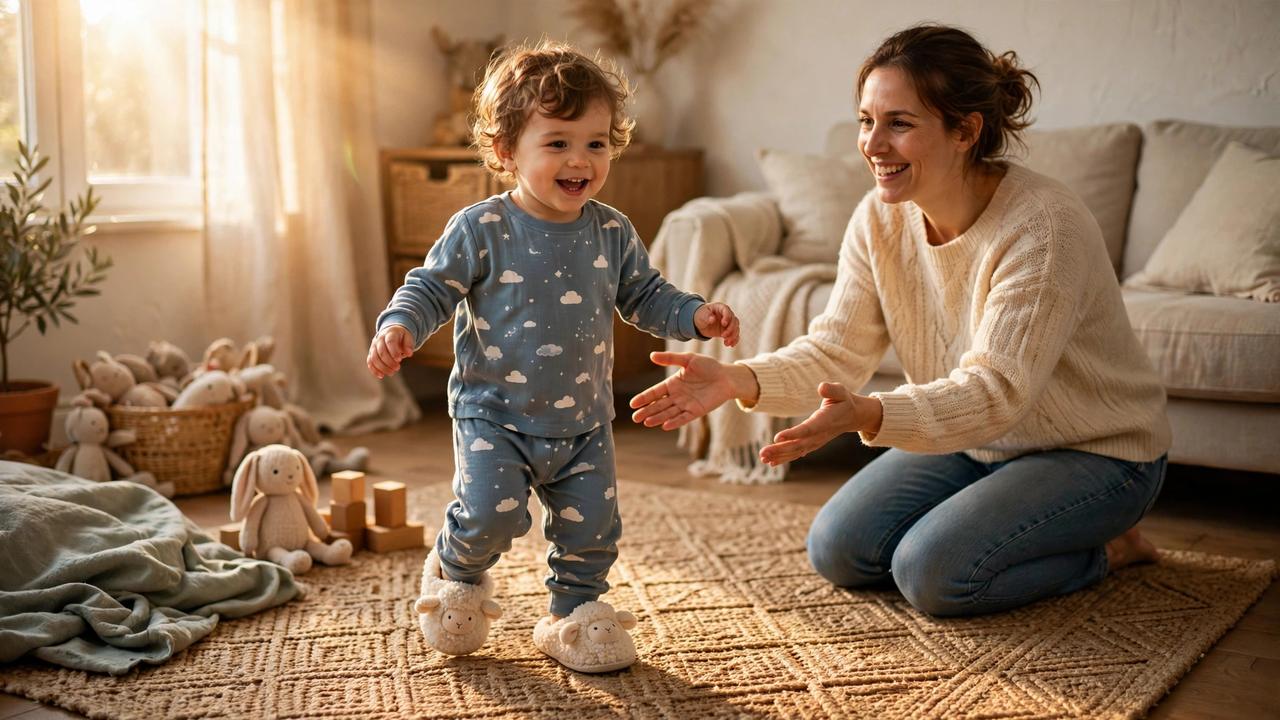
Cold floors are the first thing a toddler notices in the morning, and the last thing most parents want is a pair of house slippers that ends up kicked off under the sofa within ten minutes. The best house slippers for toddlers solve three problems at once: they keep small feet warm on hard floors, they give the sole some grip on wood, laminate and tile, and they stay on through the constant cycle of walking, crouching, climbing onto furniture and sitting down again. That sounds simple, but toddler sizing, closures and sole materials vary a lot from one maker to the next, and a slipper that works beautifully for a steady three-year-old can be completely wrong for a younger child who has only just started walking around the house with confidence.
This guide brings together six pairs that are genuinely built for the toddler size range, rather than scaled-down versions of older children’s slippers. Each pick below was checked on its maker’s listing, and every specification in this article is phrased the way the maker lists it, including the size ranges. You will find plush animal designs for children who need a reason to keep their slippers on, a low-profile knit style that behaves more like a sock with a sole, an adjustable hook-and-loop pair for feet that are hard to fit, and simple fur-lined slip-ons for maximum warmth. None of them is the right answer for every household, so each review ends with a plain Buy it if and Skip it if, and the buying guide at the end walks through sizing, soles, closures and washing in the order that actually matters when you are choosing.
Quick verdict
If you want one pair that covers the widest range of toddler households, start with the Dearfoams Kids’ Whimsical Animal Critter Washable Slipper. The maker lists a long run of critter designs, an easy slip-on shape and machine washable care, and the range reaches from toddler sizes up through little kid and big kid sizes, which makes hand-me-downs and sibling matching realistic. If staying power is your main concern, the JOINFREE Toddler Adjustable House Shoes are the strongest pick here, because the maker lists a dual hook-and-loop closure that can be adjusted for both narrower and fuller feet, plus a wide opening that lets the foot sit without being squeezed. For the youngest toddlers in this roundup, the Drecage Toddler Bunny Slippers start at an infant size the maker lists as 5-5.5 Infant and build the whole design around a soft plush upper, a padded footbed and a textured TPR outsole. The ditont Toddler Slippers suit families who want the lightest, most flexible option for spring, autumn and winter wear, with an elastic knitted top line that a child can pull on alone. The Centipede Demon Plush Warm Slippers are the warmest-feeling slip-on here, with a fur-lined interior and a cover heel design. The OWIF Toddler Slippers round out the list with a hard rubber sole, a plush body and machine washable care for households that expect slippers to be washed often.
The products in this guide
JOINFREE Toddler Adjustable House Shoes
The JOINFREE house shoe is built around adjustability, which is the feature most toddler slippers simply do not offer
Selection started with the size range, because a slipper cannot be a toddler slipper if the maker only lists it in older children’s sizes. Every pick here includes sizes the maker explicitly labels Toddler, and most also list an infant starting size or little kid sizes above the toddler range. We read each maker’s own listing for the upper material, the lining, the sole material, the closure type and the care instructions, and we only used details the maker states. Where a maker lists a sizing warning, such as a style that runs small, that warning is carried into the review rather than smoothed over, because it changes which size a parent should order.
Next came the sole. Indoor toddler slippers live on smooth floors, so each pick had to have a sole the maker describes in grip terms: a rubber sole, a TPR outsole with textured tread, an anti-slip pattern, or a slip-resistant outsole in the maker’s own wording. Pure fabric soles with no grip description were left out. After that we looked at how the slipper stays on. Closed and covered heels, elastic top lines and adjustable straps all count in a slipper’s favour, because an open-backed scuff is the style toddlers lose most often. Finally, we checked care instructions, since toddler slippers collect crumbs, spills and playground dust tracked in from the door. Five of the six makers here list machine washable care in some form, and the one style with more specific instructions, the Dearfoams critter slipper, spells out exactly how the maker wants it washed and dried. Availability was checked on each product’s Amazon page as part of selection, and only pairs with a live new offer were kept in the list.
The Dearfoams critter slipper is the most playful design in this roundup, and for many toddlers that is not a superficial point. A child who chooses the animal is a child who asks for the slippers, and the maker lists a wide cast to choose from, including Unicorn, Cat, Dog, Shark, Dinosaur, Cow, Bear, Fox and Raccoon. The listing describes the range as cute, cozy cartoon character critter slippers with an easy on and off design, so the morning routine is a simple slip-on rather than a negotiation with straps or laces. The closed shape covers the whole foot, which keeps the slipper in place better during the constant up-and-down of toddler play than an open-backed clog style, and it keeps toes covered on cold floors from the first step out of bed.
The single most important detail on this listing is the maker’s own sizing warning: the maker lists that these kids critter slippers tend to run small, and recommends ordering the next size larger to guarantee comfort and to accommodate growth. Treat that as part of the product, not as fine print. If your toddler sits between sizes, the maker’s guidance points firmly upward, and the extra room is easier for a toddler to manage in a closed slipper than a size that presses on the toes. The size run on the listing is broad, reaching from toddler sizes such as 9-10 Toddler up through little kid and big kid sizes, so this is also the easiest pick here for matching siblings of different ages in the same design.
Care is the other strong point. The maker lists these slippers as machine washable, and gives specific instructions: machine wash in cold water on a gentle cycle and lay flat to dry. That flat-dry step matters if you are used to throwing everything in the dryer, so factor it into laundry day. In daily use, this is the pair to choose when the design itself is the feature that will keep slippers on feet, when you want a gift-able pair with a character a child already loves, and when you want the reassurance of a long-established slipper brand’s own sizing and care guidance printed right on the listing.
Buy it if: your toddler will keep slippers on for the fun of the design, you want machine washable care with clear instructions from the maker, or you need one design that spans toddler through big kid sizes for siblings.
Skip it if: you cannot lay slippers flat to dry, or your toddler is hard to size and you do not want to follow the maker’s size-up guidance to get the fit right.
The JOINFREE house shoe is built around adjustability, which is the feature most toddler slippers simply do not offer. The maker lists a dual hook-and-loop design, and describes it as meeting the needs of both chubby and skinny feet, with a wide opening that allows feet to sit naturally without being squeezed. For parents whose toddler falls between standard sizes, or whose feet look narrow one month and fuller the next, that adjustability is the difference between a slipper that stays on all morning and one that works loose at the heel by breakfast. The maker also lists the closure as easy for kids to put on by themselves, which makes this a good independence pair for toddlers who insist on doing it alone.
The upper and lining lean warm and soft. The maker lists a soft, cozy faux suede upper with a high-density short fleece warm lining, and describes the shoe as super lightweight with a barefoot feel and a flexibility closer to socks than to stiff shoes. Underneath, the maker lists a flexible and sturdy rubber sole with an anti-slip pattern, described as suitable for walking on surfaces such as carpets and hardwood. That combination, a sock-like upper on a real rubber sole, is exactly the middle ground many families want for indoor wear: soft on top, grippy underneath, and structured enough to stay put.
Sizing is unusually well documented. The maker lists a size chart that runs from 3-4 Infant through 6-7 Toddler and 8-9 Toddler, up to 11.5-12.5 Little Kid, with a heel-to-toe measurement for each size, so you can measure a foot at home and match it to the chart rather than guessing from age. The maker lists the style in a long run of designs, including Rabbit, Cat, Deer, Giraffe and dinosaur options, and lists care as machine or hand washable, foldable for travel. Choose this pair when fit is the problem you are solving, when one slipper has to adjust as feet grow, and when you want the sizing decision backed by measurements the maker publishes rather than by age labels alone.
Buy it if: your toddler’s feet are hard to fit, you want a closure a child can fasten alone, or you want a published heel-to-toe chart to size from.
Skip it if: you prefer a pure slip-on with nothing to fasten, or your household wants a thick plush slipper rather than a lighter sock-style shoe.
The Drecage bunny slippers are the pair aimed most squarely at the youngest end of this roundup. The maker lists sizes starting at 5-5.5 Infant, continuing through 6-6.5 Toddler, 7-8 Toddler and 8.5-9 Toddler, and then into little kid and big kid sizes, and the listing gives a foot length for each size band, from 13 cm for the smallest size upward. The maker recommends leaving 0.5 cm of growing room in shoes, which is a useful, concrete rule to apply when you measure. The design itself is a three-dimensional bunny, with sweet bunny faces and playful 3D ears, in both full wrapped and half wrapped versions on the same listing, so you can choose more coverage or a more open fit within one product family.
Comfort details are plush from top to bottom. The maker lists a soft plush fabric with a fuzzy lining that wraps little feet in warmth, and a soft padded footbed that adds a plush, cushioned feel under every step. Underneath, the maker lists a flexible TPR outsole with a textured tread for indoor grip, described as helping little feet move across common household floors. For a young toddler, that pairing of a soft, forgiving upper with a treaded sole is a sensible balance: nothing stiff presses on the foot, and the sole is doing the gripping work on smooth floors.
This is the pair to pick for a first proper house slipper, for a bunny-obsessed toddler, or as a gift, which the maker explicitly positions it for, listing birthdays, holidays and Christmas among the occasions it suits. Because the size run starts so small and the foot lengths are printed on the listing, it is also one of the easier pairs here to size for a child you cannot measure in a shop, as long as you follow the maker’s own growing-room guidance and pick the full wrapped version if staying on is the priority.
Buy it if: you need the smallest starting size in this roundup, your toddler loves animal designs, or you want printed foot lengths and a growing-room rule from the maker.
Skip it if: you want an adjustable closure, since this is a slip-on, or you prefer a plain slipper without a character design.
The ditont slipper takes the opposite approach to plush: it is a light, low, flexible house shoe that behaves like a sturdy sock. The maker lists ultra-lightweight, stretchy materials for convenience and easy movement, an elastic fabric upper lining, an EVA cushion insole and a soft rubber sole. The top line is the detail that makes the design work. The maker lists a smooth, elastic knitted top line that allows for easy on and off, and notes that a child can do it himself, which will matter to any parent of a toddler in the doing-it-alone phase. Because the upper stretches, this is also a forgiving fit for feet that are between sizes, within the size you choose.
The maker lists the non-slip rubber soles as the grip feature for indoor exploration, and positions the slipper for spring, autumn and winter wear rather than deep-winter warmth alone. That seasonal range is honest and useful: this is the pair that stays in rotation for most of the year, in homes where a thick fur-lined slipper would be too warm outside the coldest weeks. The listing also describes the design as flexible and lightweight enough to fold and carry when you go out, which makes it a practical spare pair for grandparents’ houses, nursery bags and trips, where a bulky slipper would be left behind.
Care is simple. The maker lists the slippers as both hand and machine washable, and notes that hand washing will make them last longer. The size range on the listing is wide, with toddler sizes the maker lists including 3.5-4.5 Toddler, 5-6.5 Toddler, 7-8 Toddler and 9-10 Toddler, plus warmer lined variants within the same listing family. Choose ditont when you want the least shoe-like slipper here, when independence at dressing time is the goal, and when your floors need grip more than your rooms need heavy insulation.
Buy it if: you want a lightweight, flexible slipper a toddler can pull on alone, for use across spring, autumn and winter.
Skip it if: you need the warmest possible slipper for very cold floors, or a structured heel and strap to keep a determined kicker shod.
If warmth is the whole point, this is the pair built for it. The maker lists a warm velvet upper material and a warm, soft plush inside material, describes the upper as breathable and comfy warm plush, and describes the thickened, soft fur lining as the layer that protects against the cold of winter. In a house with stone, tile or draughty wooden floors, that lining is the feature a toddler actually feels, from the first cold kitchen crossing of the day to evening bath time. The maker lists the closure type as cover heel, and describes the cover heel design as more convenient to put on and take off and more suitable for kids’ and toddlers’ feet, which addresses the classic slip-on problem of heels slipping out at every step.
The sole is a step up in substance as well. The maker lists a TPR rubber sole, and describes the anti-skid slippers as having a thickened insole and outsole for grip and cushioning indoors and outdoors. That makes this the most outdoor-tolerant slip-on in the roundup for brief trips onto a dry porch or doorstep, though it remains, by design, a house slipper first. The maker lists the seasons as spring, summer and winter, which is best read as a sign of how broadly the maker positions the style rather than as a promise about summer comfort in a fur-lined shoe; in practice, this is a cold-weather pair.
Sizes the maker lists run through 5-6 Toddler, 7-8 Toddler and 9-10 Toddler, and on into little kid sizes, with a variety of cartoon styles on the listing. There is no adjustable closure and no published foot-length chart on this listing, so use the brand size label carefully and consider the covered heel as your staying-on feature. Choose this pair when cold floors are the complaint, when you want a covered heel without straps to fasten, and when a thicker sole appeals for a house with mixed indoor surfaces.
Buy it if: your home has cold hard floors, you want a fur-lined interior with a covered heel, or you want a thicker TPR sole.
Skip it if: your home runs warm, or you need measurements and adjustability to get the fit right.
The OWIF slipper is the straightforward workhorse of this list: a plush slip-on body on a hard rubber sole. The maker lists the bottom as a hard rubber sole and describes it as a non-skid sole for indoor use and for walks around the neighbourhood, which makes this the pair for toddlers who treat the whole house, and occasionally the path outside the door, as their territory. A harder sole also holds its shape differently from soft fabric soles, so the slipper keeps a consistent footprint on smooth floors rather than folding under the foot.
The upper keeps things simple and warm. The maker lists a comfy, warm plush material, and the designs lean into the fun that gets slippers worn, with cute patterns the maker lists such as trucks and space faces among the colour and pattern options. The size run the maker lists includes 4-5.5 Toddler, 6.5-7.5 Toddler, 8-9 Toddler and 9.5-10.5 Toddler, continuing into little kid and big kid sizes, so most toddler feet fall somewhere inside this listing’s range. As a slip-on with no strap and no elastic top line described by the maker, fit depends on choosing the right size band, so measure and use the band that matches rather than sizing by age alone.
Care is where this pair quietly wins. The maker lists the slippers as machine washable, and states that you can use a washing machine to clean them without worrying about the 3D cute pattern deforming or shedding fuzzy material. For slippers that will be worn at the breakfast table, in the bathroom and everywhere between, washable-without-fuss is a genuinely practical feature. The maker positions the pair for pajama parties, bedrooms, living rooms and bathrooms, and as a gift for occasions from baby showers to birthdays. Choose OWIF when you want a hard-soled, washable, no-fuss slipper and your toddler’s size sits comfortably inside one of its listed bands.
Buy it if: you want a hard rubber sole, machine washable care the maker says will not deform the design, or a simple plush slip-on.
Skip it if: you need a strap or elastic to keep slippers on a very active toddler, since the maker lists this as a plain slip-on.
Buying guide
Start with the foot, not the age. Toddler shoe sizes are labels, not measurements, and makers do not all build to the same last. Where a maker publishes a heel-to-toe measurement or a foot length, as JOINFREE and Drecage do on their listings, measure your child’s foot and match the measurement. Where a maker only lists size bands, as with Centipede Demon and OWIF, pick the band whose range contains your child’s current size rather than the band named for their age. Drecage’s maker guidance to leave 0.5 cm of growing room is a good general rule to borrow when a listing gives you lengths. And take maker sizing warnings seriously: Dearfoams lists that its critter slippers run small and recommends ordering the next size larger, and ignoring a warning printed by the maker is the most common route to a return.
Match the sole to your floors. On carpet, almost any sole works. On wood, laminate, vinyl and tile, the sole is the product. Look for the maker’s own grip language: rubber soles, TPR outsoles with textured tread, anti-slip patterns and non-skid descriptions all appear on the listings in this guide. A hard rubber sole, like the one OWIF lists, gives a firm, consistent grip and holds up to brief outdoor steps. A softer, flexible sole, like the soft rubber sole ditont lists or the flexible TPR outsole Drecage lists, bends with the foot and feels less like a shoe. Neither is automatically better; the question is whether your toddler needs structure or flexibility more, and whether the slipper will ever step outside.
Decide how the slipper stays on. There are three honest answers in this roundup. An adjustable hook-and-loop closure, which JOINFREE lists in a dual design, can be tuned to the foot and refastened in seconds, and it is the strongest option for feet that are narrow, full or between sizes. An elastic top line, which ditont lists in knitted form, stretches over the foot and is the easiest for a child to manage alone. A covered heel, which Centipede Demon lists, keeps a slip-on seated at the back of the foot without anything to fasten. Plain open slip-ons are the simplest of all, but they ask the most of sizing accuracy. Think about your toddler’s habits: a child who removes footwear as a hobby needs a closure, while a child who dresses independently needs something they can operate.
Weigh warmth against the season. Fur-lined and plush-lined slippers, like the Centipede Demon pair with its warm velvet upper and plush interior, are built for cold floors and cold months. Lighter knit and sock-style slippers, like the ditont pair the maker lists for spring, autumn and winter, cover more of the year in a heated home. Fleece linings, like the high-density short fleece JOINFREE lists, sit between the two. Buying the warmest pair for a warm house produces sweaty feet and abandoned slippers, so match the lining to the floor temperature your toddler actually walks on, at the time of day they wear slippers most.
Plan for washing from day one. Toddler slippers get washed, so read the maker’s care line before you buy, not after the first spill. In this roundup, the maker lists machine washable care for the Dearfoams critter slipper with cold water, a gentle cycle and laying flat to dry; JOINFREE lists machine or hand washing; ditont lists both hand and machine washing and notes hand washing extends life; and OWIF lists machine washing without deformation of the design. If your household washes everything together and dries everything in the dryer, a lay-flat-to-dry instruction is a real commitment, and a simpler care routine may be worth more than any other single feature.
Use designs strategically. Animal faces, trucks, space patterns and favourite characters are not decoration for decoration’s sake at this age; they are the mechanism by which slippers stay on feet. Dearfoams lists nine critter options, Drecage builds its pair around 3D bunny ears, and JOINFREE and OWIF both list character and vehicle patterns. If your toddler resists indoor footwear, choosing the design together, from a shortlist you have already checked for size, sole and closure, is often the step that ends the resistance.
FAQ
What size house slippers should I buy for my toddler?
Buy from a measurement where the maker gives you one. JOINFREE lists a heel-to-toe measurement for each size from 3-4 Infant to 11.5-12.5 Little Kid, and Drecage lists a foot length for each band and recommends leaving 0.5 cm of growing room. Where a maker warns about fit, follow the warning: Dearfoams lists that its critter slippers run small and recommends the next size larger. Age labels alone are the least reliable guide on any of these listings.
Do toddler house slippers need a rubber sole?
On smooth floors, a sole the maker describes in grip terms makes a practical difference. Every pick in this guide has one: rubber soles on the JOINFREE, ditont and OWIF pairs, a TPR outsole with textured tread on the Drecage pair, a TPR rubber sole on the Centipede Demon pair, and a slip-resistant outsole in Dearfoams’ description of its critter range. On carpeted floors the sole matters less, and a lighter, more flexible style may be more comfortable.
Which closure is best for a toddler who keeps taking slippers off?
An adjustable closure gives you the most control. JOINFREE lists a dual hook-and-loop design described as meeting the needs of both chubby and skinny feet, with a wide opening so the foot is not squeezed. The alternatives in this guide are ditont’s elastic knitted top line, which stretches over the foot, and Centipede Demon’s cover heel design, which keeps a slip-on seated at the heel. A plain open slip-on is the easiest style for a toddler to remove.
Can these slippers be machine washed?
Most of them, per their makers. Dearfoams lists its critter slippers as machine washable in cold water on a gentle cycle, laid flat to dry. JOINFREE lists machine or hand washing, ditont lists both and notes hand washing helps them last longer, and OWIF lists machine washing without the 3D pattern deforming or shedding. Always follow the specific instructions on the listing for the pair you buy, since the details differ.
Are any of these suitable for brief outdoor use?
Two makers describe their soles in terms that include stepping beyond the living room. Centipede Demon describes its TPR sole for grip indoors and outdoors, and OWIF describes its hard rubber sole for indoor use and walks around the neighbourhood. JOINFREE lists occasions including kindergartens, gardens and parks for its rubber-soled shoe. These remain house slippers by design, so treat outdoor use as brief and on dry surfaces, as the makers frame it.
How long will one pair last before my toddler outgrows it?
That depends on growth, not wear, for most families, which is why the size runs matter. Drecage and JOINFREE both start at infant sizes and continue through toddler into little kid sizes, and Dearfoams continues into big kid sizes, so re-ordering the same design in the next size is straightforward. Leaving the growing room the maker recommends, such as Drecage’s 0.5 cm, extends the useful life of the pair you buy now.
Conclusion
The right toddler house slipper is the one that matches your floors, your child’s feet and your laundry routine, in that order. For most households, the Dearfoams Kids’ Whimsical Animal Critter Washable Slipper is the safest starting point, with its long design list, clear wash instructions and the maker’s own size-up guidance. When fit is the battle, the JOINFREE Toddler Adjustable House Shoes answer it with a dual hook-and-loop closure and a measured size chart. The Drecage Toddler Bunny Slippers serve the youngest toddlers with the smallest starting size and printed foot lengths, the ditont Toddler Slippers give independent dressers a light, elastic, easy-on option, the Centipede Demon Plush Warm Slippers bring the warmest lining and a covered heel to cold floors, and the OWIF Toddler Slippers pair a hard rubber sole with wash-and-go care. Measure the foot, read the maker’s sizing notes, choose the sole for the floors you actually have, and the slippers stand a good chance of staying where they belong: on your toddler’s feet.
M
Modern Line Home Editorial Team
We compare specs, materials and verified owner reviews before a product earns a spot. Rankings are never paid.
Affiliate disclosure. As an Amazon Associate we earn from qualifying purchases at no extra cost to you. Prices accurate as of the date shown.
House cold even with the heat on? Walk this ordered checklist: thermostat and filter first, then drafts, insulation, leaky ducts and a failing heating system.
Windows fogging up in winter? Check where the fog sits: on the room side it is indoor humidity, outside it is harmless, and between panes the seal has failed.
Store the main firewood pile about 30 feet from your house, off the ground and covered only on top. Compare racks, woodsheds, garages and indoor spots safely.
Place a portable generator outdoors only, at least 20 feet from windows, doors and vents, exhaust pointed away. Exact distances, setup steps and CO rules here.
Keep houseplants in the right winter spot: match window direction to plant type, stay clear of radiators and cold glass, and fix dry air and low light at home.
Mice enter through pencil-width gaps at foundations, pipes, vents, doors and the roofline. Walk this room-by-room winter checklist to find and seal each one.
A winter outage timeline: what to do in the first hour, first night and multi-day outage, with food safety times, pipe protection, heat and CO safety steps.
Size a space heater by room area: 10 watts per square foot at 8-foot ceilings, adjusted for insulation and ceiling height, with full wattage and BTU tables.
Start dripping at about 20 degrees, sooner for exposed pipes. Set a pencil-lead stream, drip the right faucets on both lines, and know when to stop safely.
A fridge needs 800-1,200 starting watts, not just 150-400 running watts. Use the tables to total your fridge plus freezer, lights, furnace fan and more today.











Write Your Review
No reviews yet. Be the first to share your experience!