
Key takeaways
- Six women's house slippers with maker-listed arch support, deep heel cups and cushioned footbeds, compared on fit, uppers, closures and indoor-outdoor soles.
If you spend your mornings padding around on hard kitchen tile or hardwood, the slippers you wear at home do more work than any other footwear you own. For women who have been told they have plantar fasciitis, or who simply notice that flat, unsupportive house shoes leave their heels and arches aching by midday, the construction of a slipper matters far more than its color. This guide to the best house slippers for plantar fasciitis women’s styles available right now compares six women’s models built around structured footbeds rather than flat foam: contoured arch support, deep heel cups, cushioned midsoles, and uppers designed to keep the foot seated on that footbed instead of sliding off it.
One boundary before the picks. None of the slippers in this guide is a medical device, and none of them can treat, relieve, prevent, or cure plantar fasciitis or any other condition. What a well-built house slipper can do is give your feet a shaped, cushioned surface to stand on at home instead of a bare floor or a collapsing piece of foam. Throughout this article, every construction detail is reported the way the maker lists it: arch contours, heel cup depth, insole materials, and outsole types are product specifications, not health promises. If you have ongoing heel or arch pain, a podiatrist or another qualified clinician is the right person to advise you, and if a clinician has prescribed orthotics or specific footwear, follow that advice over anything in a shopping guide.
The six models below come from four makers that publish real construction details for their women’s slippers: Vionic, Orthofeet, OOFOS, and PowerStep. Between them they cover the main shapes women actually buy: a plush mule, an open-toe slide, an adjustable closed slipper, a stretch-mesh clog, an insulated recovery mule, and a clog built around a removable orthotic insole. Each one is a women’s model, each one is sold new through its maker’s Amazon listing, and each one was checked on its opened product page for its footbed design, materials, sizing, and availability before it earned a place here.
Quick verdict
If you want one recommendation, start with the Vionic Women’s Gemma II. It pairs the line’s Vio-Motion contoured footbed with a soft mule upper, so it feels like a proper house slipper while still giving your arch a shaped surface and your heel a defined cup to sit in. If your feet swell during the day or you want a fit you can dial in, the Orthofeet Charlotte is the strongest pick: its side strap opens fully for entry and then secures the foot, and the maker lists a removable orthotic insole with anatomical arch support inside a suede, faux-fur-lined upper. For an open-toe option in warm rooms, the Vionic Relax II slide adds an adjustable hook-and-loop strap over the same style of contoured footbed. The Orthofeet Louise suits women who prefer a breathable stretch-mesh clog that flexes over the top of the foot. The OOFOS OOcoozie Thermo Mule is the insulated, cushioned choice for cold floors, built on the maker’s proprietary foam and patented footbed. And the PowerStep ArchWear is the pick for women who already trust the PowerStep insole shape, because the maker lists its Pinnacle Wool insole, with a deep heel cradle, inside a raised-back clog with a rubber outsole.
The six picks at a glance
| Product | Style | Footbed as the maker lists it | Upper | Best for |
|---|---|---|---|---|
| Vionic Women’s Gemma II Slippers | Closed-toe mule | Vio-Motion contoured footbed | Terry and shearling options | An everyday plush mule with structure |
| Vionic Women’s Relax II Slippers | Open-toe slide | Vio-Motion footbed with deep heel cup | Plush fabric with hook-and-loop strap | Warm rooms and adjustable fit |
| Orthofeet Charlotte Orthopedic Women’s Slippers | Closed slipper, adjustable strap | Removable orthotic insole, anatomical arch support | Suede with faux fur lining | Swollen feet and a dialed-in fit |
| Orthofeet Louise Orthopedic Women’s Clog Slippers | Slip-on clog | Removable orthotic insole, anatomical arch support | Stretchable mesh | Breathability and easy entry |
| OOFOS Women’s OOcoozie Thermo Mule | Insulated mule | Patented footbed in OOfoam | Insulated textile with PrimaLoft fill | Cold floors and maximum cushioning |
| PowerStep ArchWear Women’s Orthotic Slippers | Clog with raised back | Pinnacle Wool insole, deep heel cradle | Fleece-lined with faux fur cuff | Women who know the PowerStep insole shape |
How we selected
Selection started with the footbed, because that is the part of a house slipper that separates a structured model from a decorative one. Every pick had to have a footbed the maker describes in construction terms: a contoured arch, a defined heel cup or heel cradle, and a cushioned midsole or insole layer. Flat memory-foam slippers, however soft, were left out, because a uniform slab of foam has no arch geometry to describe and compresses into the shape of the floor over time. Models whose makers publish only comfort adjectives, with no footbed construction to report, were also excluded.
Second, every pick had to be a women’s model in a women’s listing, in women’s sizing. Unisex styles that happen to fit women were passed over in favor of slippers designed and sized for women, including the width options some of these makers offer. Third, each product had to be verifiable on an opened product page: the footbed description, upper material, closure type, and sizing notes all had to come from the maker’s own listing text, and the listing had to show the slipper available to buy new. If a model’s page could not confirm those details, it did not make the list, no matter how often it appears in roundups elsewhere.
Finally, the six were chosen to cover different household situations rather than six versions of the same slipper. There is a plush mule for everyday wear, an open slide for warm climates and pedicure days, two Orthofeet models that approach fit differently (an adjustable strap versus a stretch upper), an insulated foam mule for cold houses, and a clog built around a branded orthotic insole. Where a maker publishes a break-in note, a sizing quirk, or a care instruction, that is reported in the pick itself, because those details decide whether a structured slipper actually gets worn.
Top picks
Vionic Women’s Gemma II Slippers
The Gemma II is the slipper that anchors this list because it hides its structure inside the most conventional house-slipper shape of the six: a closed-toe mule with a soft upper and a low back you can step into without using your hands. The maker lists its Vio-Motion footbed technology as designed to hug the arch, and the footbed is contoured rather than flat, so your heel lands in a defined seat and the midfoot meets a raised surface instead of air. That geometry is the whole reason this model belongs in a guide for women shopping with plantar fasciitis in mind: the construction gives the foot a shaped platform at home, which is a different experience from standing on a padded pancake.
The upper comes in fabric options that include terry and shearling finishes depending on the colorway, and the listing’s variant range covers a wide run of women’s sizes and colors, including the cream shearling version. Because it is a mule, there is no strap to adjust, which makes fit more dependent on choosing the right size than on any other pick here; the contoured footbed helps keep the heel located, but women between sizes should read the maker’s sizing guidance on the listing carefully. The outsole is a durable style suited to indoor wear and brief trips onto a hard patio or porch surface, in line with how most women actually use a house mule.
Care and expectations are simple. A contoured footbed feels noticeably different from a flat slipper for the first few wears, and Vionic’s general guidance for its orthotic footwear is to wear it for a few hours at a time at first and let your feet adapt over one to two weeks. Treat the Gemma II the same way: short wear sessions around the house, then longer ones. What you are buying is construction — a shaped footbed, a real heel seat, and a plush upper — in the most giftable, least clinical package on this list.
Buy it if: you want one structured slipper for daily wear that still looks and feels like a classic plush mule, and your feet are a standard medium width.
Skip it if: you need an adjustable fit for swelling feet, or you strongly prefer an open toe in warm weather — the Charlotte and the Relax II below cover those cases better.
Vionic Women’s Relax II Slippers
The Relax II takes the same Vio-Motion idea and puts it in an open-toe slide, which makes it the warm-weather and warm-house entry in the Vionic pair. The maker lists the footbed as featuring contoured arch support with shock-absorbing cushioning, a deep heel cup for stability, and forefoot flexibility, and it lists a flexible EVA midsole under it. The heel height is listed at 1.4 inches, so this is not a flat slide: there is a gentle lift from heel to toe built into the platform, and the synthetic outsole is described as durable enough for indoor and outdoor use.
The detail that earns the Relax II its own slot, rather than being a footnote to the Gemma II, is the adjustable hook-and-loop closure across the plush upper. A slide with a fixed band either fits your instep or it does not; this one lets you set the tension, which matters for women whose feet run narrow, whose instep is high, or whose feet change volume between morning and evening. The upper materials are listed as premium plush fabrics, with colorways that include shearling-look finishes such as the black shearling variant. The open toe also makes this the easiest of the six to wear with socks of different thicknesses, since the strap compensates.
The trade-offs are the usual slide trade-offs. Your toes are exposed to cold floors, dropped objects, and furniture legs, and a backless slide asks a little more of your gait than a closed clog. Vionic’s adaptation guidance applies here too: the maker suggests wearing new pairs for a few hours at a time until your feet adjust to the orthotic footbed, which it puts at one to two weeks. If your house runs warm, or you want a structured slipper that works from the bathroom to the mailbox, this is the most flexible-fitting option in the guide.
Buy it if: you run warm, want an open toe, and value an adjustable strap over a closed upper.
Skip it if: your floors are cold, you want toe protection, or you dislike the feel of a raised heel platform under a slide.
Orthofeet Charlotte Orthopedic Women’s Slippers
The Charlotte is the most fit-focused slipper in this guide. The maker lists a side strap that opens fully, so the top of the slipper folds open for entry and then secures with a custom fit, plus a built-in heel lip that helps keep the slipper in place as you move. For women whose feet swell over the course of a day, or who find that a fixed mule either pinches by evening or flops by morning, that full-opening strap is a genuinely useful piece of engineering rather than a styling detail. You set the fit when you put them on, and you can reset it later in the day in two seconds.
Inside, the maker lists a premium orthotic insole with anatomical arch support and multilayered cushioning, and the insole design is removable in Orthofeet’s slipper line, which gives the Charlotte a longer useful life and lets the footbed be aired or swapped. The upper is suede with a plush faux fur lining, so this is a warm slipper aimed at cool and cold houses rather than summer wear. The maker also lists a wide toe box and a true-to-size fit, and the Charlotte’s listing covers wide sizing options, which makes it the natural first look for women who wear wide shoes and usually find slippers cut too narrow across the toes.
Two cautions belong with the praise. First, Orthofeet’s listing copy leans heavily on relief language; read past it. What you can verify from the page is construction: an anatomical insole, an adjustable strap, a heel lip, a roomy toe box, and a lined suede upper. Judge the slipper on those. Second, a lined suede slipper is warm, and in a hot climate or a well-heated house it may be more insulation than you want for all-day wear. In the right house, though, the Charlotte is the pick that fits the widest range of real feet, because it adjusts to the foot instead of asking the foot to adjust to it.
Buy it if: your feet swell, you wear wide sizes, or you want a removable orthotic insole inside a warm, lined slipper.
Skip it if: you run hot, dislike suede care, or want a backless mule you can step into without touching a strap.
Orthofeet Louise Orthopedic Women’s Clog Slippers
The Louise is Orthofeet’s answer for women who like the brand’s insole but do not want a strap, a lined suede upper, or a warm slipper. The maker lists a stretchable mesh upper that follows the curves of the foot and accommodates pressure-sensitive areas, set on a slip-on clog shape that is easy to get on and off. Where the Charlotte secures the foot mechanically, the Louise secures it with a forgiving textile: the upper gives where the foot needs room and holds where it does not, which suits women whose feet are sensitive across the top or whose toe shape makes rigid uppers uncomfortable.
The footbed story matches the Charlotte’s: the maker lists a premium orthotic insole with anatomical arch support and multilayered cushioning, a wide toe box, and a true-to-size fit, and the Louise’s listing (model 732 in the maker’s numbering) covers women’s sizes in the beige colorway and beyond, including wide options in the range. Because the insole is the same family as the Charlotte’s, the choice between the two Orthofeet picks is really about climate and entry style: mesh and a clog opening for breathability and speed, suede and a strap for warmth and a locked-in fit.
Mesh has limits worth naming. It will not keep your feet warm on a January floor, it offers less structure over the toes than suede, and a stretch upper can feel loose on a narrow foot even in the right length. Women with slim feet may find the Charlotte’s strap a better route to a secure fit. But for a house slipper worn through spring, summer, and fall, or in a warm home year-round, the Louise delivers the same listed insole construction in the lightest, most breathable package Orthofeet makes for women.
Buy it if: you want Orthofeet’s listed orthotic insole in a breathable, easy-on clog, and your feet dislike rigid uppers.
Skip it if: you need warmth, you have narrow feet that swim in stretch uppers, or you want a strap you can tighten.
OOFOS Women’s OOcoozie Thermo Mule
The OOcoozie Thermo Mule is the outlier construction in this guide: instead of a separate insole inside a shoe-shaped upper, the whole slipper is built around the maker’s OOfoam, a closed-cell foam the maker describes as absorbing more impact than traditional footwear foams. The patented footbed is molded into that foam and is described by the maker as cradling and supporting the arches. On top of the foam chassis sits an insulated upper: the maker lists PrimaLoft ultra hi-loft insulation, which makes this the cold-floor specialist of the six — a packable, lightweight mule designed to keep feet warm while the foam underneath does the cushioning work.
Practical details from the listing: the closed-cell foam is machine washable and designed to minimize odor, which matters in a slipper worn barefoot daily; the mule shape is backless and step-in easy; and the maker’s sizing guidance for women who wear a half size is to size up. The listing’s variant range covers women’s sizes in several colors, including black. OOFOS also notes that its footwear carries the American Podiatric Medical Association Seal of Acceptance; that is a fact about the brand’s products as the maker states it, and it is reported here as a listing detail, not as a promise about what the mule will do for any individual foot.
Who should think twice? The OOcoozie Thermo’s support comes from its molded foam geometry, and foam softens with long use, so heavy daily wearers may find it needs replacing sooner than a leather or suede slipper with a removable insole. It is also the warmest pick here by design; in a mild climate the insulation is surplus. And because the footbed is fixed, there is no insole to swap if your clinician has given you a specific insert to use — women in that situation should look at the Orthofeet or PowerStep picks, which are built around removable or branded insole systems. For cold houses and tired end-of-day feet that want maximum cushion underfoot, though, this mule is in a class of its own in this guide.
Buy it if: your floors are cold, you want the deepest cushioning of the six, and you like a washable, step-in mule.
Skip it if: you need a removable insole, you run warm, or you want a structured upper with an adjustable fit.
PowerStep ArchWear Women’s Orthotic Slippers
PowerStep built its name on insoles, and the ArchWear clog is best understood as a house slipper built around one. The maker lists the ArchWear as including its Pinnacle Wool insoles, with a moisture-wicking wool felt top that insulates and regulates temperature, a deep heel cradle, and the arch shape the brand uses across its insole line, described as intended for normal arches. If you already wear PowerStep insoles in your walking shoes and get along with that shape, the ArchWear is the lowest-risk pick in this guide, because the underfoot geometry is a known quantity rather than a new experiment.
The slipper around the insole is a clog with a raised back, a design change the maker highlights for increased stability compared with a fully backless mule: the raised back helps keep the heel located on the insole, which matters because an arch contour only lines up with your arch if your foot stays in position. The upper carries a faux fur cuff and a warm fleece lining, and underneath there is a lightweight, sturdy rubber sole with a non-slip tread that the maker positions for indoor and outdoor use — the most outdoor-capable outsole description of the six, suited to women whose house shoes regularly travel to the mailbox, the garage, or a wet patio.
Sizing needs attention: the maker lists the ArchWear in whole sizes only and recommends sizing up to the next whole size if you are between sizes, and it notes that a break-in period may be required for women new to orthotic footwear. Both notes argue for ordering carefully and giving the clog a fair trial at home before judging the arch feel. One more consideration: the wool felt top is a comfort and temperature feature, but women who avoid animal-derived materials should check the listing’s material details, since the insole is a wool product by name and design.
Buy it if: you already trust the PowerStep insole shape, want a raised back for stability, and need a rubber outsole with real tread.
Skip it if: you wear half sizes and dislike sizing up, you avoid wool, or you want a backless mule or open toe.
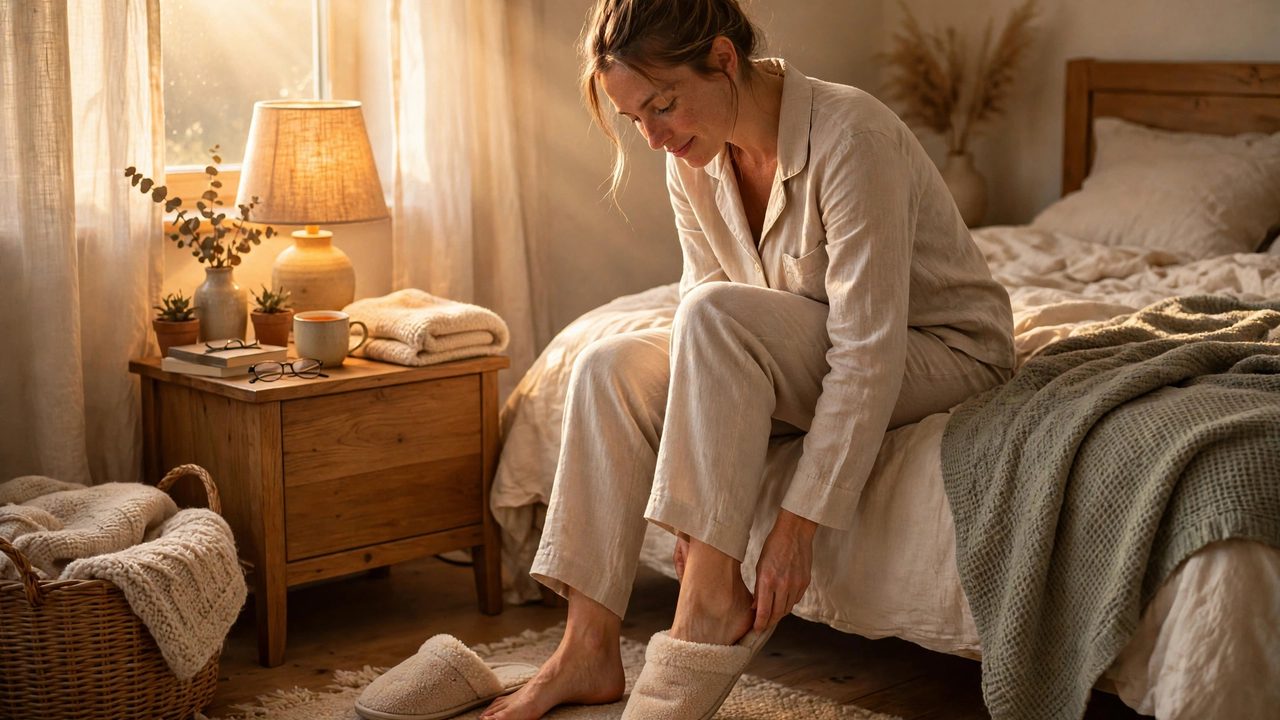
Buying guide: what actually matters in a structured house slipper
Start with footbed geometry, not softness. The single most common mistake in this category is buying the softest slipper and calling it supportive. Softness is cushioning; support is shape. When you read a listing, look for the construction words the maker uses: contoured arch, heel cup or heel cradle, and a midsole material. Every pick in this guide publishes at least the first two. A slipper whose listing talks only about plushness and memory foam may be a lovely bedroom shoe, but it is not built the way the six models above are built, and its foam will pack down flat with daily wear.
Decide how the slipper will keep your foot on the footbed. An arch contour works only when your arch is sitting on it. Makers solve the positioning problem differently: a deep heel cup (Vionic’s approach), a raised back (PowerStep), a heel lip plus an adjustable strap (Orthofeet Charlotte), a stretch upper that hugs the midfoot (Orthofeet Louise), or a molded foam footbed that wraps the foot’s shape (OOFOS). If your current slippers slide off at the heel or your feet drift sideways off the insole, prioritize the retention feature over the upper material — a secure fit on a shaped footbed is the entire point of this category.
Match the upper to your house, not the season outside. Lined suede (Charlotte) and insulated foam (OOcoozie Thermo) are winter tools; in a warm home they will be abandoned by March, and an abandoned slipper supports nothing. Stretch mesh (Louise) and an open slide (Relax II) cover the other end of the thermostat. Terry and plush mules like the Gemma II sit in the middle and suit the widest range of homes. Think about the floors you actually walk: tile and hardwood transmit cold and hardness, carpet forgives both, and the right upper-plus-footbed pairing depends on that surface.
Take sizing notes seriously; structured slippers are less forgiving. A flat slipper in the wrong size is a nuisance; a contoured slipper in the wrong size puts the arch bump in the wrong place, which is worse than no bump at all. Read each maker’s guidance on its listing: OOFOS advises women in half sizes to size up on the OOcoozie Thermo, PowerStep lists whole sizes only with the same size-up advice for in-between feet, and Orthofeet describes the Charlotte and Louise as true to size with wide options. If you wear a clinician-provided insert, choose a model whose insole is removable — the Orthofeet pair in this guide — and check that the slipper’s interior volume suits the insert before committing.
Plan for a break-in, and judge fairly. Vionic and PowerStep both publish adaptation guidance for their orthotic footwear: short wear periods at first, building up over one to two weeks. That is honest advice for any contoured footbed, because a shaped surface feels unfamiliar under a foot accustomed to flat foam. Wear new structured slippers around the house in increasing stretches, and evaluate them at the two-week mark rather than the two-hour mark. If a contoured footbed still feels wrong after a fair break-in, that model’s arch placement is not for your foot shape — which is a fit conclusion, not a verdict on the category.
Keep the health framing straight. It bears repeating in the buying guide: these are consumer slippers with structured footbeds, not medical devices, and no slipper in this guide is presented as a treatment for plantar fasciitis or any other condition. Buy them the way you would buy a well-made chair — for construction, fit, and comfort during the hours you use them. Persistent heel pain, pain that changes how you walk, numbness, or pain that does not ease deserves a clinician’s assessment, and a clinician’s footwear instructions always outrank a buying guide.
FAQ
Are these slippers medical devices?
No. All six are consumer house slippers. Their makers describe footbed construction — arch contours, heel cups, insole materials — and this guide reports those descriptions as product specifications. None of the models here is a medical device, and none is presented as treating, relieving, preventing, or curing plantar fasciitis or any other condition. For diagnosis or treatment advice, see a podiatrist or another qualified clinician.
What should I look for first if flat slippers leave my feet sore?
Footbed shape. Look for a maker-listed contoured arch and a defined heel cup or cradle, then a way of keeping your foot seated on that shape — a strap, a raised back, a heel lip, or a hugging upper. Cushioning helps comfort, but a soft flat slipper and a structured slipper are different products, and the listings of the six models above show the difference in their construction language.
Which pick is best for wide or swelling feet?
The Orthofeet Charlotte is the strongest fit story in the guide: its side strap opens fully and re-secures, the maker lists a wide toe box, and wide sizing is part of its range. The Orthofeet Louise is the alternative if you prefer a stretch mesh upper to a strap. Between the two, choose the strap if your foot volume changes a lot during the day, and the mesh if your main issue is pressure across the top of the foot.
Can I use my own insoles in these slippers?
Only where the fitted insole comes out. The Orthofeet Charlotte and Louise are listed with the brand’s orthotic insole system, which is the removable style; the Vionic, OOFOS, and PowerStep models are built around their own fixed or integrated footbeds, and stacking an extra insole on top of a contoured footbed changes the fit and the arch position. If a clinician has given you a specific insert, ask them which slipper style suits it before buying.
How long does it take to get used to a contoured footbed?
The makers that publish guidance — Vionic and PowerStep among them — suggest starting with a few hours of wear at a time and building up over one to two weeks. Treat that as the normal adaptation window for any structured slipper in this guide. Judge the fit after the break-in, on your own floors, across a full day at home.
Which of the six is warmest, and which is coolest?
Warmest: the OOFOS OOcoozie Thermo Mule, with its listed PrimaLoft insulation, and the faux-fur-lined Orthofeet Charlotte are the two cold-floor picks. Coolest: the open-toe Vionic Relax II slide, followed by the stretch-mesh Orthofeet Louise. The Vionic Gemma II and the fleece-lined PowerStep ArchWear sit between those poles, with the ArchWear leaning warm.
Conclusion
The through-line of this guide is simple: for women shopping for house slippers with plantar fasciitis in mind, the footbed is the product. The Vionic Gemma II is the best all-round expression of that idea — a plush, ordinary-looking mule wrapped around a contoured Vio-Motion footbed. The Vionic Relax II opens the toe and adds an adjustable strap for warm houses. The Orthofeet Charlotte and Louise bring a removable, anatomically listed orthotic insole to two different uppers, an adjustable lined suede slipper and a breathable stretch clog, and between them they cover the widest range of foot shapes and widths here. The OOFOS OOcoozie Thermo Mule trades structure-by-insole for structure-by-molded-foam and adds serious insulation for cold floors. The PowerStep ArchWear puts a known insole shape, a deep heel cradle, and a treaded rubber sole into a raised-back clog for women who want their house shoe to behave like footwear.
Whichever you choose, choose it on construction and fit: a listed arch contour, a heel cup or cradle, a retention system that keeps your foot on the footbed, an upper matched to your floors and your thermostat, and sizing chosen by the maker’s own guidance. Give the footbed its break-in period, and let a clinician — not a product page — handle anything beyond comfort. On those terms, any of these six will serve you better at home than the flat foam slipper most of us start with.
More from Amazon
Programs that pair well with the guide above. Offers and eligibility are set by Amazon and may change.
Collect the home and kitchen items you want in one registry that guests can shop from.
Create a wedding registrySet up recurring deliveries of everyday items on eligible products. Terms and savings are set by Amazon.
Explore Subscribe & SaveFree shipping on eligible items, Prime Video and more. Eligible new members can start with a free trial.
Start a Prime free trialAudiobooks and podcasts to listen to on the go. Eligible new members can start with a free trial.
Try Audible freeAs an Amazon Associate we earn from qualifying purchases.










Write Your Review
No reviews yet. Be the first to share your experience!