We independently review everything we recommend. When you buy through our links, we may earn a commission. As an Amazon Associate we earn from qualifying purchases.
Best Innerspring Mattresses for Heavy People in 2026
Compare the best innerspring mattresses for heavy people in queen size, with listed weight capacities, reinforced coils and firm feels, plus a buying guide.
Compare the best innerspring mattresses for heavy people in queen size, with listed weight capacities, reinforced coils and firm feels, plus a buying guide.
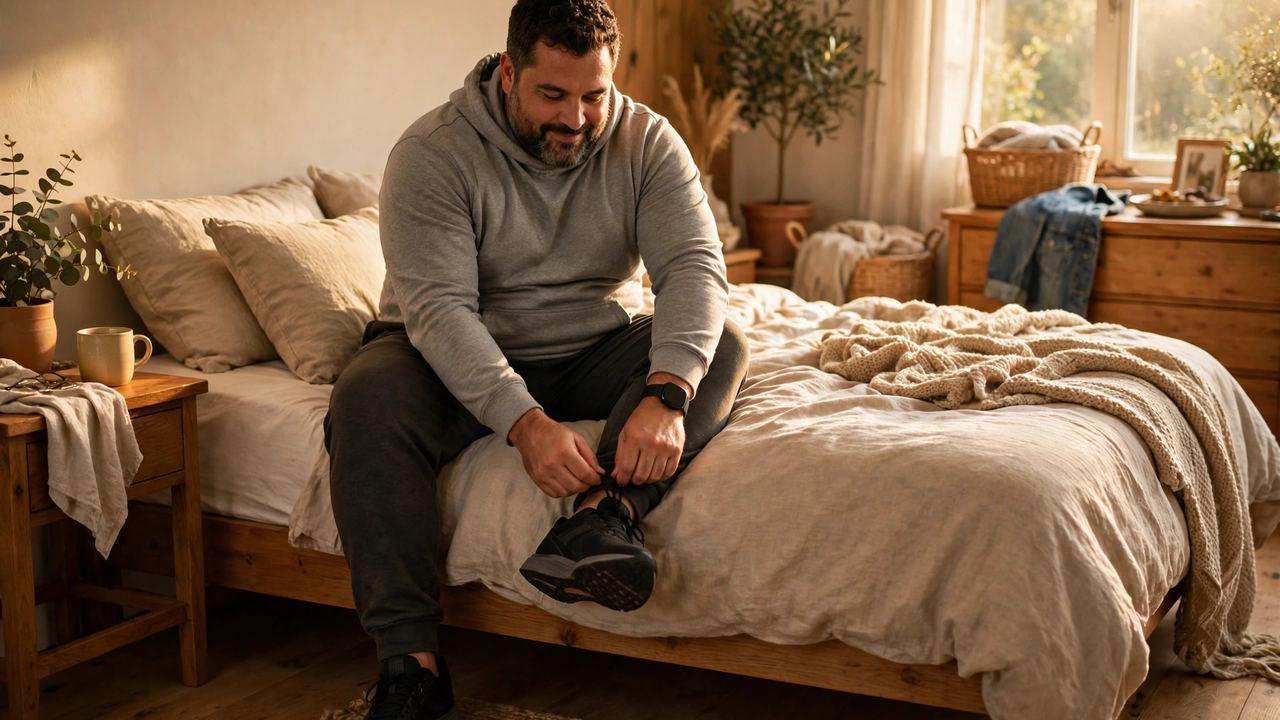
Heavier sleepers ask more of a mattress than lighter sleepers do, and they ask it in a very specific way. More weight means more pressure on the comfort layers, more load on every coil, more stress on the edges when you sit down to tie your shoes, and a faster route to sagging in any bed that was built for an average body and simply scaled up. That is why the best innerspring mattresses for heavy people are not just firm beds. They are beds whose makers state a real weight capacity, whose coil units are built heavier or packed denser, and whose comfort layers are thick and dense enough that you rest on the support system instead of sinking straight through to it.
This guide focuses on queen size, because queen is the size most couples and most solo heavy sleepers buy first, and it compares six innerspring and hybrid innerspring models that were designed or explicitly rated for higher loads. Five of the six carry a maker-listed or listing-listed weight capacity, ranging from 800 to 1,000 pounds for the queen mattress. The sixth earns its place through a firm feel, a zoned coil system and reinforced edges rather than a headline capacity number, and the review below is clear about that difference so you can weigh it yourself. Every pick was checked on its opened Amazon listing for a live offer sold new, its listed firmness, its coil type and its stated capacity where one is given. Where a maker lists a detail, we say so. Where a listing does not state a detail, we leave it out rather than guess.
Read the quick verdict for the short answer, then use the comparison table to line the six beds up side by side, and then read the individual reviews with your own sleeping position, your partner situation and your foundation in mind. A heavy back sleeper, a heavy side sleeper and a heavy couple with very different body weights do not need the same mattress, and the right choice below depends on which of those sleepers you are.
Quick verdict
If you want one recommendation, start with the Helix Plus Core Mattress with GlacioTex Pillow Top in queen. The maker lists support for up to 1,000 pounds, extra reinforcement at the hip and shoulder, hundreds of individually wrapped steel coils and reinforced side perimeters, all under a cool-to-the-touch GlacioTex cover and a medium-firm feel that suits the widest range of heavy back, stomach and combination sleepers. It is the most complete heavy-duty specification in this group, and it does not force you into an extra-firm surface to get that support.
If you want the tallest, most heavily built bed in the roundup, look at the Brooklyn Bedding Titan Plus Elite. The listing lists a 1,000-pound maximum weight capacity, 1,300 coils and a 14.5-inch profile with a medium-firm feel the maker rates at seven out of ten, plus a cooling cover for sleepers who run warm. If you want that same Titan support in a softer, more contouring package, the Titan Plus Luxe keeps the 1,000-pound capacity and pairs it with a plush top and a medium feel the maker rates at six out of ten, which makes it the friendlier Titan for heavy side sleepers and for couples where only one partner is heavy.
For heavy sleepers who want pressure relief to lead, the Nolah Evolution Comfort Plus is the comfort-first pick, with a medium feel, pocketed coils and a maker support page that states the model supports up to 1,000 pounds. The DreamCloud Premier Hybrid is the balanced middle option, with a listing-listed maximum capacity of 800 pounds, 792 pocketed coils and a medium-firm feel under a quilted top. The Bear Elite Hybrid in firm is the zoned-support option, with a five-zone coil system, reinforced edges and a 14-inch profile, for heavy sleepers who want targeted support and a choice of firmness levels within one model line.
The products in this guide
Helix Plus Core Mattress with GlacioTex Pillow Top, Queen
It as designed for plus-size support, with extra reinforcement at the hip and shoulder and support for up to 1,000 pounds, which is the figure the
We started with a simple filter that removes most mattresses from a heavy-sleeper shortlist: the maker or the listing had to speak directly to higher loads. That meant a stated weight capacity, a support system described as reinforced for plus-size sleepers, or a design brief that names heavier bodies rather than implying them. Beds that were merely firm, with no capacity figure and no heavy-duty construction detail, did not make the cut, because firmness alone is not support. A thin, extra-firm bed can feel hard on the first night and still bottom out and sag early under a heavy sleeper, while a well-built medium-firm bed with a stated capacity and a dense coil unit can hold its shape for years.
Next we checked the coil unit, because in an innerspring mattress the coils do the long-term work. We looked for individually wrapped or encased coils, which move independently and carry weight point by point, for listed coil counts where the maker publishes them, and for reinforced perimeters, because edge collapse is one of the first failures heavy sleepers notice. We also looked at profile height and comfort-layer construction. A taller mattress is not automatically a better one, but extra height usually means room for both a real comfort layer and a real support core, instead of one thin layer trying to do both jobs.
Then we applied the availability and evidence checks that govern this whole program. Each mattress below was opened on its Amazon listing, and the listing had to show a live offer sold new for the exact queen variant named in the review. A listing that rendered as currently unavailable, or that showed no featured offer, was excluded and replaced, even when the mattress itself was a strong heavy-sleeper candidate on paper. Capacities and specifications in this article are phrased as the maker or the listing states them. We have not converted, rounded up or combined figures from different sizes, and where a capacity comes from a maker support page rather than the listing itself, the review says so.
Finally, we spread the six picks across the needs heavy sleepers actually describe. There is a plush-topped option for side sleepers, a tall firm-leaning option for back and stomach sleepers, a zoned option, a cooling-cover option and a balanced mid-feel option, because a single best feel does not exist at higher body weights. Use the Buy it if and Skip it if lines under each review to match the bed to your body and your habits rather than to a generic ranking.
The Helix Plus is the pick that most directly answers the heavy-sleeper brief. The maker lists it as designed for plus-size support, with extra reinforcement at the hip and shoulder and support for up to 1,000 pounds, which is the figure the listing itself repeats in its specifications as a 1,000-pound maximum weight capacity. That combination matters because heavy sleepers rarely fail a mattress evenly. The hip zone carries the most load in almost every position, and the shoulder zone carries the load that decides whether side sleeping stays comfortable, so reinforcement aimed at exactly those two zones is a more useful promise than a generic claim of firmness.
Under the pillow top, the maker lists hundreds of individually wrapped steel coils with reinforced side perimeters. Wrapped coils respond independently, so the section under your hips can work harder while the section under your ribs stays calmer, and a reinforced perimeter means the usable sleep surface runs closer to the true edge of the bed. For heavy sleepers who sit on the side of the bed every morning, or couples who spread out across the full width of a queen, that edge support is a daily quality, not a specification-sheet detail. The listing describes the feel as medium firm and lively rather than hard, with a lofty pillow top softening first contact so back and stomach sleepers get lift without a board-like surface.
The GlacioTex pillow top is the other half of this variant’s appeal. The maker describes the cover as cool to the touch, and heavy sleepers, who sink deeper and contact more of the mattress surface, tend to notice heat build-up sooner than lighter sleepers do. Choosing this GlacioTex variant rather than the standard Plus cover is a deliberate choice for warm sleepers, and it is the variant this review specifies. The maker also lists the mattress as fiberglass-free, made with CertiPUR-US certified foams and GREENGUARD Gold certified, and assembled in the maker’s own Arizona facility, with a trial period and a limited lifetime warranty described on the listing.
Buy it if: you want the most complete heavy-duty specification in one bed, you sleep on your back, stomach or in changing positions, you share the bed and want the full 1,000-pound listed capacity working for both sides, or you sleep warm and want the cooling pillow-top variant.
Skip it if: you are a strict side sleeper who wants a deep, soft cradle rather than a medium-firm lift, or you prefer a very tall mattress profile and would rather have the extra height of the Titan Plus Elite below.
The Titan Plus Luxe exists for a gap that heavy sleepers complain about constantly: most heavy-duty beds are built firm, and firm is not what a heavy side sleeper’s shoulder wants. The maker lists the Luxe as engineered to support 1,000 pounds, and the listing’s specifications repeat a 1,000-pound maximum weight capacity, but the feel is deliberately more forgiving than the firmer Titan models. The maker rates it at six out of ten on its firmness scale and describes a plush top over 13 inches of layers, which makes this the contouring Titan, built for plus-size sleepers who still want the surface to give at the shoulder and hip.
The coil specification is substantial. The listing lists 1,032 coils in the queen, which is a dense unit for a bed in a box, and the maker describes high-density foams above it chosen to keep the bed breathable rather than hot and close. That pairing, a dense coil core with a softer top, is the correct recipe for a heavy side sleeper: the top layers handle pressure at the contact points while the coil unit underneath carries the load and stops the midsection from dropping into a hammock shape. The maker is also explicit that the Luxe was developed with mixed-weight couples in mind, naming the case where one partner is plus-size and the other is not and needs more contouring. That is a common real household, and most heavy-duty beds ignore it.
Because the feel sits at medium rather than medium firm, back sleepers who like some cradle will also get along with the Luxe, provided they want contour more than lift. Stomach sleepers at higher weights should read the firmer reviews in this guide first, because a plush top under a heavy midsection can allow more sink at the hips than a stomach sleeper usually wants. The listing describes the mattress as a bed in a box, so it arrives compressed and expands after unboxing, and the maker lists a sleep trial on the product page for shoppers who want time to judge the feel at home.
Buy it if: you are a heavy side sleeper, you share with a lighter partner who needs contouring, you want a stated 1,000-pound capacity without an extra-firm surface, or you like a plush top over a dense coil core.
Skip it if: you sleep mainly on your stomach at a higher weight and need the hips held higher, or you want the firmest, tallest build in the Titan line, which is the Elite reviewed next.
The Titan Plus Elite is the maximalist entry in this roundup. The listing lists a maximum weight capacity of 1,000 pounds, a coil count of 1,300 in the queen, and a 14.5-inch profile, which is the tallest build here. The maker describes stacked layers of high-density foams over heavy-duty coils and rates the feel at seven out of ten, which the listing classifies as medium firm. For a heavy back or stomach sleeper, that recipe reads exactly right: enough surface comfort to avoid a plank-like feel, enough coil underneath to keep the heaviest part of the body from sinking through, and enough total height that the comfort layers are not asked to double as the support core.
Cooling gets unusual attention in this model. The maker lists a GlacioTex+ cooling cover and a gel infusion in the foam layers, described as helping to wick away heat, alongside a coil construction that promotes breathability. Air moving through a coil unit is one of the genuine structural advantages of innerspring designs over all-foam beds, and it matters more at higher body weights because deeper sink means more body contact with the mattress and less air at the surface. Heavy sleepers who have rejected foam beds for sleeping hot will find the logic of this build familiar: springs for airflow and support, foam kept in the comfort role, and a cover chosen to feel cool at first contact.
The maker also lists the Elite as fiberglass-free, GREENGUARD Gold certified and made with CertiPUR-US foams, assembled in the maker’s Arizona facility, with a 120-night sleep trial named on the listing. Two practical notes follow from the specification. First, a 14.5-inch mattress sits high, so check your bed frame height and your fitted sheet pocket depth before ordering; deep-pocket sheets are the safe assumption. Second, a tall, dense queen is a heavy object to rotate, and rotating on schedule is one of the simplest habits that protects any mattress under higher loads, so plan for two people when you move or turn it.
Buy it if: you want the tallest and most heavily coiled bed in this guide, you sleep on your back or stomach, you run warm and want both a cooling cover and a breathable coil core, or you want a stated 1,000-pound capacity with a firmer lean than the Luxe.
Skip it if: your frame already sits high and another 14.5 inches would make the bed awkward to get into, your sheets are standard pocket depth, or you are a side sleeper who wants the softer Titan Luxe feel instead.
The Nolah Evolution Comfort Plus is the comfort-led member of this group, and its heavy-duty credentials come from the maker rather than from a firmness gimmick. Nolah’s own support documentation states that its mattresses, including this Comfort Plus model, support up to 1,000 pounds, and the Comfort Plus is the variant of the Evolution line built specifically with larger bodies in mind. The listing lists the queen at 13 inches thick with a medium firmness description and a pocketed coil type, which places it in the same structural family as the other picks here while keeping the surface emphasis on pressure relief.
That emphasis is the reason to choose it. Heavy sleepers do not only need support; they need the support to arrive without pressure concentrating at the shoulder, hip and knee. A medium-feeling hybrid with a substantial comfort system lets a heavy side sleeper sink far enough to spread load across a wider area, while the pocketed coils underneath respond independently so the waist and legs are still carried. Combination sleepers also tend to like this balance, because a surface that is all lift can feel unforgiving every time you roll onto your side during the night, and a surface that is all cushion can make changing position feel like work. The Comfort Plus aims at the middle of that trade-off with a heavier-duty brief than the standard Evolution.
Shoppers should note how the capacity figure is sourced, because this guide is careful about it: the 1,000-pound figure for this model is stated on the maker’s support pages rather than printed in the Amazon specification table, which is why the comparison table labels it that way. The listing itself confirms the model, the queen size, the 13-inch profile, the medium feel and the pocketed coil construction for the exact variant linked here, and it showed a live offer sold new when checked. If the distinction between a listing-stated and a maker-stated capacity matters to you, the Helix Plus and the two Titans state theirs on the listing, and this Nolah states its on the maker’s own documentation.
Buy it if: pressure relief is your first priority, you are a heavy side or combination sleeper, you want a medium feel rather than a firm one, or you want a maker-stated 1,000-pound support figure behind a comfort-focused design.
Skip it if: you want the capacity printed in the Amazon specification table itself, or you sleep on your stomach and need the firmer, higher-lift feel of the Titan Plus Elite or the firm Bear Elite.
The DreamCloud Premier Hybrid is the balanced option, and its heavy-sleeper case rests on a figure printed plainly in its own listing: the specification table lists a maximum weight capacity of 800 pounds for this queen. That is lower than the 1,000-pound figures of the Helix and Titan models, and this review will not pretend otherwise. For a solo heavy sleeper, or a couple whose combined weight sits comfortably under that stated figure, 800 pounds is still a substantial, explicit rating, and an explicit rating is worth more than the silence most mattresses offer on the subject. For a heavier couple near or above it, the 1,000-pound models above are the honest recommendation.
The construction is a six-layer hybrid listed at 13 inches, with 792 pocketed coils in the queen and a medium-firm feel. The maker describes a quilted CloudQuilt top with cooling fibers woven into the cover, and two inches of pressure-relieving memory foam within the layer stack, over a stable foundation layer designed for motion isolation. In practice that describes a bed that feels cushioned and finished on top, responsive in the middle and steady underneath, which is why the maker positions it for combination sleepers, back sleepers and sleepers who want extra support at the back. Heavy combination sleepers in particular change position often enough that a bed tuned to one position only can become annoying, and the Premier’s middle-of-the-road specification is built to avoid that.
The maker also lists the mattress as fiberglass-free and made without the ozone depleters, mercury, lead, formaldehyde and phthalates named on the listing, and DreamCloud’s trial and warranty terms are described on the product page for shoppers who want to read them before deciding. Treat this pick as the comfort-balanced choice with a clearly stated, if lower, capacity: it suits the heavy sleeper who wants a quilted, hotel-style top and a medium-firm ride, and whose household weight leaves real headroom under the maker’s stated limit.
Buy it if: you are a solo heavy sleeper or a lighter heavy couple with headroom under the stated 800-pound capacity, you change positions through the night, or you want a quilted top and a medium-firm feel from a six-layer hybrid.
Skip it if: your combined household weight approaches the stated capacity and you need the 1,000-pound headroom of the Helix Plus or Titan models, or you want the tallest profile in the guide.
The Bear Elite Hybrid is included on the strength of its support architecture rather than a capacity headline, and this review is upfront about that trade. The listing does not print a maximum weight capacity in its specification table, so if a stated number is a hard requirement for you, choose one of the five picks above. What the listing does state is a 14-inch hybrid profile in the firm feel specified here, a five-zone coil system, reinforced edges, copper-infused memory foam and a quilted cover using Celliant fibers, with GREENGUARD Gold certification and CertiPUR-US certified foams. Zoned coils are a meaningful feature at higher weights, because they let the mattress be firmer where load is greatest, around the lumbar and hip zone, and more forgiving at the shoulder, instead of forcing one uniform firmness to solve two different problems.
The firm variant is the right specification for heavy sleepers within this model line. The maker offers the Elite Hybrid in soft, medium and firm, and the variant map on the listing binds the exact queen firm mattress linked here, which is the version a heavier back or stomach sleeper should be looking at. The listing describes targeted support and pressure relief working together: comfort foams cushion the shoulders, hips and joints while the zoned coil system provides firmer support through the middle of the bed. Reinforced edges complete the picture, keeping the perimeter usable for sleeping and stable for sitting, which matters more as body weight rises.
Bear positions this mattress around cooling and overnight recovery, describing a breathable hybrid construction and a cover technology designed for rest and recovery, and the listing repeats that positioning. We make no health claims for those features here; treat them as comfort and temperature features and judge the bed on its structure. Judged that way, the Elite Hybrid firm is a well-specified zoned innerspring hybrid with a tall profile and a real edge system, offered by a maker whose range is aimed at active, heavier-framed sleepers, and it is the pick for shoppers who value zoned support and firmness choice over a printed capacity figure.
Buy it if: you want zoned coil support with a firmer middle and a softer shoulder zone, you want reinforced edges and a 14-inch profile, you sleep on your back or stomach, or you like having soft, medium and firm versions of one model to choose between.
Skip it if: a printed weight capacity is non-negotiable for you, since the listing does not state one, or you want a plush, deeply contouring top, in which case the Titan Plus Luxe is the better match.
Buying guide
Start with total load, not individual weight. A mattress capacity figure describes the total weight the mattress is listed to support, which means sleepers, and it is worth remembering that bedding, a heavy topper and a partner all count toward the real load on the bed. Compare your household’s combined weight against the maker’s stated capacity and keep genuine headroom rather than shopping right at the limit. A bed that spends its life near its maximum listed load will usually age faster than the same bed used well inside it, and headroom is the cheapest durability you can buy.
Read the coil unit before the comfort layers. Comfort foam decides how the first ten minutes feel; the coil unit decides how the third year feels. Look for individually wrapped or encased coils, which carry weight independently and resist the rolling-together effect couples notice on linked spring systems, and for listed coil counts and reinforced perimeters where makers publish them. A zoned unit, like the five-zone system in the Bear Elite, is a genuine plus for sleepers whose hips are much heavier than their shoulders. None of this requires technical knowledge to check: the makers of every pick in this guide publish their coil story on the listing, and a mattress whose listing says nothing about its springs is telling you something.
Match firmness to position at your weight, not at average weight. Firmness labels describe how a bed feels to an average body, and heavier bodies sink further into the same materials, so a medium bed feels softer to a heavy sleeper than to a light one. Heavy side sleepers should generally start at medium or plush-topped medium-firm models like the Titan Plus Luxe, because the shoulder needs room to sink without the hip dropping out of line. Heavy back sleepers do well across the medium-firm middle of this guide. Heavy stomach sleepers should start at the firmest picks, the Titan Plus Elite and the firm Bear Elite, because the priority is keeping the hips from sinking below the shoulders. If you are between positions, choose for the position you spend the most time in, not the one you fall asleep in.
Take height and foundations seriously. The picks here run from 13 to 14.5 inches, and a tall mattress needs a foundation that is itself rated for the combined load and a frame that does not flex. Check the maker’s foundation guidance, use deep-pocket sheets for the taller models, and measure your total bed height if anyone in the household has trouble getting in and out of a high bed. A strong mattress on a weak, sagging foundation will feel like a weak mattress, and heavy sleepers expose foundation problems faster than anyone.
Plan for heat and for rotation. Heavier sleepers sink deeper, contact more surface and often sleep warmer, so breathable coil cores, cooling covers like the GlacioTex variants above and breathable bedding are worth prioritizing rather than treating as luxuries. Finally, rotate the mattress head to foot on the schedule the maker suggests. Rotation spreads wear across the coil unit instead of concentrating it under the hips night after night, and at higher loads that simple habit does more for lifespan than any single material claim on a listing.
FAQ
What weight capacity should a heavy sleeper look for?
Look for a capacity the maker actually states, and compare it with the total weight of everyone who sleeps on the bed, keeping headroom under the figure. In this guide the stated capacities run from 800 pounds for the DreamCloud Premier queen to 1,000 pounds for the Helix Plus, the two Titan Plus models and the maker-stated figure for the Nolah Comfort Plus. A stated figure matters because most mattresses publish none at all.
Are pocketed coils better than traditional linked springs for heavy people?
For most heavy sleepers, yes. Individually wrapped or pocketed coils respond independently, so the coils under your hips can compress further than the coils under your legs while both keep supporting you, and a partner’s movement travels less across the bed. Every pick in this guide uses wrapped, pocketed or encased coils, several with reinforced edges or zoned layouts that add firmer support where load is greatest.
Should heavy side sleepers choose a firm mattress?
Usually not the firmest one available. A heavy side sleeper needs the shoulder and hip to sink enough to keep the spine straight, which calls for a medium feel or a plush top over a strong coil core, like the Titan Plus Luxe or the Nolah Evolution Comfort Plus in this guide. Support should come from the coil unit and the stated capacity, while the top layers provide the give. A hard surface over weak springs is the combination to avoid.
Does a taller mattress support heavy people better?
Height alone does not guarantee support, but taller hybrids have room for both a real comfort layer and a substantial coil core, which is why the picks here run from 13 to 14.5 inches. Judge the specification rather than the silhouette: coil type and count where listed, stated capacity, edge reinforcement and foam quality all matter more than an extra inch by itself. Do check sheet pocket depth and total bed height before choosing the tallest models.
Why do some picks state a capacity and one does not?
Because makers publish different information. The Bear Elite Hybrid listing states its coil zoning, firmness options, profile and certifications but does not print a maximum weight capacity, so this guide says exactly that instead of estimating one. If a printed capacity is essential to your decision, the other five picks state theirs on the listing or, in the Nolah’s case, in the maker’s own support documentation.
How can a heavy sleeper make a mattress last longer?
Use a foundation rated for the combined load, rotate the mattress head to foot on the maker’s schedule, keep the total load inside the stated capacity with headroom to spare, and use a protector to keep moisture out of the comfort layers. Choosing a mattress whose capacity and coil unit were designed for higher loads in the first place, rather than an average bed used at its limit, is the biggest single factor.
Conclusion
Heavy sleepers are not hard to fit; they are just badly served by vague specifications. The six mattresses in this guide replace vagueness with checkable facts: stated capacities of 800 to 1,000 pounds on five of them, dense wrapped-coil units, reinforced edges, zoned support and firmness levels matched to sleeping position. Start with the Helix Plus Core with GlacioTex Pillow Top if you want the most complete all-round heavy-duty specification, choose the Titan Plus Luxe for a softer Titan feel, the Titan Plus Elite for the tallest and firmest-leaning build, the Nolah Evolution Comfort Plus for pressure relief, the DreamCloud Premier for balanced medium-firm comfort with an explicitly stated capacity, or the firm Bear Elite Hybrid for zoned support. Match the bed to your total household load, your main sleeping position and your foundation, and an innerspring mattress will give you the responsive, breathable, durable support that heavier bodies actually need.
M
Modern Line Home Editorial Team
We compare specs, materials and verified owner reviews before a product earns a spot. Rankings are never paid.
Affiliate disclosure. As an Amazon Associate we earn from qualifying purchases at no extra cost to you. Prices accurate as of the date shown.
House cold even with the heat on? Walk this ordered checklist: thermostat and filter first, then drafts, insulation, leaky ducts and a failing heating system.
Windows fogging up in winter? Check where the fog sits: on the room side it is indoor humidity, outside it is harmless, and between panes the seal has failed.
Store the main firewood pile about 30 feet from your house, off the ground and covered only on top. Compare racks, woodsheds, garages and indoor spots safely.
Place a portable generator outdoors only, at least 20 feet from windows, doors and vents, exhaust pointed away. Exact distances, setup steps and CO rules here.
Keep houseplants in the right winter spot: match window direction to plant type, stay clear of radiators and cold glass, and fix dry air and low light at home.
Mice enter through pencil-width gaps at foundations, pipes, vents, doors and the roofline. Walk this room-by-room winter checklist to find and seal each one.
A winter outage timeline: what to do in the first hour, first night and multi-day outage, with food safety times, pipe protection, heat and CO safety steps.
Size a space heater by room area: 10 watts per square foot at 8-foot ceilings, adjusted for insulation and ceiling height, with full wattage and BTU tables.
Start dripping at about 20 degrees, sooner for exposed pipes. Set a pencil-lead stream, drip the right faucets on both lines, and know when to stop safely.
A fridge needs 800-1,200 starting watts, not just 150-400 running watts. Use the tables to total your fridge plus freezer, lights, furnace fan and more today.












Write Your Review
No reviews yet. Be the first to share your experience!