We independently review everything we recommend. When you buy through our links, we may earn a commission. As an Amazon Associate we earn from qualifying purchases.
Best Reusable Towels for Dabbing at Grease: 6 Picks
Dabbing grease off fried food, bacon and stovetops eats paper towels. These six reusable towels blot oil cleanly, wash well and are ready to use every day.
Dabbing grease off fried food, bacon and stovetops eats paper towels. These six reusable towels blot oil cleanly, wash well and are ready to use every day.
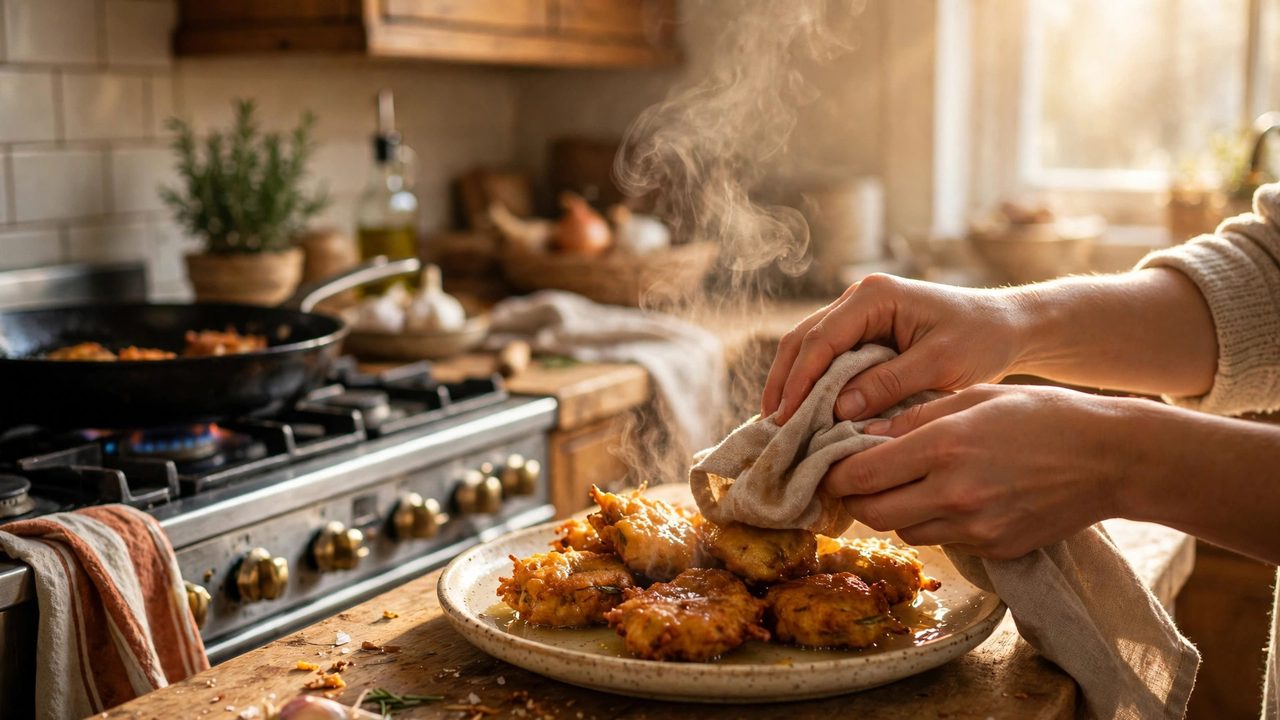
Dabbing is the quiet workhorse move of a busy kitchen. You lift fried cutlets onto a towel so the crust stays crisp instead of steaming in its own oil. You press a towel gently over bacon, pizza or a pan of roasted vegetables to pull off the surface grease before serving. You blot the top of a soup or a braise where fat has pooled, and you catch the splatter ring around a frying pan before it sets on the stovetop. Every one of those jobs is small, quick and repeated daily, which is exactly why disposable paper towels disappear so fast. Finding the best reusable towels for dabbing at grease means finding cloths that absorb oil on contact, release it again in the wash, and come back soft, flat and ready for the next round without shedding lint into food.
Not every reusable towel is good at this particular job. A towel that shines for drying dishes may smear grease rather than lift it, and a cloth that works beautifully on a stovetop can be the wrong choice for blotting food, where you want a clean, lint-free surface and no loose fibres. This guide focuses on six reusable towels sold on Amazon US, each checked on its opened product page for its material, size, pack count and care instructions, and each with a live offer for a new product at the time of checking. They cover microfibre cloths that grip grease on pans and appliances, bamboo-fibre sheets on a roll for quick tear-off blotting, Swedish dishcloths that drink up pooled oil, and a classic cotton kitchen towel for bigger, wetter jobs.
Quick verdict
If you dab grease more than anything else, start with the MR.SIGA Microfiber Cleaning Cloth in the pack of 12. The maker specifically describes it removing grease and particles from plates, pots, pans and the microwave, the cloths are a handy 12.6-inch square for folding into a dabbing pad, and a dozen in rotation means a greasy one can go straight into the wash basket while a clean one takes its place. If your dabbing is mostly blotting fried food and you want the closest thing to a paper towel routine, the Bambooee Reusable Bamboo Towel roll is the natural pick: perforated sheets, each the maker lists as machine washable up to 100 times. For the heaviest pooled grease, such as the surface of a soup or a sheet pan of roasted vegetables, the Swedish Wholesale dishcloths absorb far more per dab than a flat cloth, while the Utopia Towels cotton kitchen towels are the roomy, forgiving option for large trays and two-handed jobs.
The products in this guide
MR.SIGA Microfiber Cleaning Cloth, Pack of 12, Grey
Each cloth at 32 by 32 centimetres, which is 12.6 by 12.6 inches, a size that folds neatly into quarters to make a thick dabbing pad with several
Every product in this guide was checked on an opened page before it earned a place. We looked for towels sold new on Amazon US with a live featured offer, and we excluded anything whose page showed no available new offer, however good it looked in search results. We read the maker’s own listed specifications for material, dimensions, pack count and care, and we only describe a towel using what the maker lists, so the absorbency figures and wash counts below are the brands’ own numbers rather than our estimates.
Beyond verification, we selected for the dabbing job specifically. A good grease-dabbing towel needs four things. First, quick uptake: grease should transfer to the cloth on a light press, because rubbing spreads a thin, stubborn film and can tear delicate crusts. Second, a surface that will not leave lint or fibres behind on food. Third, honest washability, because a grease towel is only reusable if the oil actually comes out in the laundry and the cloth does not come back stiff, sour or still slick. Fourth, a sensible pack size, because dabbing grease is a dirty job and rotation matters: you want enough cloths that a used one can be set aside for washing immediately instead of being rinsed half-heartedly and used again. The six picks below spread across microfibre, bamboo rayon, cellulose-cotton and woven cotton, because each material dabs a little differently and different cooks will prefer different hands-feel at the stove.
This is the pick that speaks most directly to grease. In its own product description, the maker says these microfibre cloths remove grease and particles from the microwave oven, plates, pots and pans, and that description matches how microfibre behaves at the stove: the split fibres give the cloth a lot of surface area, so a folded pad pressed onto a greasy pan bottom or a splattered cooktop picks oil up instead of pushing it around. The maker lists each cloth at 32 by 32 centimetres, which is 12.6 by 12.6 inches, a size that folds neatly into quarters to make a thick dabbing pad with several clean faces to rotate through as each one loads up with grease.
The maker lists the cloths as ultra soft and non-abrasive, absorbent and lint free, with reinforced stitched edges, and says they are made to last through hundreds of washings. For dabbing work, the lint-free point matters twice over: nothing is left behind on a blotted cutlet, and nothing streaks across a stainless pan you have just degreased. The pack of 12 in grey is a practical colour choice for this job, because grease work eventually shadows lighter cloths even when they wash clean. Keep a small stack folded by the stove, use one face per dab, and retire the cloth to the wash once every face has been used rather than rinsing and reusing a loaded cloth, which mostly redistributes the oil.
Buy it if: your dabbing is split between food and cookware, and you want one cloth that the maker explicitly rates for removing grease from pots, pans and plates.
Skip it if: you prefer natural fibres only, or you want a tear-off sheet on a roll rather than a cloth you fold and store.
AIDEA’s cloth is the other microfibre option here, and it differs from the MR.SIGA in construction. The maker lists the blend as 87 percent polyester and 13 percent polyamide, in a 12 by 12 inch cloth, and highlights an edgeless design, which means there is no stitched border to drag across a delicate crust or catch on a pan edge while you dab. The maker describes the towels as ultra-soft, non-abrasive and exceptionally absorbent, suitable for use wet or dry, and says they keep their cleaning power and softness through hundreds of washes.
For grease dabbing, use these dry. A dry microfibre pad pressed straight down onto a greasy surface lifts oil into the fibres; a wet one tends to skate over the top. The 8-pack is smaller than the MR.SIGA dozen, but AIDEA sells its cloths in multiple colours across the range, and colour coding is a genuinely useful system for this job: dedicate one colour to food blotting only, and another to stovetops and pan bottoms, so a cloth that has been working on raw splatter never ends up pressed against cooked food. The maker advises machine washing with warm water and avoiding bleach, tumble drying and dry cleaning across its microfibre range to preserve the fibres, advice worth following because heat and bleach are what make microfibre stop gripping grease.
Buy it if: you want an edgeless, lint-free dabbing cloth and like the idea of colour-coding food towels separately from stove towels.
Skip it if: eight cloths will not keep up with your frying habit, or you regularly wash everything on hot with bleach.
Bambooee is the closest experience to the paper towel roll it is designed to replace, and for blotting fried food that familiarity is the whole point. The maker lists one roll with 20 sheets, each sheet measuring 11.5 by 11 inches, made from rayon sourced from organic bamboo. The sheets sit on a standard paper towel holder, tear off one at a time, and are, the maker lists, machine washable up to 100 times per sheet. The maker also says a single roll replaces up to 286 rolls of ordinary paper towels, which gives a sense of how many dabbing sessions a roll is built to cover.
The dabbing technique with a Bambooee sheet is simple: tear one off, lay it over freshly fried food or press it lightly against a greasy tray, let the sheet take the oil, then set that sheet aside in a small basket or bag by the sink rather than back on the roll. Once a few sheets have collected, they go into the wash together. The maker suggests storing washed sheets under the counter in a basket or dispenser once they are off the roll, which keeps the clean rotation tidy. Because the sheets are a flat, even weave, they blot without leaving fibres on food, and their slightly larger size than a standard microfibre cloth makes them good for laying over a whole batch of fried items at once. Note that a sheet used on very heavy grease, such as the drippings from a roast, will need a proper wash before it dabs cleanly again; rinsing alone leaves oil in the fibres.
Buy it if: you blot fried food often and want a roll on the counter that behaves like paper towels but goes in the laundry instead of the bin.
Skip it if: you mostly degrease pans and appliances, where a thicker microfibre pad grips better than a flat sheet.
Glosclean takes the same roll format as Bambooee and doubles the supply. The maker lists this set as two rolls with 40 sheets in total, made from 100 percent rayon derived from bamboo, with the item model number LH210225. The maker describes the sheets as soft and strong, highly absorbent, and says they leave no film and do not crumble under pressure the way ordinary paper towels can, which is exactly the failure mode you notice when a cheap disposable sheet disintegrates against a greasy tray and leaves bits behind.
Two rolls suit a household that dabs constantly: one roll living on the counter holder for food blotting, the second in reserve or stationed near the stove for splatter duty. Having a dedicated stove roll is a good hygiene habit, because the towel that catches raw frying splatter should not be the one pressed onto cooked food. The maker positions these sheets for kitchen, bathroom, garage and car cleaning as well, so a sheet that has become too shadowed for food duty can graduate to heavier cleaning work before it is retired, which stretches the useful life of the set. As with the other bamboo sheets here, wash them as a batch, let them dry fully, and reroll or fold them so a clean sheet is always the first thing your hand finds.
Buy it if: you go through blotting sheets quickly and want the roll format in a larger, two-roll supply.
Skip it if: you prefer a thick cloth pad for pressing into pan corners, or you only dab occasionally and a single smaller pack will do.
Swedish dishcloths are the heavy drinkers of this list. The maker lists this 10 pack in assorted colours, each cloth measuring 8 by 7 inches, made from a blend of cellulose and cotton, and says the cloths absorb up to 15 times their weight in liquid. That capacity is what you want when the grease is not a film but a pool: the slick on top of a pot of soup, the rendered fat in a sheet pan, or the puddle under resting fried chicken. Press a dampened cloth flat onto the surface, hold it for a moment, and lift; the sponge-like structure takes up far more per dab than a flat woven cloth can.
The maker notes the cloths must be wet before use, transforming from stiff to soft when dampened, and that they dry quickly and resist the musty odour common in dishrags. They are, the maker lists, machine washable or dishwasher washable for more than 50 uses, and they dry firm and flat, so they store in a drawer without staying damp. Two cautions for grease work. First, a Swedish cloth that has taken up a lot of fat should go straight into a hot wash; leaving it to dry loaded with grease makes the next wash harder. Second, at 8 by 7 inches these are smaller than the other picks, so they suit dabbing and blotting rather than lining a whole tray. Used as the specialist for pooled grease alongside a general cloth for films and splatter, they complete a dabbing kit nicely.
Buy it if: your grease problem is pooled fat on soups, roasts and sheet pans, and you want maximum uptake per dab.
Skip it if: you want a dry, soft cloth for pressing delicate fried crusts, or a large towel that can line a tray.
Sometimes the dabbing job is simply big. A whole sheet pan of roasted potatoes, a tray of fried items for a family, or a roasting tin that needs its fat blotted before the juices become a sauce calls for a towel with real area, and that is the Utopia Towels entry here. The maker lists a pack of 12 towels, each 15 by 25 inches, in 100 percent ring-spun cotton with a dobby weave, in black. The maker describes them as soft and highly absorbent, machine washable, and suitable as dish towels, tea towels and bar towels as well as general kitchen cloths.
Cotton behaves differently from microfibre on grease. It does not grip a thin film quite as eagerly, but it holds a lot, it is gentle on every food surface, and a large towel can be laid over an entire tray and pressed down in one motion, blotting everything evenly instead of chasing items one by one. The black colour is a practical blessing for grease work, since it hides the gradual shadowing that oily jobs leave on pale cotton even after washing. The maker advises washing these towels separately and avoiding fabric softener and bleach-type treatments that coat cotton fibres; softener is the enemy of absorbency in cotton just as heat is in microfibre. With 12 in the pack, you can keep a genuine rotation: a couple in use, a couple in the wash, and the rest clean in the drawer.
Buy it if: you cook in large batches, blot whole trays at once, and want a natural-fibre towel that forgives grease stains visually.
Skip it if: your dabbing is small and precise, where a 15 by 25 inch towel is more cloth than the job needs.
Buying guide
Match the material to the grease
Thin films and splatter respond best to microfibre. The split fibres in cloths like the MR.SIGA and AIDEA picks present a huge surface area, so a light press transfers oil into the cloth instead of smearing it thinner. Pooled grease is a volume problem, not a film problem, and that is where the cellulose and cotton blend of a Swedish dishcloth earns its place, since the maker lists it absorbing up to 15 times its weight in liquid. Blotting food you are about to serve is a gentleness problem: flat bamboo-rayon sheets and woven cotton touch the food evenly, leave no fibres behind, and will not drag a crisp coating off the way a textured cloth can if you press and slide. Most kitchens that fry regularly end up happiest with two types on hand, a microfibre pad for the stove and pans and a flat sheet or cotton towel for the food itself.
Dab, do not rub
Technique matters as much as the towel. Press straight down, hold for a second so the fibres can take up the oil, and lift straight off. Rubbing does three unhelpful things: it spreads grease into a wider, thinner film that is harder to remove, it can tear the crust on fried food, and it works oil deeper into the weave of the towel so the wash has to work harder. Fold your towel into a pad and rotate to a clean face for each new dab; a pad gives you several fresh surfaces before the whole cloth is loaded. When every face is used, that cloth is done until it has been washed, because a grease-loaded towel mostly moves oil from one place to another.
Washing is what makes them reusable
A reusable grease towel lives or dies in the laundry. Wash dabbing towels promptly, and wash them hot enough to melt out the fat they are carrying; oil left in fibres through a cool, quick wash builds up until the towel feels slick and starts to smell stale. Keep grease towels in their own wash load or with other sturdy kitchen linens rather than with clothes. Skip fabric softener on any absorbent towel: softener coats fibres with a film that directly reduces how much oil and water the cloth can take up, which defeats the purpose of the towel. The AIDEA care guidance across its microfibre range, to wash warm and avoid bleach, tumble drying and dry cleaning, reflects how microfibre lasts longest; cotton towels like the Utopia set tolerate more vigorous washing but still absorb best without softener. Dry every towel fully before it goes back in the drawer, since a damp, greasy cloth stored in the dark is where sour smells start.
Keep food towels and stove towels separate
The single most useful habit in this whole guide is separation. A towel that dabs cooked food should never be the towel that wipes raw splatter, a greasy stovetop or the outside of a pan. Colour is the easiest separator, which is one reason multi-colour microfibre packs and assorted Swedish cloths are practical, and why the black Utopia set can be assigned wholesale to tray and pan work while lighter sheets handle food. Separation also extends the life of your nicest blotting sheets, because stove work is what shadows and wears a towel fastest; once a food sheet is past its best, retire it to stove duty rather than throwing it away, and let a fresh sheet take over at the table end of the job.
Size and pack count
For dabbing, a cloth in the 11 to 13 inch square range is the sweet spot: big enough to fold into a pad, small enough to control with one hand. Larger cotton towels earn their keep when the job is a whole tray rather than a single item. On pack count, think in rotations rather than totals. Grease towels should be washed after a heavy session rather than reused for days, so a household that fries several times a week will move through cloths quickly; packs of 10 to 12, or rolls of 20 to 40 sheets, exist precisely so that washing is never the bottleneck. If you find yourself rinsing a greasy cloth under the tap and using it again because the clean ones have run out, your pack is too small.
FAQ
Can reusable towels really replace paper towels for blotting fried food?
Yes, provided the towel is flat, clean and lint-free. Flat bamboo-rayon sheets and plain cotton towels blot fried food the same way a paper towel does, by pressing lightly so surface oil transfers to the cloth. The difference is what happens next: the sheet goes into a wash basket instead of the bin, and the makers of the roll-format picks here list their sheets as washable many times over, up to 100 washes per sheet in Bambooee’s case.
How do I stop grease building up in the towels themselves?
Wash them promptly, in hot water, without fabric softener, and dry them fully. Build-up happens when towels sit loaded with oil, are washed cool, or are coated with softener, which seals residue into the fibres. A towel that has gone slick and sour after washing has usually been under-washed rather than worn out; a thorough hot wash with a full dose of detergent often restores it. If it still smells after a proper wash, retire it to garage or stove duty.
Is microfibre safe to use on food?
Microfibre cloths like the MR.SIGA and AIDEA picks are listed by their makers as lint-free and non-abrasive, and a clean microfibre pad pressed onto cooked food leaves nothing behind. The sensible rule is dedication: keep specific cloths for food contact only, wash them well, and never use a cloth on food after it has wiped a stovetop or a raw splatter, whatever it is made from.
Why does my towel smear grease instead of lifting it?
Usually one of three reasons: the towel is already loaded with oil from earlier dabs, it is wet when the job needs a dry cloth, or you are rubbing instead of pressing. Rotate to a clean face, start with a dry towel for films and splatter, and press and lift rather than wiping. If a freshly washed towel still smears, softener build-up is the likely cause, and a hot wash without softener is the fix.
How many reusable dabbing towels does a household need?
Enough to cover the gap between wash days at your frying frequency. As a working rule, a pack of 12 cloths or a 20-sheet roll suits a household that fries a few times a week and launders kitchen linens twice a week. Heavy fryers, or anyone who separates food towels from stove towels as recommended above, should count both sets and will be better served by the larger packs and two-roll options in this guide.
When should a reusable grease towel be retired?
When it no longer comes clean: a persistent sour smell after a hot wash, a slick feel that survives washing, frayed or thinning fabric, or a weave that has gone stiff. Makers list long service lives for these picks, from more than 50 uses for the Swedish cloths to hundreds of washings for the microfibre cloths, so retirement should be measured in seasons of use rather than weeks. A retired food towel can still serve for stovetops and pan bottoms before it finally leaves the kitchen.
Conclusion
Dabbing at grease is a small job done so often that the towel you choose for it quietly shapes how your kitchen runs. The right reusable towel lifts oil in one press, leaves food clean and crisp, washes out properly, and is always there in the drawer because the pack is big enough to rotate. For most cooks, the MR.SIGA microfibre cloths are the best all-round answer, with the maker’s own grease-removal description, a practical pad size and a dozen cloths to rotate. Choose the Bambooee or Glosclean rolls if your dabbing is mostly blotting fried food and you love the tear-off routine, the Swedish Wholesale cloths when pooled fat is the problem, the AIDEA cloths for an edgeless pad and colour-coded system, and the big Utopia cotton towels when the job is a whole tray at a time. Whichever you pick, keep food and stove towels separate, wash hot and skip the softener, and the paper towel roll can finally stop being a weekly purchase.
M
Modern Line Home Editorial Team
We compare specs, materials and verified owner reviews before a product earns a spot. Rankings are never paid.
Affiliate disclosure. As an Amazon Associate we earn from qualifying purchases at no extra cost to you. Prices accurate as of the date shown.
House cold even with the heat on? Walk this ordered checklist: thermostat and filter first, then drafts, insulation, leaky ducts and a failing heating system.
Windows fogging up in winter? Check where the fog sits: on the room side it is indoor humidity, outside it is harmless, and between panes the seal has failed.
Store the main firewood pile about 30 feet from your house, off the ground and covered only on top. Compare racks, woodsheds, garages and indoor spots safely.
Place a portable generator outdoors only, at least 20 feet from windows, doors and vents, exhaust pointed away. Exact distances, setup steps and CO rules here.
Keep houseplants in the right winter spot: match window direction to plant type, stay clear of radiators and cold glass, and fix dry air and low light at home.
Mice enter through pencil-width gaps at foundations, pipes, vents, doors and the roofline. Walk this room-by-room winter checklist to find and seal each one.
A winter outage timeline: what to do in the first hour, first night and multi-day outage, with food safety times, pipe protection, heat and CO safety steps.
Size a space heater by room area: 10 watts per square foot at 8-foot ceilings, adjusted for insulation and ceiling height, with full wattage and BTU tables.
Start dripping at about 20 degrees, sooner for exposed pipes. Set a pencil-lead stream, drip the right faucets on both lines, and know when to stop safely.
A fridge needs 800-1,200 starting watts, not just 150-400 running watts. Use the tables to total your fridge plus freezer, lights, furnace fan and more today.












Write Your Review
No reviews yet. Be the first to share your experience!