We independently review everything we recommend. When you buy through our links, we may earn a commission. As an Amazon Associate we earn from qualifying purchases.
Best Kitchen Towels for Iron Ons: 6 Flat Cotton Blanks
Find the best kitchen towels for iron ons: six flat, smooth cotton and organic flour sack blanks that take household-iron heat evenly, plus pre-wash tips too.
Find the best kitchen towels for iron ons: six flat, smooth cotton and organic flour sack blanks that take household-iron heat evenly, plus pre-wash tips too.
An iron-on design is only as flat as the towel underneath it. A looped terry surface, a raised dobby stripe, or a puckered hem will telegraph straight through a transfer, leaving pale patches where the iron never truly met the fabric and dark, scorched-looking edges where it pressed too hard. That is why choosing the best kitchen towels for iron ons is less about absorbency for dishes and more about finding a genuine blank: a smooth, flat-woven cotton or linen-style towel with no pattern, no texture, and no finish that fights heat. This guide is about that general iron-on work — printable iron-on sheets, iron-on transfers, and simple appliqué pressed with an ordinary household iron — rather than any one cutting machine or vinyl system.
Every pick below is a plain flour sack style towel. Flour sack fabric earns its place here for three practical reasons. First, it lies flat, so a household iron can make even contact across the whole design in one press. Second, the makers list these towels as cotton, and cotton tolerates the sustained heat that iron-on instructions call for far better than a synthetic surface that can glaze or melt. Third, flour sack towels are sold blank and unprinted, in white, so the colour you press is the colour you keep. The differences that matter are size, pack count, fabric weight, thread count where a maker publishes it, and how each towel behaves after the pre-wash that good iron-on work always starts with.
Quick verdict
If you want one pack to start with, choose the Utopia Kitchen 12-pack. The maker lists a plain weave, a true 28 by 28 inch square, and 100 percent cotton, which together give you the largest flat pressing area in this group and enough towels to sacrifice one or two to test presses. If you want the most established craft blank, choose the Aunt Martha’s set of seven, where the maker lists a premium 130 thread count and a long history of use as a decorating blank. If you want the biggest pack for a run of gifts or a small batch to sell or give away, the Aunti Em’s Kitchen set of thirteen gives you the most blanks in one order. The Madras Collections set is the organic cotton option, the Neolino set is a straightforward mid-size alternative in the same square format, and the Simpli-Magic pack is the smaller, more manageable blank for motifs that do not need a full tea towel canvas.
The products in this guide
Utopia Kitchen White Flour Sack Towels, 12 Pack, 28 x 28 Inch
Spread one towel on a hard, flat pressing surface, smooth it once with your hands, and the whole 28 inch square is usable canvas rather than a small
We started with a simple rule: no texture. Any towel with terry loops, a waffle grid, a raised check, or a printed stripe was set aside, however good it might be for drying dishes, because texture is the enemy of an even press. A household iron has no way to push a transfer down into the valleys of a waffle weave, so those designs tend to bond at the high points and lift at the low points, then crack or peel after washing. Flat flour sack weave avoids that problem entirely, which is why every product in this guide uses it.
Next, we required a blank surface in a light colour. Iron-on transfers, especially printable sheets made for light fabrics, assume a white or near-white ground. A coloured towel changes the colours in the design, and a patterned towel shows through a light transfer film. All six picks are sold in white, unprinted, with no logo or border design competing with your artwork.
We then checked the fabric each maker lists. Cotton came first, because iron-on instructions are written around pressing temperatures that natural fibres handle well, and because cotton does not develop the shiny press marks that heat can leave on synthetic cloth. One pick is listed as organic cotton, several are listed as ring-spun cotton, and one maker publishes a thread count, but the shared point is that none of these towels is a microfibre or polyester blank dressed up as a tea towel. If a design sheet says to use a cotton setting, these are the surfaces that setting was written for.
Size and pack count were the final filters. A towel needs to be larger than the design plus the width of the iron on every side, so you can press without catching a hem under the plate. The 28 inch squares here give generous margins for a full-width motif, the 27 inch squares are nearly as roomy, and the 24 inch square still suits most single-image designs. Pack counts matter because iron-on work always involves at least one test press, and because pre-washing can reveal the occasional towel with a crooked hem that you would rather demote to kitchen duty. Packs of seven to thirteen leave room for both.
Finally, every product had to be verifiable on an opened product page, with a brand, a model identifier, a listed size, and a listed fabric. Products that could not be confirmed that way were excluded rather than described with guesswork, and the specifications below are phrased as what the maker lists, because pack contents and listings can change over time.
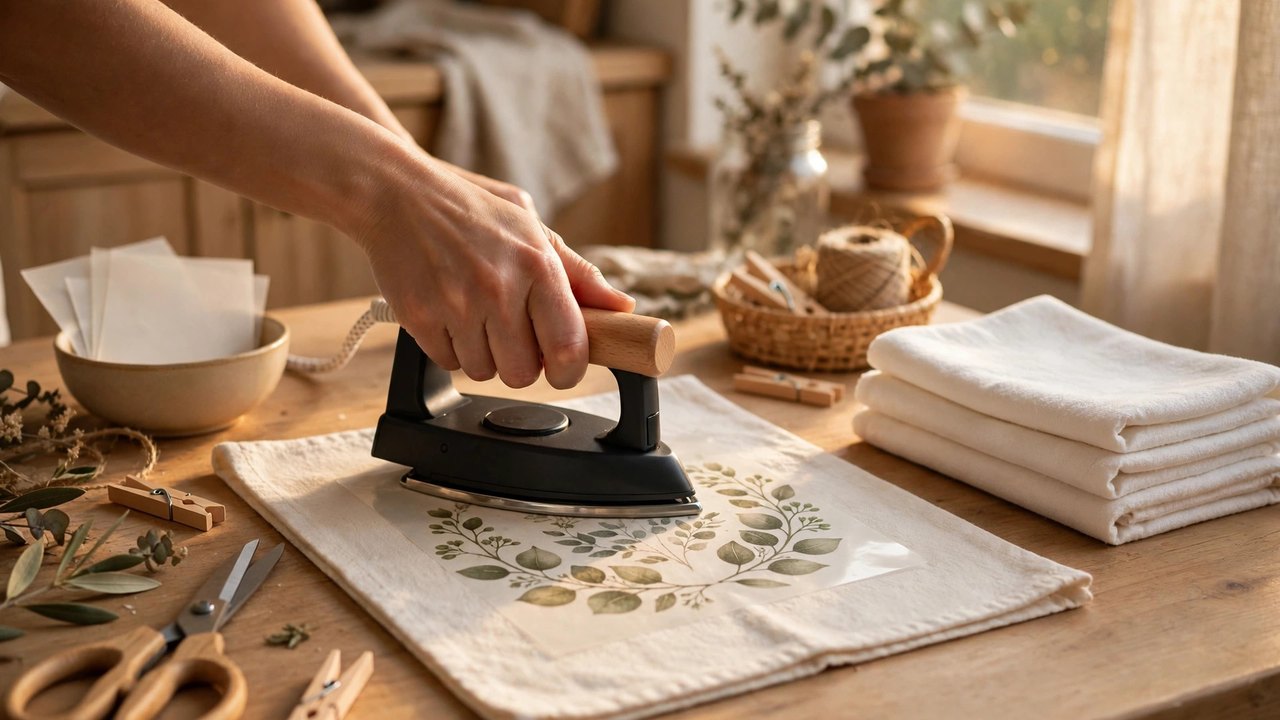
This is the most straightforward recommendation in the group, because the listing confirms the two things an iron-on project needs most: a flat surface and room to work. The maker lists the weave type as plain weave, and plain weave is exactly what you want under an iron. There are no loops to crush, no ribs to bridge over, and no border pattern to avoid when you centre a design. Spread one towel on a hard, flat pressing surface, smooth it once with your hands, and the whole 28 inch square is usable canvas rather than a small flat island in a sea of texture.
The size deserves emphasis. At 28 by 28 inches, these are among the largest blanks in this guide, and that extra area is not wasted. It lets you position a design well away from the hems, where the fabric is flattest, and it gives the iron a clear run off the edge of a transfer sheet without the plate dropping onto a folded seam. If you are pressing a design that needs two overlapping iron passes, the generous square also means you can reposition the towel rather than the transfer, which is the safer move once heat has been applied.
Fabric: the maker lists 100% cotton
Weave: the maker lists plain weave
Size: the maker lists 28 x 28 inches per towel
Pack count: the maker lists 12 towels, model UK0062
Care: the maker lists machine wash
For pre-washing, treat this pack as your test laboratory as well as your project supply. Wash the whole pack before you press anything, dry it the way you plan to dry the finished towels, and then pick the flattest towel for a test press with a scrap of transfer material or an offcut design. Cotton flour sack fabric can shrink a little on its first hot wash, and it is far better for that shrinkage to happen before a design goes on than afterwards, when uneven shrinkage can pucker the film. With twelve towels in the pack, using one as a permanent test and temperature-check towel costs you very little.
Buy it if: you want the largest flat pressing area, a confirmed plain weave, and enough blanks in one pack for tests, mistakes, and finished pieces.
Skip it if: you only make small motifs and would rather work with a smaller towel that is easier to handle on a narrow pressing surface.
Aunt Martha’s has sold flour sack towels as decorating blanks for a very long time, and that heritage shows in the specification the maker chooses to publish: a premium 130 thread count. Thread count is not a guarantee of a good press, but a tighter, more even weave does give a transfer a smoother surface to bond to, with fewer visible weave gaps showing through a light design. For detailed artwork, fine lettering, or a printable sheet with pale colours, that smoother ground is a real advantage, because the eye reads any irregularity in the surface as part of the image.
The format matches the Utopia Kitchen pack at 28 by 28 inches, so you get the same generous working area and the same freedom to keep designs clear of the hems. The set is smaller, at seven towels, which makes it a considered purchase rather than a bulk one. That suits a crafter making a smaller number of finished pieces — a set of seasonal towels for your own kitchen, or a few gifts — where surface quality matters more than having a deep stack of spares.
Fabric: the maker lists cotton
Thread count: the maker lists premium 130 thread count
Size: the maker lists 28 x 28 inches per towel
Pack count: the maker lists a set of 7, model TTS28
Care: the maker lists machine wash
Because the pack is smaller, plan your pre-wash and testing more carefully. Wash and dry all seven first, inspect each one flat against the light for weave irregularities or pulled threads, and rank them: best surfaces for your main designs, next best for simpler bold designs, and the least even towel for your test press. Bold, dark designs are forgiving of a slightly more open weave, while fine lines are not, so matching the design to the towel is a simple way to get better results from the same pack.
Buy it if: you value a published thread count and a smoother surface for detailed or pale designs, and you need quality over quantity.
Skip it if: you are producing a large batch and the seven-towel count would mean ordering several sets to finish the run.
Thirteen towels is the largest pack in this guide, and for iron-on work that number has a specific virtue: it absorbs the learning curve. Your first press is rarely your best. The iron may be a touch cool in one corner, the pressure may be uneven, or the peeling timing may be off. With thirteen blanks, those early lessons cost you a towel or two and leave you with plenty of clean canvas, instead of turning a small pack into a stressful one-shot attempt.
The maker lists the fabric as 100 percent pure ring-spun cotton. Ring-spun yarn is twisted in a way that produces a smoother, stronger yarn than basic open-end cotton, and on a towel that tends to mean a surface with fewer stray fibres standing up from the weave. Stray fibres matter for iron-ons because a transfer bonds to whatever it touches first; a cleaner surface gives the adhesive a more uniform layer to grip. The listing also highlights hemmed edges, which help the towel keep its square shape through the pre-wash, so the blank you measured is the blank you press.
Fabric: the maker lists 100% pure all-natural ring-spun cotton
Size: the maker lists 27 x 27 inches per towel
Pack count: the maker lists a set of 13, model AEK-FS-TOWELS-01-13-WHT
Features: the maker lists hemmed edges and a lint-free, super absorbent finish
Care: the maker lists machine wash
At 27 by 27 inches, these towels give up almost nothing in working area compared with the 28 inch squares, and the slightly smaller square can be easier to centre on a standard ironing board if that is your pressing surface — though a hard, flat board or table protected by a thin pressing cloth will always give firmer, more even pressure than a padded board. For a run of matching gifts, wash the whole set together so every towel shrinks and softens the same way, then press the designs in one session at one iron setting, so the finished set looks like a set.
Buy it if: you are making a batch — gifts, favours, or a matching set — and want the most blanks per order with a smooth ring-spun surface.
Skip it if: you want the absolute largest square for an oversize design that needs every inch of a 28 inch blank.
If the material itself is part of the gift — a handmade towel presented as an organic, natural-fibre piece — this is the pick that supports that story honestly. The maker lists the fabric as 100 percent organic cotton, and the set is sold as a blank crafting towel, in white, at the full 28 by 28 inch flour sack size. Nothing about the organic listing changes the pressing method: it is still a flat cotton blank, it still needs a pre-wash, and it still takes heat the way any cotton towel in this guide does. What changes is the fibre sourcing behind the finished piece.
The maker also lists the towels as lint free, which is a useful trait at the pressing stage. Lint and loose surface fibre trapped under a transfer can create tiny unbonded spots that later become the starting points for peeling. A towel that starts cleaner, followed by a quick lint roll or a shake and a smooth-down immediately before pressing, reduces that risk. As with every pick here, avoid fabric softener in the pre-wash, because softener leaves a coating on cotton that can interfere with how a transfer bonds.
Fabric: the maker lists 100% organic cotton
Size: the maker lists 28 x 28 inches per towel
Pack count: the maker lists a set of 10, model 43235-126417
Features: the maker lists a lint free finish
Care: the maker lists machine wash
Ten towels is a comfortable middle quantity: enough for a small batch plus tests, without committing to the largest pack. One practical note for organic and unbleached-leaning cotton generally, and for any white cotton blank: wash these towels on their own for the pre-wash, with no coloured laundry, and check the rinse. Any residual dressing or loose dye in a shared load can mark a white blank in ways that only become obvious once a pale transfer goes over the top.
Buy it if: organic cotton matters to you or to the person receiving the finished towel, and you still want a full-size blank.
Skip it if: fibre sourcing is not a priority and a conventional cotton pack gives you more towels for your project.
Neolino’s set is the quiet, no-drama option: a dozen white flour sack towels, listed as 100 percent cotton, in the 27 by 27 inch square that suits most kitchen towel designs. The maker positions these towels for crafting and decorating as well as kitchen use, and the blank white surface is the point — there is no stripe, check, or border to design around, so a centred motif, a corner design, or a line of text along one end all sit on the same clean ground.
What this pack offers an iron-on crafter is consistency at a useful scale. Twelve matching blanks let you standardise your process: same pre-wash, same iron setting, same press time, same peel timing, repeated across a dozen towels. Repetition is how iron-on results improve, because you change one variable at a time instead of guessing across different fabrics. By the third or fourth towel in a session with a single pack like this, most people have their pressure and timing dialled in, and the remaining towels benefit.
Fabric: the maker lists 100% cotton
Size: the maker lists 27 x 27 inches per towel
Pack count: the maker lists a set of 12, model FSACK_2727_S12_White
Colour: the maker lists white for this variant
Care: the maker lists machine wash
A note on colour variants, because this style of towel is often sold in several colours under one listing: for iron-on transfers, and especially for printable sheets made for light fabrics, order the white variant specifically, and check the pack when it arrives before washing. A natural or cream towel will warm the colours of a design and can make whites in the artwork look dingy by comparison. If your design is a dark, opaque appliqué, a cream ground can be a deliberate choice, but it should be a choice, not a surprise.
Buy it if: you want a dozen matching white blanks in a versatile mid square and a simple, repeatable pressing routine.
Skip it if: you need a published thread count or a specific weave detail before you buy, since this maker keeps its listing simpler than some rivals.
Not every iron-on design needs a full tea towel canvas. A monogram, a small motif in one corner, a child’s drawing reduced to a single image, or a short line of text all sit comfortably on a smaller blank, and a smaller towel is simply easier to handle: easier to centre on a pressing surface, easier to keep perfectly flat with one hand while the other brings the iron down, and easier to fold and store once finished. The maker lists this Simpli-Magic pack, model 79374, at 24 by 24 inches, in a pack of twelve.
The fabric listing matches the rest of the guide — 100 percent cotton, in a flour sack style the maker describes as lint-free and highly absorbent for kitchen use. For craft purposes, read that as a flat, plain cotton surface with no pattern, which is the requirement that matters. The smaller square does impose one discipline: measure your design against the towel before you print or cut anything. Leave clear margins on all sides, keep the design away from the hems, and confirm that the iron’s plate can cover the design, or cover it in clean, planned sections, without riding up onto a folded edge.
Fabric: the maker lists 100% cotton
Size: the maker lists 24 x 24 inches per towel
Pack count: the maker lists 12 towels, model 79374
Features: the maker lists a lint-free, super absorbent flour sack construction
Care: the maker lists machine wash
This is also a sensible first pack for someone new to iron-ons. The cost of a learning mistake is a smaller towel, the pressing area is forgiving to manage, and twelve blanks give you a full practice run before you move up to the larger squares for bigger designs. Many crafters end up keeping both sizes on hand: the 24 inch squares for small motifs and labels, and a 28 inch pack for statement pieces.
Buy it if: your designs are small to medium, you are learning the process, or you want a manageable blank that is easy to keep flat.
Skip it if: your artwork is wide or tall and needs the margins that only a 27 or 28 inch square can provide.
Buying guide
Start with the surface, not the softness. A towel that feels luxuriously thick and looped in the hand is usually the wrong towel for a transfer. Iron-ons need a flat, smooth, tightly woven surface, and flour sack cotton provides it. Run this mental test before buying any blank: if you can feel texture with a fingertip — loops, ribs, waffle squares, raised stripes — the iron will feel it too, and the bond will be uneven. Smooth is the specification that decides whether a design lasts.
Match the fabric to the heat. Iron-on sheets and transfers are pressed at cotton-level heat for a sustained time. The makers of all six picks here list cotton, which is why they were selected. Be cautious with blends and synthetics sold as kitchen towels: a high polyester content can shine, glaze, or distort under a hot iron, and some transfer products specify natural fibres outright. Always read the instructions that come with your transfer material and follow its fabric guidance first; the towel is the foundation, but the transfer maker’s temperature and timing are the rules of the press itself.
Pre-wash every blank, every time. New cotton towels carry mill finishes and can shrink on their first wash. Both work against you if you press first and wash later: finishes can block bonding, and shrinkage after pressing can wrinkle or crack a design. Wash the towels before decorating, without fabric softener, and dry them the way the finished item will be dried. Then iron the blank itself flat — a plain pre-press with no transfer — to remove creases and drive out moisture, let it cool on a flat surface, and only then position your design. A dry, flat, room-temperature blank bonds better than a warm, slightly damp one pulled straight from a pile.
Think about shrinkage honestly. Cotton flour sack fabric is a simple weave, and simple weaves relax. Expect a small change in dimensions after the first wash and dry, which is another reason the pre-wash matters more than any measurement on the packaging. If you are making a matched set, pre-wash the whole set together under identical conditions so every towel changes the same way. If a finished design must land in an exact position — centred over a fold line, for example — measure after the pre-wash, not before.
Choose size from the design outward. Measure your design, add the width of your iron’s plate movement and a clear margin from every hem, and buy the towel that contains that total comfortably. Full-width artwork and large printable sheets belong on the 28 inch squares. Most single motifs suit the 27 inch squares. Small motifs, monograms, and text lines are at home on the 24 inch square. Buying too small is the one mistake you cannot press your way out of.
Press on a hard, flat surface. A padded ironing board absorbs the pressure an iron-on needs. A heat-safe hard surface — a sturdy table or a pressing board, protected appropriately — lets you apply firm, even pressure across the whole design. Keep the towel in a single layer under the design, with no folded hem or second layer of towel trapped beneath it, because any step in thickness becomes a pale, under-bonded stripe in the finished piece. Press, lift, and reposition the iron rather than sliding it, so the transfer cannot shift mid-bond.
Plan for a test towel. Whichever pack you choose, designate the first towel as a tester. Use it to confirm iron temperature, press time, pressure, and peel timing with your specific transfer material, because those variables belong to the transfer product, not the towel. Wash the test piece once after pressing and inspect the edges of the design before committing to the rest of the pack. That single habit prevents more ruined blanks than any other step in the process.
FAQ
Do I really need to pre-wash towels before applying an iron-on?
Yes. Pre-washing removes mill finishes that can interfere with bonding and lets the cotton shrink before a design is applied, rather than after. Wash without fabric softener, dry as you plan to dry the finished towel, and give the blank a plain press to flatten it before you position any transfer.
Why flour sack towels instead of regular terry kitchen towels?
Because flour sack fabric is flat and smooth. Terry loops create high and low points that a household iron cannot press evenly, so a transfer bonds patchily and is more likely to lift or crack. A flat weave gives the iron full, even contact across the whole design.
Can I use a coloured towel for an iron-on design?
You can for dark, opaque designs and appliqué, where the towel colour is an intentional background. For printable iron-on sheets and most transfers made for light fabrics, choose white, as all six picks in this guide are sold, because a coloured ground changes the colours in the artwork and shows through pale areas.
What iron setting should I use?
Follow the temperature and timing printed on your transfer material, which for cotton blanks is typically a hot, dry cotton setting with no steam. Steam is the common mistake: moisture between the iron and the transfer works against a clean bond. The towel listings here are cotton, which is the fabric those instructions are generally written for, but the transfer maker’s sheet is the final authority for your project.
How do I stop edges of a design from peeling after washing?
Most peeling starts at the press, not in the wash. Use a pre-washed, softener-free blank, press on a hard flat surface with firm even pressure for the full time your transfer instructions specify, let the piece cool as directed before peeling, and check edges before washing. When you do wash finished towels, follow the transfer product’s laundry guidance as well as the towel maker’s machine wash listing.
Are these towels only for crafts?
No. Every pick here is sold as a working kitchen towel as well as a blank, with the makers listing absorbent cotton and machine wash care. Many crafters decorate one end or one corner and keep the towel in daily use, or keep a decorated set for display and an undecorated set from the same pack for everyday drying.
Conclusion
Good iron-on work on a kitchen towel is mostly decided before the iron gets hot. Choose a flat, smooth, blank cotton surface, pre-wash it without softener, let any shrinkage happen first, and press on a hard surface with the transfer maker’s own timing. The Utopia Kitchen 12-pack is the easiest starting point, with its plain weave and full 28 inch square. The Aunt Martha’s set of seven suits finer, more detailed work, the Aunti Em’s Kitchen thirteen-pack suits batches and gifts, the Madras Collections set brings organic cotton to the same full-size format, the Neolino dozen offers a simple repeatable mid-size blank, and the Simpli-Magic 24 inch pack is the manageable choice for smaller motifs and first projects. Pick the size and pack count that fit your design, keep one towel aside for testing, and the rest of the process becomes the enjoyable part it is supposed to be.
M
Modern Line Home Editorial Team
We compare specs, materials and verified owner reviews before a product earns a spot. Rankings are never paid.
Affiliate disclosure. As an Amazon Associate we earn from qualifying purchases at no extra cost to you. Prices accurate as of the date shown.
House cold even with the heat on? Walk this ordered checklist: thermostat and filter first, then drafts, insulation, leaky ducts and a failing heating system.
Windows fogging up in winter? Check where the fog sits: on the room side it is indoor humidity, outside it is harmless, and between panes the seal has failed.
Store the main firewood pile about 30 feet from your house, off the ground and covered only on top. Compare racks, woodsheds, garages and indoor spots safely.
Place a portable generator outdoors only, at least 20 feet from windows, doors and vents, exhaust pointed away. Exact distances, setup steps and CO rules here.
Keep houseplants in the right winter spot: match window direction to plant type, stay clear of radiators and cold glass, and fix dry air and low light at home.
Mice enter through pencil-width gaps at foundations, pipes, vents, doors and the roofline. Walk this room-by-room winter checklist to find and seal each one.
A winter outage timeline: what to do in the first hour, first night and multi-day outage, with food safety times, pipe protection, heat and CO safety steps.
Size a space heater by room area: 10 watts per square foot at 8-foot ceilings, adjusted for insulation and ceiling height, with full wattage and BTU tables.
Start dripping at about 20 degrees, sooner for exposed pipes. Set a pencil-lead stream, drip the right faucets on both lines, and know when to stop safely.
A fridge needs 800-1,200 starting watts, not just 150-400 running watts. Use the tables to total your fridge plus freezer, lights, furnace fan and more today.












Write Your Review
No reviews yet. Be the first to share your experience!