We independently review everything we recommend. When you buy through our links, we may earn a commission. As an Amazon Associate we earn from qualifying purchases.
Best Office Chairs to Sit With a Dog: 6 Wide Seats
Wide-seat office chairs with room for a small dog beside you: compare maker-listed seat widths, depths, capacities, arms and back support before you buy today.
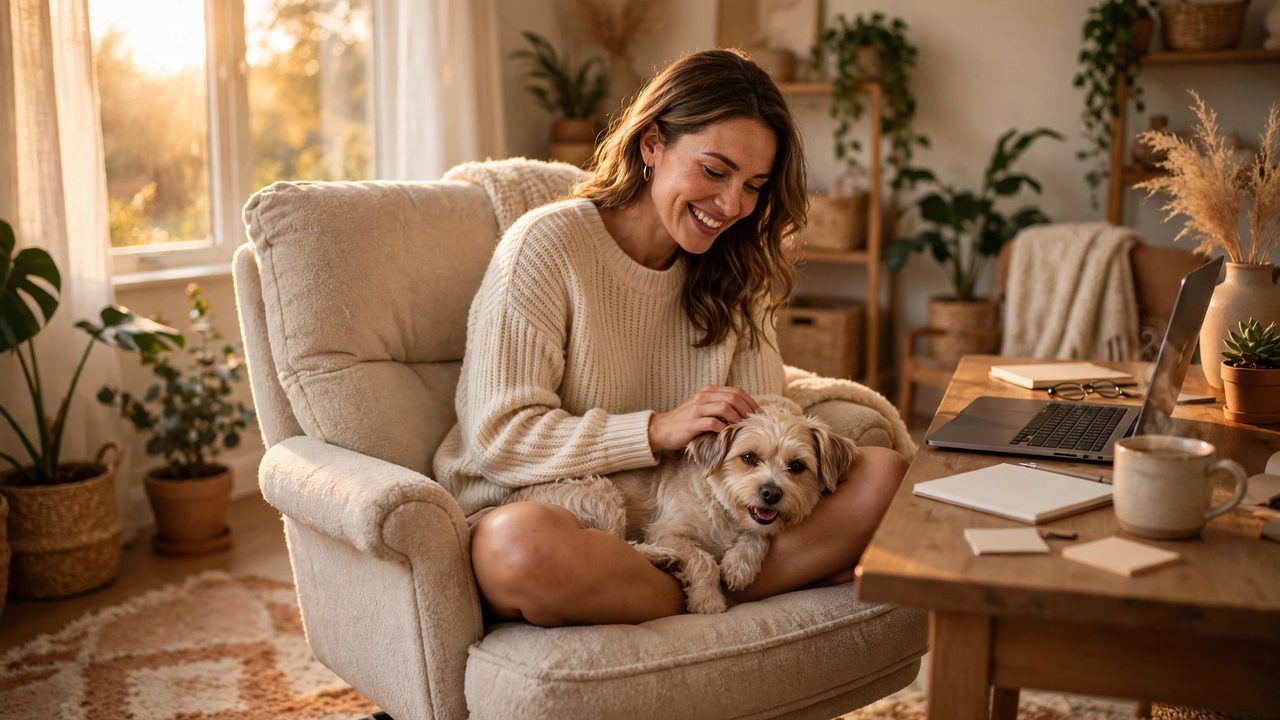
If your dog insists on joining you at the desk, a standard task chair leaves both of you squeezed. The best office chairs to sit with dog owners actually use day after day are not pet chairs at all. They are extra-wide, oversized-seat office chairs, built for big and tall users, where the maker lists a seat wide enough that a small dog can curl up on the unused part of the cushion beside you while you keep a proper working posture. That distinction matters, because no maker in this guide promises that a chair fits a dog. What the makers do publish, in plain numbers, is seat width, seat depth, and weight capacity, and those three figures are what decide whether there is genuinely spare room beside you or whether you are just hoping there might be.
This guide works only from those maker-listed figures. Every chair below was chosen because the maker lists a seat at least 21.6 inches wide, well above the roughly 19 to 20 inches of a typical office chair, and because the maker lists a weight capacity with headroom for a person plus a small dog sharing the cushion. Read the seat width first, then the space between the arms, then the depth. A wide cushion with fixed, close-set arms can feel narrower than the headline number, and a very deep cushion can push a smaller dog, and your knees, into awkward positions. The right pick is the one whose listed dimensions leave a clear, flat patch of seat beside your thigh, on a cushion firm enough that neither of you rolls toward the middle.
A safety note belongs up front. A chair is rated by its maker for a total load, and that rating covers everything on the seat at once. Add your own weight and your dog’s weight together and keep the total comfortably under the maker’s listed capacity. Supervise a dog on a chair, especially on a swivel chair with casters that can move as a dog jumps up or down, and never let a dog chew foam, fabric, or a gas-lift cover. If your dog is medium or large, even the widest seat here is unlikely to leave a sensible shared space, and a floor bed beside the chair is the kinder answer. For a small dog that already tries to climb up, though, a wide seat can turn a daily wrestle into a calm, shared routine.
Quick verdict
For the most shared room, start with the Flash Furniture HERCULES Series 24/7 chair, because the maker lists the widest seat in this guide at 25 inches wide by 21 inches deep. For a breathable mesh back and flip-up arms that clear the seat completely, look at the WITTLONG 938, where the maker lists a 23.62-inch-wide seat and the highest capacity here. For a reclining chair with a retractable leg rest for breaks, the Efomao big and tall chair lists a 23.2-inch-wide seat. For a plush, executive feel in bonded leather, the Serta Fairbanks lists a 22.5-inch-wide seat, and the Boss CaressoftPlus B991-CP matches that width with a higher listed capacity. For a mesh seat and back from an established contract brand, the HON Wave lists a generous overall width, height and width adjustable arms, and a 450-pound capacity, with a seat the maker lists at about 21.6 to 21.75 inches wide depending on the spec sheet you read. None of these is a dog chair. Each is a wide human chair whose listed seat leaves spare room, and that is exactly the point.
The products in this guide
Flash Furniture HERCULES Series 24/7 Big and Tall Executive Chair GO2085
The seat at 25 inches wide by 21 inches deep, with a seat height range the maker lists from 21.5 to 25 inches, and that width is the widest in this
Best if you want the widest maker-listed seat in this guide and your dog is small
About 21.6 to 21.75 inches wide x about 19 inches deep
450 pounds
Height and width adjustable padded arms
Adjustable arm width and a mesh seat
Use the table as a shortlist, not a decision. Two chairs with the same headline seat width can feel very different once arm spacing, cushion shape, and seat depth are counted, so the detailed sections below explain where the spare room really is on each model, and where it is not.
How we selected
Selection started with seat width, because width is the whole premise of sitting beside a dog. Only chairs where the maker lists a seat width of roughly 21.5 inches or more were considered, and standard task chairs, gaming buckets with deep side bolsters, and narrow cross-legged chairs were left out even when their marketing sounded pet friendly. Bolsters deserve a special mention: a racing-style bucket can measure wide across the outside while the flat, usable part of the cushion between the bolsters is narrow, which is the opposite of what a dog needs. Every chair here has a comparatively open seat, or arms that move, so the listed width is closer to usable width.
Next came weight capacity. The maker lists a capacity for each chair, and a shared seat adds two loads at once, so only chairs listed at 350 pounds or more were kept. That floor is not a guarantee for any particular household. It is a filter that removes lightly built chairs, after which you still need to do your own addition and leave a sensible margin. Chairs with steel or chrome bases, reinforced frames, and higher-grade gas lifts were favoured, because a dog shifting its weight at the edge of a wide cushion puts uneven, moving loads through the lift and base in a way a still, centred person does not.
Each product was then verified on opened pages, using the maker’s own specifications or a retailer or Amazon listing that shows the full details for that exact model, including its model number. Where sources disagreed on a figure, the disagreement is stated in the article rather than smoothed over, as with the HON seat width and the Efomao capacity fields. Specs are phrased throughout as what the maker lists, because cushion feel, foam firmness, and how much of a seat a particular dog will happily use cannot be known from a spec sheet. Finally, arm design was weighed heavily. Flip-up arms and width-adjustable arms scored well because they let you reclaim the full seat width and lift a dog in and out without threading it between fixed armrests, while fixed padded arms scored for owners who lean on them all day and whose dog is small enough to fit easily between them.
The headline figure here is the one that matters most for this guide. The maker lists the seat at 25 inches wide by 21 inches deep, with a seat height range the maker lists from 21.5 to 25 inches, and that width is the widest in this roundup by a clear margin. On a seat that wide, a small dog has a realistic patch of cushion beside a seated adult without either of you sitting on the waterfall edge or perching against an arm. The maker lists the seat padding as 4 inches of foam, and lists a contoured seat and back, a high back design, and an overall size of 32.75 inches wide by 34 inches deep, so measure your desk bay before ordering, because a chair this broad needs a broad home.
Support figures are equally plain. The maker lists a 400-pound weight capacity, a heavy duty chrome base, and dual wheel casters, and describes the chair as a 24/7 intensive use model, a category built for multi-shift environments where a chair is occupied around the clock. The maker lists a pressurized lumbar support knob, so lower back support can be dialled in rather than accepted as fixed, plus tilt lock and a tilt tension adjustment knob. The arms are height-adjustable padded loop arms. Loop arms give you and a dog a defined boundary at each side, which some owners like, but they do not flip away, so the usable width is the width between those arms, and a dog has to be lifted in over or in front of them rather than walking in from the side.
The back is listed at 24 inches wide by 27 inches high, with an integrated headrest area in the extended upper back, which suits taller owners who want head support while a dog takes the side of the seat. Fabric upholstery, rather than a leather-look surface, is a practical plus in a pet household, because claws tend to mark smooth coated fabrics more visibly, and fabric is less likely to feel hot against a dog resting through a long afternoon. Keep expectations grounded, though. The maker lists no pet feature, no washable cover, and no bolster-free guarantee, so put a thin, washable throw over the dog’s half of the cushion to catch hair and protect the foam, and check that the throw cannot slide into the tilt mechanism.
Buy it if you want the widest maker-listed seat in this guide and your dog is small enough to settle on roughly a third of a 25-inch cushion while you work upright.
Skip it if your workspace is tight, you need arms that move out of the way, or your dog is large enough that even a 25-inch seat becomes a squeeze rather than a shared space.
The WITTLONG 938 pairs width with the most useful arm design in this guide for a dog household. The maker lists an extra-wide seat cushion measuring 23.62 inches wide by 20 inches deep, upholstered in fabric with high-density foam, and lists the internal spacing between the armrests at 22.05 inches. Those padded arms adjust in height and flip up 90 degrees. Flip them up and the sides of the seat open completely, which makes it far easier for a dog to step onto the cushion from the side, turn around, and settle, and far easier for you to lift an older or nervous dog in without twisting. Flip them down again when the dog is on the floor and you want forearm support for typing.
The maker lists a 500-pound maximum weight recommendation, the highest in this guide, along with an SGS-certified Class 4 pneumatic gas lift, a seat height range the maker lists from 18.9 to 22.44 inches, and a recline range from 90 to 122 degrees. That capacity gives the largest arithmetic margin for a person plus a dog, although the margin rule still applies and the total should stay well under the listed figure. The backrest is listed at 29.53 inches high, framed in polypropylene and nylon and covered in breathable high-tension mesh, which is a genuine advantage when a warm dog is pressed against you for hours, because the mesh back lets air move where a solid padded back would trap heat.
Lumbar support is a separate S-curve module, and the maker lists 2 inches of vertical adjustment and 1 inch of depth adjustment for it, so you can place the curve where your back actually needs it after you have shifted slightly to make room for a companion. The maker lists the overall size at 29.53 inches wide by 26.18 inches deep, noticeably less sprawling than the largest executive chairs here, which helps in a home office. There is no dedicated headrest listed, so taller owners who rest their head back during calls should note that gap. As with every chair here, the maker lists these figures for a human sitter, so treat the dog’s corner of the cushion as borrowed human seat space, protect it with a washable layer, and keep claws trimmed so the fabric seat and mesh back are not picked apart.
Buy it if you want flip-up arms, a breathable mesh back, and the highest maker-listed capacity here alongside a genuinely wide seat.
Skip it if you need a headrest, want a leather-look executive finish, or your dog is unsettled by a chair that reclines and swivels under it.
The Efomao chair is the break-time option in this guide. The maker lists an oversized seat cushion at 23.2 inches wide by 20 inches deep and 4 inches thick, with a dual-layered sponge cushion, a high backrest, and an independent lumbar support. That width sits comfortably in the shared-seat range, giving a small dog a clear side of the cushion, while the depth is enough for the dog to curl rather than dangle. The maker lists the overall size at 30 inches wide by 31 inches deep by 50.75 inches high, a tall, executive footprint, and lists the back interior height at 29.5 inches, so this is a chair that fills a room as well as a seat.
Where this model differs is what happens when work pauses. The maker lists a reclining backrest that tilts up to 135 degrees, a tilt tension knob, 360-degree swivel, adjustable height, and a retractable leg rest. On a shared break, that leg rest changes the geometry in your favour: you recline, your legs come up, and a dog that was beside you on the seat often migrates to the space your posture has opened. Read the capacity fields carefully before relying on them. The listing title and description describe the chair as designed to accommodate up to 400 pounds and the safety information states a maximum of 400 pounds, while the structured product information field lists a maximum weight recommendation of 350 pounds. Plan around the lower figure. Treating 350 pounds as your working ceiling costs nothing and keeps a sensible margin for a person plus a dog.
The maker lists a heavy-duty metal base, an SGS certified Class 3 gas cylinder, smooth wheels, and PU leather upholstery. That smooth surface wipes clean of hair and muddy paw marks more easily than fabric, which pet owners will appreciate, but it is also the surface most likely to show claw scratches, so a throw on the dog’s side is close to essential here. The maker lists assembly at about 15 to 30 minutes with hardware and tools included. A reclining, swivelling chair with a leg rest has more moving parts than a fixed task chair, so introduce a dog to it while it is locked upright and still, and only recline once the dog treats the chair as furniture rather than a ride.
Buy it if you want a wide seat plus a recline and leg rest, so shared time with your dog continues naturally into reading and break time.
Skip it if you dislike conflicting capacity fields, need a Class 4 lift, or your dog startles when a chair moves, reclines, or extends a footrest.
The Fairbanks is the plush traditionalist of the group. The maker lists a 22.5-inch-wide spacious seat cushion, a backrest that rises 28.5 inches from the seat with a cushioned headrest, and a 350-pound weight capacity. That seat width is at the lower end of this guide, which changes who it suits. It is a sensible shared seat for a smaller adult with a very small dog, where the dog needs only a modest corner, rather than for a larger adult hoping to split the cushion down the middle. Be honest about that split before buying, because no amount of plushness creates width that is not there.
What the Fairbanks offers instead is cushion character. The maker describes layered body pillows and semi-plush cushioning in bonded leather, with padded armrests and hand-sculpted arm styling in the executive tradition. A deep, soft seat can suit a dog that likes to nest, since a small dog will often settle into a soft corner and stay there instead of roaming across a firm, flat cushion and onto your lap and keyboard. The same softness is the trade-off for work: a very plush seat gives less of the firm, level platform that keeps hips aligned through a long typing day, and a dog sinking into soft foam beside you can tilt the shared surface toward the middle.
The maker lists a nylon swivel base for this black bonded leather version, along with height adjustment and tilt lock among its functions in retailer specifications, and lists the overall size at about 28 inches wide by 30.5 inches deep by 45.75 inches high. Bonded leather needs the same claw caution as other smooth finishes, and it can feel warm in a hot room, especially with a dog adding body heat at your side. Put a breathable cotton throw over the dog’s portion and the comfort equation improves for both of you. Of the six chairs here, this is the one to choose for looks and softness first and shared width second, and for a tiny dog that may be exactly the right order of priorities.
Buy it if you want a plush executive chair first, your dog is very small, and a modest corner of a 22.5-inch seat is genuinely enough.
Skip it if you need maximum shared width, a capacity above the maker’s listed 350 pounds for your combined total, or a firm seat for long upright work.
The Boss B991-CP matches the Serta on headline width and beats it on listed capacity and seat shallowness, which is a useful combination for this use. The maker lists a seat 22.5 inches wide by 19 inches deep, a back 29 inches high by 23 inches wide, a seat height range from 19 to 22 inches, and a 400-pound weight capacity. That 19-inch depth is the shallowest in this guide, and shallow matters for sharing in a way that is easy to miss. A dog sitting beside you needs width, but a very deep seat encourages the dog to settle behind your thigh or against the backrest, where it pushes you forward. A shallower cushion keeps both of you in a simpler side-by-side line and can suit shorter owners whose feet still need to reach the floor.
The maker lists double plush pillow-top style cushioning, Caressoft upholstery in black, a heavy-duty spring tilt mechanism, pneumatic gas lift seat height adjustment, and a 27-inch brushed metal base with large casters in the maker’s product descriptions. Wrap-around steel frame arm construction is part of the maker’s description of this model family, with padded arms, so the arms are structural and fixed rather than occasional. That gives a solid lean, and a firm edge a dog can curl against, but it also means the space between the arms is the space you get, full stop. Measure your own hip width, add the width your dog occupies when curled, and compare the total honestly with the listed seat width before assuming a fit.
The overall footprint is the caution. Retailer specifications list this chair at 33.5 inches wide overall, the widest overall stance here despite a mid-pack seat, because of that wrap-around arm frame. In a small home office, a chair can offer a wide seat and still be the wrong buy if it cannot roll back from the desk or turn without striking a wall, a crate, or a sleeping dog on the floor. Check the full circle the chair needs to swivel, not just the space it occupies parked. For a larger room, though, the B991-CP is a straightforward proposition: a plush, high-capacity executive chair whose shallower, 22.5-inch seat suits a smaller adult sharing with a small dog.
Buy it if you prefer a shallower seat, want a 400-pound maker-listed capacity, and have the floor space for a very wide overall frame.
Skip it if your room is narrow, you need arms that adjust or flip away, or you and your dog together need more than a 22.5-inch seat.
The HON Wave is the adjustable, breathable option from a brand best known for contract office seating. The maker lists a 450-pound capacity, a contoured padded mesh seat and mesh backrest, pneumatic seat height adjustment, tilt tension and tilt lock, a synchro-tilt control mechanism, a five-star base, and all-surface casters. On seat width, sources for this exact model differ slightly: a retailer specification lists the seat at 21.6 inches wide, while the maker’s spec sheet for model BSXVL705VM10 lists seat width at 21.75 inches, with a usable seat depth of 19.75 inches on that sheet and 19 inches in the Amazon product information. Plan around the smaller figures. Even at the conservative reading, the seat is wider than a standard chair, but it is the narrowest in this guide, so this is a pick for a smaller adult and a small dog, chosen for adjustability and airflow rather than raw shared acreage.
The arms are the reason the Wave still earns its place. The maker lists arms that adjust in both height and width. Width adjustment is rare and valuable here, because pushing the arms outward can recover usable seat room that fixed arms would fence off, and it lets you set a clear boundary on your working side while opening the dog’s side. Combined with adjustable lumbar support, listed for this model in its specifications, the Wave can be tuned around the slightly asymmetric posture that sharing a seat creates, instead of forcing you to sit dead centre on a chair that assumes a solo sitter.
Mesh on both seat and back is the other distinction. A padded mesh seat has a firmer, more suspended feel than deep foam, which keeps the shared surface level, so a dog’s weight at the edge is less likely to create a slope you slide into. Airflow is better for a warm dog and a warm room. The trade-offs are feel and formality: mesh reads as a working task chair rather than an executive statement, and some owners simply prefer a solid cushion under a dog. The maker lists the overall size at 30.25 inches wide by 25.63 inches deep by 42.88 inches high, a comparatively tidy footprint for a big and tall chair, which helps if the dog also has a floor bed, toys, and a water bowl competing for the same corner of the room.
Buy it if you want width-adjustable arms, a mesh seat and back, and a 450-pound maker-listed capacity in a comparatively compact big and tall chair.
Skip it if you need the widest possible seat, dislike the suspended feel of mesh, or your combined size calls for one of the 23-inch-plus seats above.
Buying guide
Start with arithmetic, not photographs. Measure the width your dog takes up when curled in its usual sleeping ball, then sit in your current chair and measure the width you occupy at the hips and thighs. Add the two numbers. If the total is within an inch or two of a chair’s maker-listed seat width, that chair will feel like a negotiation every day, because cushions curve up at the edges and arms intrude. Look for a listed seat width that leaves a few spare inches beyond your combined measure, and remember that the space between the arms, where a maker lists it, is the truer ceiling. The WITTLONG listing, for example, lists 23.62 inches of seat and 22.05 inches between the arms, and that second number is the one a dog experiences.
Then do the weight addition. Your weight, plus the dog’s weight, plus a margin for movement, should sit comfortably below the maker’s listed capacity. Dogs do not load a chair politely. A dog jumping up lands with more force than its standing weight, and a dog leaning at the front edge loads the lift unevenly. Higher listed capacities and stronger lift classes give more headroom for that reality, which is why the 450 and 500-pound listings here are attractive for sharing even when the static total looks modest. If two capacity figures appear for one model, as they do for the Efomao chair, work from the lower one.
Choose arms for your routine. Flip-up arms are the most forgiving for a dog that comes and goes, because the seat opens into a bench. Width-adjustable arms are next best, letting you trade arm support for seat room. Fixed padded or loop arms suit a dog that arrives once, settles, and stays, and an owner who leans while typing. Think, too, about how the dog gets down. A high seat, and several chairs here list seat heights starting around 19 to 21.5 inches, is a long drop for a small or older dog. A low step beside the chair, or a rule that you lift the dog down, protects joints better than letting it launch itself onto hard flooring many times a day.
Pick a surface for a pet household. Fabric and mesh shrug off light claw contact and breathe against a warm dog, but hold hair and odour and need vacuuming. Smooth leather-look surfaces release hair with a wipe and clean up after muddy paws, but show claw scratches and can feel hot and slippery, so a dog may scrabble for grip when the chair swivels. In every case, a thin washable throw over the dog’s half of the seat is the cheapest protection available. Keep it thin, because a thick folded blanket changes the seat height and lumbar geometry the maker designed, and keep it clear of the lift, tilt, and caster mechanisms.
Finally, plan the room, not just the chair. Big and tall chairs list overall widths from about 28 to 33.5 inches in this guide, with deep footprints and wide bases. Leave room to swivel without rolling over paws, room for the dog to approach from its preferred side, and a floor bed nearby for the many times the dog would rather stretch out than share. A wide chair works best as an invitation, not an obligation, and a dog that can choose the floor often chooses the chair more calmly.
FAQ
Will a dog really fit beside me on an office chair?
A small dog can, on a wide enough seat, and the maker-listed seat width is how you judge it. Measure your dog curled up and yourself seated, add the widths, and compare them with the listed seat width and, where available, the space between the arms. On the widest chair here, listed at 25 inches, a small dog and a smaller adult can sit side by side. On a 22.5-inch seat, expect the dog to get a corner rather than a half. A medium or large dog will not fit sensibly beside an adult on any chair in this guide.
Is it safe for a dog to share a chair rated for one person?
Only within the maker’s listed limits. Add your weight and your dog’s weight and keep the total comfortably under the listed capacity, supervise the dog on a swivelling, wheeled chair, and stop if the chair creaks, sinks, or tilts unevenly under the combined load. No maker in this guide markets its chair for pet use, so the safe claim is a narrow one: a wide seat leaves physical room, and a high listed capacity leaves arithmetic room, and both margins are yours to respect.
Which arm style is best when a dog comes and goes?
Flip-up arms, like those the maker lists on the WITTLONG 938, open the sides of the seat completely, so a dog can step on and off without squeezing past a fixed arm. Width-adjustable arms, as listed on the HON Wave, are the next most flexible. Fixed loop or wrap-around arms give better leaning support but mean lifting the dog in and out, which suits a calm dog that settles once and stays.
How do I protect the seat from hair and claws?
Use a thin, washable throw over the dog’s side of the cushion, keep claws trimmed, and vacuum fabric or mesh regularly. Smooth leather-look seats wipe clean but show scratches, so the throw matters most there. Keep fabric clear of the gas lift and tilt mechanism, and check the throw has not bunched into a slope that pushes you or the dog off level.
What if my dog is too big for every seat here?
Then the honest answer is a different setup, not a bigger promise. Put a supportive dog bed directly beside your chair, at the side your dog prefers, so the dog is within arm’s reach without sharing the cushion. Many owners find that arrangement gets them most of the companionship with none of the posture compromises, and the wide chair still earns its place by giving you room to turn toward the dog comfortably.
Conclusion
Sharing a desk chair with a dog is a dimensions problem before it is a shopping problem, and dimensions are exactly what makers publish. Choose by the maker-listed seat width first, check your combined weight against the maker-listed capacity second, and let arm design decide between close matches. The Flash Furniture HERCULES GO2085 offers the widest listed seat here at 25 inches. The WITTLONG 938 combines a 23.62-inch seat with flip-up arms and the highest listed capacity. The Efomao chair adds recline and a leg rest for shared breaks, the Serta Fairbanks and Boss B991-CP bring plush executive comfort at 22.5 inches with different capacities and depths, and the HON Wave trades a little width for width-adjustable arms and breathable mesh. Measure your dog, measure yourself, protect the cushion, and the right wide seat turns a daily interruption into the best part of working from home.
M
Modern Line Home Editorial Team
We compare specs, materials and verified owner reviews before a product earns a spot. Rankings are never paid.
Affiliate disclosure. As an Amazon Associate we earn from qualifying purchases at no extra cost to you. Prices accurate as of the date shown.
House cold even with the heat on? Walk this ordered checklist: thermostat and filter first, then drafts, insulation, leaky ducts and a failing heating system.
Windows fogging up in winter? Check where the fog sits: on the room side it is indoor humidity, outside it is harmless, and between panes the seal has failed.
Store the main firewood pile about 30 feet from your house, off the ground and covered only on top. Compare racks, woodsheds, garages and indoor spots safely.
Place a portable generator outdoors only, at least 20 feet from windows, doors and vents, exhaust pointed away. Exact distances, setup steps and CO rules here.
Keep houseplants in the right winter spot: match window direction to plant type, stay clear of radiators and cold glass, and fix dry air and low light at home.
Mice enter through pencil-width gaps at foundations, pipes, vents, doors and the roofline. Walk this room-by-room winter checklist to find and seal each one.
A winter outage timeline: what to do in the first hour, first night and multi-day outage, with food safety times, pipe protection, heat and CO safety steps.
Size a space heater by room area: 10 watts per square foot at 8-foot ceilings, adjusted for insulation and ceiling height, with full wattage and BTU tables.
Start dripping at about 20 degrees, sooner for exposed pipes. Set a pencil-lead stream, drip the right faucets on both lines, and know when to stop safely.
A fridge needs 800-1,200 starting watts, not just 150-400 running watts. Use the tables to total your fridge plus freezer, lights, furnace fan and more today.












Write Your Review
No reviews yet. Be the first to share your experience!