We independently review everything we recommend. When you buy through our links, we may earn a commission. As an Amazon Associate we earn from qualifying purchases.
Best Caulk for Tubs and Showers: Types, Set Times, Picks
Compare silicone, siliconized and acrylic caulks for tubs and showers, with listed dry times, surfaces and trade-offs, to match the product to your own joint.
Compare silicone, siliconized and acrylic caulks for tubs and showers, with listed dry times, surfaces and trade-offs, to match the product to your own joint.
Our top picks at a glance
8 products from this guide, in the order reviewed below.
1
Gorilla Waterproof Silicone Caulk & Seal
This is a 100 percent silicone caulk described as waterproof, mold and mildew resistant and flexible, and a published roundup names it a…
As an Amazon Associate we earn from qualifying purchases. Prices and availability can change.
A cracked or moldy seam around the tub lets water behind the wall, and the wrong caulk fails again within a season. This guide explains how to choose the best caulk for tubs and showers, comparing silicone, siliconized and acrylic products by listed surfaces, dry times and trade-offs, so the next seam you lay lasts.
Quick verdict on the best caulk for tubs and showers
For a tub-to-wall joint that stays wet and flexes, a 100 percent silicone sealant is the usual starting point, and the products below are sorted by what the pages state about type, dry time and surfaces. Paintable options exist, but they trade some water performance for that flexibility.
The picks come from published product pages and a published caulk roundup, and every spec in this article is limited to what those pages state. Where a page left out a size, surface or set time, the entry says so rather than filling the gap with a guess.
We looked for products described for kitchens and baths, because that wording signals a formula meant for constant moisture. We also wanted a spread of chemistries so you can see the real trade-off: pure silicone for flexibility and water resistance, siliconized formulas for easier cleanup, and paintable acrylic blends for visible trim lines.
Eight products made the cut. A few popular names were left out because the pages we could read did not state enough about them to describe fairly. If a product is missing, that is the reason, not a judgment on its quality. Check the current listing and the label on the tube before you buy.
The best caulk for tubs and showers, product by product
Each entry below gives the exact product name, the type the page states, the sizes and dry times listed, and what the page says it sticks to. Read the label on the tube you buy, because makers revise formulas and packaging, and the label always overrides a review.
This is a 100 percent silicone caulk described as waterproof, mold and mildew resistant and flexible, and a published roundup names it a top overall pick for showers and tubs. It suits a homeowner who wants one dependable tube for the tub-to-wall joint.
The roundup lists a 10 oz size and a 30 minute dry time, and says it adheres to most bathroom surfaces. It also reports that the bead applied easily, tooled well and stayed barely noticeable once dry, with no yellowing. The maker-style cautions are clear: it is not suitable for aquariums, brick, masonry, metals or cement, and it is not paintable.
Pros: pure silicone chemistry, quick dry time, easy to tool, stays clear. Cons: cannot be painted, so you must pick the right color or clear up front, and it does not bond to masonry or metal joints. Buy if you want a straightforward silicone for a standard tub or shower seam. Skip if the joint needs to be painted to match trim.
This 100 percent silicone sealant is listed in 2.8-ounce and 10.1-ounce tubes, which makes it a good fit for small repairs where a full cartridge would be wasted. It is described as shrink and crack proof, low odor, flexible and waterproof for up to 10 years.
The roundup lists a 30 minute dry time, with dry time given as 30 minutes to 24 hours, and the surfaces named are metal, plastic, wood, glass, tile and fiberglass. Fiberglass is the one that matters for many tubs, so it is a useful confirmation that the formula is meant for that surface. It is not paintable.
Pros: small tube option, low odor, consistent beads, nearly invisible when clear, strong flexible seal. Cons: using small tubes to caulk an entire shower would be tedious, and the 10 year figure is a maker claim about waterproof performance, not a guarantee for your bathroom. Buy if you are patching a few spots. Skip if you are re-caulking a full surround and want a large cartridge.
This silicone sealant is listed in a 10.1 oz size and described as low odor, waterproof and mold resistant, with no shrinking, cracking or yellowing. It is aimed at someone who wants a quick dry time and a bright white finish on a visible seam, such as along the front edge of the tub.
The roundup lists a 30 minute dry time, with 30 minutes to 24 hours given and up to 24 hours recommended for best results. The maker’s caulking guide calls the product 30-minute water-ready and mentions lifetime mold-free protection with a footnote, so read that footnote on the package before relying on the claim. The roundup does not state surfaces and says it is not paintable.
Pros: fast dry, bright white result, flowed well in the review, helpful on a large gap. Cons: surfaces are not stated in the roundup, so confirm them on the label, and it cannot be painted. Buy if you want a fast turnaround and a clean white line. Skip if your tub surround is a color other than white and you need a tint match.
This is a siliconized latex caulk that creates a waterproof barrier, includes Microban antimicrobial protection and can be painted. It is the pick for a seam where color matching matters, such as a joint against painted drywall or trim above the tub.
The roundup lists 2 hours before painting and 24 hours before showering, and names ceramic and plastic tile, porcelain, metal, cultured marble, drywall, painted surfaces, glass, fiberglass and wood. A size is not stated. Cleanup with a wet rag is described as easy, and paint took well.
Pros: paintable, broad surface list including fiberglass and porcelain, easy cleanup. Cons: the 2 hour dry time is longer than the Kwik name suggests, and as a siliconized latex it is a different material from pure silicone. Buy if you need a paintable bead on a tub surround. Skip if the joint is submerged often and you want pure silicone.
This low-VOC siliconized acrylic caulk carries HomeShield antimicrobial protection and comes in white, clear and tan. It suits a project where a paintable seam and a wide surface list matter more than speed, for example a bathroom you can leave alone while the bead dries slowly and fully.
The roundup states it dries in 72 hours and warns that brush strokes or pulling can happen if it is worked too soon. Surfaces listed are porcelain, ceramic, marble, glass, plastic, vinyl, fiberglass and more. A size is not stated. It took paint well once dry and stayed fairly flexible.
Pros: low VOC, antimicrobial protection per the maker, paintable, many surfaces. Cons: very long drying time, which means the tub sits out of service longer. Buy if you can leave the bathroom alone for several days and want paint-ready results. Skip if you need the shower back the same day.
This low-odor, low-VOC siliconized caulk has a glossy white finish and is described as repelling stains, dirt and water while staying flexible after drying. It is for a homeowner who cares most about how the finished bead looks, since a visible white line around the tub is the first thing guests notice in a small bathroom.
The roundup lists 5.5 fl oz and 10.1 oz sizes from two retailers, and says it dries in 4 hours with over 24 hours recommended before water exposure. Dry time is listed as 4 to 24 hours. Surfaces are not stated and it is not paintable. The review credits it with the nicest finish of the caulks it covered, plus easy tooling and cleanup.
Pros: glossy finish, easy to tool, low odor, flexible. Cons: not paintable, and the 4 hour dry time must pass before you inspect the bead. Buy if a clean white line is the priority. Skip if you need to confirm the listed surfaces before committing, since the page does not state them.
This siliconized acrylic caulk stays flexible and waterproof and comes in bronze, white and clear. It is also described as usable as an adhesive, for example on loose backsplash tiles, which makes it a flexible small-job tube for someone who also has a few other bathroom repairs waiting and wants one product to cover them.
The roundup gives dry time as 30 minutes to 24 hours, says it is paintable after latex paint dries and that oil-based paint needs 24 hours, and reports that it adhered well to fiberglass. A size is not stated. The one complaint is that paint did not handle especially well, mainly because of the bronze color used in the review.
Pros: paintable, adhered well to fiberglass, quick dry, easy cleanup. Cons: paint results depend on color, and the page gives no size. Buy if you want a paintable caulk that doubles as a light adhesive. Skip if you need pure silicone for a constantly wet joint.
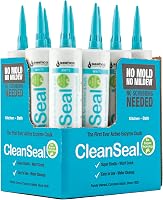
Sashco describes CleanSeal as an acrylic tub caulk and calls it the first active enzyme caulk, with the line No mold. No mildew. No scrubbing needed. It is for someone who wants a maker-designed tub product rather than a general sealant, and it gives the guide an acrylic option that is named for tub work on the maker’s own page.
The maker’s page says it is super elastic and will not crack, is waterproof, comes in white and almond, and sets quickly within 24-48 hours. The page also says a tub can be used within 24 hours of application in general, without tying that to one product, so follow the tube label for your exact set time. Size is not stated.
Pros: sold specifically as tub caulk, two colors, mildew claim from the maker. Cons: the page gives no size, no warnings and no surface list, and the mildew wording is a maker claim you should read on the label. Buy if a tub-specific acrylic appeals. Skip if you want a 100 percent silicone.
Choosing caulk comes down to a few decisions: the base chemistry, how long you can keep water off the joint, whether you will paint it, and how clean the surface is before you start. Each of those is covered below in plain terms, without invented numbers.
Silicone, siliconized and acrylic caulk compared
Pure silicone stays elastic and sheds water, which is why it is the common choice where a tub meets a wall. Siliconized acrylic and latex blends are easier to smooth and clean up with water, and many can be painted, but they are usually less flexible once cured.
The maker guide from GE calls 100 percent silicone the gold standard for tubs and showers, and suggests checking the label for a bathroom or kitchen and bath rating and a mildew-resistant formula. The trade-off for pure silicone is that most are not paintable and cleanup differs from water-based caulk, so read the label for tools and cleanup before you open the tube.
Dry time versus set time
Dry time is when the surface skins over, and set time is when the bead is ready for water. The two are not the same, and the listings above show a wide spread, from products that dry in 30 minutes to one that needs 72 hours, so plan the job around the slowest step.
Always follow the set time printed on the tube before the first shower, even if the bead feels firm. Water on an uncured bead can leave pits, wrinkles or a weak seal that fails early. If the household has only one bathroom, pick a faster-curing formula and schedule the work for a day when you can stay out of the tub.
Prep work that decides how long the seal lasts
Most failed caulk jobs fail at the prep step, not the product. Old caulk should be removed completely rather than covered, and the joint should be cleaned and fully dry before new sealant goes in. A few extra minutes here decide whether the new bead grips or peels away at the edges later.
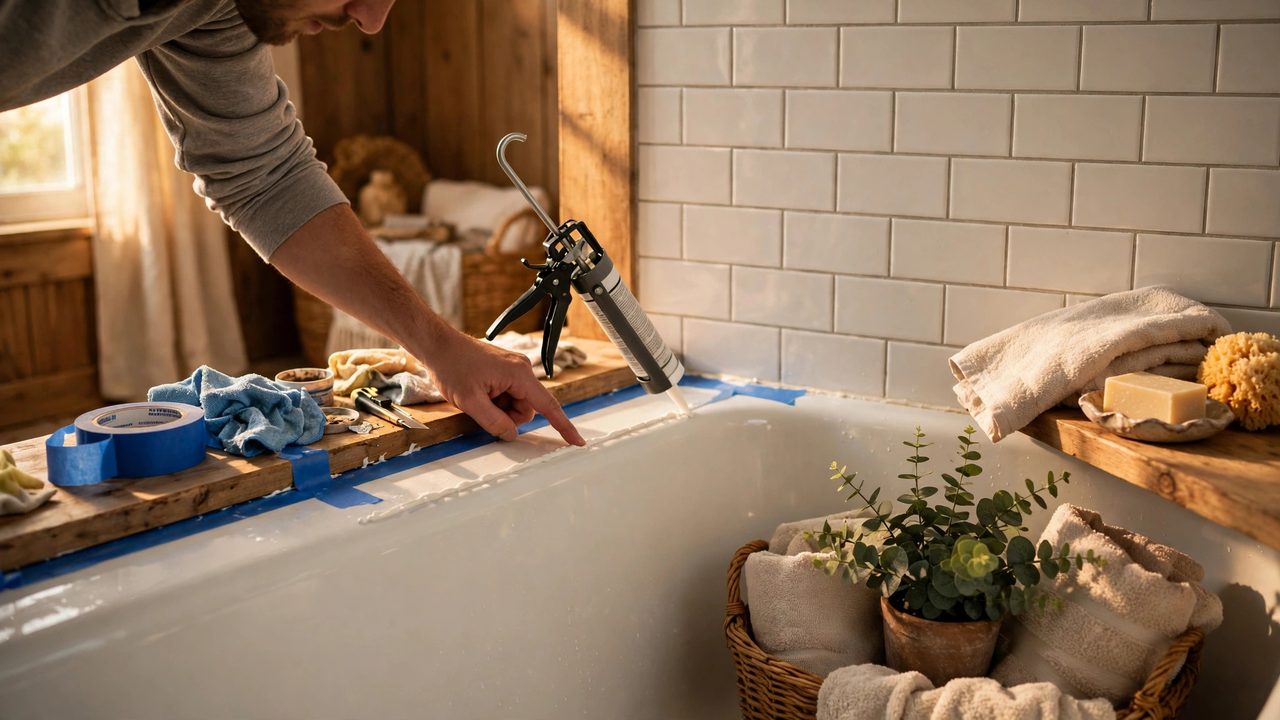
The GE guide advises removing the old bead with a sealant remover tool, wiping the area with rubbing alcohol or a mild cleanser, and letting it dry completely. It warns against metal scrapers, which can scratch the tub or tile, and against applying new sealant over old caulk. Painter’s tape on both sides of the joint gives a sharp line, peeled off while the caulk is still wet.
How to choose the best caulk for tubs and showers by surface
Match the caulk to the materials on both sides of the joint. A fiberglass or acrylic tub, a tile wall and a painted drywall edge each behave differently, and a caulk that bonds well to one may be weak on another. Reading the surface list on the tube is the quickest way to avoid a mismatch before you open it.
The listings above name fiberglass for GE Advanced Silicone 2, DAP Kwik Seal Plus, Red Devil Duraguard and Loctite Polyseamseal, and porcelain for DAP Kwik Seal Plus and Red Devil. For stone, metal or unusual finishes, read the surface list on the tube and test a hidden spot if the label is silent. When two products look equal, favor the one that explicitly names your material.
Mold and mildew claims to read carefully
Many bath caulks mention mold or mildew resistance, antimicrobial protection or a mold-free guarantee. These describe the cured caulk, not the surfaces around it, and they do not remove the need for ventilation and drying. Knowing what the wording actually covers helps you set realistic expectations for how the seam will look in a year.
The GE guide suggests ventilating the bathroom, towel-drying the caulk line after showers and cleaning with gentle cleansers. It also advises inspecting caulk yearly and replacing it about every five years, or sooner if it cracks, peels, pulls away or has mold that will not scrub off. Treat the maker claim as one layer of protection rather than a promise.
Common caulk mistakes
The most frequent mistakes are caulking over old caulk, working in a wet joint, cutting the nozzle too wide and using the tub too soon. Each one shortens the life of the seal and can trap moisture behind the bead. Most are easy to avoid with a little planning, a clean joint and a steady hand.
Cut the tip at an angle and make one steady pass, as the GE guide describes, then smooth the bead with a gloved finger or a smoothing tool. Work in small sections, overlap beads slightly at corners, and resist the urge to go back over a bead that has started to skin, because that tears it and leaves ridges.
FAQ
These are the questions that come up most often when homeowners replace the seam around a tub or shower. Answers stay general, and the label on your tube is the final authority for dry times, surfaces and temperature limits. Where a figure appears, it comes from the pages used for this guide.
Is silicone or acrylic caulk better for a tub?
For a joint that stays wet and flexes, pure silicone is generally preferred, and the GE guide calls it the gold standard for tubs and showers. Acrylic and siliconized blends are easier to paint and clean up, so they suit trim lines and drier joints where the seam is not under constant water.
A few acrylic tub products, such as Sashco CleanSeal, are made specifically for tubs, so read the label rather than judging by the base type alone. If you cannot decide, choose the product whose label names your tub material and the words kitchen and bath.
How long should I wait before using the shower?
Wait the set time on the tube, which varies a lot by product. The listings above range from products described as water-ready in 30 minutes to ones that call for over 24 hours or up to 72 hours to dry, so there is no single answer that fits every tube.
Because dry time and cure time are different, treat the longer number as the safe planning figure. Ventilate the room, keep water off the bead and avoid steam if you can. If the label and a review disagree, follow the label.
Can I caulk over old caulk?
The GE guide says not to apply new sealant over old caulk. Remove the old bead with a sealant remover tool, scrape off residue, wipe with rubbing alcohol or a mild cleanser, and let the joint dry before you start. That sequence gives the new bead a clean base.
Skipping removal traps moisture and mold under the new bead and gives the fresh caulk a weak base to grip. It is a tedious job, but it is the step that most affects how long the new seam lasts.
Can I paint over bathroom caulk?
Only if the product says so. Among the listings above, DAP Kwik Seal Plus, Red Devil Duraguard and Loctite Polyseamseal are described as paintable, while the pure silicone products and DAP Kwik Seal Ultra are not, so decide on paint before you buy it.
Paintable caulk usually needs a set time before painting, such as the 2 hours listed for DAP Kwik Seal Plus, and Loctite notes that oil-based paint needs 24 hours. Check the label for your paint type, and remember that paint over a flexible joint can crack if the joint moves.
How often should tub caulk be replaced?
The GE guide suggests inspecting caulk yearly and replacing it about every five years, or sooner when it cracks, peels, pulls away or shows mold that will not scrub off. Those are general maintenance points rather than a promise for any one product, and your own bathroom’s moisture and movement will change the timeline.
Good ventilation and wiping the line dry after showers help the bead last. If you notice gaps, soft spots or stains that return quickly, treat it as a sign the seal has failed and replace the bead instead of adding a layer on top.
Conclusion
For most tubs and showers, start with a 100 percent silicone such as Gorilla Waterproof Silicone Caulk & Seal or GE Advanced Silicone 2, and use a paintable siliconized product only where color matching matters. Prep the joint thoroughly, follow the set time on the tube, ventilate the room, and replace the bead as soon as it cracks or pulls away.
M
Modern Line Home Editorial Team
We compare specs, materials and verified owner reviews before a product earns a spot. Rankings are never paid.
Affiliate disclosure. As an Amazon Associate we earn from qualifying purchases at no extra cost to you. Prices accurate as of the date shown.
Compare the best inexpensive whirlpool bathtubs by listed jets, pump, size, material and limits, with electrical needs and tips for checking live listings.
Compare the best inexpensive deep bathtubs by listed water depth, capacity, size and material, with limits noted and tips for checking each live listing first.
Shopping for the best bathtubs under 600? Compare entry-level alcove, drop-in and freestanding tubs by their listed size, depth and features, with limits noted.
Searching for the best bathtubs under 250? See portable, foldable, inflatable and basic steel options ranked by listed features, with limits and what to check.
Looking for the best tape for bathtubs? Compare five self-adhesive caulk strips by width, length, material and limits, plus prep steps and when tape fails.
A practical guide to curtain rods for bathtubs: tension, curved, wall-mounted and corner designs, with listed lengths, materials, weight limits and trade-offs.
Choose the best bathtub trays by expandable range, material, book and wine glass slots and grip, with a clear buying guide, care tips and an FAQ for bath fans.
Find the best rust primer for bathtubs: compare rust converters, rust-bonding and oil or water-based primers, with prep steps, limits and an FAQ for metal tubs.
Compare the best epoxy paint for bathtubs by surfaces, curing times, odor and application, with prep steps, buying advice and a full FAQ for worn or dull tubs.
Compare the best wax for bathtubs by listed surfaces, form and limits, and learn the slip risk, prep needs and when to skip wax, with a buying guide and FAQ.














Write Your Review
No reviews yet. Be the first to share your experience!