We independently review everything we recommend. When you buy through our links, we may earn a commission. As an Amazon Associate we earn from qualifying purchases.
Best Bang for Your Buck Bathroom Tubs: Eight Picks Ranked
Compare eight alcove, drop-in and freestanding bathroom tubs for the best bang for your buck bathroom tubs, with listed sizes, materials, drains and trade-offs.
As an Amazon Associate we earn from qualifying purchases. Prices and availability can change.
Homeowners hunting for the best bang for your buck bathroom tubs must weigh material, size, drain parts and installation type, because a tub that looks simple on a listing can need extra pieces. This guide ranks eight tubs by listed features and included parts, not by cost, so the order stays fair and easy to follow.
Quick verdict
Among bathroom tubs, the strongest value on paper comes from standard-size alcove and drop-in models with a clear material description, stated dimensions and a drain option that fits your plumbing. This article ranks eight tubs by listed features and makes no claim about cost.
By features, the Kingston Brass Aqua Eden stands out for its stated capacity and drain options, the Grayley for a simple acrylic alcove shape, and the American Standard Cambridge Americast for a heat-retaining construction. The Kohler Archer and Delta Classic 500 suit drop-in and tub-and-wall setups.
Value is more than the number on a listing. Drain kits, overflow parts, faucets and walls are sold separately for several tubs here, so read what is included. Listed prices change often, so check each current listing price against your own limit and add the parts you need.
Installation should follow the maker manual and a qualified installer. Nothing here claims any tub is safe, slip-proof or suited to a medical or mobility need, and an occupational therapist or doctor is the right person to ask about that.
The products in this guide
Grayley Alcove Soaking Bathtub
Acrylic, a soaking design and a 60 x 32 x 22 inch size
Best if you want a plain acrylic alcove tub and can confirm the drain side
The table puts the eight tubs side by side using only details the review pages state: type, material, dimensions in inches and the main trade-off. Where a page does not state a fact such as weight, the table leaves it out rather than guessing at it. Use it to spot trade-offs fast.
We chose tubs that review pages describe with enough detail to compare: a stated material, dimensions in inches, a tub type and at least one named drawback. Tubs described only as stylish or modern were left out, since style alone does not make a good match.
Most picks are standard 60-inch tubs because that size fits many existing alcoves, but a compact drop-in and a freestanding model are included for readers with different layouts. Check the opening in your bathroom against each listed size before you order anything.
Ranking follows listed features and included parts, such as flanges, aprons, drains and overflows, never cost. A tub higher on the list is not claimed to be cheaper, and none is claimed to fall below any figure.
We have not installed or used any of these tubs. The content below paraphrases review pages and maker wording as listed, and we say plainly when a page does not state a weight, drain side or capacity.
Best bang for your buck bathroom tubs, reviewed one by one
Each entry covers who the tub is for, why it fits a value search, the specs as listed, the limits, pros and cons, and a buy-if and skip-if line. Read the maker manual and confirm every measurement before you buy or cut into a wall. Read the cons as closely as the pros.
The Kingston Brass Aqua Eden 60-Inch Alcove is the tub that two of the review pages list in their roundups. It suits a homeowner replacing a standard alcove tub who wants a deep soak and an integrated apron without moving plumbing. Confirm the drain side and parts before you order.
One page lists acrylic with fiberglass and resin reinforcement, 60 x 30.7 x 22.2 inches and 58.2 gallons. Another lists 60 inches long, 30.688 inches wide and 22.063 inches high, left- or right-hand drain options, predrilled overflow and drain openings and an integrated flange for tile or a surround.
Both pages say the overflow and drain are sold separately, so add them to the plan. One reviewer says some users report the acrylic surface scratches more easily than expected, so handle it carefully during installation and use the cleaners the maker allows.
Pro: deep soaking depth and a stated 58.2 gallon capacity.
Pro: left- or right-hand drain options.
Pro: integrated apron and flange for a built-in look.
Con: overflow and drain must be bought separately.
Con: surface scratching reported by some users.
Buy it if you are replacing a standard 60-inch alcove tub and want a deep, simple acrylic shell. Skip it if you want the drain kit included or a scratch-resistant surface promise.
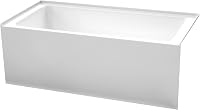
The Grayley Alcove Soaking Bathtub is a plain acrylic alcove tub for a homeowner who wants a standard, no-nonsense shape. The review page labels it as a budget-minded pick, but it does not state a cost, so treat that label with care. It is a plain, standard-shape choice.
The page lists acrylic, a soaking design and a 60 x 32 x 22 inch size. It describes a simple style, durable acrylic and a comfortable backrest angle. The page text does not state the drain location, so confirm the side on the current listing before you order.
The listed cons are that some might not like the warm touch of acrylic and that the depth could make stepping into the tub difficult for some. If step-in height matters for anyone in your home, an occupational therapist can advise on mobility needs.
Pro: simple alcove shape in acrylic.
Pro: comfortable backrest angle as listed.
Pro: standard 60-inch length.
Con: depth may make stepping in harder for some.
Con: drain side and capacity are not stated on the page.
Buy it if you want a plain acrylic alcove tub and can confirm the drain side. Skip it if step-in height is a concern or if you need a stated capacity.
The Fine Fixtures 60-Inch Acrylic Alcove Soaking Bathtub is an apron-front alcove tub for a homeowner who wants help with a clean installation edge. It sits in the middle of the group on listed depth and capacity. It also lists a sloped lumbar support and a stated capacity.
The page lists high-gloss acrylic with fiberglass reinforcement, 60 x 30 x 21.5 inches and 56 gallons. It describes an integrated tile flange and apron, which the page says simplify installation, and a sloped lumbar support for a more comfortable soak. Drain location and weight are not stated.
The page notes that some customers report cosmetic damage during shipping, so inspect the tub on delivery before it goes into the wall. Installation should follow the maker manual and a qualified installer, especially where the apron meets the floor.
Pro: integrated tile flange and apron.
Pro: sloped lumbar support is listed.
Pro: stated capacity of 56 gallons.
Con: some cosmetic shipping damage is reported.
Con: drain location and weight are not stated.
Buy it if you want an apron-front alcove tub with a stated flange. Skip it if you want a tub with a drain side stated up front.
The Kohler Archer Drop-In Soaking Bathtub is a drop-in acrylic tub for a homeowner building a deck or surround around the tub rather than using an alcove. It lists a low step-over height and a reversible drain, which keeps plumbing choices open for the build. It also comes in five finishes, as listed.
The page lists acrylic, a drop-in soaking design and 60 x 32 x 19 inches. It also lists a low step-over height, a reversible drain and five finishes. The drain side is not fixed, which makes it more flexible for different plumbing layouts.
The listed cons are that the textured bottom can be harder to clean and that the drain assembly is sold separately. A drop-in also needs a surround or deck that you build, which adds to the project, so plan it before you order.
Pro: low step-over height as listed.
Pro: reversible drain.
Pro: five finishes.
Con: textured bottom may be harder to clean.
Con: drain assembly sold separately.
Buy it if you plan a built-in deck or surround and want a reversible drain. Skip it if you want a finished-front alcove tub.
The Delta Classic 500 Alcove Bathtub and Wall is a tub-and-wall set for a homeowner who wants one package for a bath-shower area. It is the only entry on this list that lists wall panels and storage as part of the set. Check wall framing and plumbing needs before buying.
The page lists acrylic, a 60 x 32 x 62 inch size, caulkless wall installation, a deep bathing well, plenty of built-in storage and no need for a mortar bed. It is described as a tub and shower combo. Drain location and capacity are not stated.
The page lists drain sold separately and says the lightweight material requires careful handling. A tub-and-wall set needs correct wall framing and plumbing, so installation should follow the maker manual and a qualified installer.
Pro: tub and wall in one set.
Pro: caulkless wall installation as listed.
Pro: built-in storage.
Con: drain sold separately.
Con: lightweight material needs careful handling.
Buy it if you want a tub and wall as one set for a bath-shower area. Skip it if you want a tub only, or a freestanding design.
The American Standard Cambridge Americast Bathtub is the heat-retention pick for a homeowner who prefers a heavier material than acrylic. The review page labels it best overall, though its value depends on the parts you add. Read the weight note before you commit.
The page lists Americast, described as a porcelain-enamel surface over a steel core with an insulating composite backing, in an alcove soaking shape at 60 x 32 x 17.75 inches. It lists durable construction, bathwater heat retention, lumbar support, a slip-resistant floor and a fit for a standard alcove.
The cons listed are that it is heavier than acrylic tubs and that the drain is sold separately. Heavier tubs need a floor that can carry them, so ask your installer about the structure before ordering. A slip-resistant floor is a listed feature, not a promise.
Pro: stated heat-retaining construction.
Pro: slip-resistant floor and lumbar support are listed.
Pro: shallower 17.75 inch height.
Con: heavier than acrylic.
Con: drain sold separately.
Buy it if you prefer a heavier, heat-retaining material and your floor can carry it. Skip it if you want a light tub or an included drain.
The Woodbridge 55-Inch Acrylic Freestanding Bathtub is a compact freestanding tub for a homeowner who wants a standalone look without a full-length tub. It has the clearest weight statement of the group. That makes it easier to plan around than tubs with no stated limit.
The page lists fiberglass-reinforced acrylic, an oval freestanding shape, 55 x 31.75 x 23 inches and 55 gallons. It supports up to 1,000 pounds, has a nonslip bottom and includes an overflow and drain. The drain location is not stated.
A freestanding tub needs clear floor space around it and plumbing planned for its position. Installation should follow the maker manual and a qualified installer. The page does not list drawbacks, so read other reviews and the manual before ordering.
Pro: a stated 1,000 pound support figure.
Pro: overflow and drain included.
Pro: nonslip bottom is listed.
Con: needs clear floor space.
Con: the page lists no cons and no drain location.
Buy it if you want a compact freestanding tub with an included drain. Skip it if you have a tight alcove or need a stated drain location.
The Fine Fixtures 48 x 32 Inch Drop-In Tub is the compact option for a small bathroom or a tight remodel. It suits a homeowner whose space cannot take a standard 60-inch tub. It is the smallest tub in this article, so the exact interior length deserves a careful check against your own height and space.
The page lists fiberglass-reinforced acrylic, a 48.25 inch length and a 19.125 inch depth, with a right or left drain. It says strong feet mean no mortar base is needed. A 54.125 inch version is available. The page does not state the width in text.
The page lists no cons. A shorter tub gives a shorter soak, and a taller bather should check the interior length before ordering. A drop-in also needs a deck or surround, so plan the build around the tub before you buy.
Pro: compact for small bathrooms.
Pro: right or left drain can be installed.
Pro: no mortar base needed, as the page says.
Con: shorter length may not suit taller bathers.
Con: width is not stated in the page text.
Buy it if your space is tight and a 48.25 inch length fits you. Skip it if you want a full-length soak or a tub-and-wall set.
Buying guide for bathroom tubs
A tub that fits the room and the plumbing is worth more than a tub that looks good on a screen. These sections explain what to measure, which materials differ and what the listing often leaves out, so you can compare tubs fairly. Read each one before you compare listings.
Alcove, drop-in or freestanding
An alcove tub fits between three walls and usually has a finished front apron. A drop-in tub sits inside a deck or surround you build. A freestanding tub stands alone and needs clear floor space and plumbing planned for its position. Pick the type before you pick the model.
For a swap in an existing bathroom, an alcove tub of the same length is often the simplest path. A drop-in or freestanding tub can change the layout and add carpentry or plumbing work.
Whichever you choose, measure the opening and the doorway before you order.
Acrylic, Americast and fiberglass
Acrylic tubs on these pages are usually described as reinforced with fiberglass and resin, and several are listed as light. Americast is described as a porcelain-enamel surface over steel with an insulating backing, and it is heavier than acrylic. Compare listings on material first.
Acrylic can scratch, and one page says some users report scratches sooner than expected. Heavier materials may need a stronger floor. Ask the maker about cleaners that are allowed for the surface.
Material affects heat retention, handling and cleaning, so compare the materials as listed rather than assuming.
Drain, overflow and what is included
Several tubs here list the drain, overflow or both as sold separately, while the Woodbridge 55-inch lists an included overflow and drain. Add the missing parts to your plan before you compare listings. Missing parts can turn a simple listing into a longer shopping list.
Drain side matters too. The Kingston Brass lists left- or right-hand options, the Kohler Archer lists a reversible drain, and the Fine Fixtures 48 lists a right or left drain. Other pages do not state the side, so confirm it.
A tub with the wrong drain side can force a plumbing change, which costs time even when the tub looks like a good match.
Size, depth and water capacity
Length and width decide whether a tub fits the opening, while depth decides how deep a soak feels and how high the step-over is. The listed depths here range from 17.75 inches for the Cambridge Americast to 22.2 inches for the Aqua Eden. Measure your own opening twice.
Stated capacities include 58.2 gallons for the Aqua Eden, 56 gallons for the Fine Fixtures 60 and 55 gallons for the Woodbridge 55. Several pages do not state capacity, so do not assume it.
Also check your water heater, since a deeper tub may use more hot water.
Installation and who should do it
Tub installation involves framing, plumbing, leveling and wall finishing, and a small mistake can cause leaks. Follow the maker manual and use a qualified installer, especially for heavier tubs and freestanding setups. Plan the install before the tub arrives.
Inspect the tub on delivery, since pages mention shipping damage on some listings. Do not install a tub with cracks or chips, and keep the packaging until it has been checked.
Check local rules too, since some areas require permits for plumbing changes.
Care and common mistakes
A tub lasts longer when it is installed, cleaned and used as the maker directs. These notes are general, so always defer to the maker manual for the cleaners and methods your tub allows. Keep the maker manual where you can find it later, since it names the allowed cleaners.
Common mistakes include forgetting the drain kit, ordering the wrong drain side, skipping the delivery inspection and cleaning acrylic with harsh abrasives. Another is buying for style without checking the opening.
Test any cleaner on a hidden spot first, rinse well and dry the surface. Keep a mat or tread in mind only if the maker allows it, and do not treat any surface as slip-proof.
FAQ
These answers cover the questions shoppers ask most when comparing bathroom tubs for value. They stay general and point back to the maker manual wherever the review pages do not state a fact. Where a page does not state a fact, the answer says so and defers to the maker manual.
What are the best bang for your buck bathroom tubs?
This article ranks eight tubs by listed features and included parts. No tub is claimed to cost less than any figure, so check each current listing price against your own limit and add the parts you need. Always read the maker wording and the included parts list before you decide.
Look for a stated material, exact dimensions, a drain option that fits your plumbing and a clear list of what is included.
Is acrylic or Americast better value?
The pages describe acrylic as lighter and Americast as heavier with stated heat retention. Which is better depends on your floor, your handling needs and the listing details. Material choice also changes handling on delivery day, which matters when a tub is large and awkward to carry.
Neither is promised to last any number of years on these pages, so read the maker terms.
Do I need to buy the drain separately?
For several tubs here, yes. The Aqua Eden, Cambridge Americast, Kohler Archer and Delta Classic 500 pages list the drain or overflow as sold separately, while the Woodbridge 55-inch lists an included drain. A missing drain part can delay the whole install, so plan for it.
Confirm what is included on the current listing before you compare.
Can I swap a tub myself?
Some people do, but installation involves plumbing, framing and wall work. Follow the maker manual, check local rules and consider a qualified installer, especially for heavier or freestanding tubs. Your own skills and your local rules should guide that choice.
Mistakes can lead to leaks behind walls, which are expensive to fix.
Which tub suits a small bathroom?
The Fine Fixtures 48 x 32 drop-in is listed as compact at 48.25 inches long, and the Woodbridge 55 is a compact freestanding option at 55 inches. Measure the room and doorway before choosing. Small rooms also limit door swing, so check the doorway and the clearance around the tub as well.
A shorter tub gives a shorter soak, so check that the interior length works for you.
Conclusion
For a standard alcove swap, start with the Kingston Brass Aqua Eden or the Grayley, and consider the Cambridge Americast for a heavier material. Check each current listing price against your limit, add the drain parts, measure twice and follow the maker manual with a qualified installer before work begins.
M
Modern Line Home Editorial Team
We compare specs, materials and verified owner reviews before a product earns a spot. Rankings are never paid.
Affiliate disclosure. As an Amazon Associate we earn from qualifying purchases at no extra cost to you. Prices accurate as of the date shown.
Compare the best inexpensive whirlpool bathtubs by listed jets, pump, size, material and limits, with electrical needs and tips for checking live listings.
Compare the best inexpensive deep bathtubs by listed water depth, capacity, size and material, with limits noted and tips for checking each live listing first.
Shopping for the best bathtubs under 600? Compare entry-level alcove, drop-in and freestanding tubs by their listed size, depth and features, with limits noted.
Searching for the best bathtubs under 250? See portable, foldable, inflatable and basic steel options ranked by listed features, with limits and what to check.
Looking for the best tape for bathtubs? Compare five self-adhesive caulk strips by width, length, material and limits, plus prep steps and when tape fails.
A practical guide to curtain rods for bathtubs: tension, curved, wall-mounted and corner designs, with listed lengths, materials, weight limits and trade-offs.
Choose the best bathtub trays by expandable range, material, book and wine glass slots and grip, with a clear buying guide, care tips and an FAQ for bath fans.
Find the best rust primer for bathtubs: compare rust converters, rust-bonding and oil or water-based primers, with prep steps, limits and an FAQ for metal tubs.
Compare the best epoxy paint for bathtubs by surfaces, curing times, odor and application, with prep steps, buying advice and a full FAQ for worn or dull tubs.
Compare the best wax for bathtubs by listed surfaces, form and limits, and learn the slip risk, prep needs and when to skip wax, with a buying guide and FAQ.















Write Your Review
No reviews yet. Be the first to share your experience!