We independently review everything we recommend. When you buy through our links, we may earn a commission. As an Amazon Associate we earn from qualifying purchases.
Best Rust Stain Remover for Tubs: Powders, Sprays and More
Compare rust stain removers for tubs by form, listed surfaces, contact time and cautions, from powders and foams to concentrates, to pick one for your tub.
Compare rust stain removers for tubs by form, listed surfaces, contact time and cautions, from powders and foams to concentrates, to pick one for your tub.
Our top picks at a glance
4 products from this guide, in the order reviewed below.
1
Bar Keepers Friend original powder cleanser
This powder cleanser is the product the maker’s shower-rust guide points to for shower floors and tub basins.
As an Amazon Associate we earn from qualifying purchases. Prices and availability can change.
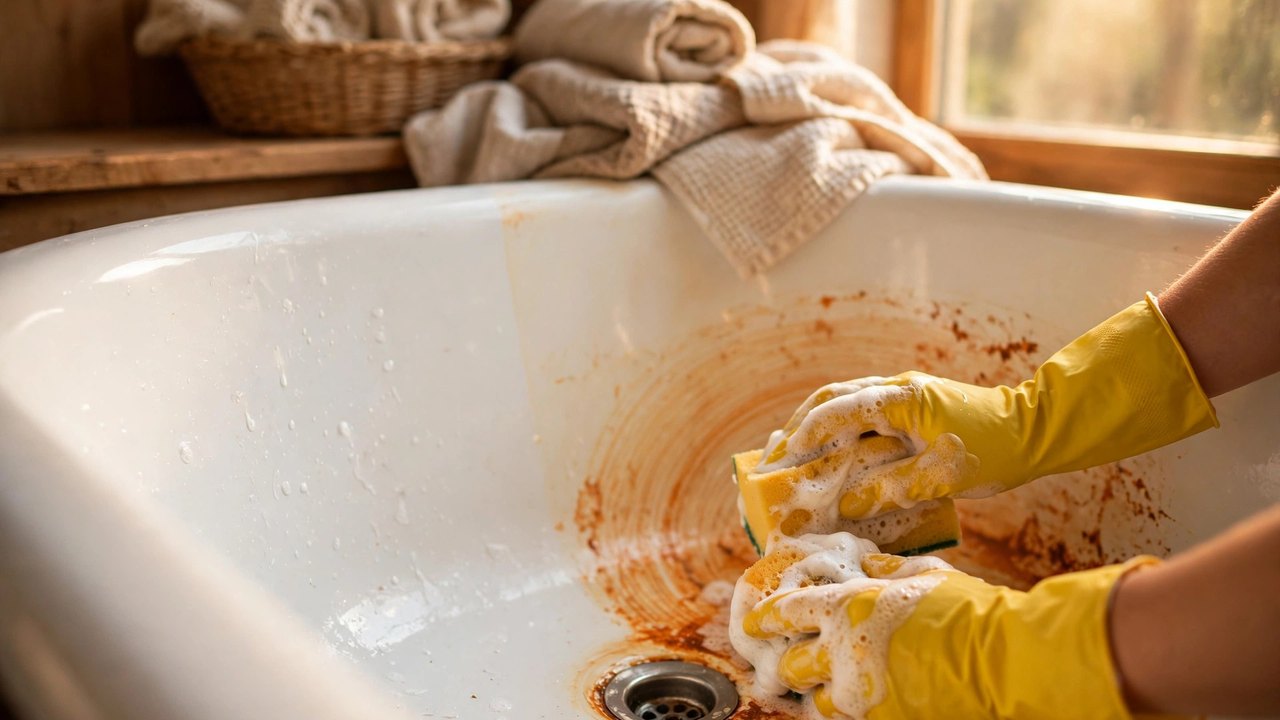
Orange rings, drip trails and dull brown patches on a white tub usually come from iron in the water or a rusting can or fixture. This guide compares the best rust stain remover for tubs by form, listed surfaces, contact time and cautions, so you can match a product to your tub finish before you scrub.
Quick verdict on the best rust stain remover for tubs
For a porcelain tub basin, a powder cleanser used as a paste is the classic approach, while a clinging foam or a concentrated rust remover handles walls and fixtures. The table below lists each pick by form, the surfaces its page names and the main limit to keep in mind.
The picks come from published product roundups and a maker guide on removing rust from showers, and every spec in this article is limited to what those pages state. Where a page left out a size, surface or contact time, the entry says so plainly, and nothing is filled in from memory or guesswork.
We looked for products that name rust or iron in their description and list tub-friendly surfaces such as porcelain, fiberglass or acrylic. We also wanted different formats, because a powder, a foam and a concentrate behave very differently on a flat tub floor, a vertical wall and a metal fixture.
Six products are covered. Some well-known rust removers were left out because the pages we could open did not describe them well enough to treat them fairly. The article makes no promise of results, and a stain can respond differently depending on the tub finish and how long it has been there.
The best rust stain remover for tubs, product by product
Each entry lists the exact product name, the form the page states, the surfaces it names and the cautions it mentions. Treat these details as a starting point and read the label on the bottle or can, since formulas, sizes and directions are the maker’s to change.
This powder cleanser is the product the maker’s shower-rust guide points to for shower floors and tub basins. It suits porcelain tubs where a rust ring has settled into the surface and you are prepared to scrub gently by hand, working a paste into the stain instead of spraying and walking away from it.
The maker’s steps say to test an inconspicuous area first, dampen the surface without leaving standing water, sprinkle on a small amount, and use a thick paste with a little water for stubborn stains. Let it sit for one minute, wear rubber gloves, wipe with a wet sponge or cloth, rinse thoroughly and buff dry. A roundup lists porcelain, fiberglass and tile, and warns it can scratch some surfaces, so test the tub and grout first. That review also reports it began wearing away caulking.
Pros: multipurpose, short wait time, names porcelain and fiberglass. Cons: abrasive action can scratch some finishes, and it may wear away caulk lines. Buy if you have a porcelain tub with a rust ring on the basin. Skip if your tub is soft acrylic and you want to avoid abrasion.
Bar Keepers Friend MORE Spray & Foam
This is the maker’s pick for shower walls and doors, because it clings to vertical surfaces and does not run off like a thin liquid. It suits a rust trail below a tub spout or a stain on a tub-surround wall, where a thin liquid would simply run down and pool at the bottom.
The maker says to test first, noting it suits acrylic doors, grout and delicate tile but not natural stone. There is no need to wet the surface. Use the spray setting for spots or the foam setting for larger areas, let it sit for one minute, scrub with a non-abrasive sponge and rinse. Repeat as needed, then wipe for shine. The maker’s page does not state a size here.
Pros: clings to walls, non-abrasive sponge method, names acrylic doors and grout. Cons: not for natural stone, and a size is not stated on the page. Buy if the stain is on a wall rather than the tub floor. Skip if the rust is on the basin and you want a paste.
This is a concentrate that targets rust, calcium, lime and soap scum, with an EPA Safer Choice certification, and no phosphates, ammonia or bleach. It suits tubs with both iron stains and mineral deposits from hard water, where one product that covers both saves you from juggling two bottles.
A roundup says it can be mixed with equal parts water or used at full strength, with a contact time of only 2 minutes before rinsing. Surfaces listed include plastic, ceramic tile, glass, stainless steel, metal fixtures, shower doors, fiberglass, toilet bowls and sinks. The maker’s page lists a 14oz product, and another roundup lists a 28 OZ size, so check which you have. The roundup also says it struggled with heavy buildup.
Pros: handles rust and minerals, lists fiberglass, certified by EPA Safer Choice per the page. Cons: struggled with thick buildup, and the short contact time means it is not a set-and-forget product. Buy if you want a concentrate for rust and hard-water spots. Skip if the tub has deep, heavy staining.
This cleaner is designed for calcium, lime and hard-water deposits and also handles soap scum and grime. A published bathtub-cleaner roundup names it best overall, and the reviewer says rust did not stand a chance against it, though the same page admits the toughest buildup was beyond it.
The page lists EPA Safer Choice certification, biodegradable, no alcohol, ammonia or bleach, and an unscented formula. Surfaces listed are glass shower doors, tile, stainless steel, fiberglass, granite, porcelain and plastic. Form and size are not stated. The review says it could not remove the toughest buildup and made only a dent in hard-water stains, so set expectations accordingly.
Pros: unscented, no bleach or ammonia, broad surface list including fiberglass and porcelain. Cons: did not clear the toughest buildup, and form and size are not stated. Buy if you want a daily bath cleaner that also deals with light rust. Skip if you are dealing with an old, deep stain.
These foam pads are activated with water and are described as good for targeted stains such as rust or small mineral buildup. They suit a single rust spot or a ring around a drain, where a spray would run off and you want to rub only the affected patch rather than the whole tub.
The roundup sells them as a box of 10 scrubbers and reports they performed as well as the best cleansers on soap scum, but are too small and effort-intensive for a whole tub. It also says they removed most, but not all, mold in a hard-to-reach track. No surfaces are stated on that page, so check the pack and test a hidden spot, since a foam pad is a mild abrasive.
Pros: no liquids, good for spot work, easy to use under the sink. Cons: not practical for a whole tub, and no surface list on the page. Buy if you have one or two small rust spots. Skip if the stain covers a large area or the tub has a delicate finish.
This spray-wait-rinse cleaner is billed as industrial-strength, with organic salt as the main ingredient and no bleach or acids. It suits someone with light rust staining on top of soap scum and mildew, and who wants one product for the lot rather than separate bottles.
The roundup describes it as cutting soap scum, hard-water stains, rust and mildew without heavy scrubbing, and lists fixtures, sinks, showers, mirrors, tile and grout. It also calls it septic-safe. The page gives no size and no warnings, and does not name tub materials, so confirm the label before using it on acrylic or fiberglass.
Pros: no bleach or acids, spray-wait-rinse routine, septic-safe per the page. Cons: no size, no warnings, and no tub materials listed. Buy if you want a general tub and tile spray that also mentions rust. Skip if you need a dedicated rust product with a stated contact time.
Household methods and the cautions makers give
Many people reach for a pantry or garage product before a specialty remover, so the warnings printed by makers are worth knowing first. This section passes on cautions, not recipes, and defers to the tub maker and the product label, because a home remedy that works on one finish can quietly damage another.
The WD-40 guide to bathtub rust names enamel, acrylic and porcelain as tub materials and warns that vinegar is acidic and may not suit some bathtub materials, that bleach can discolor acrylic tubs, and that WD-40 residue must be removed before bathing. The Bar Keepers Friend guide warns that bleach sets rust stains and can make the discoloration worse. Treat these as reasons to test a hidden spot before trying any home remedy.
Choosing a rust remover comes down to your tub material, the age and depth of the stain and where it sits. The sections below explain these trade-offs in general terms, without inventing numbers or promising results, so you can judge any rust product you find on a shelf, not only the ones named here.
Where tub rust comes from
Rust stains on a tub usually come from iron in the water supply, a rusting metal object left on the surface, a corroding fixture or a chip in the enamel that exposes the metal underneath. The cause matters because removing a stain without fixing the source means it returns.
If stains appear again quickly in the same place, look for a dripping faucet, a rusting drain part or an iron-rich water supply. A plumber or water professional can advise on the source. For a chip in the finish, a refinishing or repair professional can tell you whether a cleaner is enough.
Matching the remover to your tub material
Porcelain over steel or cast iron tolerates more abrasion than acrylic or fiberglass. A powder that is fine on porcelain may dull a soft finish, so use products that list your material and test a hidden corner first. A little care at this step avoids permanent dull patches that are harder to fix than the original stain.
For acrylic and fiberglass, favor non-abrasive sprays and foams that name those materials, such as the Bar Keepers Friend MORE Spray & Foam entry or CLR Pro Bath Daily Cleaner. If your tub has been refinished, check with the refinisher before using any acid-based or abrasive product, since some finishes are sensitive.
Powders, foams and concentrates compared
Powders make a paste that stays on a flat tub floor, foams cling to walls, and concentrates are flexible but need careful dilution and rinsing. Each has a place, and the stain location often decides the format. A flat floor stain, a wall streak and a metal fixture ring each call for a different tool.
A powder offers the most scrubbing power but the most scratch risk. A foam has gentler action and works on vertical surfaces. A concentrate such as CLR is useful for rust plus mineral scale but has a short contact time and needs thorough rinsing. Read the label for how long it can safely sit on the surface.
How to choose the best rust stain remover for tubs by stain age
Fresh, light stains often respond to a gentle foam or pad, while old, deep rings may need repeated treatments. No product on this list is described as removing every deep stain in a single pass. Setting realistic expectations early helps you avoid overdoing it on a finish that cannot take much abuse.
The roundups report that some products struggled with heavy buildup, so plan for repeat applications rather than longer contact times. Never leave a product on longer than the label allows. If a stain remains after several tries, consider that it may have penetrated a worn finish and ask a professional.
Safety, ventilation and mixing
Never mix cleaning products, especially bleach with acids or ammonia, because the fumes can be dangerous. Wear gloves as the labels direct, ventilate the bathroom and keep products away from children and pets. Treat every rust remover as a chemical product that needs the same care as any strong household cleaner, whatever the front label says.
Rinse the tub thoroughly before bathing, and avoid combining a rust remover with another cleaner, even a mild one. The Bar Keepers Friend guide specifically warns to avoid bleach on rust. If you are unsure whether a product suits your tub, read the label or contact the maker.
Preventing the stain from coming back
Prevention means fixing the source and keeping the surface dry and clean. Wipe the tub after use, fix leaks, and do not leave metal cans or razors sitting on the tub edge. Small habits keep rust stains from forming and keep you from reaching for strong products as often.
The Bar Keepers Friend guide notes rust can come back and that a white tub looking dull or off-white is an early sign, suggesting regular cleaning to keep surfaces clear. A weekly wipe with a gentle cleaner is easier on the finish than waiting for a heavy stain that needs strong products.
What to do before you start cleaning
Preparation takes a few minutes and avoids most cleaning mistakes later on. Identify the tub material, read the label for surfaces and contact time, and test the product on a hidden spot so you can see how the finish reacts before treating a visible stain.
Clear the tub, open a window or run the fan, put on gloves as the label directs and have clean water ready for rinsing. Dampen or leave the surface dry according to the product directions, since the Bar Keepers Friend powder and foam are used differently. Keep a soft cloth for buffing and a non-abrasive sponge for walls. If the finish looks worn, chipped or recently refinished, stop and ask a professional before you apply anything strong.
FAQ
These are the questions people ask most often about rust on tubs. Answers are general, and the product label and your tub maker always take priority over a guide like this. Any figure given here comes from the pages used for this article, and everything else is left out.
What is the best rust stain remover for a porcelain tub?
Among the products here, Bar Keepers Friend original powder cleanser is the one the maker points to for tub basins, and it lists porcelain. Use it as a paste, test a hidden spot first and wear rubber gloves as directed. The maker’s guide describes a short wait, a thorough rinse and a dry buff, and says to repeat if a stain remains.
CLR Calcium, Lime & Rust Remover and CLR Pro Bath Daily Cleaner also list porcelain or tubs on their pages. Avoid scouring beyond what the label says, since scratches make future stains stick more easily.
Can I use bleach on rust stains in a tub?
The Bar Keepers Friend guide says to avoid bleach, because it sets rust stains and can make the discoloration worse. The WD-40 guide adds that bleach can discolor acrylic tubs. In short, bleach is the wrong tool for iron stains, and it risks making both the stain and the tub finish worse.
Never mix bleach with acids or ammonia, because the fumes can be dangerous. If you want to try another cleaner after bleach, rinse the tub thoroughly with water first and ventilate the room. When in doubt, choose a product that lists your tub material.
Will a rust remover damage an acrylic or fiberglass tub?
It can, depending on the product and the finish. Abrasive powders and strong acids are the usual concerns, so choose a product that names acrylic or fiberglass, follow the label’s contact time and test a hidden spot. Soft finishes are easier to dull than to repair, so gentler products and a patient approach are usually the safer route.
The Bar Keepers Friend MORE Spray & Foam page names acrylic doors, and CLR lists fiberglass. If your tub is acrylic or fiberglass and you are unsure, contact the tub maker for approved cleaners before you try a rust product.
How long should a rust remover stay on the tub?
Follow the label. The pages above give a one minute wait for both Bar Keepers Friend products and a contact time of only 2 minutes for CLR, so leaving a product longer than directed is not the point. Each maker has chosen a short window for a reason, and the label is the only guide to how long a product can safely stay on.
Longer contact does not necessarily mean a better result and may harm a finish. If the stain is still there after the recommended time, rinse, then repeat as the label allows rather than leaving it on longer.
Why does rust keep coming back on my tub?
Because the source has not been fixed. Iron in the water, a dripping fixture or a chip in the finish can keep producing stains even after a thorough clean. A stain that returns in the same place is a clue worth following before you buy a stronger product.
Look for what touches the tub: leaking faucets, rusting drain parts or metal items left on the edge. If the stain returns in the same place, contact a plumber or a tub refinishing professional to look at the cause instead of cleaning it repeatedly.
Can I use foam pads on tub rust?
Foam pads such as Mr. Clean Extra Durable Magic Eraser are described as good for targeted stains such as rust or small mineral buildup, but the page does not list tub surfaces, so check the pack and test a hidden spot first, then rub gently on the stain only.
Because a pad is a mild abrasive, rub gently and rinse often, and do not use it on a finish that already looks dull or worn. For a large stain, a pad becomes tiring and uneven, so switch to a spray, foam or paste that lists your tub material.
Conclusion
For a porcelain tub basin, use Bar Keepers Friend powder as a paste. For walls, try its MORE Spray & Foam. For rust plus hard-water spots, consider CLR. Test a hidden corner, skip bleach, rinse well, and fix the source of the iron so the stain does not return. Always follow the label and your tub maker’s cleaning guidance.
M
Modern Line Home Editorial Team
We compare specs, materials and verified owner reviews before a product earns a spot. Rankings are never paid.
Affiliate disclosure. As an Amazon Associate we earn from qualifying purchases at no extra cost to you. Prices accurate as of the date shown.
Compare the best inexpensive whirlpool bathtubs by listed jets, pump, size, material and limits, with electrical needs and tips for checking live listings.
Compare the best inexpensive deep bathtubs by listed water depth, capacity, size and material, with limits noted and tips for checking each live listing first.
Shopping for the best bathtubs under 600? Compare entry-level alcove, drop-in and freestanding tubs by their listed size, depth and features, with limits noted.
Searching for the best bathtubs under 250? See portable, foldable, inflatable and basic steel options ranked by listed features, with limits and what to check.
Looking for the best tape for bathtubs? Compare five self-adhesive caulk strips by width, length, material and limits, plus prep steps and when tape fails.
A practical guide to curtain rods for bathtubs: tension, curved, wall-mounted and corner designs, with listed lengths, materials, weight limits and trade-offs.
Choose the best bathtub trays by expandable range, material, book and wine glass slots and grip, with a clear buying guide, care tips and an FAQ for bath fans.
Find the best rust primer for bathtubs: compare rust converters, rust-bonding and oil or water-based primers, with prep steps, limits and an FAQ for metal tubs.
Compare the best epoxy paint for bathtubs by surfaces, curing times, odor and application, with prep steps, buying advice and a full FAQ for worn or dull tubs.
Compare the best wax for bathtubs by listed surfaces, form and limits, and learn the slip risk, prep needs and when to skip wax, with a buying guide and FAQ.












Write Your Review
No reviews yet. Be the first to share your experience!