
Key takeaways
- Compare the main types of desk chairs, from task and mesh to executive, gaming and drafting stools, with one real model per type and a buying guide to match.
Desk chairs are not one product: task, mesh, executive, gaming and drafting-stool styles each suit different bodies, desks and workdays. This guide explains the best types of chairs for sitting at a desk and pairs each type with a real model, using only the specs that the maker or retailer pages state.
Quick verdict
The right type depends on how you sit, how long you sit and what your desk allows. Task chairs suit most people, mesh chairs suit warm rooms, executive chairs suit a traditional look, gaming chairs suit tall backs and drafting stools suit raised desks.
- Adjustable task chair: Steelcase Series 2, rated up to 400 lbs.
- Mesh chair with a moving lumbar cushion: Autonomous ErgoChair Mesh.
- Executive look on a short daily schedule: Staples Turcotte Luxura.
- Racing-style chair in mesh: Lenovo Legion Mesh Ergonomic Racing Gaming Chair.
- Tall desk or counter: Staples mesh drafting stool with a foot ring.
- Dual backrest with headrest: Autonomous ErgoChair Core.
- Plain mesh task chair: Staples Kroy.
Match the type to your main job first, then compare the specs inside it. A chair that fits your desk height and your day will beat a chair that wins on a spec sheet but fights your setup.
Side-by-side comparison of desk chair types
The table shows the seven chairs by type, the situation each type suits, one useful stated spec and the main limit. Entries come from maker or retailer pages, and where a page is silent on a number the cell says so. Read across a row to see the type, the model and its trade-off.
| Type | Model | Best for | Key spec | Main trade-off |
|---|---|---|---|---|
| Task chair | Steelcase Series 2 | Full-day desk work | Up to 400 lbs, 4D arms | Seat height range not stated |
| Mesh chair | Autonomous ErgoChair Mesh | Warm rooms | Seat height 18.5 to 21.5 inches | Rated to 300 lbs |
| Executive chair | Staples Turcotte Luxura | Traditional offices | Faux leather, high back | Fixed arms, 4 to 6 hours daily |
| Gaming chair | Lenovo Legion Mesh | Long sessions at a screen | Four-way lumbar, 4D arms | 1-year warranty, carpet casters |
| Drafting stool | Staples mesh drafting stool | Tall desks and counters | Foot ring, seat to floor 28.54 to 34.25 inches | No lumbar support |
| Headrest chair | Autonomous ErgoChair Core | Leaning back to read | Headrest included, dual backrest | Rated to 242.5 lbs |
| Basic mesh task | Staples Kroy | Simple setups | Adjustable lumbar and arms | Seat depth not adjustable |
How we selected the types and models
The list starts with the main styles that people actually sit on at a desk, then picks one model per style that a maker or retailer page shows as available. Every number in the entries is copied from those pages as stated. That keeps the comparison honest and easy to check.
Type came first because the biggest mistake is buying the wrong kind of chair for the job. A drafting stool is a poor choice at a standard desk, and a fixed-arm executive chair is a poor choice for heavy keyboard work, so the guide explains each type before the models.
Within each type, adjustability decided the pick. Chairs with adjustable lumbar, arms and tilt were favored over fixed designs, and where a model has fixed parts, the entry says so plainly instead of hiding it.
Capacity, warranty and floor notes were used as tie-breakers. Some pages state a weight rating and some do not, some give daily-use limits and some do not, and each entry notes what is stated and what is not.
Kneeling chairs, saddle seats and balance-ball seats are covered in the buying guide in general terms only. No specific model is recommended for them, because this guide only names products whose pages it could read in full.
Best types of chairs for sitting at a desk
Each entry below names a type, one model that represents it, who the type suits and what the model page states. Use the type to decide the shape of chair you need, then use the specs to judge the individual model within it. Start with the type that matches your desk.
Task chair: Steelcase Series 2
The task chair is the default for desk work, and the Steelcase Series 2 shows the type at its most adjustable: weight-activated back tension, adjustable arms and adjustable lumbar. It suits people who sit for long blocks and want to tune the chair. It is the model to beat in this group.
The maker states that the chair is durable enough for weight up to 400 lbs. Its back tension responds to body weight, and the page says the recline range includes full recline, a boost setting and an upright back lock, without giving angles.
Arms are standard 4-dimensional arm support that adjusts to preferred height, width, depth and pivot, with an armless version also offered. Lumbar support is height-adjustable, and the page lists back styles including Air Back, 3D Microknit, Upholstery, Quilted Upholstery and Fabric Back Cover.
The seat is foam with flexible edges and adaptive bolstering. The page states a 21% increase in recycled content and a Limited Lifetime warranty of 12 years, multi-shift, 24/7 parts and labor. It does not give a seat height range.
- Pros: 4D arms, adjustable lumbar, weight-activated tension, 400 lb rating.
- Cons: no stated seat height range, more options to choose between.
- Buy if: you want a full-featured chair for most of the day.
- Skip if: you need to confirm seat height before ordering.
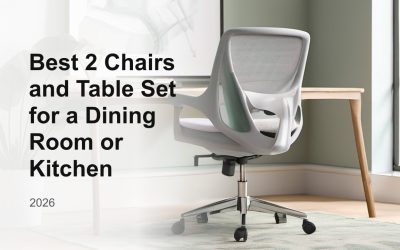
Mesh chair: Autonomous ErgoChair Mesh
The mesh chair swaps padding for a tensioned fabric that lets air through, and the Autonomous ErgoChair Mesh adds a flexible lumbar cushion that moves up and down. It fits people who run warm or sit in rooms without much airflow. Its specs are listed below.
The maker states a weight capacity of 300 lbs, a seat height range of 18.5 to 21.5 inches and a seat 19 inches long by 19 inches wide. The page describes a special German mesh made of 72% polyester and 28% polyamide.
The lumbar cushion is called Back Fit and moves up and down. The 3D armrests move front to back and side to side and pivot, with a height range of 11 to 14 inches. The adjustable headrest takes the back to 28 to 31 inches high.
Tilt range is 22 degrees with a 2:1 synchro-tilt ratio between the back and the seat. The maker lists a Lifetime warranty. For a tall user or a deep-seat preference, check the 19-inch seat depth before ordering.
- Pros: moving lumbar cushion, 3D arms, headrest, Lifetime warranty.
- Cons: 300 lb rating, 19-inch seat.
- Buy if: you want breathable support with fine adjustments.
- Skip if: you prefer a padded seat and back.
Executive chair: Staples Turcotte Luxura
The executive chair is the high-back, padded style many people picture in an office, and the Staples Turcotte Luxura is a plain example with faux leather and fixed parts. It suits a traditional look and shorter daily use. Read the limits before buying.
The listing states a weight capacity of 275 lbs, a seat height of 17.7 to 20.5 inches and a seat 19.3 inches wide by 19.29 inches deep. The back is 27 inches high and 20.1 inches wide, and the overall height runs 42.5 to 46.3 inches.
Lumbar support is integrated and fixed, and the arms are fixed. Tilt is a center tilt with seat tilt and a lock, and the page lists no synchro tilt. The upholstery is Luxura faux leather on a nylon base with casters rated for carpet.
The page recommends a maximum daily use of 4 to 6 hours and lists ANSI/BIFMA compliance, a 5-year limited warranty and full assembly. The listing also carries a state chemical warning notice, which is worth reading before you buy.
- Pros: executive look, low seat minimum, five-year warranty.
- Cons: fixed arms and lumbar, 4 to 6 hours daily, carpet casters.
- Buy if: you want a classic look for part-day use.
- Skip if: you sit at a desk most of the workday.
Gaming chair: Lenovo Legion Mesh Ergonomic Racing Gaming Chair
The gaming chair is the racing-style seat with a tall back and a headrest, and the Lenovo Legion version uses mesh and a fully adjustable lumbar curve. It suits people who sit at a screen for long sessions and want a tall back. The specs below show what the page states.
The Staples listing states a weight capacity of up to 275 lbs, overall dimensions of 48.25 to 52 inches high, 28.2 inches wide and 25.25 inches deep, and a seat 21.5 inches wide by 17.5 inches deep. The back height is 31 inches.
Lumbar is a built-in four-way adjustable curve, the arms are fully adjustable 4D arms and the headrest is adjustable. The page says seat height and recline adjust with seat-side controls and gives no ranges for either.
The mesh is breathable, and the casters are 360-degree dual swivel casters for carpet, not recommended for tile or hardwood. The page lists a 1-year manufacturer limited warranty and full assembly, with optional expert assembly.
- Pros: four-way lumbar, 4D arms, headrest, mesh.
- Cons: 1-year warranty, no stated seat range, carpet casters.
- Buy if: you want a tall racing-style back in mesh.
- Skip if: you have hard floors without a mat.
Drafting stool: Staples mesh drafting stool
The drafting stool is a tall chair for raised desks, counters and standing-height workbenches, and the Staples mesh model adds a back and a foot ring. It suits a high work surface, not a standard desk. It is a specialist seat, so read the limits and the notes on height before you decide.
The listing states a seat to floor height of 28.54 to 34.25 inches and overall dimensions of 47.1 to 52.5 inches high, 28.5 inches wide and 28.6 inches deep. The weight capacity is rated up to 275 lbs.
The foot ring gives space to rest feet when sitting, which matters because the feet cannot reach the floor. The arms are fixed and can be assembled with or without, and the spec table lists no lumbar support. The page conflicts on tilt tension, so check it.
The back is mesh and the seat is fabric, on a 5-pointed star base with casters. The listing says it meets or exceeds ANSI/BIFMA standards, carries a 5-year manufacturer limited warranty and needs full assembly.
- Pros: foot ring, mesh back, suits tall desks, 5-year warranty.
- Cons: no lumbar support, tilt wording conflicts.
- Buy if: your work surface is counter height.
- Skip if: you use a standard desk.
Headrest chair: Autonomous ErgoChair Core
A headrest chair adds neck and head support for leaning back, and the Autonomous ErgoChair Core pairs one with a dual backrest. It suits people who read, think or take calls leaning back as well as typing upright. Check the seat minimum and the capacity before you buy.
The page states a weight capacity of 242.5 lbs, a seat height of 20 to 23.8 inches and a seat 18.5 inches long by 20 inches wide. Seat depth runs 18.5 to 20.5 inches, which gives some room to fit leg length.
It has no separate lumbar adjustment. The dual backrest supports the lower and upper back separately. The 3D armrests have a height of 10.5 to 13.5 inches, and the headrest is included and adjustable. The tilt range is listed as 40 degrees, and the page also lists a 130-degree recline.
The page describes mesh fabric with PU on the headrest, armrests and part of the seat, and it lists a 2-year warranty. The seat minimum is higher than most chairs here, so shorter users should check it.
- Pros: headrest included, dual backrest, 3D arms, depth range.
- Cons: high seat minimum, 2-year warranty, 242.5 lb rating.
- Buy if: you lean back often.
- Skip if: you are short or need a separate lumbar dial.
Basic mesh task chair: Staples Kroy
The Staples Kroy is a plain mesh task chair with the adjustments most people need and few extras, and it shows what the basic end of the task-chair type offers. It suits simple setups where you want fewer controls to manage. It is a useful baseline for comparing the other chairs.
The listing states support up to 275 lbs, a seat 19.59 inches wide by 16.54 inches deep, with depth not adjustable, and a seat height of 18.9 to 22.76 inches. The back is up to 24.8 inches high and 17.1 inches wide.
It has adjustable lumbar support and height-adjustable arms. Tilt is a swivel-tilt with tension control and a tilt lock, and the chair reclines. The back and seat are mesh on a five-point base with casters rated for carpet and hard floors.
The page lists overall dimensions of 41.1 to 44.9 inches high, 28.7 inches wide and 27.6 inches deep, a weight of 34.1 lbs, ANSI/BIFMA compliance and a 5-year limited warranty. Assembly is full.
- Pros: adjustable lumbar and arms, hard-floor casters, light at 34.1 lbs.
- Cons: seat depth not adjustable, no headrest mentioned.
- Buy if: you want a plain, adjustable mesh chair.
- Skip if: you want a headrest or depth adjustment.
Buying guide to desk chair types
This guide explains the main types in plain terms, covers the less common seats that the product list leaves out, and shows how to match a type to your desk, your day and your floor. Use it before you compare individual specs. Use it before you compare individual specs.
Which of the best types of chairs for sitting at a desk fits you
The best types of chairs for sitting at a desk differ mainly in how much they adjust and how they hold the back. Task and mesh chairs offer the most adjustment, executive chairs prioritize padding and looks, and gaming chairs add a tall back and a headrest.
Start with how long you sit. For full workdays, choose a type with adjustable lumbar, arms and tilt. For shorter blocks or a shared desk, a simpler chair can be enough, and fixed parts matter less when you move around often.
Then consider the room and the desk. A drafting stool only makes sense at a raised surface, and a heavy chair with carpet casters is a poor match for a hard floor. Matching type to context avoids most buying mistakes.
Task, mesh and executive chairs compared
Task chairs are built to adjust, mesh chairs are built to breathe and executive chairs are built to look substantial. Many chairs blend these, so a mesh task chair, such as the Kroy, is both, while an executive chair is usually padded and fixed. The next paragraphs explain how.
Adjustment is where the types diverge most. Task chairs commonly offer adjustable lumbar, arms, seat depth and tilt, while executive chairs often fix the arms and lumbar. If your work depends on arm position, treat adjustable arms as non-negotiable.
Upholstery changes feel more than looks. Mesh keeps the back cooler, padded fabric is soft and quiet and leather-look materials suit a formal room but hold heat. Read the material line, because wording such as bonded leather or faux leather varies by listing.
Gaming chairs and drafting stools
Gaming chairs share a racing-seat shape with a tall back, side bolsters and often a headrest. Quality varies widely, so judge them by the same list as any chair: adjustable lumbar, arms, tilt, a stated capacity and a clear warranty. Treat both as specialist types and read the specs closely.
Drafting stools are tall seats for raised surfaces and they include a foot ring because feet cannot reach the floor. They are for counters, benches and standing-height desks, not for a normal desk, and many have no lumbar support.
If your desk is height-adjustable, a regular task chair is usually a better match, since you can lower the desk to meet the chair. A drafting stool only helps when the surface is fixed at a high level.
Kneeling, saddle and ball seats
Kneeling chairs, saddle seats and balance-ball seats change the sitting position rather than refine it. They tilt the pelvis or ask the core to work, and they are best treated as a second seat to alternate with a regular chair. Treat them as extras rather than a main chair.
These seats have trade-offs: kneeling pads load the shins, saddle seats are tall and need a raised desk and ball seats offer little back support. This guide does not recommend a specific model of any of them.
If you try one, start with short periods and change positions often. If you have pain that persists, talk to a doctor or physical therapist before using any alternative seat for long stretches.
Casters, floors and care
Casters decide how a chair behaves on your floor. Several chairs here list casters for carpet only, and the Kroy lists casters for carpet and hard floors, so results depend on the floor. A mat or softer casters can help on hard surfaces. Read the caster note on each page.
Check the base as well. A five-point base is the common standard, and the material, such as nylon, plastic or aluminum, changes weight and feel. Heavier chairs are steadier but harder to move.
Care is simple: wipe mesh with a damp cloth, follow the maker manual for upholstery and tighten bolts if the chair loosens. Keep the manual and check the warranty terms on the page before you rely on them.
Frequently asked questions about desk chair types
These answers address the questions people ask when they are choosing between types of desk chairs, and they stay within the pages for these models and general ergonomics advice that does not depend on one product. Each answer points back to the specs listed earlier.
What is the best type of chair for a desk job?
For most desk jobs, an adjustable task chair is the best fit, because it offers adjustable lumbar, arms and tilt. The Steelcase Series 2 is the premium example here, and the Kroy is the plain mesh version of the same idea. Fit and adjustment come first, and looks come second.
Are gaming chairs good for working at a desk?
They can be, if the specs match your needs. Look for adjustable lumbar, adjustable arms, a stated capacity and a clear warranty. The Lenovo Legion lists a four-way lumbar curve and 4D arms but only a 1-year warranty and carpet casters. Read the warranty and caster notes on the page.
Do I need a headrest on a desk chair?
A headrest is a convenience, not a requirement. It helps when you lean back to read, think or take calls, and the Core includes one. If you sit upright and type, adjustable arms and lumbar matter more than a headrest. Choose the feature that matches how you sit.
Can I use a drafting stool at a normal desk?
Not well. A drafting stool is much taller than a standard chair, with a seat to floor height of 28.54 to 34.25 inches on the Staples model, so it suits counters and raised benches. At a normal desk your knees would not fit. It belongs at counters and benches.
Does mesh or padded upholstery last longer?
The pages for these chairs do not compare durability, so no claim is made. Mesh is easier to keep cool, and padded or leather-look seats feel softer. Check the warranty term on each page and follow the maker care instructions. Both can work, so match the material to your room and habits.
Conclusion
For most desks, start with an adjustable task chair such as the Steelcase Series 2, or the Autonomous ErgoChair Mesh if you want breathable support. Choose executive, gaming or headrest styles for specific needs, and keep drafting stools for raised surfaces only. Check floor and fit before you order.







Write Your Review
No reviews yet. Be the first to share your experience!