
Key takeaways
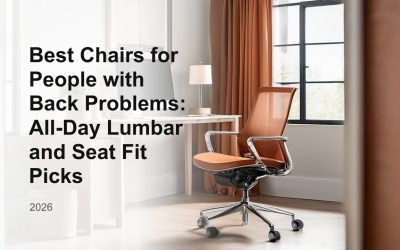
- Find the best chairs for people with low back problems in this roundup of seven chairs with adjustable lumbar support, seat depth control, and shaped backrests.
The best chairs for people with low back problems share one trait: the lower back meets a shaped, adjustable surface instead of an empty gap. This roundup gathers seven task chairs with lumbar controls, seat depth adjustment, and backrests built to hold an upright sitting posture through long desk days.
Quick Verdict
Seven task chairs made this roundup because each one gives the lower back a defined place to rest, with controls that move the support to the sitter instead of asking the sitter to adapt to a fixed shell. The list below favors adjustable lumbar pads, seat depth control, and backrests shaped to follow the natural curve of the spine.
The HON Wave High-Back Chair BSXVL701SB11 leads the group for sitters who want a firm, adjustable lumbar pad with a leather seat and a mesh back. The Flash Furniture HERCULES GO2085 is the pick for larger sitters who want a wide, thickly padded seat with a lumbar knob they can turn without standing up.
For a lighter, breathable option, the Lorell ErgoMesh Managerial Mesh Mid-Back Chair offers back height adjustment and a mesh back at the entry tier of this roundup. The Boss B992-BK Heavy Duty Executive Chair suits sitters who want a wide executive seat with reinforced lumbar shaping and a 400 lb maker stated capacity.
Comparison Table
Every chair below was chosen for the way its backrest meets the lower back, so the table leads with the support features that matter most for this roundup. Seat height and seat depth show the fit range, while the armrest and upholstery columns show how each chair handles daily desk work in a home office or a shared workspace.
| Model | Weight Capacity | Seat Height | Seat Depth | Lumbar Support | Armrests | Upholstery |
|---|---|---|---|---|---|---|
| HON Wave High-Back Chair BSXVL701SB11 | 250 lb | 19 to 21 in | 20.75 in | Adjustable lumbar | Height-adjustable arms | Bonded leather seat, mesh back |
| Lorell ErgoMesh Managerial Mesh Mid-Back Chair | 250 lb | 17.7 to 21 in | 18.7 in | Height-adjustable back | Height- and width-adjustable arms | Fabric seat, mesh back |
| Boss B992-BK Heavy Duty Executive Chair | 400 lb | 19 to 22 in | 19 in | Reinforced lumbar | Padded arms | LeatherPlus vinyl |
| Boss B699-BK Mesh Heavy Duty Chair | 400 lb | Not stated | Not stated | Not stated | Height-adjustable arms | LeatherPlus seat, mesh back |
| Office Star Space Seating 57 Series 5700E | 250 lb | 18.5 to 22.75 in | 19.5 in | Built-in lumbar | Height-adjustable arms | Bonded leather seat, mesh back |
| Flash Furniture HERCULES GO2085 | 400 lb | 21.5 to 25 in | 21 in | Adjustable lumbar knob | Height-adjustable padded arms | Fabric |
| HON Wave High-Back Mesh Chair BSXVL702MM10 | 250 lb | 18 to 22.25 in | 20 in | Built-in lumbar curve | Height-adjustable arms | Mesh back, padded fabric seat |
How We Selected the Best Chairs for People with Low Back Problems
Selection started with the backrest, because a chair earns a place in this roundup only when its lower back area offers a real, adjustable point of contact. Each model below passed three checks on support, fit, and build, and every capacity figure comes from the maker, with gaps marked Not stated rather than filled in from a guess.
Adjustable Lumbar Support You Can Position
A lumbar pad that sits too high or too low does little for the sitter, so the first check looked for lumbar support that moves. Chairs scored better when the pad slides up and down, turns on a knob, or sits on a backrest whose height can change, because those controls let the support land on the inward curve of the lower back.
The HON Wave BSXVL701SB11 and the Flash Furniture GO2085 earned strong marks here for pads that adjust in place without tools. The Office Star 5700E and the HON Wave BSXVL702MM10 use built-in lumbar shaping instead of a moving pad, which suits sitters who prefer a fixed contour and do not want another lever to learn. The Lorell ErgoMesh chair moves its whole backrest up and down, which shifts the support zone in a different but workable way.
Seat Depth That Fits Your Leg Length
Seat depth decides whether the backrest can do its job, because a seat that runs too deep pushes the sitter forward and away from the back. The second check favored chairs with a sliding seat or a depth that fits a wide range of leg lengths, so the sitter can sit back fully with a small gap behind the knees.
Most chairs in this roundup list a fixed depth between 18.7 and 21 inches, and the spread across the seven models covers short, average, and long leg lengths. The GO2085 runs deepest at 21 inches and pairs that depth with a tall seat height range, which fits taller sitters best. The Lorell chair runs shallowest at 18.7 inches, which suits shorter sitters who want their feet flat on the floor while their back stays in contact with the mesh.
Backrest Shape and Tilt That Hold Posture
A good backrest keeps its shape when the sitter leans back, so the third check looked at backrest contour, tilt control, and frame strength. Chairs scored better when the tilt locks in an upright position and the tension can be set, because a backrest that drifts or flops forward forces the sitter to hold posture with muscle effort alone.
High-back models in this roundup extend support well above the shoulder blades, while the mid-back Lorell chair keeps the profile lower for desks with shelving above. The Boss B992-BK and the Flash Furniture GO2085 use thick padding and wide seats that spread body weight across a larger surface. The mesh backs on the HON Wave chairs, the Lorell chair, and the Boss B699-BK let air move through the backrest, which keeps the sitting surface cooler across a long afternoon.
The Seven Chairs
The seven chairs below cover mesh backs, leather seats, heavy-duty frames, and compact mid-back profiles, so the roundup fits more than one body type and more than one desk setup. Each entry lists what the chair does well for lower back support and what to watch before choosing it, with capacities stated exactly as the maker lists them.
HON Wave High-Back Chair BSXVL701SB11
This HON Wave chair pairs a bonded leather seat with a mesh back and an adjustable lumbar pad, a combination that suits sitters who want firm support with a cooler backrest. The maker spec sheet lists a 250 lb capacity, a seat height range of 19 to 21 inches, and a seat depth of 20.75 inches, which fits average to taller sitters well.
What works well: The adjustable lumbar pad is the standout feature, because it slides to meet the inward curve of the lower back instead of sitting at a fixed height. The mesh back breathes through long sessions, the bonded leather seat wipes clean with a damp cloth, and the knee tilt mechanism lets the seat and back move together in a smooth recline. Height-adjustable arms round out a chair that feels built for full workdays at a desk.
What to watch: The seat height range starts at 19 inches, which may sit high for shorter sitters who want both feet flat on the floor without a footrest. The bonded leather seat needs regular wiping to stay fresh, and the 250 lb maker stated capacity sits below the heavy-duty models in this roundup, so sitters near that limit should leave a margin and look at the 400 lb options instead.
Lorell ErgoMesh Managerial Mesh Mid-Back Chair
This Lorell ErgoMesh chair is the lightest, most breathable pick in the roundup, with a mesh back, a fabric seat, and a backrest that adjusts in height. The maker spec sheet for the variant used here lists a 250 lb capacity, a seat height range of 17.7 to 21 inches, and a seat depth of 18.7 inches, which suits shorter sitters and smaller desks.
What works well: The low seat height floor of 17.7 inches makes this the easiest chair in the roundup for shorter sitters to set up with feet flat and knees level. The mesh back keeps air moving across the shoulders and lower back, the back height adjustment shifts the support zone up or down, and the arms adjust in both height and width. The compact mid-back profile also fits under shelving and in rooms where a tall chair would crowd the space.
What to watch: Some listings of this model family show 275 lb for other seat variants, while the variant used here lists 250 lb, so the exact variant matters when comparing capacities. The mid-back profile ends below the shoulder blades, so sitters who want upper back coverage should look at the high-back models instead. The fabric seat shows wear sooner than leather, and the shallow 18.7 inch depth may feel short for long-legged sitters.
Boss B992-BK Heavy Duty Executive Chair
This Boss executive chair brings a wide, thickly padded seat and a reinforced lumbar area to sitters who want a heavy-duty frame with an executive look. The maker warranty guide lists the B992-BK at a 400 lb capacity, and a retailer listing carrying the maker spec gives a seat height range of 19 to 22 inches with a seat depth of 19 inches.
What works well: The 400 lb maker stated capacity gives this chair the widest margin in the roundup for larger sitters, and the wide seat spreads weight across a broad surface. The reinforced lumbar area holds its shape under load, the padded arms sit on a steel wraparound frame, and the heavy-duty spring tilt mechanism locks the back in an upright position. The LeatherPlus vinyl seat wipes clean and resists scuffs from daily use.
What to watch: The seat height starts at 19 inches, which may sit high for shorter sitters, and the executive styling runs wide, so it needs a roomy desk area and a clear path for the casters. The lumbar shaping is built in rather than adjustable, so sitters who want to move the pad up and down should look at the HON Wave BSXVL701SB11 or the Flash Furniture GO2085 instead.
Boss B699-BK Mesh Heavy Duty Chair
This Boss mesh chair combines a breathable mesh back with a pillow-top LeatherPlus seat and the same heavy-duty build as the B992-BK. The maker warranty guide lists the B699-BK at a 400 lb capacity, and the maker listing does not publish a seat height range or a seat depth, so both figures are marked Not stated in the table above.
What works well: The mesh back lets air pass through during long sessions, which keeps the backrest cooler than a solid vinyl back. The pillow-top seat adds a soft top layer over a firm base, the height-adjustable arms move to meet different desk heights, and the tilt lock holds the chair upright for focused work. The 400 lb maker stated capacity matches the strongest chairs in this roundup and suits larger sitters who want mesh ventilation.
What to watch: No lumbar pad is listed for this model, so sitters who want a moving lumbar control should choose the HON Wave BSXVL701SB11 or the Flash Furniture GO2085. The maker does not publish seat height or seat depth figures, so fitting this chair means sitting in it first or measuring the listing on the exact unit offered. The wide heavy-duty frame also needs more floor space than a compact task chair.
Office Star Space Seating 57 Series 5700E
This Office Star 57 Series chair pairs a bonded leather seat with a dark AirGrid mesh back that carries built-in lumbar shaping. The maker listing gives a 250 lb capacity, and the maker spec sheet for the series lists a seat height range of 18.5 to 22.75 inches with a seat depth of 19.5 inches, a broad range that fits many body types.
What works well: The AirGrid back flexes gently against the lower back and keeps air moving, while the thick padded leather seat gives a firm, supportive sit. The seat height range runs from 18.5 to 22.75 inches, which covers shorter and taller sitters in one chair, and the 2-to-1 synchro tilt lets the back recline further than the seat for a relaxed lean. Height-adjustable arms and a heavy-duty nylon base complete a chair that handles daily desk work without fuss.
What to watch: The lumbar shaping is built into the mesh rather than adjustable, so sitters who want to slide a pad up and down should look at the HON Wave BSXVL701SB11. The bonded leather seat needs wiping after long use, and the 250 lb maker stated capacity sits below the heavy-duty Boss and Flash Furniture models, so larger sitters should weigh that limit before choosing this chair.
Flash Furniture HERCULES GO2085
This Flash Furniture HERCULES chair is the widest, deepest seat in the roundup, built for larger and taller sitters who spend long hours at a desk. The maker lists a 400 lb capacity, a seat height range of 21.5 to 25 inches, and a seat depth of 21 inches, with a lumbar knob that adjusts the support from the seated position.
What works well: The lumbar knob is the most convenient lumbar control in this roundup, because it turns by hand while the sitter stays seated. The 25 inch wide seat carries 4 inches of foam padding, the extended upper back includes an integrated headrest, and the height-adjustable padded arms support the shoulders during long sessions. The 400 lb maker stated capacity and the chrome base give this chair a solid, planted feel under larger sitters.
What to watch: The seat height starts at 21.5 inches, which is the highest floor in this roundup and may leave shorter sitters with dangling feet unless a footrest is added. The wide 25 inch seat needs a generous desk area, and the fabric upholstery collects dust more readily than leather, so it benefits from regular vacuuming. Taller sitters gain the most here, while shorter sitters should look at the Lorell chair instead.
HON Wave High-Back Mesh Chair BSXVL702MM10
This HON Wave mesh chair is the second Wave model in the roundup, with a padded fabric seat and a full mesh back instead of the leather seat on the BSXVL701SB11. The maker manual lists a 250 lb capacity, a seat height range of 18 to 22.25 inches, and a seat depth of 20 inches, with a built-in lumbar curve in the mesh back.
What works well: The full mesh back moves air freely and keeps the sitting surface cool, while the padded fabric seat gives a softer sit than the leather Wave model. The seat height range runs from 18 to 22.25 inches, which covers a wide span of body heights, and the synchro-tilt mechanism reclines the back and seat together in a balanced motion. Height-adjustable arms and a five-star base round out a chair that fits most standard desks.
What to watch: The lumbar support is a built-in curve rather than a moving pad, and one independent review found the lumbar shaping modest, so sitters who want a strong, adjustable pad should choose the BSXVL701SB11 instead. The fabric seat shows dust more readily than leather, and the mesh back offers less upper back padding than the thickly padded Boss and Flash Furniture models in this roundup.
What to Expect from the Best Chairs for People with Low Back Problems
A good chair for low back support feels different from an ordinary desk chair from the first sit, because the backrest meets the lower back at once instead of leaving a gap. The guide below explains what that contact should feel like, how seat depth and height work together, and how tilt controls shape a full day of sitting.
How Lumbar Support Should Feel When You Sit
Lumbar support should feel like a gentle, even push against the inward curve of the lower back, not a hard point. Sit fully back in the chair with feet flat on the floor, then slide the pad or the backrest until the support meets the curve. The contact should stay even when you lean forward to type and when you lean back to read.
If the pad presses only at one height, move it down a notch and sit again before deciding it does not fit. A pad that feels strong at first often settles into a comfortable fit after a few minutes, while a pad that feels absent at every height is the wrong match for that body. Chairs with a knob control, like the Flash Furniture GO2085, make this fine tuning easy because the sitter can adjust while seated.
Seat Depth, Seat Height, and Leg Position
Seat depth and seat height work as a pair, because a deep seat with a low height leaves the knees bent too far, while a shallow seat with a high setting leaves the feet dangling. Start with seat height, so the feet rest flat and the knees sit level with the hips, then check the depth by sliding back until the backrest meets the lower back.
The Lorell chair suits shorter legs with its 18.7 inch depth and low height floor, while the GO2085 suits longer legs with its 21 inch depth and tall height range. A gap of two or three fingers between the seat edge and the back of the knee is a good sign. Sitters between those extremes can use any of the mid-range models in this roundup and fine tune with the tilt tension. When the depth and height both fit, the backrest stays in contact through the whole workday without constant readjusting.
Tilt, Tension, and Moving Through the Day
Tilt controls decide how the chair behaves when the sitter shifts position, and a good setup changes with the task at hand. Lock the back upright for typing and focused work, then open the tilt for reading or phone calls so the backrest follows the lean. Tension sets how much effort that lean takes.
Most chairs in this roundup lock the tilt upright and offer a tension knob under the seat, so the sitter can set the resistance once and leave it alone. Standing up every hour also helps, because even the best chair works better when the sitter changes position through the day. A short walk to refill a glass of water gives the back a break that no tilt setting can replace.
Fitting and Assembly at Home
A new chair fits best when the sitter sets it up slowly on the first day, instead of rushing through the levers and living with a poor fit. The steps below take about fifteen minutes and cover the seat, the backrest, and the final safety checks that keep the chair steady under daily use.
Setting Seat Height and Lumbar Position on Day One
Start with the chair on a flat floor and sit in it with shoes on, because footwear changes the height that feels right. Raise or lower the seat until the feet rest flat and the thighs sit level, then move the lumbar pad or the backrest height until the support meets the lower back curve.
Sit for ten minutes at that setting before changing anything, since a new chair needs a short trial to show its true fit. Next, set the armrests so the forearms rest lightly with the shoulders relaxed, not lifted toward the ears. If the armrests push the shoulders up, lower them a notch; if the elbows hang in the air, raise them until the forearms meet the pads.
Assembly Checks Before First Use
Most chairs in this roundup ship partly assembled, with the base, gas lift, and seat needing a few bolts and the backrest to finish the build. Tighten every bolt by hand first, then finish with the tool provided, and check that the gas lift seats fully into the base before sitting down.
After assembly, roll the chair across the floor and lean back gently to check the casters and the tilt lock. A lift that sits crooked can wobble under weight, so press it straight down until it seats with a firm click. The casters should roll smoothly without catching, and the tilt should lock upright when the lever is set.
Conclusion
Seven chairs, one shared idea: the lower back deserves a shaped, adjustable surface that meets the sitter where the spine curves inward. From the adjustable lumbar pad on the HON Wave BSXVL701SB11 to the wide, knob-controlled GO2085, this roundup gives every body type a chair that supports upright sitting without asking the sitter to work for it.



Write Your Review
No reviews yet. Be the first to share your experience!