
Key takeaways
- Find the best air purifiers for dust and pet dander, with True HEPA filtration, washable pre-filters, and quiet everyday cleaning for homes with pets today.
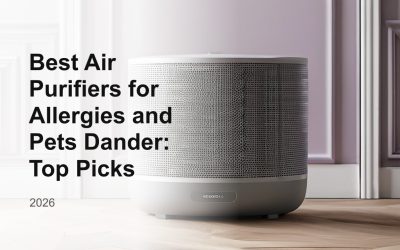
Finding the best air purifiers for dust and pet dander means picking a unit that catches fine dust before it settles and dander before it spreads through the home. This guide compares seven models on particle capture, pre-filter design, noise, and upkeep, so you can pick one that fits your rooms and your pets.
Best air purifiers for dust and pet dander: what wins in dusty pet homes
Dust and pet dander look alike in the air, but they behave differently once they land. Dust settles onto shelves, floors, and bedding within hours, while dander is light enough to stay airborne and drift through doorways into rooms where no pet has ever slept.
A purifier that handles both needs a True HEPA layer for fine particles and a pre-filter that catches hair and large dust before they clog the fine layer.
Dust settles, dander floats, and both need HEPA
A True HEPA filter traps 99.97 percent of particles at 0.3 microns, which covers the fine dust that triggers sneezing and the dander flakes that trigger itchy eyes. A unit without a HEPA layer may move air and catch hair, but it will let fine particles pass straight through and settle again.
The HEPA layer is the part that matters most, and every pick below carries one.
The difference between dust and dander shapes where you put the unit. Dust is heaviest near doors, windows, and high traffic floors, while dander is heaviest near pet beds and sofas where animals sleep. A single unit in the room where pets spend the most time will catch the most dander, while dust needs the unit near the dirtiest air. When the two overlap in one room, that room is the place to start.
Why a washable pre-filter matters
A washable pre-filter catches hair and large dust before they reach the HEPA layer, which keeps airflow strong and stretches the time between HEPA changes. In a home with shedding pets, the pre-filter loads up fast, and a washable design lets you rinse it instead of buying a new one every few weeks.
A clogged pre-filter forces the fan to work harder and cuts airflow, so the HEPA layer sees less air and the room clears more slowly.
Check whether the maker allows washing for each model, since some pre-filters are rinse only and others must be vacuumed. A weekly rinse or vacuum takes a minute and keeps the whole unit working at full strength. The models in this guide that carry a washable pre-filter call it out in their notes, and the roundup favors them for pet homes.
Room size and pet traffic
A small bedroom unit will fall behind in an open living room where two dogs sleep, since the air volume is larger and the dander load never stops. Room ratings rest on clean air delivery and air changes per hour, so one machine can serve a small room well and a large room poorly.
Measure the room first, then add any open space that shares its air, such as a hallway or a connected kitchen.
Pet traffic raises the load all day, since shedding, scratching, and movement keep dander airborne long after a cleaning session. A room with two large dogs needs more air changes than a room with one small cat, even at the same floor area. When the maker publishes a room size, check which air change rate sits behind it, since a size rated at one air change per hour is far smaller in real use than the same size rated at five.
Best air purifiers for dust and pet dander compared in one table
The table gathers the seven picks in one place, with the filter set, the room each one suits, and the key figure from its maker or AHAM rating. Shortlist two or three models from it, then read the full notes that follow for noise, filter life, and the small details that decide the final pick.
| Product | Type | Best for | Key spec |
|---|---|---|---|
| Winix T500 | HEPA + carbon + PlasmaWave | Mid rooms, smart control | CADR 250 m3/h |
| Coway Airmega 230 | Max2 HEPA + carbon | Large rooms, strong CADR | CADR 260 smoke |
| Blueair DustMagnet 5240i | HEPASilent + charged pre-filter | Dust heavy rooms | AHAM CADR 137 smoke |
| Dyson Purifier Cool Gen1 TP10 | H13 HEPA + carbon | Bedrooms, quiet cooling | CADR Not stated |
| Sharp FP-A60UW | True HEPA + Plasmacluster | Mid rooms, ion care | CADR 232 smoke |
| TruSens Z-6000 | Dual HEPA + UV-C | Very large rooms | AHAM CADR 485 smoke |
| Vornado AC500 | True HEPA | Mid rooms, classic design | 335 sq ft |
How to size a purifier for dust and dander
Sizing a purifier for dust and dander starts with the room volume and the pet load, not the product page. A unit that changes the room air about five times per hour at its rated size keeps particle levels low, while an undersized unit runs at full speed all day and still falls behind.
Match the clean air delivery to the room, and match the filter set to the dust source.
Air changes per hour and dust load
The turnover rate of a room, known as air changes per hour or ACH, counts how many times the purifier filters the whole room volume in one hour. Allergy guidance often points to four or five changes per hour, while general use accepts fewer. A unit that turns a 200 sq ft bedroom over five times an hour may manage two in a 400 sq ft living room.
So the same machine can serve one room well and another poorly.
Dust load varies by home, since a house near a busy road or a dusty field needs more air changes than a house with sealed windows and hard floors. Pet traffic adds to the load, since shedding and movement keep dander airborne all day. When the maker publishes a room size, check which air change rate sits behind it, and size the unit for the rate you actually want rather than the largest number on the box.
Filter types that catch fine dust
True HEPA is the layer that matters most for fine dust, since it traps the particles that settle onto shelves and trigger sneezing. A washable pre-filter helps by catching hair and large dust before they reach the HEPA layer, which keeps airflow strong and stretches the time between HEPA changes.
Carbon sits beside the HEPA layer and handles the smells that particles alone cannot explain, though it does nothing for dust itself.
Some units add an ionizer or a plasma stage, and these can help particles settle out of the air, but they do not replace filtration. If a unit offers a switch for that stage, you can turn it off and rely on the HEPA and carbon layers alone. Check the filter part numbers before you buy, so you know the replacement cost and how often each layer needs a fresh one.
Noise, placement, and daily running
A purifier that is too loud on high speed will end up switched off at night, which is exactly when dust settles onto bedding and pillows. Look for a low speed noise level near the level of a quiet bedroom, and a medium speed that you can live with while watching television.
An auto setting lets the unit speed up while the air is dirty and slow down once the room clears, which keeps noise low through the day.
Placement shapes results as much as fan speed. Put the unit where air can reach it from all sides, away from walls and curtains, and keep the intake clear of pet beds and blankets that shed fibers. Run it through the day rather than in short bursts, since dust builds up again within hours of switching off, and a steady low speed holds the room steadier than a loud sprint.
Dust and dander picks that lead the pack
The first three picks cover the most common dusty pet rooms: a mid sized room with smart control, a large room with strong delivery, and a dust heavy room with a charged pre-filter. Each one passed a check of its maker specifications, and each one handles dust and dander with a different mix of filters.
Winix T500
The Winix T500 fits a mid sized room, with a CADR of 250 cubic meters per hour as published, a room size of 50 square meters, and a HEPA layer with a carbon layer and a PlasmaWave stage. It adds smart app control and voice control, which let you set schedules and check the air from a phone.
The CADR is published in cubic meters per hour rather than cubic feet per minute, and this guide states the figure as published without converting it, since the maker gives no CFM figure.
Its listing appears in the United Kingdom market, so check local stock and filter supply before you buy. The four stage filtration pairs a washable pre-filter with a carbon layer and a True HEPA layer, so hair and dust are caught before the fine filter. For a mid sized room where app control and a modern design matter, it is a current model with a strong feature set.
Coway Airmega 230
The Coway Airmega 230 suits a large room, with a CADR of 260 smoke, 292.4 dust, and 343.1 pollen from the Coway one sheet. It is rated for 403 sq ft at 4 air changes per hour, or 975 sq ft at 2 air changes per hour, and it runs at 60 W at 20.5 lb, measuring 22.8 by 16.7 by 8.3 inches.
Its Max2 filter pairs an activated carbon layer with a Green True HEPA layer, and the pre-filter is washable.
Its strong dust CADR is the figure that matters for this guide, since dust is the heaviest load in a pet home, and the washable pre-filter keeps airflow strong between washes. The air quality sensor and auto mode let it speed up after vacuuming or a dog shaking off near the couch and settle back once the air clears. For a large living room with two pets and a lot of foot traffic, it is the strongest large room pick here.
Blueair DustMagnet 5240i
The Blueair DustMagnet 5240i is built for dust heavy rooms, with an AHAM CADR of 137 smoke, 133 dust, and 140 pollen CFM, rated for 212 sq ft. Noise runs from 23 to 47 dB, and power draw runs from 4 to 22 W, with Wi-Fi control. Its charged pre-filters catch dust before it settles onto surfaces.
Which is a different approach from a standard pre-filter, and its HEPASilent filtration pairs a mechanical filter with an electrostatic charge.
Some Blueair manual versions list 153 smoke, 153 dust, and 172 pollen, which conflicts with the AHAM set, so this guide uses the 137, 133, and 140 AHAM figures and notes the difference. The charged pre-filter is the part that matters for dust, since it pulls particles out of the air before they land on a shelf. For a room where dust on surfaces is the main complaint, it is the most focused pick in this guide.
More dust and dander purifiers worth a close look
The next four picks suit bedrooms, mid sized rooms, very large rooms, and classic designs. They use the same HEPA plus pre-filter recipe in different shapes, so the choice comes down to room size, noise tolerance, and how much floor space you can spare.
Dyson Purifier Cool Gen1 TP10
The Dyson Purifier Cool Gen1 TP10 fits a bedroom, with an H13 HEPA layer and an activated carbon layer in a 360 Combi filter, plus Air Multiplier airflow. It stands 41.33 inches tall at 10.43 lb, offers ten airflow settings, and comes with a remote control but no app.
Dyson publishes no CADR figure for this model, so this guide records CADR as Not stated, and coverage claims vary widely, from 101 sq ft in one listing to 600 sq ft in others, so no single coverage figure is used as fact.
Its tall, narrow body fits a bedroom corner without taking up floor space, and the cooling airflow doubles as a fan in warm weather. The sealed filtration system keeps captured particles inside the unit, which matters for a bedroom where dust and dander are the main worry. For a bedroom where quiet cooling and a slim body matter more than a published CADR, it is a premium pick with a clear coverage caveat.
Sharp FP-A60UW
The Sharp FP-A60UW fits a mid sized room, with a CADR of 232 smoke, 220 dust, and 238 pollen, and a room size of up to 341 sq ft. It carries True HEPA filtration with Plasmacluster ion care, runs at 65 W on high, and uses a washable pre-filter. It is a different model from the Sharp FP-A80U used in an earlier article.
From the Sharp FP-F60UW used in another, with its own size and CADR figures.
Its Plasmacluster stage releases ions into the room air, and the washable pre-filter catches hair and large dust before the HEPA layer. The 65 W high speed gives it enough airflow for a mid sized living room, while the low speed suits a bedroom at night. For a mid sized room with a pet and a dusty floor, it is a solid middle choice with a clear CADR set.
TruSens Z-6000
The TruSens Z-6000 suits a very large room, with an AHAM smoke CADR of 485 and a room size of 1,750 sq ft at 2 air changes per hour, or 752 sq ft at 4.84 air changes per hour. It carries dual sided True HEPA layers with activated carbon, a TRU-BEAM UV-C stage, and a SensorPod that reads the air away from the unit.
It measures 14.7 by 18.4 by 27.3 inches at 42.1 lb and draws 109.3 W, so it is the largest and heaviest unit in this guide.
Its dual sided design pulls air from both sides, which gives it the high CADR that a very large room needs, and the SensorPod lets it read the air where you sit rather than at the unit itself. The size and weight mean it needs a clear spot on the floor and a strong surface to sit on, so measure the space before you order. For an open living room with several pets and a lot of dust, it is the strongest pick here by delivery rate.
Vornado AC500
The Vornado AC500 is a classic mid sized model, with True HEPA filtration and a room size of about 335 sq ft from a review source. It uses a two stage design with a pre-filter and a True HEPA layer, and it suits a bedroom or a small living room where a simple, steady unit is enough.
The maker does not publish a CADR figure in the sources seen, so this guide records CADR as Not stated, and as an older model its current availability is limited, so check stock and filter supply before you buy.
Its simple design has no app or sensor to learn, which suits a room where you want to set the speed and leave it alone. The two stage filtration gives it a real HEPA layer for dust and dander, and the compact body fits a nightstand or a desk. For a buyer who finds it in stock with filters available, it is a straightforward classic pick, but newer models in this guide offer published CADR figures.
Running costs and upkeep for dust and dander purifiers
A purifier is a running cost as much as a purchase, and pet homes wear filters out faster than homes without animals. Hair and dander load the pre-filter first, and a HEPA layer that has soaked up months of dust loses airflow even if it still looks clean. Plan the budget around filter changes, not just the unit on the shelf.
Filter replacement schedules and pet hair
How long a filter lasts tracks the pet load as much as the calendar, so a maker schedule built for a clean home will run short where two shedding dogs live. Rinse or vacuum the pre-filter every week or two, since a clogged pre-filter makes the fan work harder and cuts the airflow that reaches the HEPA layer.
Replace the HEPA layer on schedule even if the unit still moves air, because a loaded HEPA layer cannot catch fine dust at full strength.
Keep a spare pre-filter and a spare HEPA filter on hand, so a change takes minutes instead of waiting for a delivery while dust builds up. Check the filter part numbers for each model before you buy, since a cheap unit with costly filters can cost more over three years than a pricier unit with long lived filters. The washable pre-filters on the Coway, Winix, and Sharp models in this guide are the clearest example of how washable design cuts the running cost.
Vacuuming, dusting, and the purifier together
A purifier works best beside regular cleaning, not instead of it. Vacuum with a HEPA vacuum at least twice a week in a pet home, since settled dust and dander on floors and rugs will keep rising into the air every time someone walks through the room.
Dust shelves and hard surfaces with a damp cloth, which traps particles instead of scattering them back into the air for the purifier to catch again.
Run the purifier on a steady low speed through the day, and raise it for an hour after vacuuming or dusting, when the air holds the most particles. Wash pet bedding weekly, since it holds the densest dander load in the home, and keep pet beds near the purifier so the unit catches dander at the source. If dust on shelves stays heavy after a week of running, the source is still releasing particles, and no filter change will fix that on its own.
Conclusion
The best air purifier for dust and pet dander is the one that matches your room size, your pets, and your patience for filter changes. Start with the room measurement, pick a HEPA model with a washable pre-filter from the table, and run it on a steady low speed so dust and dander stay down all day.


Write Your Review
No reviews yet. Be the first to share your experience!